If you are looking for Haryana government jobs in 2025, then you have a lot of great options. Every year the Haryana government recruits many posts in different departments, in which the youth get good salary, secure future and respectable life.
Whether you are 10th pass, 12th pass or graduate – government jobs are available in Haryana according to every qualification. The special thing is that here recruitments are done on many popular posts in police, education, electricity, health, and administrative departments.
Below we have brought you a list of Best Government Jobs in Haryana in 2025, which gives information about the top 15 jobs. This table gives complete information about the name of the job, department, qualification and official website.
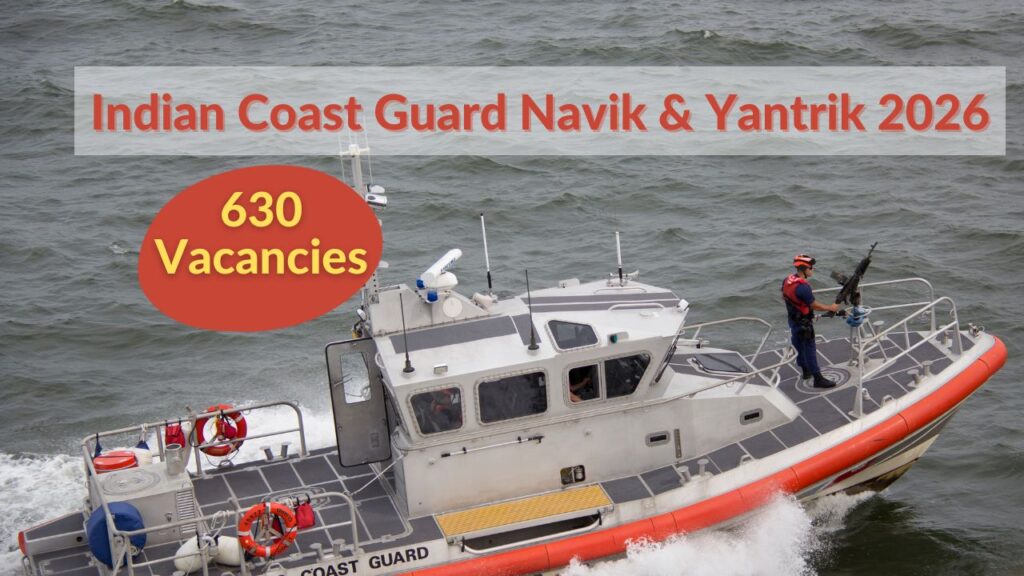
Indian Coast Guard Navik & Yantrik 2026 is an interesting opportunity for those who are willing to serve in maritime. The Indian Coast Guard is one the prestigious departments that act as a protector that involves patrolling, search & Rescue operations. This requires passionate candidates seeking a challenging and rewarding career. This recruitment appears each year, this time with approx 630 vacancies for this role. You can apply from the direct link given below or go to the official website for registration.
Overview of the Indian Coast Guard Navik & Yantrik Recruitment
Exam Conducting Body
Indian Coast Guard
Post Name
Indian Coast Guard Navrik & Yantrik
Job Location
Based on Job Post
Indian Coast Guard Navrik & Yantrik
It happens each year to recruit for the Indian Coast guards as Navrik & Yantrik. Interested candidates can apply online to secure their position in this field.
The total number of vacancies is 630 for the Coast Guard Navik & Yantrik 2026 Recruitment. To apply for this post candidates should meet the physical standards that are common for every candidate Navik and Yantrik. Height should be 157 cm, chest 5 cm, and weight according to age and height. Apply for this post if you wish to build an adventurous and challenging career that will give you lifetime joy. Coast Guard Navik & Yantrik recruitment Is already here and starts on 11 June 2025 to the 25th of June 2025. Apply online to grab the opportunity for this job as soon as possible. Kindly check the all details on the official website mentioned in this article for documents required and Form filing or you can directly apply from the link provided in the article.
An Indian student admitted to a US master’s program this year might do the maths on a $60,000 tuition bill and assume a loan will fill the gap. The New Federal Student Loan Limits that took effect on 1 July 2026 make that assumption riskier than ever, and for many applicants the federal system was never an option in the first place.
Graduate PLUS loans are no longer available starting July 1, 2026. That program let graduate students borrow up to the full cost of attendance without lifetime borrowing caps. The New Federal Student Loan Limits 2026 introduce a replacement with strict annual and lifetime borrowing ceilings.
Graduate student loans are capped annually at $20,500, with an aggregate cap of $100,000. Professional student loans are capped annually at $50,000, with an aggregate cap of $200,000. On top of that, all student borrowers beginning in July will have a total aggregate borrowing limit of $257,500.
The legal source is a 2025 law, and the Department of Education released the final regulations in the May 1, 2026, Federal Register. These changes explain why understanding the New Federal Student Loan Limits is now important for anyone planning to finance a graduate degree in the US.
Who Counts as a “Professional” Student Under the New Federal Student Loan Limits?
Amounts borrowed for students enrolled in 11 professional degree programs are limited to $50,000 per year, and they may borrow an aggregate amount equal to $200,000 over their lifetime. Graduate students in other programs, such as accounting, engineering, nursing, and many other fields, can borrow $20,500 in any one year, and their total borrowing during their academic career cannot exceed $100,000.
Some fields are included (law, medicine, dentistry, veterinary) but others like engineering, nursing, and most of the courses most Indians choose to study overseas (MS in computer science/data science etc.) are not. If you want to study a non-professional course costing $55k per year, you’ll only get less than half covered by the federal limit.
A group consisting of 24 states and the District of Columbia has sued in federal court in a case involving nursing and health care degrees. In any case, always check the latest updates before using both results.
Why Most Indian Students Feel This Indirectly
You must be at least a US citizen or eligible non-citizen to receive federal loans. This means students on F-1 visas will not be eligible, whatever the New Federal Student Loan Limits say. To determine which category you fall into head to the official eligibility page on studentaid.gov. Green card holders and some other categories have different rules.
These caps are important for two reasons. Firstly, they change the private market you will be borrowing from. Graduates and postgraduates are increasingly borrowing from private lenders as they are no longer covered by federal aid. So there will be higher competition between American borrowers and your lender and cosigner.
Secondly, universities are becoming more cautious in their admissions. With fewer domestic students able to gain loans, universities will place a greater emphasis on accepting full-paying international students. There may be tighter scholarship money in some courses. This is just an inference however, no university has confirmed this.
Price the whole degree, not the first year. Be sure to include tuition fees, living expenses and health insurance. If your degree is 2-years long and costs $60k per year then that will be $120k in total. This can’t be covered by any federal options.
Compare three lender types. Public Sector and Private sector institutions offer collateralized loans. They often have lower interest rates. However, NBFCs tend to be quicker but have higher costs. International lenders such as US education lenders may require a US co-signer. Always ask each lender what the full repayment schedule is and whether there will be interest charged whilst you are studying.
Ask the university’s financial aid office one specific question: “What funding do international students in my program actually receive?” Department-level assistantships and tuition waivers often matter more than any loan.
Treat the exchange rate as a cost. While at current rates $20,500 is quite expensive, but if the rupee falls it can mean paying back extra in lakhs. You do run the risk of borrowing in dollars and earning in rupees once you get back to India. However, if you are planning to stay and work in the US then it will be much better.
If you’re a US permanent resident or hold another eligible status, the New Federal Student Loan Limits apply to you directly. Borrow the federal amount first because its repayment terms are usually gentler, then fill the gap privately. Students who borrow a new federal Direct Loan on or after July 1, 2026, will be eligible for only two repayment plans.
Conclusion
The New Federal Student Loan Limits 2026 make it more important than ever to understand how much you can borrow before accepting a US university offer. Before you accept an offer, write down the program’s total cost, the funding you can confirm in writing, and the gap.
Get two quotes in writing. If the amount required to bridge the gap exceeds what you would be comfortable borrowing based on your anticipated starting salary (in rupees), this is an indication that you may want to look at cheaper options or a different intake.
If you are preparing for the UPSC exam then getting every update for the exam is necessary to appear in the exam and achieve your goal. Get UPSC Notification for UPSC CSE 2025 Exam which will happen in 3 phases—Prelims, Mains, and Interview. Aspirants should prepare according to the exam pattern. You can check the eligibility criteria, and exam pattern in this article.
Highlights Of The UPSC Exam
Conducting By
Union Public Service Commission
Exam Name
UPSC Civil Service Exam
Posts
Group A & B Officers
Vacancy
1129
Selection Process
Prelims, Mains, Interview
Starting Salary
Rs. 56,100 per Month
Notification Release
22/January/ 2025
Application Starts On
22/January/ 2025
Application Ends On
11/February/ 2025
UPSC Prelims Exam Date
25/ May/ 2025
UPSC Mains Exam Dates
22, 23, 24, 30, & 31/August/2025
Final Result
Update Soon
Exam Pattern for UPSC Exam 2025
Prelims: General Studies and CSAT, the two objective types of paper are conducted in prelims. Candidates must complete the first paper within 2 hours, the same duration applies to 2nd paper 2 too. Each paper is holding 200 marks, negative marking of 1/3 for every wrong answer.
CSAT Qualifying: 33% is the least to get in Paper 2 (CSAT) for clearing the exam and there is no change in the marking scheme.
Mains: Nine papers descriptive in terms 3 hours each, total marks 1750.
Interview: Personality Test is conducted of 275 marks
No major changes: In exam pattern for 2025, just procedural changes happen this year and you can find the updates on the official website.
Candidates who wish to crack this exam should understand the complete RRB ALP Syllabus 2025 to stay first step ahead. Knowing the crucial topic will help you to focus on smart preparation and beat the competition. Assistant Loco Pilot is a competitive exam by RRB for job recruitment in the Indian Railway sector.
RRB ALP Exam Pattern 2025
Features
CBT 1
CBT 2 – Part A
CBT 2 – Part B
Duration
60 min
90 min
60 min
Total number of Questions
75
100
75
Subjects
Mathematics, Reasoning, General Science, and Current Affairs
Post-specific question ( based on selected postQualifying minimum marks 35%
Negative Marking
Yes, 1/3rd marks deducted for wrong answer
RRB ALP Syllabus 2025: Detailed Section-Wise Exam Topics
CBT 1 Syllabus 2025: Topic-Wise
Mathematics
Number System: Natural numbers, whole, integer, rational & irrational Bodmas: Application of order, Power, roots, division, multiplication, add, sub Decimal & Fraction: Operations, Conversion, Comparison, Simplification LCM & HCF: including word problem Ratio and Proportion: Calculation, application in problem-solving Percentage: Increase & decrease of percentage, various contexts Mensuration: Measurement of Areas and volume, and geometric shapes Time, Work & Distance: Speed, distance, time work done, relative speed, average speed Profit and Loss: cost price, selling price, profit, loss, discount Algebra: Basic algebraic operations, linear equations and quadratic Simple and Compound Interest:principal, rate, and time for both simple and compound Geometry and Trigonometry: geometric figures, angles, triangles, circles, trigonometric ratios Statistics: Mean, median, mode Square Root, Age Calculations
Reasoning & General Intelligence
Analogies: identifying and figuring out relationships between pairs of words, numbers Alphabetical and Number Series: Recognize patterns in sequences Coding and Decoding: Decode messages or words based on a given pattern Mathematical Operations: basic mathematical rules or operations to numbers, letters Relationships: identifying relationships from given information. Syllogism: analyzing the statements and deduce logical theory Jumbling: Rearrange jumbled words or sentences Venn Diagram: Use Venn diagrams to solve set relations, and logical grouping. Data Interpretation and Sufficiency: Analyze and interpret data presented in various forms (tables, charts, etc.) Conclusions and Decision Making: Draw valid conclusions from given statements or given information in the statements Similarities and Differences: examine the similarity and difference among words, numbers, Analytical Reasoning: Solve complex logical problems involving patterns and sequences Classification, Directions, Statement: Arguments & assumptions
General Science
Physics: Concepts of motion, speed, velocity, Laws of Motion and Force, Work, Power, Energy, Heat & TemperatureLight: Reflection, RefractionSound, Electricity, Magnetism, Simple Machines, atmospheric pressure Chemistry: Elements, Compounds, chemical bonding, atomic structure, acid, base, salts, metals & non-metals, Periodic Table, Environment Chemistry, Water Properties Biology: Human body systems & functions, photosynthesis, reproduction, microorganism, nutrition & Health, Reproduction, Basics of genetics
General Awareness
Currents Affairs: day-to-day national & International topics, Science & Technologies: latest discoveries, innovations Sports: tournaments, related news Culture: heritage of India Strong Personalities: political leaders, richest man Economic: Policies, global economy, surveysPolitics, Awards, Art & Culture and Government Schemes
CBT 2 (Part – A) Syllabus
The CBT 2 Part A questions contained mostly the topics of CBT 1 syllabus. The slight difference in CBT 2 Part A is more advanced concepts on the same topics and more number of questions in the examination. It requires more effort and time on each section: Mathematics, Reasoning, General Awareness, General Science.
CBT 2 (Part B) – Post-Specific Syllabus
This section involves the post specific test which is required in the field of choosing by the candidates at the time of registration. Some popular posts mentioned below and their key topics to cover in the CBT 2 Part B exam. Make sure you study from your ITI Trade books and NCVT curriculum for this part-
Electrical
Electrical Instrument, Refrigeration, Mechanic
Mechanical Engineering
Fitter, Turner, maintenance, Refrigerator
Mechanic (Motor/Diesel)
Tractor Mechanic, Heat Engine, Air-conditioning
Electronics Mechanical
Radio and TV, Electronic Mechanic
CBAT – Computer-Based Aptitude Test (For ALP Only)
After clearing CBT 2 candidates will reach the next stage of CBAT. No negative marking in this test but require at least 42 marks in each test battery to clear out the exam. Focusing on exam syllabus and exam pattern will help you to beat this competition among lakhs of candidates. Your final merit for ALP will be based 70% on CBT 2 Part A + 30% on CBAT.
Conclusion
To secure a government job you must study hard and stay focused on the preparation. The exam pattern and syllabus topic help you to learn strategy wise. The RRB ALP 2025 syllabus might look vast, but with smart planning and consistent efforts, you can master it. Keep practicing the aptitude question on each section and stay updated with Current Affairs.
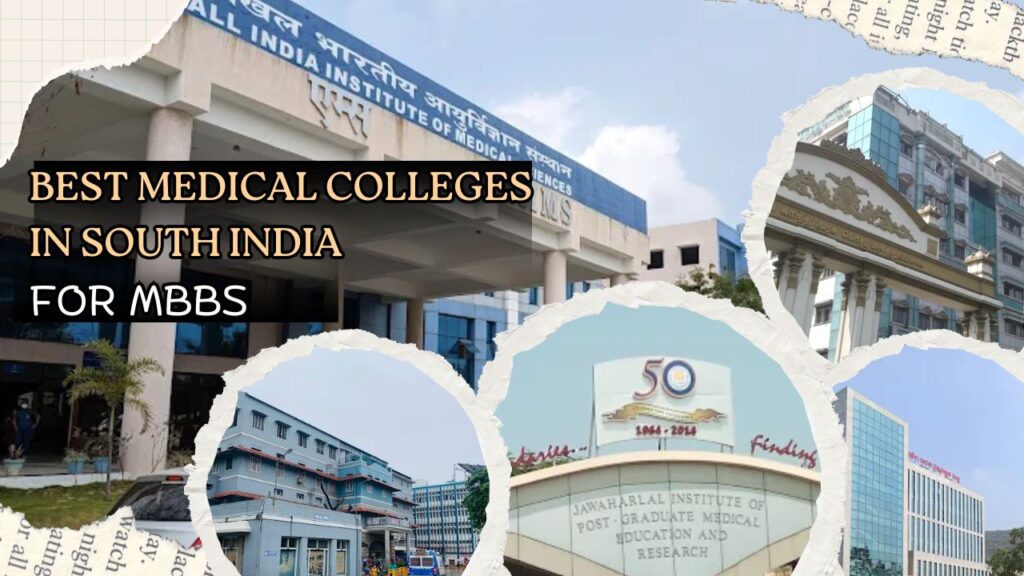
There are world-class Best Medical Colleges in South India for MBBS which provides quality education and excellent training to produce doctors. The well-established states including Karnataka, Tamil Nadu, Kerala, Andhra Pradesh, and Telangana come under the region of South India. Taking admission in any of these colleges is the right choice for starting your medical journey. South India offers both private and government colleges in a wider range.
Let’s look into these prestigious colleges which offer both theoretical and practical medical education for students.
How Did They Become the Best Colleges?
They are equipped with strict regulations to provide strong curriculum, advanced training, hospital exposure, experienced faculty, and support for career growth. After monitoring college prospects and record of successful students, NIRF ranked them as the top colleges of India. The ranking made it easy for students to choose their best college for their higher education.
Top Government Medical Colleges
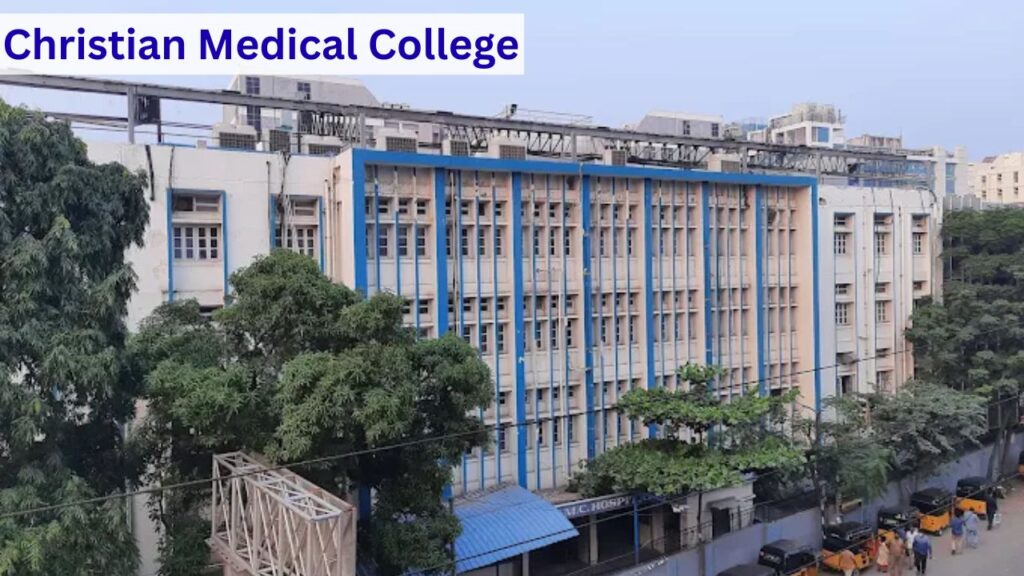
Christian Medical College
Christian Medical College, Vellore is private but offers the best education at affordable fees of just Rs. 13,500 yearly for MBBS. This college became a crown jewel of South India and ranked at 3rd position domestically by NIRF due to its top education and low fees.
Image credit: Christian Medical College
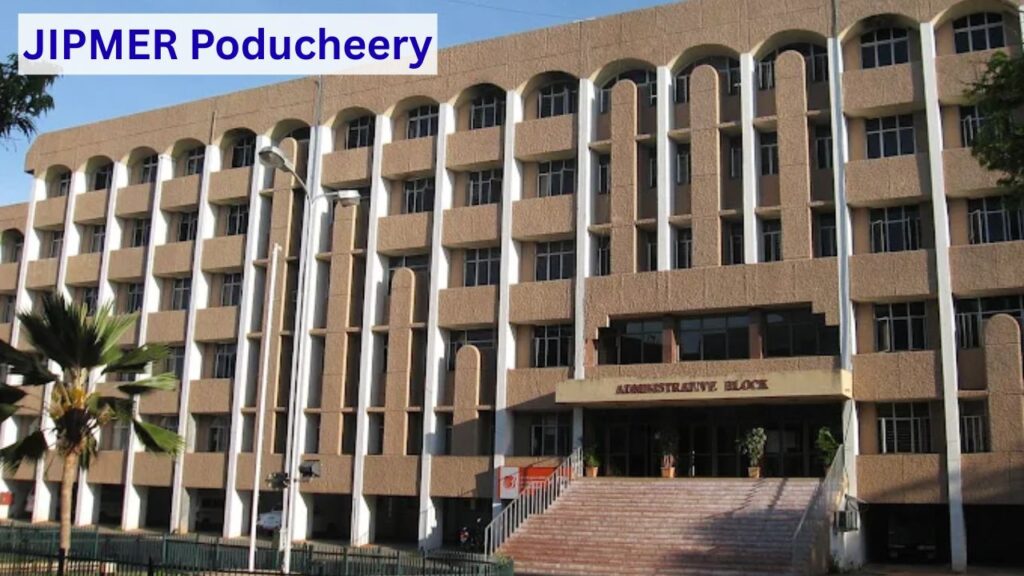
JIPMER Poducheery
Jawaharlal Institute of Postgraduate Medical Education and Research became a best known college for MBBS as it has a strong alumni network. It produces world-class doctors at low fees around Rs. 6000 yearly. It ranked at 4th position in NIRF 2025 due to its exceptional medical education. It is the top medical college of South India, but students need to score well in NEET to get admission here.
Image credit: JIPMER
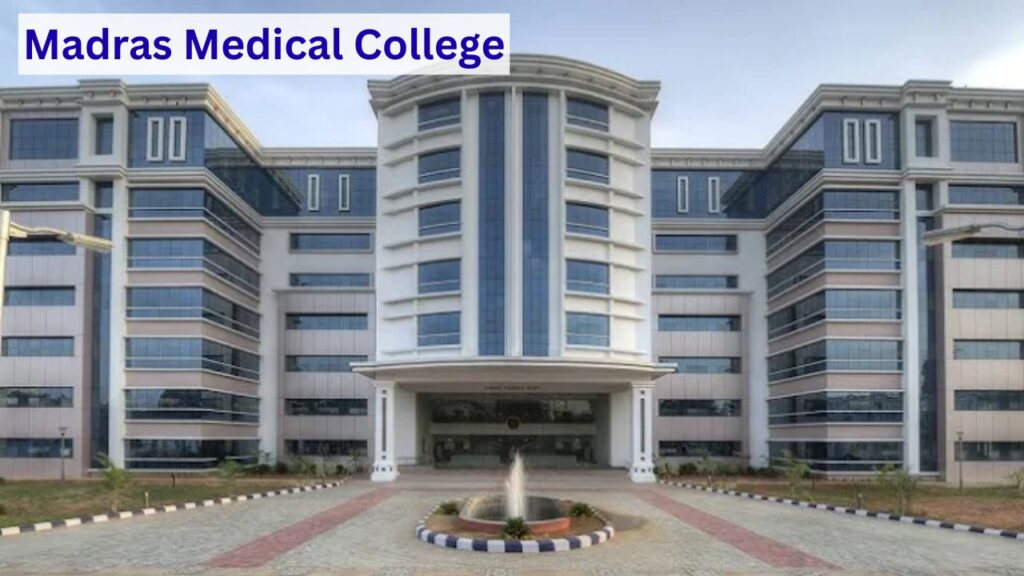
Madras Medical College
Chennai offers best government colleges including Madras Medical College which was established in 1835 and ranked at 16th among top medical institutions in India. Students need to score around AIR 944 in NEET for securing a position among 250 MBBS seats.
Image credit: Madras Medical College
AIIMS Network in South India
All India Institute of Medical Sciences has set its footprints in the South India region with highly ranking among global medical institutions. Students aiming to get their MBBS degree from AIIMS can turn their dream into reality without relocation.
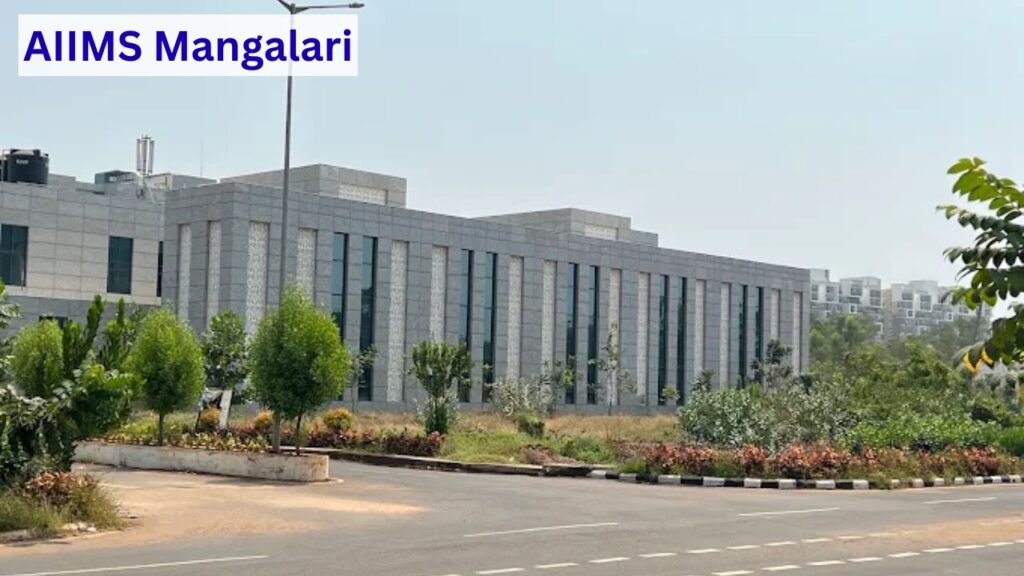
AIIMS Mangalari
AIIMS Mangalari – Andhra Pradesh has become the 29th best medical institution in India by NIRF ranking. It offers a strong curriculum and practical training in a 5 years MBBS program at low fees of around Rs. 15,760 yearly.
Image credit: AIIMS Mangalari
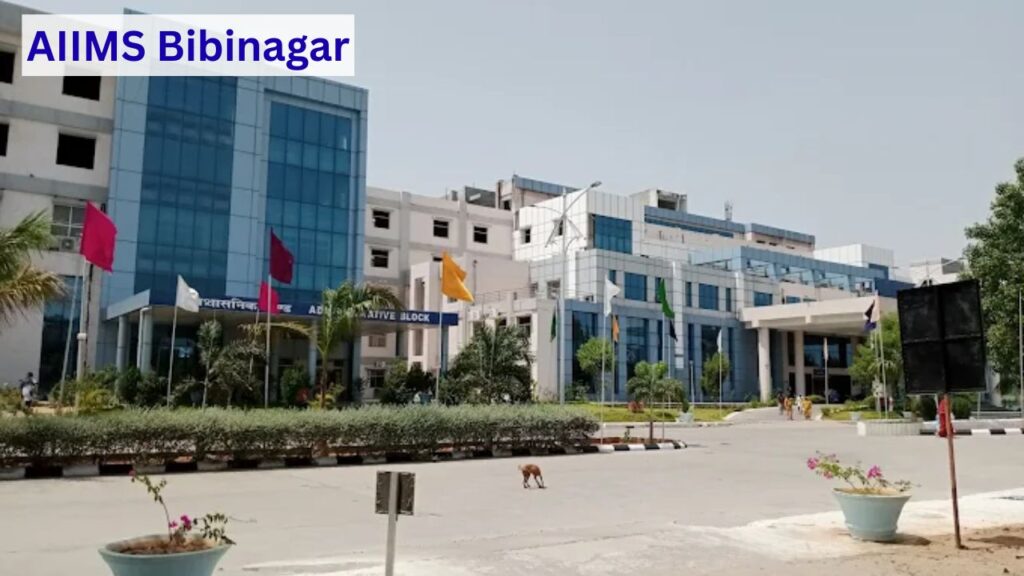
AIIMS Bibinagar
Telangana also has the best medical college and hospital — AIIMS to provide students hospital exposure for getting real knowledge. This one was established recently but still manages to rank in the top medical institutions of India.
Image credit: AIIMS Bibinagar
State-wise Government College For MBBS
Tamil Nadu
There are more than 39 government colleges in Tamil Nadu but the top medical colleges can establish your career faster and stronger.
Madras Medical College
Stanley Medical College
Coimbatore Medical College
Government Kilpauk Medical College
Karnataka
Bangalore Medical College
Mysore Medical College
Karnataka Institute of Medical Sciences
Kerala
Government Medical College, Kozhikode
Government Medical College, Thiruvananthapuram
Government Medical College, Kottayam
Telangana
AIIMS Bibinagar
Gandhi Medical College, Hyderabad
Osmania Medical College, Hyderabad
Andhra Pradesh
AIIMS Mangalagiri
Sri Venkateswara Medical College, Tirupati
Andhra Medical College, Visakhapatnam
Top Private Medical Colleges
Kasturba Medical College
Kasturba Medical College is ranked under top 10 manipal medical institutions for its top-tier education. It offers MBBS at annual fees of around Rs. 17,80,000 and KMC Mangalore also has the same fee structure but both colleges have different cutoffs. KMC Manipal accepts students with AIR 40,258 and KMC Mangalore accepts at AIR 57,207 NEET cutoff.
Amrita School of Medicine
Amrita School of Medicine is located in Kochi and offers best medical education to their students. They have experienced faculty and strong curriculum, making it the highest-ranked private medical college in South India. It has ranked at 9th in NIRF ranking and it offers MBBS at fees around Rs. 18,50,000.
St. John’s Medical College
St. John’s Medical College of Bangalore offers MBBS program at fees around Rs. 8,11,285 yearly. It ranked 30th among Indian medical institutions and needed a cutoff AIR 11,483 for admission in the course.
MS Ramaiah Medical College
MS Ramaiah Medical College is also located in Bangalore and comes under top 50 in medical colleges. It offers MBBS at cost Rs. 25,15,750 approx. It is the best college because of its excellent faculty, attached to multi-speciality hospital, and strong alumni network.
JSS Medical College
JSS Medical College, Mysore is also a top medical college that provides MBBS around Rs. 18,86,900. Admission is accepted for students who do have a cutoff around AIR 122,228 in NEET.
Sri Ramachandra Medical College
Chennai best college – Sri Ramachandra Medical College, ranks among best medical colleges. It is best for MBBS education at fees. Rs. 10,00,000. Students need AIR 313,535 cutoff for admission in this college.
Admission Requirements & NEET Cutoffs
Government colleges are more strict on the NEET cutoffs because of their top-tier education in low fees. They categorized from top to mid-tier colleges, colleges like AIIMS and JIPMER need AIR 1000–5000 NEET cutoffs for students’ admission. While mid-tier colleges require AIR 5000–15,000 NEET cutoffs for admission.
Private colleges have wider variation in NEET cutoffs, top private colleges require AIR 10,000–50,000 and some colleges need AIR 50,000 — 200,000.
But NEET cutoffs significantly depend on the state, year and college type, so check out the college official brochure for admission that mentioned exact NEET score for admission.
Fee Structure Analysis
Government colleges such as AIIMS and top-tier central institutions have offered MBBS programs in a lower range of fees Rs 6000 – Rs 16,000 annually. While state government colleges have a slightly higher range from Rs. 60,000 to 110,000 annually for MBBS. According to the management quota, government college fees range between Rs 6–12 lakh annually.
Private colleges have divided their range between Deemed university and Private colleges, according to management quota which significantly ranges between Rs. 25 lakh to 50 lakh annually. It may slightly lower around Rs. 8 – 12 lakhs in some private colleges.
Conclusion
South India’s Medical colleges offer prestigious opportunities for aspiring doctors to take their MBBS degree at an affordable price. Private institutions fees are higher, so aim for the government colleges which offer both excellent academic resources and clinical exposure to medical graduates. These Best Medical Colleges in South India for MBBS will provide you not only a degree but the best education and research ecosystem to become a doctor.