RRB Station Master Mock Test 2026–27: Latest Syllabus, Exam Pattern & 100 Practice Questions

RRB Station Master Mock Test

The RRB Station Master Exam 2026–27 is an important opportunity for candidates preparing for Railway Recruitment Board (RRB) examinations. Candidates should understand the latest RRB Station Master syllabus, exam pattern, selection process, and question format before starting their preparation.

To help candidates prepare effectively, we have provided an RRB Station Master Mock Test 2026–27 featuring 100 multiple-choice questions based on the prescribed syllabus. This practice paper covers Basic Science and Mathematics, Data Analysis and Interpretation, Logical Capability, and Mental Reasoning.

Candidates can attempt the questions, check the answer key, and evaluate their preparation through the practice test.

RRB Station Master Exam Pattern 2026–27

Before attempting the RRB Station Master online mock test, candidates should understand the examination structure.

Subject  Questions  Marks
Basic Science, Mathematical and Analytical Capability 60 60
Logical Capability 20 20
Mental Reasoning 20 20
Total 100 100
  • Total Questions: 100
  • Total Marks: 100
  • Exam Duration: 120 Minutes
  • Question Type: Multiple Choice Questions (MCQs)
  • Negative Marking: 1/3 mark for each incorrect answer

Note: Refer to the applicable official RRB notification for the final examination rules.


RRB Station Master Mock Test 2026–27

RRB Station Master Mock Test 1

PDF Download

How to Prepare for RRB Station Master Exam 2026–27?

Candidates should follow a structured preparation strategy to improve their performance.

  1. Understand the complete RRB Station Master syllabus.
  2. Study Basic Science and Mathematics regularly.
  3. Practice Data Analysis and Interpretation questions.
  4. Improve Logical Capability and Mental Reasoning.
  5. Attempt RRB Station Master online mock tests.
  6. Review incorrect answers and understand their solutions.
  7. Practice with a timer to improve speed and accuracy.

Frequently Asked Questions (FAQs)

1. How many questions are asked in the RRB Station Master CBT?

The examination pattern provides 100 objective-type questions carrying 100 marks.

2. What is the duration of the RRB Station Master examination?

The CBT duration is 120 minutes.

3. Is there negative marking in the RRB Station Master exam?

Yes, 1/3 mark is deducted for every incorrect answer.

4. Where can I practice RRB Station Master mock tests?

Candidates can practice the 100-question mock test provided in this article.

5. What subjects should I prepare for the RRB Station Master exam?

Candidates should prepare Basic Science, Mathematics, Data Analysis and Interpretation, Logical Capability, and Mental Reasoning according to the applicable syllabus.

Conclusion

Preparing for the RRB Station Master Exam 2026–27 requires consistent practice, a clear understanding of the syllabus, and proper time management. This RRB Station Master Mock Test provides candidates with an opportunity to practice important questions, evaluate their performance, and identify areas that require improvement.

Candidates are advised to regularly attempt practice tests and follow official RRB notifications for the latest examination updates.

Leave a Comment

Your email address will not be published. Required fields are marked *

Top B.Tech Colleges in India: Latest Ranking & Admission Guide

BTech Colleges in India

When thinking about starting a career in engineering then choosing among the top BTech Colleges in India is the priority for every student. The race for a Bachelor of Technology (BTech) course has gotten much tougher and thrilling as there are plethora of options for would-be engineers across the country. If you’re a Class 12 student planning to appear for entrance exams or a parent navigating the admissions maze, this one-stop guide will give you an overview of the current scenario of top BTech colleges in India, their rankings, placements and admission criteria. 

Understanding the Current Landscape: NIRF Rankings 2025

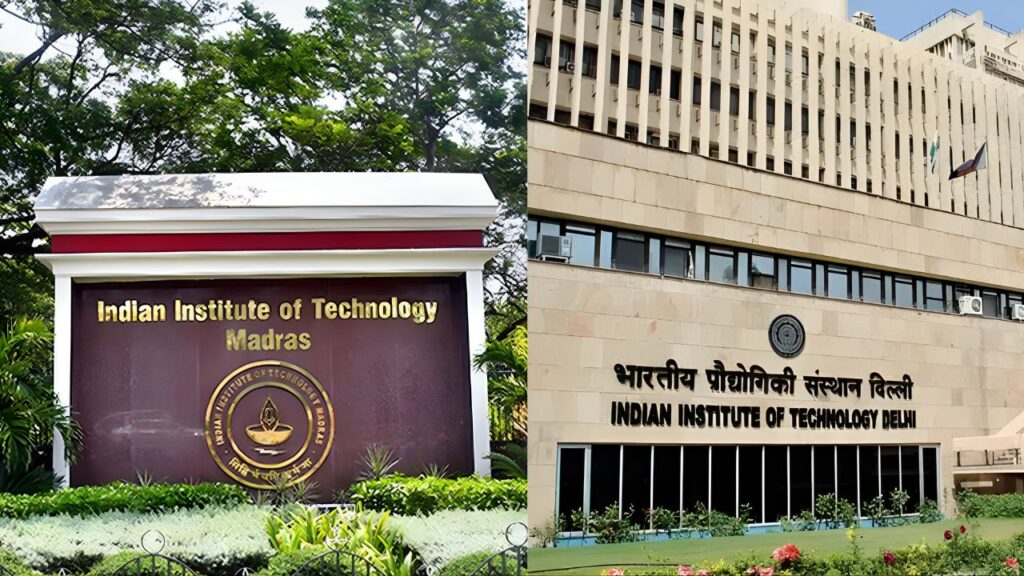
Indian BTech Colleges NIRF Ranking 2025 is considered as the standard for deciding the best BTech colleges in India. As per the updated list, IIT Madras ranked 1st once again for the ninth straight year, further consolidating its hold on engineering. The top five Engineering institutes in India according to NIRF 2025 are IIT Madras, IIT Delhi, IIT Bombay, IIT Kanpur, and IIT Kharagpur.​

 IIT Madras, IIT Delhi

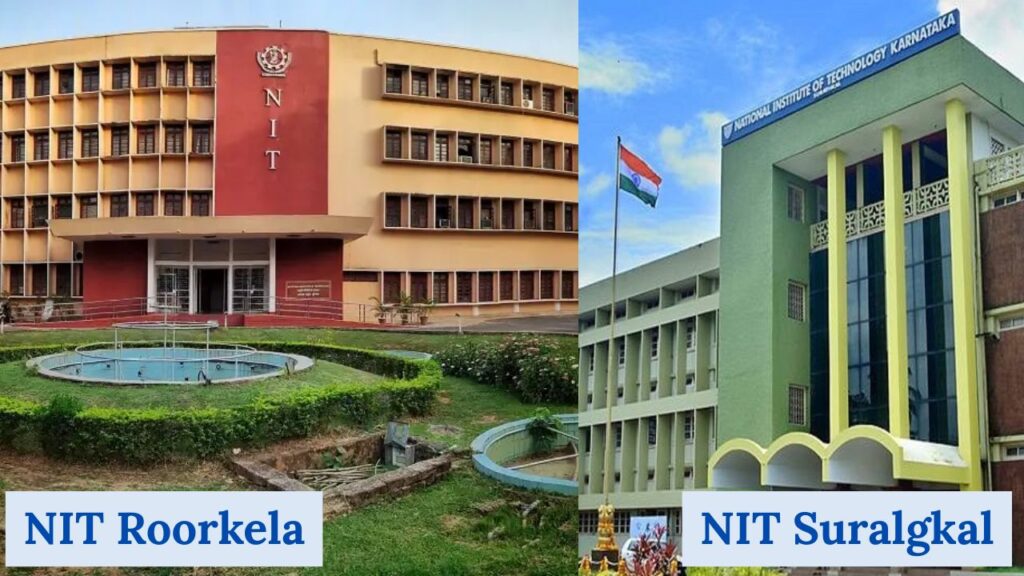
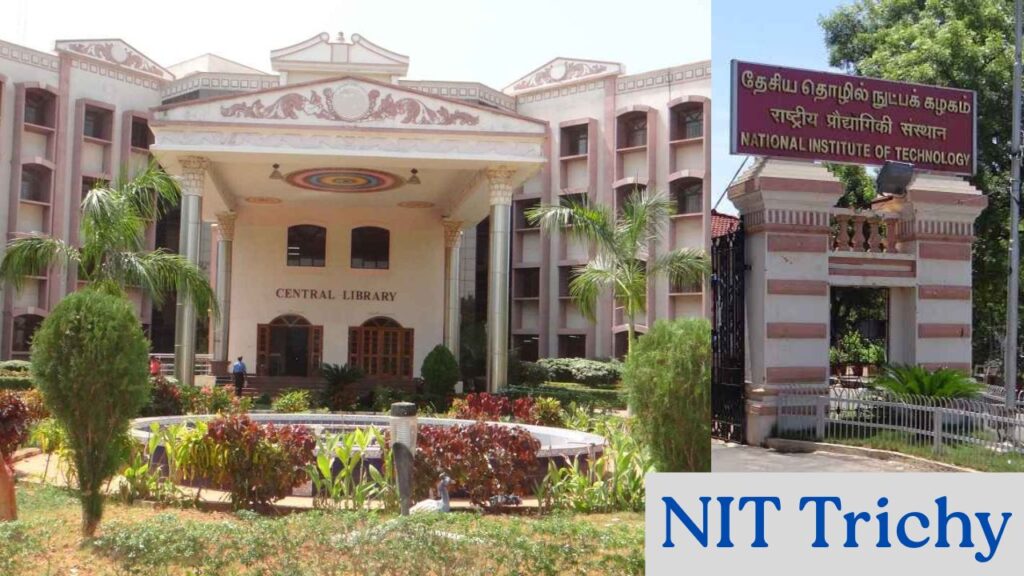
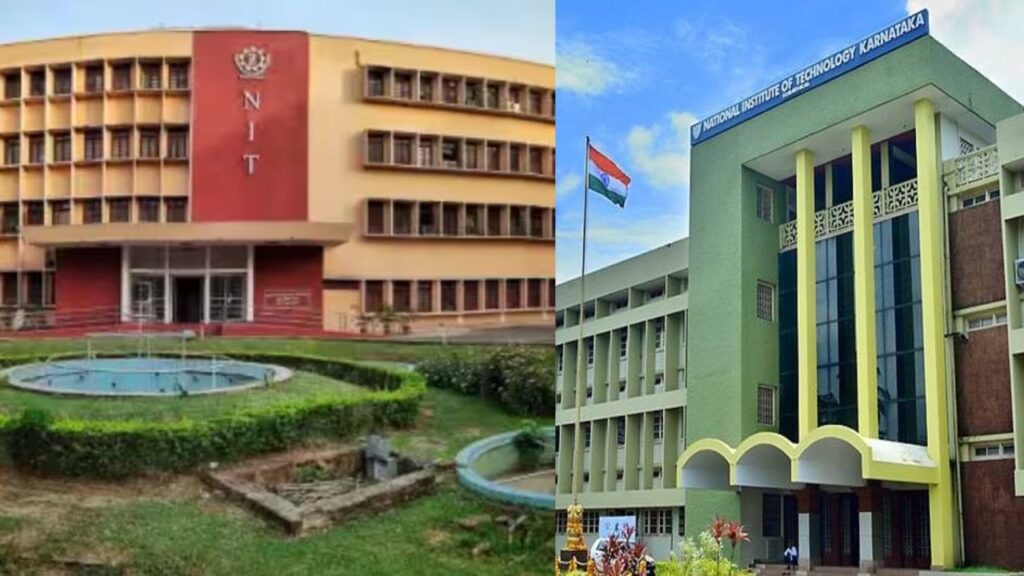
But the story is not all IITs, the NIRF Rankings are not limited to the only IITs. As far as the National Institutes of Technology (NITs) are considered, only NIT Trichy emerges among the top 10 at rank 9 in the list, which speaks about the immense competition in rankings. Following NIT Trichy we have the older NITs like NIT Roorkela, NIT Suralgkal, we have NIT Calicut who all regularly get top 25! 

NIT Roorkela and NIT Suralgkal

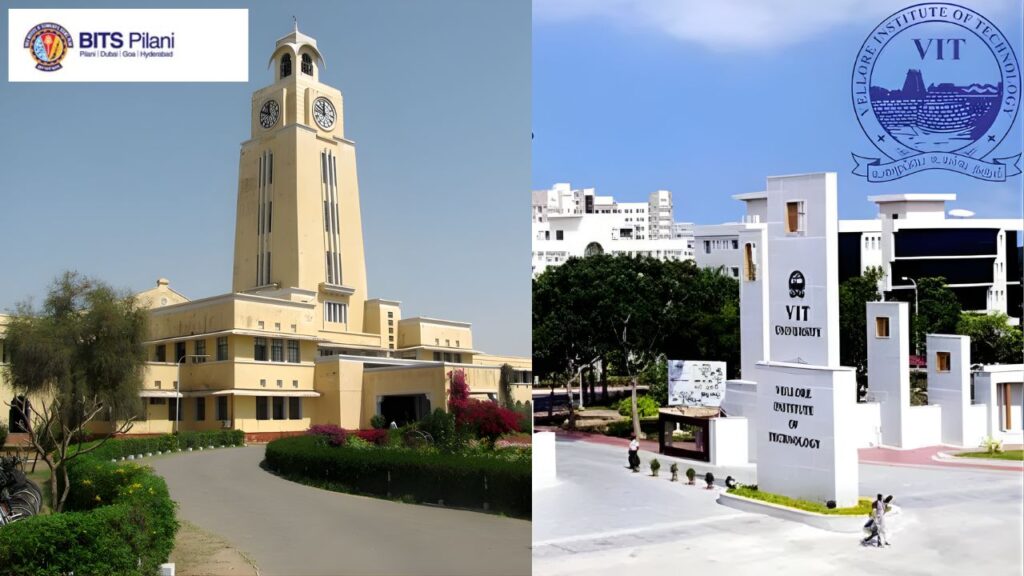
Private institutes have also made a place for themselves, with BITS Pilani at Rank 11 and VIT Vellore at Rank 16 in NIRF 2025. These colleges are no joke, they do provide a world class education and you will have no problem finding employment. 

The Tier System

In addition to the usual rankings, a number of industry insiders grade schools according to tiers based on placement results, presence of recruiters, and number of competitive cutoffs. This gives a more refined sense of the college pecking-order. 

Tier 1 (Premier Institutes) consists of the legendary IITs such as IIT Bombay, IIT Delhi, IIT Madras, IIT Kanpur, IIT Kharagpur, IIT Roorkee, IIT Hyderabad, and IIT Guwahati. These are also engineering colleges which dream destinations for most engineering aspirants. Indian academics are tough and placement records are also excellent.​

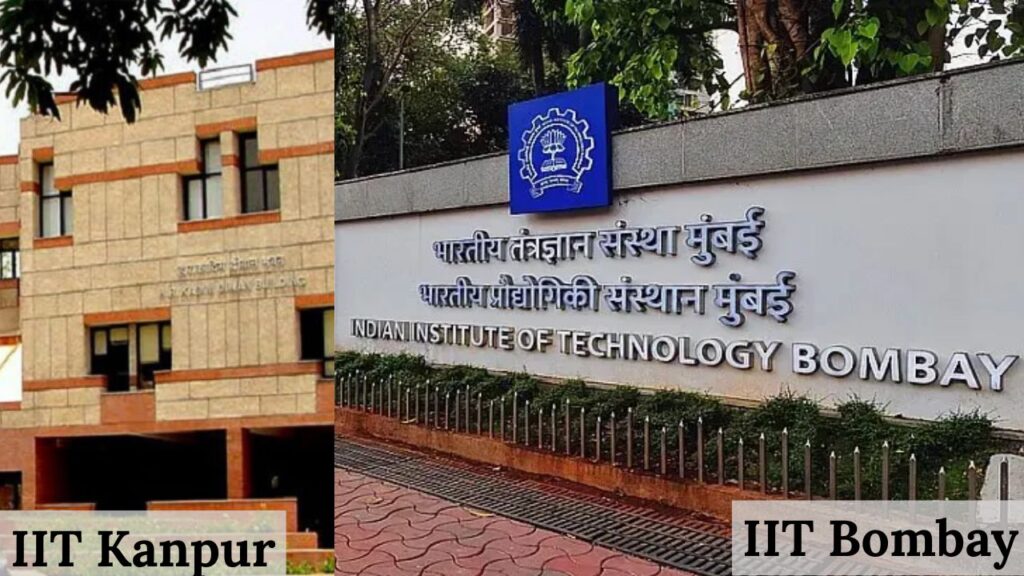
IIT Kanpur and IIT Bombay

Tier 1.5 (Strong and Competitive) has institutes such as IIT BHU (Varanasi), IIT Indore, BITS Pilani, IIT Ropar, IIT Gandhinagar, NIT Trichy, NIT Surathkal, and NIT Warangal. These universities have good academics and employment potential and have gained significant traction in reputation. 

Tier 2 (Well established with Consistent Track Records) Institutes of the second tier like IIT Mandi, IIT Jodhpur, IIT Bhubaneswar, IIT ISM Dhanbad, NIT Rourkela, NIT Calicut, BITS Goa, BITS Hyderabad, and the likes, boast of consistent placement records coupled with strong alumni network. These are established institutes and provide assured opportunities for students for career growth and links with industry.  

Placement Statistics

While selecting a college, the chief concern is usually the placement. Let’s dig into the real figures. The average salary package at IIT Bombay soared to ₹23.5 LPA in the 2024 placement drive, showing a 7.7% rise from last year’s ₹21.8 LPA. The highest package at IIT Bombay soared to a staggering ₹3.67 crore, with 22 students bagging offers scaling the ₹1 crore per annum mark. 

The placement rate for IIT Bombay’s BTech programme is a healthy 74.53%, with 1,475 students placed out of 1,979 registered. Curiously, Computer Science Engineering is the most in demand branch with 230 offers, then closely matched by Electrical Engineering (232) and again by Mechanical Engineering (229).​

The average package at IIT Kanpur hiked up to ₹26.27 LPA, whereas IIT Delhi saw an average package of ₹17.60 LPA with a highest package of ₹2.05 crore. These statistics attest to the amazing value top engineering colleges provide their students. 

Admission Process For B.Tech

Anyone with ambitions to be a part of these institutions should know the process of meteoric rise, which is Understanding the process of admissions is essential for any aspirant who wants to get into these esteemed organizations. The route for BTech admission in India: Your Class 12 results and entrance exams largely decide your fate.​

NIT Trichy

An all India examination termed JEE Main is required to be passed by the candidates for admission to the institutes like IITs, NITs. Candidates are required to qualify in JEE Advanced, which is the next level after JEE Main, for seeking admission to IITs. JEE Advanced for admission to IITs can be attempted only by JEE Main rank holders (JEE Main is qualifying exam for JEE Advanced), and seat allotment in IITs is done on the basis of JEE Advanced ranks alone. 

The eligibility criteria is simple, but important: candidates should have completed class 12th (science stream with physics, chemistry, and mathematics) with minimum marks of 50% to 75% which varies as per the institute and category. For reserved category contenders the qualification is generally 65%.​

Admission Process For B.Tech

The BTech admission schedule is designed in a manner that helps you to plan well in advance. Application period: It may be from November to March of next year, subject to specific entrance examination. 

Entrance exams are generally held in April-June, followed by counselling and seat allotment after the exams then classes usually start around August or September. 

Cutoff Ranks Matters

In top colleges, an applicant with a JEE Main rank less than 5,000 can expect to get one of the top five NITs. For example, NIT Trichy’s Computer Science Engineering has an opening and closing rank of 1000-2000 in general category, NIT Surathkal’s CSE has ranks in the range of 1500-3500. 

General 91-95
EWS 79-83
OBC-NCL77-81
SC 58-62
ST 44-48

Under this category, the likely cutoff percentile for JEE Main 2025 is General (91-95), EWS (79-83), OBC-NCL (77-81), SC (58-62), ST (44-48). But, all these are predictions based on the past year’s trends of the exam, the actual figure of cutoff may be different. 

Popular BTech Specializations

The present day BTech courses are not only confined to traditional engineering branches. Computer Science Engineering (CSE) leads the list as the most preferred branch for a bright career in software development, data science and cybersecurity. 

Popular BTech Specializations

But today the BTech branches in the specializations are far more than the CSE. Mechanical Engineering, Civil Engineering, ECE (Electronics and Communication Engineering), and IT (Information Technology) are still the standard choice but some new fields are emerging that are taking over the engineering world. AI and Data Science, Cyber Security, Cloud Computing, Biomedical Engineering, and Robotics and Automation Engineering are the courses currently making waves owing to high demand in industry. ​

Emerging disciplines such as these are the future of engineering, and firms looking to attract the best graduates in those niche are already hard-pressed to come up with competitive salary packages. 

Understanding the Financial Reality

It is also necessary to consider the expenses related to BTech. The entire course fee amount for government colleges like NITs and IITs is generally between ₹8.35 lakhs and ₹9.17 lakhs which is really affordable considering the kind of opportunities these institutes offer.​

Private universities such as BITS Pilani have much higher fees at ₹23.9 lakh for the full course, although they do have a variety of advantages such as more flexible curricula and better placement results.​

With a low fee structure of ₹8.35 lakh, IIT BHU, Varanasi also has the highest ROI of 239.52%, due to a median package of ₹20 LPA. 

Conclusion

Selecting a BTech college is among the most crucial decisions in your academic life. Despite the importance of rankings and placement statistics, you must keep in mind your interests, what you want to do in your career and your personal circumstances. If you’re going for the elite IITs, the perpetually decently performing NITs, or the private ones like BITS Pilani, do remember that your success depends as much on how hard you work as how good your education institution is.

Start your JEE Main preparation today, aim for a good rank, and keep track of the dates of the admission process. After all the efforts and proper guidance, it’s not going to be long before you’re striding down the hallways of the top engineering colleges in India, ready to make a mark on the world. 

How To Prepare For Railway RRB ALP Exam And Secure High-Paying Government Job

RRB ALP Exam

If you possess this skill to play futures trades on rails or solve complex technical/mechanical problems, those are the two pieces of this dream. Getting the post of Assistant Loco Pilot (ALP) in Indian Railways will make your dream come true. But you must know every detail about RRB ALP Exam to approach it with the right strategy.

With over 11,000 vacancies announced for the 2026 cycle, the competition is going to be fierce. So, the right strategy will not help you become a genius but it will set the game’s rules and manage your time to clear it in a single attempt. 

Let’s break down exactly how you can prepare for the RRB ALP Exam and get a railway job with high salary and career growth.

What Does an Assistant Loco Pilot Do? 

Assisting the main Loco Pilot and making sure that train moves smoothly on their track is Assistant Loco Pilot duty. Engineering related field students are ideal for this job because it requires system maintenance, checking the locomotive’s engine, and fixing technical snags required knowledge. 

This job requires fit and healthy people to make sure that they finish their jobs properly. Most importantly their eye-sight matters the most for RRB ALP posts.

Eligibility Criteria For Assistant RRB ALP Exam

Check your eligibility criteria is important before applying for this position. The Railway Recruitment Board set some rules for the recruiters to ensure they have capable working professionals.

Educational Qualification

You need more than just a regular high school degree. Having 10th class marksheet is mandatory along with: 

  • ITI certificate from an NCVT/SCVT recognized institution in Electrician, Mechanic, Turner, etc.
  • 3-year Diploma in Mechanical, Electrical, Electronics, or Automobile Engineering.
  • B.E./B.Tech Degree in any stream.

Age Limit & Medical Standards

18 to 30 years old candidates are eligible for this job but reserved category candidates will get age relaxation.

Medical standards are non-negotiable, particularly 6/6 vision without glasses, perfect color vision, and no history of night blindness. Eye sight is important while driving a train because safety depends entirely on your sight. 

Railway RRB ALP Selection Process 

You have to clear each of the stages to secure a position. From the first online test, second online test with more depth questions, and Computer Based Aptitude Test. After clearing these tests, you are called for document verification to confirm your position.

Exam Structure and Pattern 

CBT 1 

Total Questions 75 Questions 
Duration60 Minutes 
Negative Marking 1/3rd mark deduction
Core Subjects Mathematics, General Intelligence & Reasoning, and General Science 

CBT 2 

Parts Total QuestionsDurationTopicPassing Score
Part A 100 Questions 90 Mins Maths, Reasoning, and Basic Science & Engineering. 50% of your final merit selection 
Part B 75 Questions 60 Mins Relevant to engineering branch or ITI trade 35% to pass 

CBAT 

It is basically a “Psycho Test,” which means they will check your responses including reflexes, focus, depth perception, and mental calmness under pressure. It covers 50% weightage in your ranking but not negative marking.

Salary and Perks

Indian Railways pays its pilots extraordinarily well. Though minimum pay scale is Rs 19,900 (Level 2 of 7th CPC), actual take home salary is on higher side owing to heavy allowances. 

ComponentApproximate Amount
Basic PayRs. 19,900
Dearness & House Rent AllowancesVaries by location (approx. Rs. 11,000+)
Running AllowanceVaries by km (approx. Rs. 6,000–Rs. 10,000)
Expected Monthly In-Hand SalaryRs. 30,000 to Rs. 45,000

The Corporate Ladder: Career Growth

From the entry level position of Assistant Loco Pilot (ALP) you are going to Senior Assistant Loco Pilot position with departmental exams and experience. Next Loco Pilot (Goods), Loco Pilot (Passenger / Mail) and then move to the higher authority Loco Supervisor / Crew Controller position.

Read More 👉 RRB RPF New Vacancy Notification 2026: Details Explained For RPF Constable

How to Prepare Step-by-Step Plan 

Step 1: Master the Foundational Math & Reasoning

Start with hard chapters and practice them daily and don’t lose focus on long formulas, solve with shortcuts for Arithmetic and reasoning.

Step 2: Fall in Love with NCERT Science

Basic science is not tough, you can easily prepare from Class 9 and Class 10 NCERT textbooks of Physics and Chemistry. 

Step 3: Keep Your Technical Trade Alive

Spend at least an hour every day reviewing your basic engineering books. For clearing CBT, focus on solving previous year question papers to increase your speed and accuracy.

Step 4: The Mock Test Ritual

Answering 75 questions in 60 minutes requires incredible speed. To build that speed, Start giving weekly mock tests early on, and increase the frequency. 

Conclusion 

Clearing the RRB ALP Exam is not for genius but for the disciplined person. Accuracy also plays a vital role in RRB ALP exam because of its negative marking. Make a daily routine, concentrate a lot on science and technical basics, and support your preparation with continuous mock tests. Steady your focus, work consistently and you’ll be running the rails in no time. 

Gemini 4 Argon: How the New AI Model Can Help Students and Teachers

Gemini 4 Argon

Gemini 4 Argon is the new AI model which is specifically designed to handle complex, long-horizon professional workflows. Google announced it on September 30, 2026. It helps students and teachers in advanced reasoning & knowledge work but it is available first to trusted cyber defenders in Google’s Fairwind Program. You cannot switch it on in the Gemini app today.

A Class 12 student preparing for JEE Main sits with 400 pages of handwritten notes. A college lecturer has 90 answer scripts to grade and a lecture to build before Monday. Both are the kind of long, messy, multi-step work that every AI model since 2023 has promised to help with and mostly fumbled halfway through. Gemini 4 Argon is Google’s attempt to fix that, and it launched only days ago.

Everything below about students and teachers is therefore an informed projection from Google’s stated capabilities, not a report from classrooms. Google’s announcement did not include any education-specific features.

What Google Announced About Gemini 4 Argon

Gemini 4 Argon is the first model in the Gemini 4 generation. Google DeepMind’s flagship frontier AI model built for real-world coding, complex knowledge in industries such as software engineering, finance, and legal drafting. It arrives after Google dropped its planned Gemini 3.5 Pro. Google chose to focus on developing Gemini 4 instead.

Three specifics matter for anyone thinking about study and teaching use:

Longer output. Argon’s output limit rises to 1 million tokens, up from 64,000. A token is roughly three-quarters of an English word, so this is about the difference between getting a long essay back and getting an entire textbook chapter’s worth of material back in one go. Exact output ceiling is unconfirmed because Google didn’t publish the full documentation. Vals AI lists a 1M-token context window but caps output at 262K tokens.

Multimodal input. Gemini 4 Argon takes text, image, video and file inputs which suggests that notebook images, tough topics in a recorded lecture and previous year question papers can go in a single chat and give you conclusions.

Sustained multi-step work. Google’s Gemini product lead, Tulsee Doshi, called it an “incredibly well-rounded” model that excels at running long, multi-step tasks. That is the capability most relevant to teachers, and also the one least tested by outsiders so far.

Who Can Use Gemini 4 Argon?

Due to its advanced capabilities—especially in cybersecurity—Google is rolling out Argon cautiously. Access is restricted to select cyber defenders, public institutions, and government pre-release access programs. 

Google says wider rollout will start with paid API customers and Google AI Ultra subscribers, and it has not announced a public release date. Google AI Ultra is the company’s most expensive consumer plan, so even when access widens, free Gemini users and students on cheaper plans may be last in line. Nothing Google has published mentions the free app or the Google AI Pro tier.

Google hasn’t announced a launch date for India, no pricing details, and not any documentation about accessing hindi or regional-language performance. Anyone who tells you a date for India is guessing. As of the latest reports, Google has published no API model ID for Argon.

WHY FREE USERS CAN’T ACCESS THE Gemini 4 Argon?

Google says it can autonomously find, validate, and patch critical software vulnerabilities, which is exactly what attackers would also want, so Google is starting with vetted defenders. That is a reasonable explanation for the staged rollout, though it also means classroom access may arrive later than a pure education product would.

What The Benchmark Numbers Say About Gemini 4 Argon

Most of the figures below come from Google’s own announcement, so independent testing of Gemini 4 Argon is still catching up.

On Vals AI’s index, Argon ranks first with 68.90%, ahead of Claude Sonnet 5.5 at 67.04%. On AutomationBench, Zapier’s test of end-to-end business tasks, Google says Argon ranks first with 51.3%. Google reports 91.7% on LVBench for long-video understanding, the most useful figure, it helps students and teachers in complex topics. 

Independent analysis from Artificial Analysis is more measured. It found Argon matches OpenAI’s GPT-6 Astra on its Intelligence Index at about 60% of the cost per task, at discounted launch prices. The same analysis notes Argon uses far more output tokens per task than GPT-6 Astra, so the savings come from low token prices rather than efficiency. And on one agentic coding test, Argon scored 57% against Claude Sonnet 5.5’s 64%. Argon is competitive, not unbeatable.

How students could use Gemini 4 Argon

Treat the following as plausible uses given what the Gemini 4 Argon model is built to do, not as features Google has announced.

Turning a mountain of material into a study system 

Current AI models will lose the accuracy and logical understanding in long threads or when you provide them huge input sizes. Google designed this model to fill that gap, it accepts syllabus PDF, numbers of images, question paper then structured a revision plan for you. It also analyzes your weak spots and never forgets two hours before conversation. That is the practical meaning of “long-horizon” for a student.

Learning from video 

If the LVBench result holds up in real-world use, that means it is helpful for students to upload a recorded lecture and ask for explanations about depth elements inside the topics which you find hard to understand. Sometimes searching for a particular thing to understand is painful, but recorded lectures can be helpful in this way.

Writing feedback that isn’t generic 

A stronger writing model is most useful for students to write a statement of purpose for a postgraduate application and essay for an English exam. So there won’t be a lot of edits and errors in a context that wastes your time. Google specifically lists creative writing among Argon’s trained strengths.

Already existing Gemini models are weaker but working efficiently, after testing them by giving full-length JEE mock tests to Gemini which was posted on Physics Wallah and Careers360 with immediate feedback and a customized study plan, it proved that those features are available today so no need to wait.

How teachers could use Gemini 4 Argon

Again, these are projections. Google’s announcement is aimed at professionals and developers, not schools.

Marking and feedback at scale

The sustained multi-step ability matters most here. A teacher can upload marking schemes and answer sheets of students to generate draft scores with reasons for a teacher to review. That is a practical workflow of an AI model. Drafting matters because a model that gets 95% of high-stakes board or university papers right still isn’t a reliable grader. It’s a first pass that needs human review.

Lesson and assessment preparation

A teacher can use help to make a lesson plan for a week by uploading chapter’s outline, questions, and also generate differentiated worksheets for stronger and weaker students. It can also make a question paper according to the pattern.  Long output limits help because you can request a full unit in one pass rather than stitching together fragments.

Administrative work 

Argon’s strongest announced use is enterprise knowledge work across documents, which maps onto school and college paperwork: circulars, timetables, attendance reports, accreditation files. It is less glamorous than lesson planning, but it is where teachers lose the most hours.

Where Gemini 4 Argon falls short

Beyond the access limits, there are real reasons to stay cautious.

First, most of the performance claims are Google’s own, and independent testing is limited because the model isn’t broadly available. Google disputes the idea that testing is thin, and told CNBC that employees have been testing Gemini 4 versions for weeks. That is internal testing, which is not the same as the open scrutiny a public release brings.

Second, speed and cost. Vals AI lists a latency of 46 minutes for its full test suite, and the Magai review flags slow responses at high reasoning settings. A student cramming the night before an exam will notice slow.

Third, price. Google’s introductory rates of $2 per million input tokens and $10 per million output tokens will eventually double to $4 and $20. At current rates, that is far below what a school or coaching institute would spend on individual student plans, but it is a developer-facing price, not what a student will pay. Consumer pricing in India has not been announced.

Fourth, the general risk with any AI model in education: confident wrong answers. A model that can sustain long tasks can also sustain a long error. Anything graded, anything citing facts, and any solution to a numerical problem still needs checking against the textbook.

Useful Gadget 👉 Google Launches Fitbit Air in India: Features, Price and Availability

Gemini 4 Argon Also Fits in The Business World

Once access widens, Argon can be accessible for software teams working on real codebases, and analysts and lawyers drafting long filings or pulling evidence out of charts, filings, and video.

Software Engineers & Developers: Teams tackling massive codebases, complex repository-wide migrations, or intricate multi-step debugging will find Argon invaluable. Thanks to its strong performance on coding benchmarks like DeepSWE and its massive output window, it can handle extensive code generation and architectural overhauls in a single trajectory. 

Cybersecurity Professionals: Due to its heavy training in security operations, vetted cyber defenders and authorized security teams (such as those in the Fairwind Program) use Argon to proactively find, validate, and patch vulnerabilities across complex software systems. 

Enterprise Data & Research Analysts: Professionals who deal with document-heavy workflows—such as cross-referencing dense financial disclosures, legal frameworks, or extensive data charts can leverage its multi-step reasoning to synthesize massive amounts of text and data accurately.

AI & Model Evaluation Teams: Organizations and researchers benchmarking cutting-edge frontier models use Argon to test long-horizon reasoning, agentic task execution, and reliability under heavy cognitive loads against competing models like Claude Opus and GPT.

Conclusion

There is no Gemini 4 Argon to log into right now because this model isn’t launched yet. Gemini existing models are also working well for students, so there is no need to wait and buy. But for more complex work and tasks, such as worksheet generation or feedback comments on a single class’s assignments, Argon is needed.

Don’t upgrade a subscription for Gemini 4 Argon, don’t trust any site claiming early access, and check Google’s official blog for the announcement. If your institution is considering an AI tool, ask the vendor for documented accuracy numbers in your subject and language, not a model name.

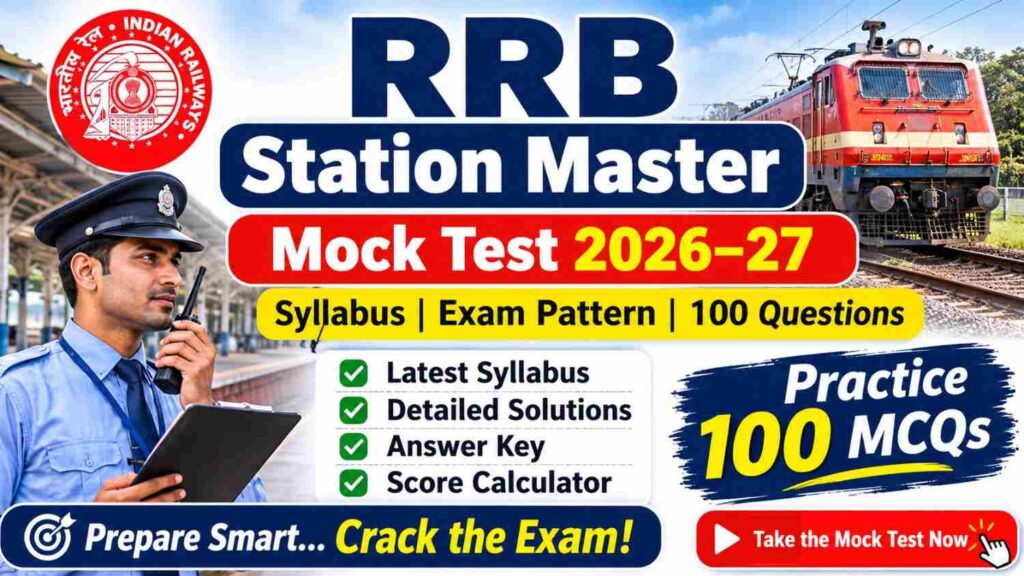
Allahabad High Court RO / ARO / CA Recruitment 2026 For 543 Seats

Allahabad High Court RO / ARO / CA Recruitment 2026

Law students in Uttar Pradesh can hurry to secure their prestigious job in the High Court of Judicature at Allahabad (Prayagraj). This is the most respected High Court in the country, now recruiting candidates for through Allahabad High Court RO / ARO / CA Recruitment 2026 drive for Review Officer which is a higher post among these two, Assistant Review Officer which also has a good salary but lower position than RO, and Computer Assistant (CA) posts. 

You can apply until 21/June/2026 and the exam date will be announced soon. Check the official site of National Testing Agency (NTA) which conducted this exam for a total of 543 vacancies. Whether you’re a student, government job seeker, a working professional, this blog will help you understand if you are eligible, selection process, and pay scale. 

Exam Conducting BodyNational Testing Agency 
PostsReview Officer (RO), Assistant Review Officer (ARO), and Computer Assistant (CA) 
Vacancies543  
Last Date to Apply21/June/2026
Fee payment deadline 22/June/2026 
SalaryUp to ₹1,51,100 
Official WebsiteClick Here

Post-Wise Vacancy Details

The notification of Allahabad High Court RO / ARO / CA Recruitment 2026 covers three distinct administrative posts within the court. The Assistant Review Officer position has more empty seats to fulfil than the other two posts — Review Officer and Computer Assistant. Let’s look into Category-wise breakdowns.

Post NameShort FormVacanciesPay LevelExam Conductor
Review OfficerRO138Level 8NTA (CBT Mode)
Assistant Review OfficerARO380Level 7NTA (CBT Mode)
Computer AssistantCA25Level 4NTA (CBT Mode)
Total—543——

What Does Each Role Do?

Senior Administrative PostReview Officer (RO)Mid-Level Administrative PostAssistant Review Officer (ARO)Technical / IT Support PostComputer Assistant (CA)
Supervises and manages the work of AROs and other staff in the assigned branch of the High Court.Works directly under the Review Officer and assists in day-to-day court administrative functions.Ensure every system works properly from the High Court’s administrative to judicial departments.
Scrutinises legal files, case papers, and judicial orders for accuracy and completeness before they move up the chain.Handles file movement, case listing, and maintenance of court diaries and cause lists.Manage and maintain every data into the digital server to keep it secure.
Position requires experience and intellectual mind to assist judges and judicial officers in related cases.Handling Review Officers documents, notices, and orders accordingly.Operates and maintains any system or devices of the high court.
Prepares summary notes, reports, and dispatches official correspondence on behalf of the court.Assists in maintaining legal records, dispatch registers, and correspondence files.Online tracking of the case and court’s e-court maintained with CA’s help.
Working officially with registry, accounts, and record rooms to ensure smooth workflow.Answers queries from lawyers and people of the particular case.Supports in managing the court’s official website data, cause list uploads, and digital notices.
Every record is moved under the eye of RO as he/she responsible for official records of the branch.Best for beginners to understand the judicial administration process.Responsible for maintaining computer lab infrastructure and providing basic troubleshooting support to staff.
Career Path: ARO → RO → Senior RO → Deputy Registrar (via departmental promotion)Career Path: ARO → Review Officer → Senior Section OfficerCareer Path: Computer Assistant → Senior Computer Assistant → IT Officer

Eligibility Criteria – Who Are Eligible?

Submitting an application isn’t enough if you have missed any of the following from your resume. Check down the eligibility requirement one-by-one for all the posts then apply for the position that fits you.

Educational Qualification

  • For RO & ARO posts: Bachelor’s Degree with computer knowledge & O‑level/DOEACC certificate to work in the office.
  • Computer Assistant (CA): Any Bachelor’s degree along with Diploma in Computer Applications OR BSc (Computer Science)/BCA.
  • Knowledge of Hindi in Devanagari script is generally required for all posts.

Age Limit (as on 01 July 2026)

RO & ARO21 — 35 years
Computer Assistant18 — 35 years
  • SC/ST (UP): Upper age relaxation of 5 years (max 40 years)
  • OBC (UP): Upper age relaxation of 3 years (max 38 years)

Nationality & Domicile

  • Any Indian citizen can apply for the job.
  • OBC, SC, ST, EWS category candidates are applicable only to domicile residents of Uttar Pradesh.
  • Only the general category of other states can apply for this job.

Computer Proficiency

  • A basic computer proficiency certificate/diploma is generally required for RO and ARO posts as part of eligibility under the service rules.
  • For Computer Assistant, a proper knowledge and certificate of Diploma in Computer Applications (DCA) are mandatory OR any degree in computer science/IT.
  • Hindi & English typing speed must be fast because it tests on a selection stage for relevant posts.

Exam Schedule & Key Dates

On 1st June 2026, the application form started to fill out. If you want to apply, complete your application as soon as possible. Check all important dates announced so far. Exam dates for the written test and skill test will be communicated via admit cards on the NTA portal.

Notification Released & Online Application 01/June/2026 
Last Date to Submit Online Application21/June/2026 
Last Date for Fee Payment 22/June/2026 
Admit Card Download To Be Announced 
Examination  To Be Announced 

How You Get Selected

The selection process for all three posts is difficult but once you understand that properful, your mind will be prepared for it. The multi-stage process starts from the written exam and important stage which shortlisted you for the following qualifying skill test and document verification. 

Here’s how the process works:

Stage 1: MCQ-based exam as part one of the paper, conducted in CBT mode by NTA. It covers 200 questions for 200 marks, you must complete in 3 hours 20 minutes. 

Stage 2: Computer Typing Test is the second part of the exam which is conducted on the same day as the written exam for RO/ARO and it gives 50 marks. Test your Hindi and English typing speed and accuracy. 

Step 3: Part B only qualifies you but the merit list is prepared on Part A (CBT) scores, so prepare every topic well enough. Only candidates who clear the skill test (qualifying) are included in the final merit list. 

Step 4: The next stage is document verification for the Shortlisted candidates. The authorities will check your certificates, adhaar, and category documents that must be produced. 

Step 5: Candidates who clear all stages and are found medically fit are issued appointment letters by the High Court Registrar General’s Office.

Exam Pattern : 

Exam TypeSingle Stage Examination (2 Parts on the same day)
PartPart I (Written)
Part Format200 MCQs
Part I Marks200 Marks
Part I SubjectsGeneral Knowledge, Hindi, English, Legal Knowledge, Computer Awareness, General Science, History, Geography, Polity, Economy, Current Affairs
PartPart II (Skill Test)
Part II NatureQualifying
Part II Marks50 Marks
Negative MarkingNot confirmed yet — check the detailed notification

Application Form Step-by-Step Guide

  1. Visit the official site to find “AHC RO/ARO/CA Recruitment 2026” links and click on it.
  2. Make a new registration for yourself and put your valid email or number.
  3. Your account is created after verification through OTP then login.
  4. To enter the rest of the information about yourself, login with the same registration email.
  5. Recheck your details – personal, educational qualifications, category, and the post you are applying for. 
  6. Scan required documents and upload it and pay the application fee – ₹1,200 for General/OBC candidates and ₹1,000 for SC/ST/EWS. 
  7. After successful payment, submit the form and download/print the confirmation page. Keep it safely for future reference.

Read More:- UPSSSC UP Combined Lower Subordinate Services (Graduate Level) Recruitment Process, Eligibility, And Salary

Salary & Pay Scale

The salary will be distributed under 7th Pay Commission structure. In addition to the basic pay, employees are entitled to multiple allowances which significantly boost the in-hand salary.

Review Officer (RO)Asst. Review Officer (ARO) Computer Assistant (CA) 
₹47,600 – ₹1,51,100 ₹44,900 – ₹1,42,400 ₹25,500 – ₹81,100
Pay Matrix Level 8Pay Matrix Level 7Pay Matrix Level 4

Conclusion

The Allahabad High Court RO / ARO / CA 2026 is the highest Ranked job notification in the year in the state of Uttar Pradesh from the UPSC and any other central government agency. The State Judicial Services has notified 543 vacancies and it is one of the best paying jobs under 7th Pay Commission with the stability and prestige of a career in judicial sector, so the rewards and stakes are high. 

Whether you are trying for the senior Review Officer position, the ARO job both entry level and extremely rewarding, or the computer-centric Computer Assistant job – the window to apply is open now and slamming shut in just three weeks. Start your preparation now, keep an eye on the official website and fill the application form accurately in every aspect. 

UPSSSC Agriculture Technical Assistant Preparation: Complete Guide to Cracking AGTA Exam

UPSSSC Agriculture Technical Assistant preparation

If you are an agriculture graduate from UP and want to grab a secure government job, then UPSSSC Agriculture Technical Assistant Preparation is crucial to get this golden opportunities. With 3,446 posts announced recently in the recruitments, this Group-C job with the Department of Agriculture not only offers you secure job in India’s largest state but also a meaningful work in serving the farmers of the state.

But here is the reality check: clearing this exam is not just about being B.Sc. The competition is stiff, the syllabus is vast and the exam pattern itself has some quirks that can take you by surprise. Having reviewed the new notification and strategies adopted by the successful candidates, I have tried to make this guide exhaustive to help you in your preparation journey. 

Are You Qualified?

You must fulfill the UPSSSC Eligibility Criteria to apply for the UPSSSC. As on the date of notification, your age should be 21 years to 40 years. But the SC/ST/OBC candidates are allowed to get the relaxation on age as per the rule of the state government. Applications received from ineligible candidate(s) will be rejected, so check your eligibility before applying. 

Degree: Graduation in the Agricultural field is required as your knowledge is beneficial for a job. It must come from a recognized university or college.

List of course are good choice for your degree:

  • B.Sc. (Hons.) Agriculture
  • B.Sc. Horticulture / B.Sc. (Hons.) Horticulture
  • B.Sc. Forestry / B.Sc. (Hons.) Forestry
  • B.Tech (Agriculture Engineering)
  • B.Sc. (Hons.) Science from a University of Agriculture and Technology

The PET catch: Since 2022, UPSSSC has made the UP Preliminary Eligibility Test (PET) mandatory for every candidate to pass this exam with required score then applying for any main exam of AGTA.

Exam Pattern Decoded

There are no multiple phases for the AGTA, you just have to clear this one and the powerful UPSSSC Agriculture Technical Assistant recruitment exam with document verification and grab your chance for a government job. 

  • Total Questions: 100 objective-type MCQs
  • Total Marks: 100 
  • 1 Question = 1 Mark
  • Duration: 2 hours 
  • For incorrect answer, ¼ mark will be deduct

This marking system indicates that you need accuracy in your answer rather than attempting.

Subject-wise Distribution

SubjectQuestionsMarks
Crop Science2525
Biotechnology, Plant Breeding & Crop Physiology1010
Soil & Water Conservation1515
Agriculture Extension55
Agriculture Economics & Schemes55
Dairy & Animal Husbandry55
Computer Concepts & IT1515
General Information of Uttar Pradesh2020
TOTAL100100

What You Actually Need to Study

Part 1: Core Agriculture (65 Marks)

Crop Science involves the Study of various cereals, pulses, and oilseeds and also covers modern agricultural practices such as integrated, natural and organic farming. So you have to know about seed production, about pest management, about post-harvest technology and storage systems. Let’s get real—what is a field officer going to tell farmers?

Biotechnology & Plant Breeding covers Genetics Concepts, Photophosphorylation, Respiration, and Plant Metabolism. ISE don’t memorize definitions; actually understand what biotechnology is and how it works, and how it’s used in agriculture now.

Soil & Water Conservation involves Master soil properties, erosion control, fertilizer classification, irrigation, and watershed management.. I think the 15 questions are generally easy if you have your basics clear.

Agriculture Extension covers rural development concepts, farmer’s schemes issued by the Government, and training methods. This ties right into what you’re doing in your future job.

Agricultural Economics has MBA contents such as MSP (Minimum Support Price) of various Crops, Agriculture commodities trading, import-export strategies and UP’s One Trillion Economy plan. Be a regular user of agri policies.

Dairy & Animal Husbandry includes a lot of practical training but what’s the right way to do Animal Breeds, Feed management, Milk production, Poultry farming, Diseases management. Even if you were a crop science major, don’t sleep on this 5-mark question. 

Part 2: Computer and IT (15 Marks)

This isn’t just basic computer know-how anymore. The syllabus cover crucial IT related questions which means you need study hard:

  • It involves from Hardware, software and operating system to MS Word and MS Excel operations
  • Internet Protocol and Email Management
  • Digital financial instruments and e-Governance
  • New technologies – AI, Machine Learning, Big Data, IOT and India’s IT feats

You don’t have to think that new technologies are not needed, the first rule for the tech engineer is opting for new technologies every year. So, AI and Machine Learning are now part of an agriculture exam. The UPSSSC needs officers with a flair for technology who can put traditional farming together with digital India. 

Part 3: UP General Knowledge of 20 marks

To succeed in this field, one should have deep knowledge of history, culture, art and architecture of Uttar Pradesh. A good understanding of its physical geography with its climatic differences, soil groups, forest, wild life and mineral resources, will be found helpful. 

Also, a good knowledge of the state economy in terms of agriculture, industry and commercial conditions is essential. Keeping abreast with the day’s news and the work of the state government you shall further enrich yourself and make yourself even more capable. 

Selection Process

After clarifying the written test, candidates need to verify their documents (ID, Marksheets, DOB certificate, etc). The written test passing score is depending on your category. Final merit list will be made upon these scores not on interview as there is no interview.

UPSSSC Agriculture Technical Assistant Preparation Strategy

Crop Science and Soil Science is a very important part as they hold maximum marks in the exam. So, prepare well with understanding, not rote learning. BSc notes and NCERT agriculture textbooks are very helpful as resources for your study.

  • After clearing your basics, dive deeper with “A Textbook of Agricultural Field Crops” by V. Venkataraman to prepare for the Crop Science subject. 
  • And “Soil Science” by D.K. Das is a perfect option for Soil Science.
  • Many students recommended “Uttar Pradesh General Knowledge” by Dr. C.L. Khanna for increasing UP knowledge.
  • Try Youtube or free resources online to learn about Computers assets and other new techs related to the agriculture field.

The last Months 4-6 is given for the Practice & Revision of previous year papers for making a speed to solve fast in the exam. Weekly mock tests are best for your preparations. Everything is available on the internet, so do not stress about the resources. To avoid mark deduction, master to Maintain an error log.

Read More:- BSNL Recruitment 2026: Apply Online for 120 SET Vacancies, Eligibility & Full Details

What Makes This Exam Challenging?

There is a strategy and of course general scoring strategies are applicable too that candidates must follow to win in this agriculture based exams. What several candidates tend to miss is the fact there are non-agricultural parts like Computer (15 marks) and UP GK (20 marks), which have a big weightage of marks. Disregarding these can drastically hit your overall results.

How to approach the Stage II exams, Time Management is very helpful for Effective preparation. Although two hours is more than enough time, candidates often find themselves stuck on difficult questions, for instance in biotechnology, with not enough time left at the end to tackle items such as UP GK. so that way you can avoid that.

Also, academic knowledge from one’s degree is no place to rely on. The focus is not on theoretical understanding, but on practical application and problem-solving at field level. 

Before you start preparing for the AGTA exam, you must be aware that you must meet all the eligibility requirements (like qualifying the PET) for the same. Non-compliance of such requisites may result in jeopardizing a candidate’s whole preparation and risk that nothing has been achieved in all those years toiling. A complete scan of the eligibility dates is hence highly recommended to avoid any last minute surprises. 

Conclusion

The UPSSSC Agriculture Technical Assistant is one such post which will help in this regard. The active UPSSSC Agriculture Technical Assistant Recruitment 2026 Advertisement is a good opportunity for the job seekers. You should go for 6-8 Months UPSSSC Agriculture Technical Assistant Preparation to increase your chances of selection and should Follow the Syllabus Strictly. Your position on the merit list can be decided by the marks obtained. Get started on your preparation now with full dedication and consistency to get success in this very competitive selection. 

Scroll to Top