RRB NTPC Syllabus 2025: CBT 1 & 2 Detailed Exam Pattern

The RRB NTPC is a competitive exam for candidates recruitment in various roles. The goal of this examination is to fill 11,558 vacancies in non-technical sectors. The massive recruitment of over 12 million applicants includes both graduate and undergraduate candidates. The selection process is multi-staged, having two computer-based tests following up the typing or aptitude skill test, document verification, and medical examination (for certain posts like railway). This rigorous process ensures that only the most capable and well-prepared candidates secure a position in the Indian Railways.

To crack this exam candidates must prepare by understanding the latest syllabus and exam pattern of the examination. The exam pattern is designed to assess the ability of the candidate for such roles as Station Master, Goods Train Manager, Senior Clerk cum Typist, Junior Clerk cum Typist, and many more. Candidates must be proficient in General Awareness, Mathematics, and General Intelligence & Reasoning, with each stage testing different aspects of knowledge and aptitude.

Stages of selection

To recruit the most qualified candidates they structured the process in multiple stages for various non-technical posts. The First stage includes a Computer Based Test, a common screening round for all applicants. This stage covers the topics of General Awareness, Mathematics, and General Intelligence & Reasoning. Candidates must clear the CBT-1 to get their name in the shortlist for the next round.

Second Stage following up the more advanced topics in the subjects to ensure the ability of the candidate. Candidates must clear this second stage with a higher level of difficulty of the questions and more questions. Those who clear this stage are eligible for subsequent skill-based assessments.

The Next stage requires the skill test of the candidates for which they were applied. Some Job posts are required to pass the typing skill test to clear the stage they must score better in this stage. The Typing Skill Test is mandatory for clerical posts, evaluating candidates’ typing proficiency. Posts like Station Master and Traffic Assistant have to take aptitude tests for operational roles.

The Last stage is for the shortlisted candidates who passed the above stage and now time to proceed with the document Verification and then the Medical examination to ensure the candidates are perfectly fine to join the organization or department. Only those who qualify in all these stages are considered for final appointment.

RRB NTPC Exam Pattern 2025 (Subjects, Marks, Duration, and no of questions)

Exam StageSubjectsNumber of QuestionsTotal MarksDuration
CBT 1General Awareness,Mathematics,General Intelligence & Reasoning10010090 minutes
CBT 2General Awareness,Mathematics,General Intelligence & Reasoning12012090 minutes

Negative marking: The candidate should be aware of negative markings for the question. 1/3 mark is deducted for every wrong answer. While the correct answer gets you 1 mark. Negative marking applies to both CBTs. 

Language: This exam is available in multiple languages. Candidates can choose a regional language from different regions can also attempt this exam. The primary languages include English and Hindi. For the Computer-Based Aptitude Test (CBAT), the question paper is provided only in English and Hindi.

Also Read : RRB NTPC Graduate Admit Card Out! Direct Link To Download Hall Ticket Now

Subject-Wise Number of Questions and marks for RRB NTPC

SubjectCBT 1: No. of QuestionsCBT 1: MarksCBT 2: No. of QuestionsCBT 2: Marks
General Awareness40405050
Mathematics30303535
General Intelligence & Reasoning30303535
Total100100120120

Detailed Syllabus for RRB NTPC 2025

It is structured in a way that helps evaluate the candidate’s proficiency in Mathematics, General Intelligence & Reasoning, and General Awareness. Both CBT-1 and CBT-2 contained the same syllabus, the key difference is there are more questions in CBT-2 and harder-level questions. Let’s break down the topics of each subject that will help you to maintain the learning pattern.

Mathematics

This sections includes basic quantitative skills enhancing topics like Number System, Decimals & Fractions, LCM & HCF, Ratio and Proportion, Percentage, Mensuration, Time and Work, Time and Distance, Simple & Compound Interest, Profit and Loss, Algebra, Geometry & Trigonometry, Elementary Statistics, and Data Interpretation. 

General Intelligence & Reasoning

This section has reasoning topics to check the candidates’ logical thinking and the ability to assess their skill in problem-solving. The important topics are Analogies, Number & Alphabet Series, Coding-Decoding, Mathematical Operations, Similarities & Differences, Blood Relations, Analytical Reasoning, Syllogism, Jumbling, Venn Diagrams, Puzzles, Data Sufficiency, Statement-Conclusion, Decision Making, Maps & Graph Interpretation. To prepare for this subject you must practice logic-related questions daily to crack the exam.

General Awareness

General Awareness means how much you observe the changes and updates around yourself. It must be national or international but have high value for government jobs. You must prepare well in this subject for higher scores. Current Affairs (National & International), Indian History & Freedom Struggle, Geography (India & World), Indian Polity & Governance, Indian Economy, General Science (Physics, Chemistry, Biology), Art & Culture of India, Sports, Computer Basics & Applications, Important Organizations (UN, WHO, etc.), Government Schemes, and Static GK.

Conclusion

Here is the updated syllabus for the candidates who want to crack the RRB NTPC examination. This exam is conducted to recruit candidates for non-technical posts in the government sector. This structured RRB NTPC Syllabus 2025 will help you crack the exam.


Leave a Comment

Your email address will not be published. Required fields are marked *

Railway RRB ALP Admit Card 2026: Download Now From Direct Link

Railway RRB ALP Admit Card 2026

The Railway RRB ALP Admit Card 2026 for the CBT 1 is live on the official website for the candidates who have applied for the post can now download the admit card from below and appear for the exam to get a dream job in the Indian Railways. Upon its schedule from 13 February 2026, the admit card is the official ticket telling off that you are going to the exam hall. 

If you have been studying for this exam for months, it’s time to calm down, stay focused, and get organized. Download your hall ticket well in advance and check all the particulars in it thoroughly and also make arrangements to link your transport to the examination centre. 

Now, with a total of 9,970 ALP vacancies to be filled and lakhs of candidates competing for them, every little step now matters — and it all begins with your hall ticket. 

Quick Exam Schedule Guide

StageDetailsTimeline/Status
CBT 1 ExamHeld RRB-wise for 9,970 total vacancies16—-18/February/2026 
CBT 1 Admit CardsReleased online via regional RRB sitesOut since Feb 9, 2026
CBT 1 ResultsMerit lists prepared with normalization for multi-shiftsExpected 2-3 weeks post-exams
CBT 2 ShortlistingAround 150,000 total candidates shortlistedBased on CBT 1 merit
CBT 2 City SlipAdvance info on exam city3-4 days before CBT 2 (pattern-based)
CBT 2 Admit CardDownload from regional sites3-4 days before test date
CBT 2 TentativePer RRB Calendar 2026March—April/2026

Railway RRB ALP Admit Card 2026 Release Update

The Railway RRB ALP Admit Card 2026 has been released on 09th February 2026 on all the regional websites of Railway RRB. This is in regard to the Computer Based Test (CBT 1) to be held on 13, 16, 17 and 18 February. There are no hard copies to be sent—it’s all online, so don’t wait till the last moment. Thousands of aspirants registered for a total of 9,970 vacancies, so this was a golden chance in Indian Railways. 

Read More 👉 BSc Radiology and Imaging Technology: Course, Eligibility, Fees & Career

Step-by-Step Download Guide

The process of downloading is simple, just make sure you follow the steps properly to avoid bugs:

  1. Go to your regional RRB site (like rrbcdg.gov.in for Chandigarh, rrbapply.gov.in for Hyderabad) or the consolidated link at rrb.digialm.com.
  2. Click on the ”RRB ALP CBT 1 exam admit card 2026″ link.
  3. Fill in the Registration Number/User ID and Password/Date of Birth.
  4. Hit “Submit” or “Login,” and your hall ticket will pop up.
  5. Check the details, download the PDF and take 2-3 printouts. Save your backups!

Pro tip : If you panic, forget your password, just click on “Forgot Password” right there. Test Your Login Early to Avoid Getting Clogged Up on Exam Eve. Test your login early to dodge any server rush issues on exam eve. 

What’s Inside Your Admit Card

DetailWhy It Matters
Candidate’s NameConfirms identity
Roll/Registration No.For entry and verification
Photo & SignatureMust match your ID
Exam Date & ShiftNote reporting time (usually 1-2 hrs early)
Centre AddressPlan your travel now
Duration & InstructionsCBT 1 is 60 mins, 75 questions
CEN No. (01/2025)Links to your application

Documents to Carry in Exam 

Remember to carry these following document as it is get you enter the examination hall:

  1. Bring a hard copy of your admit card and a recent passport size photograph. 
  2. a valid original photo ID for verification.
  3. Black or blue ballpoint pen.

Please note:

  • Accessories, bags, and eatables are strictly prohibited in the examination centre.
  • The gate will be shut prior to 8-9 AM, even if you have a late shift.
  • Further stages after CBT 1 are: CBT 2, CBAT, document verification (DV), and medical examination. 

Exam Pattern

PartSubjectsQuestionsMarksDurationNotes
AMathematics, Logic & Reasoning, General Science 10010090 minsQualifying cut-offs: 40% must secure by UR/EWS category candidates/ above 30% for OBC/SC/ 25% for ST 
BRelevant Trade (qualifying only)757560 minsMust pass Part B to proceed
Useful Links
Download Admit CardClick Here
LoginClick Here
Official WebsiteClick Here

RRB Station Master Vacancy 2026: Eligibility, Apply Online

RRB Station Master Recruitment 2026

RRB published a short notice for RRB Station Master Recruitment 2026 on its official website. Candidates who are eligible for the post can apply when the application portal gets open between 27 October 2026 to 25 November 2026. Prepare your official documents that are required to attach with the application.

ItemDetails
RecruitmentRRB Station Master Recruitment 2026–27
NotificationCEN No. 08/2026
VacanciesApproximately 1,265
Apply Now Click Here
Official websitesrrb.indianrailways.gov.in / rrbapply.gov.in
Pay levelLevel-6, 7th CPC; basic pay ₹35,400 per month plus allowances
SelectionSingle-stage CBT, CBAT, Document Verification, Medical Examination 

There has been a development in Station Master recruitment, it is being conducted separately for all 21 RRBs and is not part of the regular RRB NTPC recruitment. But the selection process is the same – CBT, CBAT, Document verification and medical exam. The total vacancy is about 1,250.

See Full Detailed New RRB Station Master Syllabus 2026

RRB Station Master Recruitment 2026 Timeline

EventDate
Short notice released21 October 2026
Detailed notification expected26/27 October 2026
Online application starts27 October 2026
Last date to apply25 November 2026, 11:59 PM
Exam DateUpdate Later

Application Fee

  • General/OBC/EWS: ₹500 
  • SC/ST/PwBD: ₹250 
  • Candidates should confirm the refund amount and rules before submitting the application fee. The refund is expected to be around Rs.400 for general and Rs.250 for reserved category candidates.

Educational Eligibility 

The detailed educational qualification will be known after the full notification for RRB Station Master is published before the application process. 

Basic education requirement: candidates must hold a graduation degree in any disciple from a recognized university. There is no minimum score declaration yet.

Age Limit to Apply For Station Master

CategoryExpected age limit
UR / EWS20 to 30 years 
OBC-NCL20 to 33 years (3-year relaxation) 
SC / ST20 to 35 years (5-year relaxation) 
PwBDSubject to post suitability and medical standards; confirm in detailed CEN 
Ex-servicemenAs per applicable Railway recruitment rules 

What Are The Medical Standards for Station Master

A candidate must be good and fit to apply as station master. The Station Master requires A-2 medical standard so make sure you have:

TestRequired standard for Station Master
Distant vision6/9, 6/9 without glasses; no fogging test 
Near visionSnellen 0.6, 0.6 without glasses 
Colour visionMust be normal; tested using Ishihara charts 
Binocular visionMust pass 
Field of visionMust pass 
Night visionMust pass 
MyopiaMust meet prescribed myopic-vision requirements

You should know that candidates who have low distant-vision are generally allowed for Glasses/contact lenses. The post requires standard specified 6/9 vision without glasses. Color blindness candidates are not eligible. I suggest you test your eye-sight before applying for this position. 

How to Apply for RRB Station Master Recruitment 2026

Wait for the 27 October 2026 to open the application portal then you can fill out your details but check the official notification before applying. 

  1. Open the RRB website and search for the Station Master application link after 27 October.
  2. Read the detailed notification and if you are eligible for this position, click for new registration.
  3. Verify your email and mobile number then login again. 
  4. Fill out the details correctly including personal details, highest education, and preferences then recheck every spelling or error so your application won’t be revoked later.
  5. Upload your ID, sign, photo, and required certificates in a mentioned format and size.
  6. Preview then submit. Pay the amount that is required to complete the process.
  7. Download and save the copy of the application for future references.

Documents Required:

  • Aadhaar card with updated photograph and biometrics.
  • Class 10 certificate for name and date of birth.
  • Graduation degree or provisional certificate, as applicable.
  • Category certificate for SC/ST/OBC/EWS, if applicable.
  • PwBD, ex-servicemen, minority, or EBC certificate, if claiming that category.
  • Recent passport-size photograph and signature in the prescribed digital format.
  • Valid mobile number, email ID, and online payment method.

RRB Station Master Salary

Once you pass all four stages of recruitment, the starting salary would be around Rs. 35,400 per month which raises later with experience. This is Pay Level-6 post under the 7th Central Pay Commission but in-hand salary station master get is around Rs. 67,684 including allowances.

Conclusion

RRB Station Master recruitment 2026 are announced with a short notification but detailed notification will be published on 27 October 2026 with clear eligibility criteria for candidates. Until then, prepare your health and test your eye-sight to avoid wasting time later. RRB follows the strict rules so it is hard to secure a position in a railway sector. 

Once you fill out the RRB Station Master recruitment application, check the exam pattern and syllabus to clear the CBT exam. The selection process has four stages: CBT, CBAT, document verification and medical exam. Candidates have to pass all the stages to get selected.

Best Government Jobs in Kerala in 2025

If you are looking for a government job in Kerala, then many great opportunities are available for you in 2025. In Best Government Jobs in Kerala in 2025, you can get a good career with high salary, job security, and respect. Kerala government releases recruitment in many departments every year such as Police, Health, Education, Agriculture, and Administrative Services.

Whether you are 10th pass or graduate, many types of government jobs are available for you in Kerala. You can apply for these recruitments through Kerala Public Service Commission (KPSC). Below we have given a list of top 15 government jobs in Kerala which includes details of job title, department, eligibility and official website. This table will help you in choosing the right job for you.

Top 15 Best Government Jobs in Kerala in 2025

S.No.Job TitleDepartment/OrganizationEligibilityOfficial Website
1Kerala Administrative Service (KAS) OfficerKerala Public Service Commission (KPSC)Graduate Degreehttps://www.keralapsc.gov.in
2Sub Inspector of PoliceKerala Police DepartmentGraduate + Physical Standardshttps://keralapolice.gov.in
3Assistant Engineer (Civil)Kerala PWDB.Tech in Civil Engineeringhttps://pwd.kerala.gov.in
4Junior EngineerKerala Water Authority / Local Self GovtDiploma in Engineeringhttps://kwa.kerala.gov.in
5Forest Range OfficerKerala Forest DepartmentB.Sc. in Forestry/Science Subjectshttps://forest.kerala.gov.in
6Staff NurseKerala Health ServicesGNM/B.Sc. Nursinghttps://dhs.kerala.gov.in
7Higher Secondary School TeacherKerala Department of EducationPG + B.Ed + SEThttps://education.kerala.gov.in
8Clerk/TypistKerala PSC / Secretariat12th Pass + Typinghttps://www.keralapsc.gov.in
9Village Field AssistantRevenue Department10th Passhttps://www.keralapsc.gov.in
10Assistant Prison OfficerKerala Prisons and Correctional Services12th Pass + Physical Standardshttps://keralaprisons.gov.in
11Assistant Public ProsecutorKerala Law DepartmentLLB + Bar Council Registrationhttps://kerala.gov.in
12Assistant Director (Agriculture)Kerala Agriculture DepartmentB.Sc./M.Sc. in Agriculturehttps://keralaagriculture.gov.in
13FiremanKerala Fire and Rescue Services12th Pass + Physical Fitnesshttps://fire.kerala.gov.in
14Assistant Grade IIKerala State Co-operative BankGraduate Degreehttps://keralacobank.com
15Lab TechnicianKerala Medical Services CorporationDiploma/Degree in Lab Technologyhttps://kmscl.kerala.gov.in

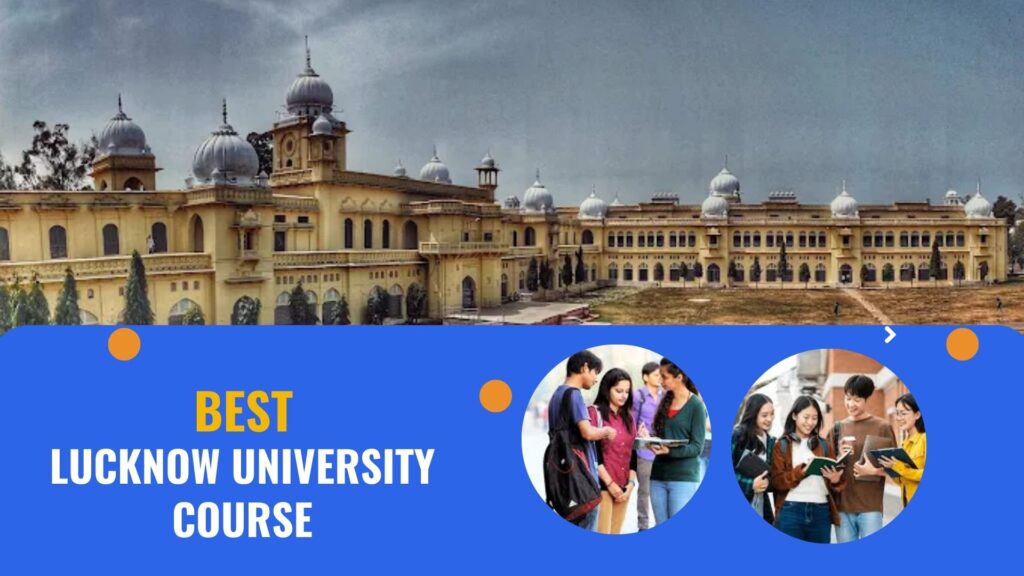
Discover the Best Lucknow University Courses in 2025 – UG, PG, Diploma & More!

Best Lucknow University Courses – Top UG, PG, Diploma & Professional Programs 2025

Lucknow University is one of the oldest and most respected universities in India. Many students dream of studying here. If you want to know about the best Lucknow University courses in 2025, this article is for you. We will talk about the main courses at undergraduate (UG), postgraduate (PG), and diploma levels. We will also look at some popular professional courses. This guide will help you find the right course for your future.

Main Types of Lucknow University Courses

  • Undergraduate (UG) Courses
  • Postgraduate (PG) Courses
  • Professional and Vocational Courses
  • Diploma and Certificate Courses

Let’s explore each type.

Undergraduate (UG) Courses at Lucknow University

Undergraduate courses start after class 12. These courses help you build basic knowledge for your career. Here are some of the best UG Lucknow University courses:

Bachelor of Arts (BA)

The BA is a famous course. You can choose subjects like:

  • Hindi
  • English
  • History
  • Political Science
  • Sociology
  • Economics

The course is for three years. There are many subject combinations, so you can pick what suits your interest best.

Bachelor of Science (BSc)

This course is good for students who love science. The BSc at Lucknow University comes with many subjects like:

  • Physics
  • Chemistry
  • Mathematics
  • Botany
  • Zoology
  • Statistics

BSc is a three-year full-time course. There are also special groups like BSc (Physics, Chemistry, Mathematics) or BSc (Botany, Zoology, Chemistry).

Bachelor of Commerce (BCom)

BCom is best for students interested in business, finance, or accounting. At Lucknow University, you learn subjects like:

  • Accountancy
  • Business Law
  • Economics
  • Management

BCom is a three-year course and gives you great career options in banking, finance, and business.

Bachеlor of Computеr Applications (BCA)

BCA is for thosе who want to work in computеrs and IT. You lеarn softwarе, programming, and computеr basics. It is a popular Lucknow Univеrsity coursе for tеch lovеrs. Thе coursе is for thrее yеars.

Bachеlor of Businеss Administration (BBA)

If you drеam of managing a businеss or bеing a lеadеr, BBA is thе right choicе. You will study businеss, markеting, financе, human rеsourcе, and morе. BBA is a thrее-yеar coursе at Lucknow Univеrsity.

Bachеlor of Laws (LLB and BA LLB)

LLB is for studеnts who want to bеcomе lawyеrs. Lucknow Univеrsity offеrs both thrее-yеar (aftеr graduation) and fivе-yеar (aftеr class 12) coursеs. You will lеarn about Indian law, constitution, criminal law, human rights, and othеr law-rеlatеd topics.

Bachеlor of Education (BEd)

If you want to tеach, BEd prеparеs you for a carееr in schools. This is a two-yеar coursе aftеr graduation. It tеachеs you about tеaching mеthods, child psychology, and classroom managеmеnt.

Bachеlor of Finе Arts (BFA)

BFA is for crеativе studеnts intеrеstеd in painting, sculpturе, or appliеd art. It is a four-yеar coursе. Lucknow Univеrsity givеs you modеrn and classical art training. 

Bachelor of Journalism and Mass Communication (BJMC)

BJMC teaches skills for journalism, mass media, and communication. It is a great course for students who want to become reporters, news editors, or work in media houses.

Postgraduate (PG) Courses at Lucknow University

After graduation, you can do PG courses. These courses give you deeper knowledge and better job options. Here are some of the popular PG Lucknow University courses:

Master of Arts (MA)

You can choose from subjects like:

  • Hindi
  • English
  • History
  • Political Science
  • Sociology
  • Psychology
  • Economics

MA is usually a two-year course. It gives you in-depth subject knowledge.

Master of Science (MSc)

MSc is best for science graduates. Subjects include:

  • Physics
  • Chemistry
  • Mathematics
  • Zoology
  • Botany
  • Statistics

This course sharpens your skills for research or teaching careers.

Master of Commerce (MCom)

MCom is for students who want to work in finance, banking, or accounts. The course covers subjects like advanced accountancy, business management, and financial studies.

Master of Business Administration (MBA)

MBA helps students take up high-level jobs in business, marketing, or management fields. You learn about Human Resources, Finance, Marketing, International Business, and more. MBA is a top-rated Lucknow University course and has high value.

Master of Computer Applications (MCA)

MCA is good for tech and computer graduates. It teaches about advanced computer programming, networks, and software. MCA is a two-year PG course.

Master of Laws (LLM)

This PG course is for law graduates. Students can select specializations like:

  • Constitutional Law
  • International Law
  • Corporate Law
  • Criminal Law
  • Environmental Law

LLM helps in building expert knowledge in law.

Master of Social Work (MSW)

MSW is for those who want to help people and do social service. The course trains you in working with communities, helping children, and working for social causes.

Master of Education (MEd)

For those who already have a BEd, MEd makes you an expert in education and teaching.

Popular Professional Lucknow University Courses

Lucknow University has many professional courses. These courses are designed for fast jobs and skilled work.

  • Bachelor of Pharmacy (BPharma): For working in medical and pharma companies.
  • Bachelor of Technology (BTech): Lucknow University offers Computer Science and Artificial Intelligence as main branches.
  • Bachelor of Law (LLB/BA LLB): For legal practice or judiciary.
  • Bachelor and Master of Business Administration (BBA/MBA): For careers in business, human resources, retail, and finance.
  • Bachelor of Computer Applications (BCA): For software and IT industry.
  • Bachelor of Journalism and Mass Communication (BJMC): For media, public relations, and journalism careers.
  • Master of Social Work (MSW): For social service, NGOs, and government roles.

These Lucknow University courses give you practical skills that are needed in jobs right after graduation.

Engineering and Technology Courses

Lucknow University offers BTech courses in fields like:

  • Computer Science and Engineering
  • Artificial Intelligence

These engineering courses are in high demand. You get updated labs, good teachers, and industry exposure. BTech at Lucknow University is a four-year course and opens doors to IT, government, and private jobs.

Read More 👉 Best Nursing Colleges in Lucknow with Fees, Courses & Admission 2025

Management Programs

If you want to lead teams or companies, these are popular choices:

  • BBA: For business basics at UG level.
  • MBA: For high-level management, finance, marketing, and HR skills.

Lucknow University’s MBA program is known for good placements and modern teaching.

Law Programs

Law is one of the oldest faculties at Lucknow University. These are major law Lucknow University courses:

  • LLB (Three Years): For graduates.
  • BA LLB (Five Years): After class 12.
  • LLM: For those who want to do research or become experts in the legal field.

Students can learn about Indian law, legal techniques, and courtroom skills.

Computer and IT Courses

Computers and information technology are important today. These courses include:

  • BCA: Basics of computer applications for UG students.
  • MCA: For PG students who want deep knowledge in computers.

You learn computer languages, programming, and web development.

Science Courses

Science has many UG and PG courses. Lucknow University offers:

  • BSc: Physics, Mathematics, Botany, Zoology, Chemistry, and Statistics.
  • MSc: The same branches are available at PG levels, with more focus on research and practicals.

These Lucknow University courses are best for students who want to work in labs, hospitals, research centers, or teach in schools.

Arts and Humanities Courses

If you like literature, history, or languages, you can choose:

  • BA: Hindi, English, History, Economics, Psychology, Philosophy, and Political Science.
  • MA: Any of those subjects for advanced study.

These courses help you prepare for teaching, civil service, or further research.

Commerce and Management Courses

Commerce students can study:

  • BCom: UG level, building basics in commerce, accountancy, and business.
  • MCom: PG level, advanced studies in finance, accounts, and management.

Many students pick these Lucknow University courses to work in business, banking, or government jobs.

Diploma and Certificate Courses

Lucknow University offers diplomas and certificates in many fields. These short courses give you job skills fast. Some diploma courses include:

  • Diploma in Computer Applications
  • Diploma in Yoga
  • Diploma in Business Management
  • Certificate courses in foreign languages like French and German

These Lucknow University courses are good for skill-building in a short time.

PhD and Research Programs

If you want to do research, Lucknow University offers PhD programs in arts, sciences, commerce, law, management, and engineering. You need a master’s degree to apply. Lucknow University has modern research labs and good guides for researchers.

Special Facilities and Student Life

Lucknow University has many facilities:

  • Modern libraries
  • Computer centers
  • Science labs
  • Hostels for boys and girls
  • Sports grounds
  • Medical care

Campus life is active and full of different events. You can join clubs, sports, or cultural activities.

Which Lucknow University Course is Right for You?

It depends on your interest. Here are some tips:

  • If you like science, choose BSc or MSc.
  • If you like business, pick BBA, MBA, or BCom.
  • Law students can go for LLB or BA LLB.
  • Computer lovers can do BCA or MCA.
  • Future teachers can select BEd or MEd.
  • Art and literature fans should choose BA or MA.
  • Those looking for quick jobs can select diploma or certificate courses.

Talk to teachers or University counselors if you are confused.

Admission Process

To get into most Lucknow University courses, you need to:

  • Fill the online form
  • Meet the eligibility (pass class 12 for UG, have a graduation degree for PG)
  • Take entrance tests for some courses like BBA, MBA, LLB, B.Ed, and BCA
  • Appear for counseling in some professional and PG courses

Read all University rules while applying.

Important Points about Lucknow University Courses

  • Lucknow University is known for many options, from regular degrees to expert professional courses.
  • It has great links with companies for placements.
  • Fees are pocket-friendly. Most courses are affordable for everyone.
  • Courses change from time to time, and new ones are added as needed.
  • Old and new subjects mix to give you the best of both worlds.

Placement and Career Options

Lucknow University students get good jobs after finishing their courses. Many companies visit the campus to hire graduates. You can get jobs in:

  • Government offices
  • Private companies
  • Banks
  • Schools and colleges
  • Hospitals and labs
  • Law firms and courts

Some students also start their own business after studying Lucknow University courses.

Scholarships and Support

There are many scholarships for both meritorious and needy students. If you do well in studies or have problems in paying fees, you can get help through University schemes.

Tips to Succeed in Lucknow University Courses

  • Attend your classes every day.
  • Take part in extra activities.
  • Practice writing answers and speaking in English.
  • Use the University library for more learning.
  • Talk to teachers if you have doubts.

Conclusion: Your Pathway Starts With Lucknow University Courses

With good quality education, and good career outcomes, Lucknow University is a smart choice for students. With a range of Lucknow University courses in arts, science, commerce, computers, technology, law, management, and health sciences, there is something for everyone at Lucknow University. Whether you are looking for a simple degree, professional qualification, or a fast diploma, you will find the go to Lucknow University courses for you.

Best Government Jobs for Engineers in India 2026

Best government jobs for engineers

If you are an engineer at the crossroads of your career and question if you should jump into the private sector rat race or check out government jobs for jollies, we have some good news for you. The Indian government and its PSUs are going to recruit a massive number of engineers in 2026, and this might be your golden opportunity to get a job with immense stability, good pay and superb benefits. Now, let’s take a look at Best Government Jobs for Engineers in India 2026 that are waiting for you. 

Why Government Jobs Matter for Engineers

Here’s the thing about government jobs that many young engineers seem not to realize: government jobs offer something that’s increasingly hard to come by in this volatile economic climate — stability and long-term security, even if it means starting with a lower salary (and slower pace of promotion) than you might get in the private sector. You won’t have to worry about sudden lay-offs when the market takes a dive, and your job security is guaranteed by the power of the whole nation to back you up.​

The pay scale in government service has also undergone a sea-change. A recently qualified engineer in a government job is paid somewhere between ₹3,00,000 and ₹4,50,000 per year, with regular, foreseeable increments based on your years of service. Further, government jobs have full medical coverage, housing allowances, pensions schemes, flexible working hours and good leave policies – benefits that are all but vanished in private organisations. 

Top Government Job Categories for Engineers in 2026

1. PSU Recruitment Through GATE

PSUs (Public Sector Undertakings) are the behemoths of India’s industrial sector, and they are hiring in a big way in 2026. Over 50 major PSUs such as IOCL, ONGC, NTPC, BHEL, Power Grid, GAIL are on recruiting mode for engineering graduates. These organizations pay a competitive salary of ₹40,000 to ₹80,000 per month for entry level jobs with quick career advancement.​

If you have done well in your B.Tech / B.E., then good GATE (Graduate Aptitude Test in Engineering) score will help you in getting through. GATE scores are valid for 3 years, so you can still be content even if you haven’t appeared for it yet, so start booking your seats on these high profile jobs. 

Major PSUs to recruit in 2026 are Power Grid Corporation (for electrical engineers), IOCL (for mechanical, electrical and computer science engineers), ONGC (for offshore and onshore engineering posts), NTPC (for thermal, hydro power projects) and GAIL (for pipeline and energy management posts). 

2. UPSC Engineering Services Examination (ESE)

This is the highest and most difficult scale of government engineering jobs. The UPSC Engineering Services Exam is the door to Grade A and Group B posts in services like the Indian Engineering Service, Indian Telecommunication Service and Indian Engineering Service, Central Water Engineering Service, Border Roads Engineering Service etc.​

UPSC Engineering Services Examination

The Date for the ESE 2026 (prelims) is 8th February 2026 and for mains is 21st June 2026. The competition is fierce, but so are the prizes. Selected candidates are placed at pay level 10 of 7th Pay Commission matrix, which implies good salary growth along with prestige. The job involves huge responsibilities and the opportunity to make a real impact in driving the infrastructure and development projects in India. 

Selection procedure is a 3-step process: preliminary exam (500 marks), the mains exam (600 marks), and personality test (200 marks).

3. SSC Junior Engineers and Assistant Engineers

The SSC JE recruitment is conducted for multiple Ministerial and Departmental posts under group “B” between its two divisions Central Public Work Department and Survey of India and other such Departments of the Government of India. These jobs are Group B (non-gazetted) positions at Level 6 and the pay-scale is Rs 55,000 to Rs 65,000 per month after the take home is calculated in allowance.

What makes SSC JE positions so desirable, is that old people can sit for the exam. It’s a pretty simple format for an exam all about engineering basics and common sense/general knowledge. The promotion prospect is fixed and you can get promoted to Assistant Executive Engineer (AEE) after getting experience which in turn you can get promoted to Executive Engineer , salary wise you can earn up to 1,80,000 p.m. as an Executive Engineer. 

4. Indian Railways and Infrastructure Projects

Indian Railways, having a large rail network in the world, is constantly recruiting engineers in track maintenance, signal systems and infrastructure development. These posts also carry special allowances for field posting and provision of accommodation in various parts of India.

Indian Railways and Infrastructure Projects

On the same lines, NHAI, CPWD, state public works departments also recruit civil engineers from time to time. If you like the idea of watching your work become real highways, bridges, and other public works, these agencies provide tremendously fulfilling careers. 

5. Defense and Space Research Organizations

For engineers with an interest in high-tech and national security, ISRO (Indian Space Research Organisation), DRDO (Defense Research and Development Organisation) and BEL (Bharat Electronics Limited) are dream organisations. ISRO also hires in large numbers for satellite programmes, launch vehicles and space applications. DRDO is related to defense technology development.​

These jobs are mentally stimulating, have cutting-edge equipment, and give you a deep feeling of having played a part in your country’s technological progress. The pay is competitive, though often little lower than the best PSUs, but the feeling of a fulfilling career and the scope for innovation are unmatched. 

Engineering Branches with Maximum Government Job Opportunities

If you are still studying in college or if you are planning to choose a specialization, then these are the engineering branches which will have maximum demand for government jobs in 2026:

Civil Engineering roles are plenty in Infrastructure development, Railways, and Water resources projects. Mechanical Engineering finds good demand with manufacturing PSUs and thermal power stations. Electrical Engineering is always sought after in power generation, transmission and distribution. CSE & ECE has been the most sought after branch with the arrival of the digital age, leading to many opportunities in telecommunications, space programmes and defence research. 

Read More 👉 Nainital Bank Recruitment 2025: Clerk, PO, SO Exam Date & Details

How to Prepare and Apply

The path is well-defined: Your academic performance should be of high standard – most government bodies ask for a minimum of 60-65% in your engineering stream. Second, for those going for PSU jobs, crack GATE exam in 4-6 months of focused-study. Third, for the coveted ESE examination, if you can bear to start early, score high, because competition is tough but rewards are great.

Start with official website of recruiting bodies such as UPSC, SSC, GATE and individual PSU websites. Create job alerts on government job websites, subscribe to official notifications on Facebook and Twitter, and do not forget to apply for the jobs. Many positions close within days of notification. 

Is a Government Job Right for You?

Government work is for you, if you care more for stability than getting rich quickly, like the predictability of your daily schedule, and want to do something useful for the country. The salary increment may look like a slow pace compared to the private sector counterparts at the start, but you can enjoy better lifetime earning and security through pension schemes and long term benefits.​

There are more openings than ever before across government agencies for the year 2026. If you are a fresh graduate or an individual with experience looking for a career change, your time is now. With focus, the right approach, and a bit of luck, securing a top government engineering position in 2026 can be less of a pipe dream and more of an attainable objective. 

So start preparing today and you may be launching a multidimensional government career offering security, advancement and the satisfaction of playing a part in India’s development story by the turn of the year. 

Conclusion

Best Government Jobs for Engineers in India 2026 aren’t just about steady pay—they are about establishing a stable, respected, and mission-driven career. There is massive hiring across PSUs, UPSC Engineering Services, Railways, infrastructure bodies and premier organisations like ISRO, DRDO where engineers have more national development converging with professional growth opportunities than ever before. 

The private sector might offer faster rewards, yet government jobs have security for life, predictable growth and benefits which really stand the test of time. If you want to prepare smartly and stay focused, then 2026 could be the year that you transition from being lost in the career wilderness to a future defined by stability, impact, and pride for having served the nation.

Scroll to Top