Railway Recruitment Boards (RRB), indianrailways.gov.in has issued notification for the job vacancies for RRB Isolated Categories Recruitment 2026 now available. The recruitment is being conducted for a total of 311 vacancies for various posts such as Senior Publicity Inspector, Lab Assistant Grade III (Chemist & Metallurgist), Chief Law Assistant, Junior Translator (Hindi), Staff & Welfare Inspector, Public Prosecutor, and Scientific Assistant/Training.
The RRB CEN 08/2025 – RRB Isolated Categories Recruitment 2026 Application submission has started for this RRB vacancy online from 30/December/2025 to 29/January/2026. Interested and eligible candidates may apply online through the official RRB website.
Candidates are requested to read the full notification very carefully to clear all the essential facts of eligibility criteria, Fee, Age Limit, Salary, Selection process and other important instructions. Here is the direct link to apply online for the RRB Isolated Categories Recruitment 2026 along with detailed information.
Graduation with a diploma in Public Relations, Advertising, Journalism or Mass Communication from a recognized University/Institute.
Lab Assistant Grade III (Chemist/Metallurgist)
39
12th passed with Physics & Chemistry from a recognized board.
Chief Law Assistant
22
Bachelor’s in Law + 3 years practice as a leader at Bar from recognized university.
Junior Translator (Hindi)
202
Master’s in Hindi/English + Diploma/Certificate in Translation from recognized university.
Staff and Welfare Inspector
24
Bachelor’s + Diploma in Labour/Social Welfare/Labour Laws/LLB (Labour Laws)/PG in Personnel Mgmt/MBA(HR)/PG in HRM from recognized institutions.
Public Prosecutor
7
Bachelor’s in Law + 5 years practice as advocate at Bar from recognized university.
Scientific Assistant/Training
2
Master’s in Psychology from a recognized university.
Salary Scale For RRB Isolated Categories Recruitment 2026
The base Salary starts at Rs. 19,900/- then it can go higher up to Rs. 44,900/- per month according to the post. So, candidates can now hurry to fill the application for this golden opportunity.
Follow These Steps to Apply Online for RRB Isolated Categories Recruitment 2026
Read the Notification: Download the RRB Isolated Categories Notification 2026 (PDF) and read it thoroughly to have the eligibility criteria.
Visit the Official Website: Indian Railways Recruitment 2023 Apply Online at indianrailways.gov.in
Fill the Application Form: Fill in the application form with as your personal, educational and contact details in an accurate manner.
Upload Documents: In the specified format, upload the necessary papers including photos and signatures.
Pay the Application Fee: Pay the application fee using any of the supported online payment methods.
Submit & Print: Before submitting the application form, check it thoroughly, submit it and then take a printout of the application form for the record.
For too many future leaders, a foreign MBA is not just an academic ambition—it is the gateway to a global career, prestige, and personal growth. If an international MBA is at the top of your 2025 goals, you must have asked yourself “Which entrance exam do Is Best for MBA Abroad in 2025?
The major MBA Entrance Exams for Studying Abroad in 2025 include GMAT, GRE, IELTS, TOEFL and each vary on the basis of the eligibility, scope and impact on career. Prestigious universities overseas need you to have good percentile score in GMAT or GRE for taking MBA admissions and also IELTS or TOEFL as a proof of your English language proficiency. The decision on which exam to take depends on your educational background, the universities you want to apply to, and your career aspirations.
Let’s travel to a geographical imagination in this important choice to keep it straight forward and practical in a way that fits today’s environment.
Why Entrance Exams Matter for MBA Abroad
Why do these tests matter so much? Top schools abroad like Harvard and Wharton, London Business School and INSEAD, use standardized test scores as a way to compare applicants from every country, profession and educational background. And they have to make sure that a student can handle a tough workload, add to the class and succeed in a cutthroat atmosphere.
So, selecting your entrance test is one of the major early decisions you’ll have to make in your MBA journey.
GMAT: The Classic Choice, Still Reigning in 2025
The Graduate Management Admission Test (GMAT) has been the MBA admissions boss for decades—and it remains the best option this year. GMAT scores are accepted by more than 2,400 business schools worldwide. The test’s emphasis on critical thinking, quantitative ability and analytical writing is tailored to the needs of typical business classes.
Who should choose GMAT?
Applicants with the clear intent to attend a full time MBA program, particularly in the USA, UK, Canada, Europe, and Asia Pacific.
Those ready to put some effort into business logic, data sufficiency, and analytical writing—the very same writing and logical thinking skills that B-school professors rave about.
Students who want their competitive nature captured in a single score. Top schools tend to like GMAT scores ranging from 700 to 740.
The GMAT is tough, but it’s a fair test. It consists of Quantitative Reasoning, Verbal Reasoning, Integrated Reasoning and Analytical Writing. A number of dedicated test-takers have reported that their GMAT studying not only helped with admissions, but with classwork as well.
GRE: The Flexible, Multi-Path Option
The Graduate Record Examination (GRE) used to be the obscure relative in business school admissions. Now it’s a key competitor — particularly at top schools. Why? Universities seek more diverse cohorts and numerous candidates are considering multiple programs — from MBA to MS, PhD, or even public policy or engineering degrees.
Why pick GRE?
You’re also applying to other graduate programs (not the MBA) that require GRE scores.
You have strong verbal and analytical skills – the verbal section of the GRE is more vocabulary intensive than the GMAT.
You like math a little more straight forward as you don’t get the infamously tricky data sufficiency section in GRE quant questions.
The tide of data is turning: 41% of Harvard Business Schools have recently begun to admit a larger proportion of students with GRE scores, an increase from 12% just seven years ago. Almost all top MBA schools in the world accept both exams now. That being said, look up the individual trends at each school before you apply to see if they are more GMAT or GRE score friendly.
Executive Assessment for Experienced Professionals
If you are a busy professional seeking an Executive MBA (EMBA) program, here is a new and growing alternative—the Executive Assessment (EA). The EA is more than 100 top business schools, is much shorter (90 minutes), and is designed for people with advanced professional expertise as opposed to those who have recently been involved in academic study.
Should you choose EA?
You are applying for an EMBA, not the regular full-time MBA.
You have been working for at least 8 to 10 years, maybe even more, a few might already have some leadership roles.
Select your target schools list that includes EA among accepted exams and don’t rely on it as a backup option.
The best EA scores are around 155-160 for the top programs of the world, but always check the averages for each school as you would for GMAT or GRE.
A New Trend: Test Waivers for Qualified Candidates
Here’s good news for many candidates — The number of MBA colleges offering waivers for GMAT, GRE, or EA in 2025 is expected to increase even further in 2025 after the pandemic and with the overwhelming number of mature professionals desirous of getting seats for the next batch. Well-ranked schools, including MIT Sloan, NYU Stern, Michigan Ross and others, now waive requirements for applicants with strong academic backgrounds, advanced degrees, major professional certifications (such as CFA or CPA), or significant work experience.
A waiver isn’t a sure admission. but it can help you save some precious time, take some pressure off and get your focus on other parts of what you need to apply—like essays and interviews.
No Test Is Complete Without Language Proficiency
In addition to GMAT, GRE or EA, nearly all foreign MBA programs will require evidence of your English language ability. This is in the form of TOEFL, IELTS, or PTE results. Minimum requirements vary, but top schools generally want 100-110 in TOEFL and 7.0-7.5 in IELTS.
A few MBA colleges are now also offering waivers for the language test if you have studied predominantly in English in your undergraduate program or have got high verbal scores in GMAT / GRE.
With all these options, how do you decide what’s right for you for your future?
Step 1: Narrow down your list to a few target schools. See which tests they need, like, and the average grades they posted last year.
Step 2: Take practice GMAT and GRE exams on the Internet. Find out which one plays to your strengths.
Step 3: Determine you may be eligible for test waivers based on your transcripts, degrees, certifications, and professional experience.
Step 4: Set your timeline Schedule for the size Up Keep in mind that the GMAT / GRE can be taken more than once (after a waiting period of 16 days, and 21 days for the GRE), so start your preparation early for maximum results.
Step 5: Don’t forget about English proficiency and TOEFL/IELTS waiver possibilities.
Personalizing Your Strategy: GMAT vs GRE vs IELTS vs TOEFL
GMAT is the most sought after exam for global MBA programs, more so for full-time MBA at the top universities. It tests the fundamental quantitative, reasoning, and analytical writing abilities necessary to study management of business. Most top schools such as Stanford, Harvard, London having Business School and INSEAD, expect scores in excess of 720.
GRE is now accepted at all top MBA programs, as well as thousands of other graduate programs (MS, PhD). That said, it’s not just business schools that it caters to: It’s a good choice for those who want more options. GRE’s verbal section tests your vocabulary, while its quantitative section is simpler than GMAT for many test takers.
The exams are necessary for non-native English speakers. IELTS is more popular in the UK, Europe, Canada and Australia due to the fact that it has a face-to-face speaking part and is more flexible in its format. It’s the standard for US and Canadian institutions, and now it’s fully computer-based.
Executive Assessment (EA) — The Executive Assessment is tailored for busy professionals who are considering EMBA or mid-career MBA programs, recognized by over 100 leading schools around the globe. Test Waivers- Several business schools these days also waive the GMAT/GRE/EA and English language proficiency examinations for candidates with outstanding academic qualifications or work experience. Always verify with each school, since policies change regularly.
MBA Abroad Entrance Exams: Comparison Table
Exam
Eligibility
Scope/Use
Structure/Score
Career Tips/Impact
GMAT
Graduates; 2+ yrs work often preferred
Global MBA and business schools
Quant, Verbal, IR, AWA; 200-800, valid 5 yrs
Widely accepted at top B-schools, strong quantitative and reasoning skills valued
GRE
Graduates; flexible for dual-applicants
MBA, MS, PhD, other grad courses
Verbal, Quant, Writing; 260-340, valid 5 yrs
Useful for multi-program applicants; check school preference for MBA
US, Canada schools favor TOEFL; computer-based format
EA
Experienced professionals
Executive MBA
Condensed GMAT-style test
Accepted at EMBA programs; short exam
Which Entrance Exam Is Best for MBA Abroad in 2025?
The GMAT remains the gold standard for the traditional MBA aspirant, especially for those targeting the best programs globally.
GRE is more suitable for candidates with wider graduate options, or who have strength in vocabulary/verbal reasoning.
IELTS is suitable for applying to the UK, Australia, Canada and Europe; TOEFL is good for the US/Canada and other regions that have a preference for digital format.
Executive Assessment (EA) is a specialised exam for seasoned professionals applying for an EMBA.
For those with outstanding credentials, test waivers may be granted – always check the latest rules of each university.
Conclusion
Select the exams based on your MBA target location, school requirements, personal strengths, and the Zukunftscope of your career. Develop your application as a whole, starting with strong test scores, and then building compelling essays and a vibrant profile to maximize your chances for admission and career success.
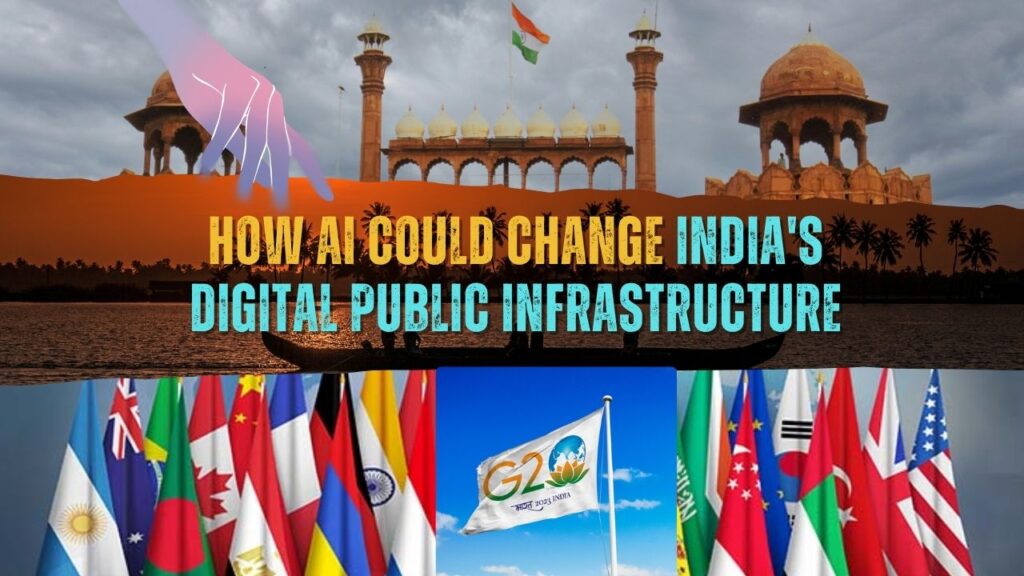
The shift from traditional systems to Digital India raises concerns about public privacy and security, as greater reliance on digital systems can create new opportunities for fraud and scams. Aadhaar is one pillar of what the government now calls India’s Digital Public Infrastructure and how AI could change that DPI for making it faster and more reliable is the biggest evolution.
Every month, close to 20 million people across India get turned away by a fingerprint scanner or a face-authentication camera that’s supposed to hand them a subsidised ration bag, a pension, or a bank withdrawal. That failure rate — a little over 6% of roughly 312 million Aadhaar-based authentications attempted monthly has stayed almost unchanged for a decade, according to UIDAI’s own parliamentary disclosures.
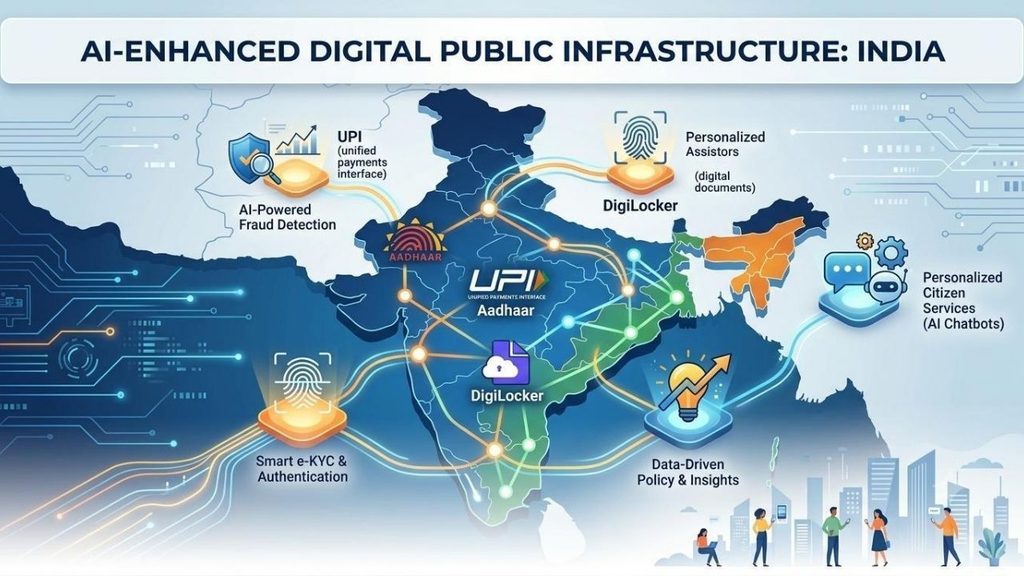
It’s a strange fact to sit with, because DPI includes the stack of identity, payments, and data-sharing rails — Aadhaar, UPI, DigiLocker, Account Aggregator, ONDC — that more than a billion Indians touch, often without realising it. AI is now being wired into nearly every one of those rails. Some of it is already live and working.
What Is India’s Digital Public Infrastructure
Aadhaar is the identity layer — a biometric ID held by nearly every adult in the country. UPI is the payments layer, the real-time system that lets any bank app talk to any other. DigiLocker and Account Aggregator are the document and data-sharing layers, letting people share verified paperwork or consented financial records instead of photocopies.
ONDC is the newest piece, an attempt to do for e-commerce what UPI did for payments: an open network any app can plug into, rather than one company owning the marketplace.
Each of these was built as plumbing — deliberately boring, interoperable infrastructure. AI is the first layer being added on top that isn’t boring at all, and it’s arriving fastest in fraud detection, credit, language, and now shopping.
Fraud Detection at a Scale No Human Team Can Watch
UPI now clears more than 750 million transactions a day, a number NPCI expects to keep climbing toward a billion. At that volume, catching fraud after the money has moved is close to useless — NPCI’s fraud-detection platform processes roughly 2 terabytes of transaction data daily and needs to score risk within about 20 milliseconds, fast enough to block a payment before it settles.
Its MuleHunter AI tool has already flagged more than 4.7 lakh mule accounts — the disposable, borrowed accounts fraud rings use to bounce stolen money through four to six hops before cashing out.
NPCI is now piloting what it calls a “federated model” with three or four banks: instead of pooling everyone’s raw transaction data in one place, banks and NPCI compare AI-generated risk scores on a customer, getting the benefit of shared pattern-matching without centralising anyone’s actual financial history.
NPCI’s leadership has said openly that the next leg of UPI’s growth depends on AI doing three jobs at once — catching fraud, extending credit based on payment history, and onboarding the next half-billion users through voice and regional-language interfaces instead of English-only screens.
Half of India Still Can’t Access Bank Credit
For decades, an MSME owner without three years of clean, bankable paperwork was mostly invisible to formal lenders — not un-creditworthy, just un-scoreable.
The Account Aggregator framework, built on the RBI’s 2016 Master Direction and NITI Aayog’s Data Empowerment and Protection Architecture, changed the plumbing: with a customer’s explicit consent, a lender can now pull real bank statements, GST filings, and insurance records through a single encrypted pipe instead of chasing PDFs.
As of the framework’s fourth anniversary in 2025, 112 financial institutions had gone live on both sides of that pipe, with hundreds more connected as data providers or users. AI models sit on top of that data flow, and lenders report the payoff is real: industry estimates put improvements in default-prediction accuracy at 15 to 25%, and processing times that used to run one to three weeks are increasingly settled same-day.
This isn’t unregulated black-box lending, though — RBI’s digital lending rules require a lender to explain, in terms a risk officer or auditor can actually interrogate, why a model approved or rejected an application, which puts a real ceiling on how opaque these systems are allowed to get.
No More Language Barrier: Treating Language Like Infrastructure
India has more than one language and an AI layer that drops the barrier between languages is Bhashini. In India, MeitY’s National Language Translation Mission became fully AI-powered translation engines and it now sits underneath every government services app from January 2026. Portals like DigiLocker, UMANG, e-Shram running into 22 Indian languages.
A Bhashini-powered voice assistant called Kumbh Sahaiyak used a Llama-based model to field pilgrim questions in 11 languages in real time — arguably the clearest proof yet that a DPI project can meet people in their own language at genuine crowd scale, not just in a pilot deck. If India’s Digital Public Infrastructure’s whole promise was ever about reaching people who can’t fill out an English form, Bhashini is the piece actually doing that, one API call at a time.
The Part AI Might Not Fix: Aadhaar’s Exclusion Problem
The government’s current bet is that AI-driven face authentication — rather than fingerprint or iris scanning, which struggle with a manual labourer’s worn fingerprints or an elderly person’s cataracts — will close that 6.5% failure gap.
It’s already been tested at real scale with UIDAI ran a face-authentication proof of concept at NEET-UG 2025 exam centres with the NTA and NIC, and by 2026 similar AI-camera verification, backed by liveness checks and a fingerprint or manual fallback, was standard at UPSC exam halls. Officials describe the results as promising.
Researchers who’ve actually gone door to door are less convinced: a survey across 32 villages in Jharkhand by economist Jean Drèze and co-authors found exclusion errors running as high as 20% in areas where biometric authentication was required for every ration purchase — and critics note that swapping fingerprints for face scans doesn’t remove the underlying design flaw, which is that a single biometric check, controlled by a ration dealer or bank teller rather than the beneficiary, decides whether someone eats that month.
There’s a second, quieter concern sitting alongside is the more AI systems sit on top of Aadhaar-linked data — UPI payments, SIM registrations, app logins — the easier it becomes to assemble a detailed behavioural profile of someone, usually described publicly as fraud prevention rather than surveillance. Both things can be true at once.
AI-based face authentication may genuinely cut into the 20-million-a-month failure count, and the same infrastructure may quietly expand what the state and private platforms can see about a person’s life. That tension, not a clean technical fix, is the actual story here.
Agents That Could Soon Shop and Transact for You
The newest layer is barely a layer yet. ONDC, India’s government-backed alternative to Amazon and Flipkart, runs on the open-source Beckn protocol, which had onboarded more than 900 network participants across grocery, food delivery, mobility, and financial services by 2026.
FIDE, the nonprofit behind Beckn, has already demonstrated BecknGPT — an experimental agent that lets a ChatGPT-style assistant browse and complete an ONDC purchase on a shopper’s behalf and mainstream apps including Swiggy, BigBasket, and Flipkart have started exposing their catalogues directly to AI shopping assistants.
It’s genuinely early, more demo than daily habit right now. But the direction matters: if UPI proved India could build a public payments rail that private apps compete on top of, ONDC plus AI agents is the government’s bet that the same model can work for commerce itself, without any single platform owning discovery.
Whatever India’s Digital Public Infrastructure domestic wrinkles, India has turned it into one of its more effective diplomatic exports.
During its 2023 G20 presidency, India pushed Digital Public Infrastructure as a global development model, the framework receiving endorsement from 20 member nations. By 2026, the cooperation agreements between India and other 23—24 countries have been signed for helping them build their own version of Aadhaar, UPI, or DigiLocker by sharing open-source blueprints rather than selling a finished product.
UPI itself is already live in eight-plus countries, from the UAE and Singapore to France and Mauritius, and Kenya is reportedly building a national digital-identity stack directly modelled on India’s approach.
Analysts who track this call it the “Aadhaar Paradox”: India is exporting a model with real, unresolved problems at home — the exclusion numbers above, heavy market concentration in UPI apps, ongoing data-protection debates — alongside genuine, population-scale successes that few other countries have managed.
Both halves of that sentence are true, and any AI layer India bolts onto its own DPI will likely travel abroad along with everything else.
What Determines Changing India’s Digital Public Infrastructure With AI Goes Well
A few concrete things to watch over the next year, rather than general optimism about AI transforming governance.
First, whether NPCI’s 30% market-share cap for individual UPI apps — currently set to take effect December 31, 2026 — actually holds this time, since two apps still control more than 80% of transaction volume and AI-driven credit and voice features could widen that gap further or finally give smaller players something to compete on.
Second, whether UIDAI’s AI-based face authentication measurably moves the 6.5% Aadhaar failure rate in its next couple of annual disclosures, or whether as analyzer expect — it just changes which biometric ends up failing people.
None of these are settled yet. Both will tell you, faster than any government press release, whether AI made India’s Digital Public Infrastructure more inclusive, or just faster at doing the same thing to the same people.
AI could make India’s Digital Public Infrastructure faster, more accessible, and better at handling problems that humans simply cannot manage at this scale. From spotting fraud across UPI transactions to helping lenders understand small businesses and breaking language barriers, the benefits are already becoming visible.
But the bigger question isn’t whether AI can make India’s Digital Public Infrastructure more efficient. It’s whether it can make it more inclusive without creating new problems along the way. Aadhaar’s authentication failures, concerns around data profiling, and the risk of AI-powered systems becoming harder to challenge show why speed alone isn’t enough.
India has already built the digital rails. The next phase is about deciding how intelligently, transparently, and fairly AI runs on top of them. The success of that shift will depend not just on better models, but on whether the people using these systems actually have fewer barriers when they need them most.
Changes in the world are happening so fast, and artificial intelligence is at the center of them all. If you are a Class 12 student considering your future course of study, the Bachelor of Business Administration in Artificial Intelligence (BBA in AI) is more than just a degree—it’s your chance to shape the future while earning a stable career in one of the most in-demand areas today. This programme stands for an exceptional blend of business management and state of the art AI technology that is transforming the business operations around the world.
Why BBA in AI Matters More Than Ever
You may have heard the term “artificial intelligence” (AI) thrown around a lot, but what does that actually mean for your job? AI isn’t some far-off science fiction concept anymore, it’s baked into the apps you use every day, from Netflix recommendations to banking fraud alerts. Businesses in every sector — healthcare, finance, manufacturing, e-commerce — are scrambling to adopt AI in their operations. That means there is a great opportunity for graduates with knowledge of business strategy and AI technologies.
Instead of traditional BBA programs that just teach the basics of business or engineering degrees that focus only on technical skills, a BBA in AI is really both. You study business principles such as management, finance, and marketing as well as machine learning, data analytics, and applications of AI. With this cross-domain training, you have an extremely strong value proposition to potential employers as you can convert AI technicalities to business use cases and create meaningful innovation.
Understanding the SET 2026 Pathway
If you want to pursue the BBA in AI through SET 2026, then here’s what you need to know. The Symbiosis Entrance Exam (SET) is your pathway to Symbiosis Artificial Intelligence Institute (SAII), IILM, IIMT, & many more. SET 2026 Exam will be held on 2nd May and 10th May 2026. There are approximately 760 seats in total through the SET at the Symbiosis institutes, which is a very competitive but rewarding process of selection. The application form from these universities is expected to be released From December 2025 to March 2026 for admission.
You should have passed Class 12 with at least 50% aggregate marks (45% for SC/ST students) to be eligible. The good news is that you can also apply if you have not got your Class 12 result, but will need to upload your certificate of passing later. The SET exam itself is simple – it’s a one-hour online test with multiple-choice questions (MCQs) in English and there’s no negative marking.
The syllabus includes the following: General English, Logical Reasoning, Quantitative Skills, and General Awareness. The application fee is INR 2,250, and the test is held in over 80 cities across the country, so you have no excuse for not knowing where you can take it.
The SAII BBA in AI program curriculum is well planned as per the NEP 2020 directives and it provides an exit policy which is flexible. This means you can earn qualifications progressively — a Certificate after Year 1, a Diploma after Year 2, or proceed to complete your full Bachelor’s degree after Year 3, with an option for Honours or Honours with Research in Year 4.
This isn’t just a matter of learning about theoretical concepts. Practicing real industry issues in project-based courses, obtaining hands-on experience in AI-specialized laboratories and studio spaces, receiving industry mentoring, and doing internships that connect the theory studied in classrooms and application in real industry.
Students can use the core curriculum to learn the basics of AI, machine learning, statistics and programming alongside more traditional business course topics. You will also study a number of specialist modules tailored to your individual interests, whether you want to work in healthcare technology, financial services, marketing analytics, or in the creative industries.
Career Opportunities After BBA in AI
BBA in AI pass outs are earning good salaries and have excellent career options. New graduates usually receive packages ranging from 6 to 10 LPA followed by huge pay hikes as they gain experience and specialization. AI/ML Researchers or Data Scientists at mid-level earn ₹7-14 LPA, and a senior AI/ML Architect commands ₹10-20 LPA or more.
The career options are extremely varied. I can imagine it as being either AI Business Analyst – making the data-driven business decisions for a company. You could be a Product Manager for AI platforms and guide the building of new solutions.
Digital Strategy Consultants With AI Credentials Are Especially Needed as Organizations Seek to Transform Digitally. Data Science to Business Strategy Business Intelligence Experts While there are numerous talented experts in business intelligence, few possess a robust knowledge of both data science and business strategy, making their services highly sought after in today’s economy.
More than 74% of Indian employers are expected to recruit freshers for AI jobs in 2025, witnessing a 22% year-on-year growth in fresher opportunities. Top companies including Amazon Web Services (AWS), Microsoft, Google Cloud, Meta, IBM, Infosys, TCS, HCLTech and Tech Mahindra are aggressively hiring freshers with skills in AI and business. Even startups and fintech firms are engaged in a bidding war for talent, paying lip smacking packages and offering work on bleeding edge projects.
The Skills You’ll Need
For this profession you need communication and technical skills. Technical background is having knowledge in programming languages, mainly python, the standard of the industry for AI and ML. You also have to be well versed in math, statistics, and data science. As a part of your toolkit, you will have to understand machine learning algorithms, deep learning methodologies and frameworks such as TensorFlow and PyTorch.
But it’s not all code and algorithms. You’ll also need to be a critical thinker, a problem solver, and an effective communicator — because at the end of the day you’ll be explaining some pretty complex AI concepts to non-technical stakeholders in business environments. Creativity and an open mind are critical since you will have to solve new problems that may not have textbook answers.
Fees and Financial Considerations
Cost transparency is important. BBA in AI from top Symbiosis institutes are between ₹1 lakh to 3 lakhs per annum but it depends on your chosen institute and mode of delivery. The range of total fees for 3 years for top institutions is around ₹ 3 lakhs and ₹ 9 lakhs but it varies from one institute to another. There are a few cheaper BBA programs through online or distance mode, where the entire program costs between ₹1.5 and ₹1.68 lakhs.
So important to add that most schools do provide scholarships/financial aid in some way for need or merit – so don’t let fees be the only thing that stops you from applying if this is your passion.
There are a number of colleges in India that provide BBA in Artificial Intelligence (AI)/ BBA in Data Analytics or BBA in Machine Learning, as per the demand in emerging field of business over the technology. Important information regarding fees, admission procedure, and recognitions including accreditations for particular colleges are mentioned in the following paragraphs, which are curated from authentic sources.
Note that fees are the estimated total tuition fees (excluding one-time fees such as registration fee), and are subject to change, please check with the official website.
Conclusion
Selecting a BBA in AI with SET 2026 is opting for an opportunity laden future. The blend of business and technology results in graduates who are in high demand in today’s market place. You’re not just earning a degree — you’re staking your claim at the convergence of two powerful currents: strategic business thought and transformative technology.
Generic graduates are not what the world needs—it needs industry-ready professionals who can leverage AI to solve business problems, bring innovations, and deliver business value. If you’re inquisitive, analytical, enjoy problem solving, and want to make a difference with a rewarding career, BBA in AI through SET 2026 may just be what you are seeking. Begin to prepare for SET today, and the future of business and technology.
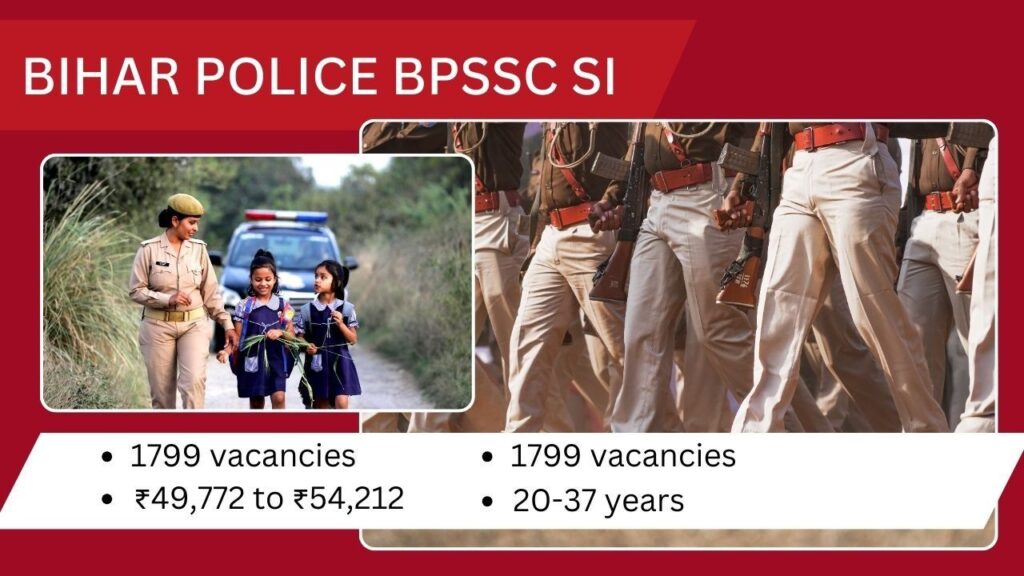
Bihar Police SI: Are you dreaming of Serving your State as a Police? The Bihar Police Subordinate Services Commission (BPSSC) SI recruitment is your best shot at securing a prestigious and well-paid job in the police department. With 1799 Vacancies Released under Advt. This is the high time to apply, as this is to best government jobs in bihar. Let me take you through all the information you need about the SI post from How To Apply to Salary Structure and Career Opportunities.
What Exactly is a Sub Inspector in Bihar Police?
The Sub Inspector (SI), also known as “Daroga” in Hindi, is an important office in the police force that is scathing about peace, social security, and law in their areas of jurisdiction. Consider them as the police station department of operations. They’re not just desk jockeys — SI’s participate in field operations, investigations, and oversee junior officers.
They tend to have their hands in all sorts of things like registering First Information Reports (FIRs), investigating crimes, maintaining law and order, and even supervising constables. From conducting raids, to building relationships with the community, to litigating cases in court, SI’s work is ever-changing and requires one to be physically and mentally strong.
What Does an SI Actually Do?
Let me give you the drab realities of what your daily life as an SI looks like. You’ll have multiple critical jobs to do:
Crime Investigation: After investigating the crimes registered in your jurisdiction, you will be required to register FIRs and collect evidence.
Supervision: You will also be responsible for the supervision of constables and other junior staff, who you will deploy for patrols and duties.
Law and Order: Conducting patrolling at regular intervals so as to check on illegitimate activities and to keep the peace intact.
Court Appearances & Litigation Liaison: Handle routine court appearances and day-to-day inquiries from the court, and monitor court administrative compliance.
Community Relations: Establishing reports with the public and keeping in contact with those who live in an area.
Paper Trail: Recordkeeping, report writing and office work.
Raids & Operations: You will be part of the raids and operations on criminals, but under senior officers.
Basic Eligibility Requirements
Before you start dreaming about recruiting, let’s make sure you meet a couple of very basic eligibility requirements. The good news is that the criteria are straightforward and relatively broad.
Educational Qualification
You are required to have a bachelor’s degree in any stream from a recognized university. It doesn’t matter whether in any stream – arts, science, commerce or else. All that is required is that you have a valid graduation certificate. You can apply if you are in your final year too, but you will have to submit your degree certificate at the time of document verification.
Age Limit
Category
Males
Females
General
20-37 years
Up to 40 years
OBC/EBC
Up to 40 years
Up to 40 years
SC/ST
Up to 42 years
Up to 42 years
Nationality & Other Requirements
you should be an Indian citizen. There is no explicit ban on how many times you can try, just keep in mind you should be within the age limit for each time you apply.
Note: You will be disqualified by the BPSSC at any stage if you are found ineligible.
How to Apply For Bihar Police Subordinate Services Commission (BPSSC) SI?
The Application Process is completely online. Here are the steps:
Step 1: Registration
Then go to the official website bpssc.bihar.gov.in and on the Apply Online link for Sub Inspector (SI) recruitment to apply. Register with your e-mail ID and mobile number and then enter basic details like name, date of birth and address.
Step 2: Pay the Application Fee
The application fee is only ₹100 for all categories, including male, female, and transgender candidates. You have the option to pay by credit card, debit card, net banking or UPI.
Step 3: Complete Your Application
Now we’ll get to the bottom line. Fill in your educational qualifications, address details etc and upload your photograph and signature. Make sure your photo is 3.5cm × 4.5cm and meets the above requirements. You will also need to upload your certificates and documents applicable to that notification.
Step 4: Submit and Save
After reviewing everything, submit. Make a printout of the application form and retain it for your records.
Exam Pattern and Syllabus
To get selected as SI in Bihar police you need to pass through different phases of examination which include your knowledge, physical fitness and your suitability to be the police officer.
Stage 1: Preliminary Written Examination
Prelims is your first step in the race. It is an objective examination having 100 multiple choice questions in the paper worth 200 marks, with 2 marks allotted for each question. You have two hours to take it. The entire examination is based on General Knowledge and Current Affairs and has questions on:
Indian History,
Geography of India,
Indian Polity,
Indian Economy,
Science and Technology,
Art and Culture,
Sports, Awards and recent national and international News.
There’s negative marking – 0.2 marks get deducted for every wrong answer. You must obtain a minimum of 30% marks to be eligible. Around 20 times the number of vacancies (about 35,980 candidates for 1799 posts) will be shortlisted for the mains examination.
Stage 2: Mains Written Examination
Once you clear the prelims, a main examination is held which is tougher and more comprehensive in nature.The mains has two papers, 200 marks each:
Paper I: General Hindi is Preliminaries level to be computed from the following items: grammar, comprehension, vocabulary, synonyms, antonyms and sentence correction. You get 2 hours.
Paper II: General Studies is the second and lengthier paper assessing your knowledge in a wide array of subjects namely Civics, Indian History, Indian Geography, General Science, Economics, Current Affairs, and Mathematics with Mental Ability. This paper also duration of two hours.
All in all, you would be taking 200 questions from both the papers, carrying 400 marks altogether. The qualifying nature of mains is merit based and about 6 times the number of vacancies are called for the physical test.
Stage 3: Physical Efficiency Test (PET) and Physical Standard Test (PST)
Category
Height (cm)
Chest (cm) Min
Weight Requirement
Males (General/OBC/EBC/EWS)
168
79
Proportionate to height
Males (SC/ST)
160
79
Proportionate to height
Females
155
–
Minimum 48 kg
Transgender
As determined
As determined
As determined
Stage 4: Document Verification and Medical Examination
Finally, after you pass the physical standards, you will be subjected to the document verification at which you must bring all your original certificates, and a medical examination to prove that you are physically and mentally capable to perform police duties. The health check includes vision, hearing and general health.
Exam Dates of Bihar Police SI
Remember to appear in The Bihar Police SI Prelims Exam will be held on 18 & 21/January/2026. Two sessions will be conducted on both days:
First Shift: 10:00 AM to 12:00PM (Report at 08:30 AM)
Second Shift: 2:30 PM to 4:30 PM (Report at 1:00 PM)
The admit cards were released on 30th december 2025 so download it from the official website.
Basic Salary Structure
Allowance
Amount (₹)
Basic Pay
35,400 per month
Dearness Allowance (DA)
4,248
House Rent Allowance (HRA)
2,124 to 5,664
Ration Money Allowance
3,000
Transport/City Aid
600 to 1,500
Medical Allowance
1,000
Uniform Allowance
900
Vehicle Allowance
2,500
All these factors combine to result in a monthly salary of ₹49,772 to ₹54,212.
Salary Growth Over Time
The interesting thing is your payslip doesn’t stay the same. You will get yearly bumps to your pay that will keep increasing your basic pay every year. After 5 years of service, with the consideration of increments and possible revisions in DA, your salary in hand may be around ₹58,000 to ₹62,000 per month and more than this with a promotion.
Career Growth of SI
It’s not just the starting salary that makes the job attractive, the role is a springboard to a very rewarding career. The promotion ladder is simple and hierarchical:
SI → Inspector → Deputy Superintendent of Police (DSP) → Additional SP (ASP) → Superintendent of Police (SP)
You advance to a greater pay matrix level with each promotion resulting in tremendous salary hikes. For instance if you are promoted to Inspector your basic pay could rise to a higher stage with which you also get increments in all the allowances.
Promotion is on merit performance on seniority experience and departmental examinations. Good work, solving cases, and maintaining a clean record can fast-track your career.
Conclusion
To be a BPSI is not only a government job but also it is a duty to serve in the society, uphold the law and order and a career opportunity to earn good name with good growth. The pay is good, the work is steady, and the potential for promotion is significant. Here is your opportunity to bring about a change with 1799 vacancies to be filled.
If you are eligible and interested to work hard then no one can stop you from applying. Begin your preparation today, keep on pace and best of luck. The dream to become a Daroga and to make you proud Bihar Police is definitely within your reach!
RBI has released an official notification for Office Attendant posts for the year 2026. The Board has issued the notification on 15 January 2026 and invites applications from the candidates who have qualified 10th standard. The registration process for the online application has started with the notification release.
The Starting Salary for an RBI Office Attendant is ₹24,250 Per Month in the PAY SCALE 24,250–53,550. Employees also receive allowances like DA, HRA, CCA, Grade Allowance etc. along with the basic pay.