RRB NTPC Graduate New Vacancy Notification 2026 — Check Every Detail

RRB NTPC Graduate New Vacancy Notification

RRB NTPC Graduate New Vacancy Notification 2026 is a great chance for job seekers who want stable and high-paying careers in the government sector. As this is one of the largest employers in the world. Lakhs of students who have graduated recently can apply for this exam and prepare for it.

The Railway Recruitment Board (RRB) has brought transparency in the recruitment process by issuing the annual recruitment calendar. It is helpful for students in focusing their preparation with a crystal clear, organized roadmap for exams rather than browsing through the notifications everyday. 

This detailed guide will cover everything you need to know about the RRB NTPC Graduate vacancies in 2026 – from available seats to who can apply.

What Is RRB NTPC Graduate?

Non-Technical Popular Categories is an exam for roles on different zonal railways and production units of the Indian Railways, this recruitment drive run by Railway Recruitment Board every year. 

It doesn’t require any technical degree as it is non-technical, so many graduates can apply for this exam. It provides stability, career growth, and respect in your early age. Apply as fast as you can because there are thousands of students waiting for this opportunity already.

Undergraduate level posts aren’t paid as high as graduate level posts within the railway system.

RRB NTPC Graduate New Vacancy Notification 2026 – Numbers Breakdown

There are 8,868 vacancies under 2026 recruitment drive in which 5,810 vacancies are for graduate-level posts that leaves only 3,058 for 12th pass students. The application process for (CEN) 06/2025 was finished in 2025 and the CBT-1 exam took place from March 16 to March 27, 2026.

Now candidates are waiting for the CBT-1 result so that they can move to the next stage CBT-2  of selection. If you missed this chance then apply for the upcoming RRB NTPC Graduate posts in August 2026. The notification will release soon according to the RRB Annual Calendar. The formal assessment of vacancies across zones will start between June and July 2026 and official notification will drop in August.

ActivityTimeline
Vacancy Assessment across ZonesJune 2026
Indenting of Vacancies in OIRMS PortalJuly 2026
Proposal for Draft CEN NotificationAugust 2026
Release of Official Public NotificationAugust 2026
Commencement of Online ApplicationsAugust – September 2026
CBT Stage 1 ExaminationLate 2026 / Early 2027

The Ministry of Railways set the calendar for the candidates to prepare themselves. The vacancy number dropped from last year (11,558) means the competition is tighter. Take this matter seriously to prepare properly for securing a seat in Railways.

List of Graduate Posts and Their Roles

You have chosen your preference in different roles in the application form. To make a decision, you must know the job profile under the title, so here are the primary graduate-level options:

1. Station Master (SM)

It is a highly responsible role that falls under Pay Level 6 in which you have to check running trains have reached their assigned destination safely and efficiently. Safety of passengers and the public by controlling signals and ensuring all the safety protocols have followed is Station Master responsibility.

2. Goods Train Manager (GTM)

Also known as Good Guard, they are responsible for safety and movement of Goods Train. You will work along with Loco Pilot, check packages reached at their destination, and ensure no damage occurs during transit. This position has the maximum share of vacancies in recent charts. 

3. Chief Commercial cum Ticket Supervisor (CCTS)

You must have the ability to handle communication in pressure because this role is responsible for managing ticket counters, checking reservations, overseeing luggage and handling customers politely whether you are in mood or not. Overall, you have to deal directly with the public or supervise commercial tasks.

4. Senior Clerk cum Typist

You must have fast typing speed as it is required to handle clerical work, maintain staff files, process data, and assist higher authorities in administrative departments. Senior clerk is an excellent job if you prefer an officer desk job with regular working hours.

5. Junior Accounts Assistant cum Typist (JAA)

Numbers are your skill? Then Junior Accounts Assistant cum Typist is an ideal job for you. You are responsible for managing financial bookkeeping, processes bills, keeps track of expenditures, audits internal payments. Working in the finance and account department of railway is to ensure that the railway zone’s finances are running smoothly without any false transmission.. 

6. Traffic Assistant

Control rooms are the system’s mind so the trains run smoothly. Traffic Assistant works there and manages line clearances along with assisting operational managers in optimizing railway traffic networks in control rooms to handle traffic movement operations.

Salary and Perks 

Post Name7th CPC Pay LevelInitial Basic Pay (INR)
Station MasterLevel 6₹35,400
Goods Train ManagerLevel 5₹29,200
Chief Commercial cum Ticket SupervisorLevel 5₹29,200
Junior Accounts Assistant cum TypistLevel 5₹29,200
Senior Clerk cum TypistLevel 5₹29,200
Traffic AssistantLevel 4₹25,500

These salaries are the bare minimum. And as you gain more experience and move up in the salary matrix, there are incremental hikes. Additional benefits of working for the railways include free or concessional travel on the railways, medical facilities, pension (under National Pension System) and job security that few private players offer. 

Are You Eligible For The RRB NTPC Graduate New Vacancy Notification?

You have to be eligible to apply for the 2026 vacancies to be announced. Getting a job in Indian railways is the ambition of all the job seekers. 

Education Required 

As it is a graduate-level vacancy, you must have a degree in any stream from a recognized university or college. If you are in the final year, you can apply but a degree certificate must be obtained by the university at the document verification process.

Age Limit For Candidates

Minimum 18 Years 
Maximum 33 Years 

Age Relaxations for Reserved Categories

OBC 3 Years (36 years )
SC / ST 5 Years (38 years )
PwBD 10 to 15 Years 
Ex-Servicemen Period of service rendered plus an additional 3 years 

Medical Standards 

Jobs in the railway have their own medical standards. Applicants must satisfy vision standards and other physical fitness requirements to ensure you take responsibilities of the biggest network of India.

Complete Application Process for RRB NTPC Graduate New Vacancy Notification

  1. Visit the application portal on the official site of the Railway.
  2. Put your number and email on the registration box to make your account and remember the credentials.
  3. Fill out the application form with correct details including education, category, and personal information.
  4. Choose your preferred job roles (check 3 preferences) and region where you can work easily. 
  5. Upload document — ID, Signature, Photo, Category certification, Educational Certificate. Pay the amount to complete the application via online payment methods
General / OBC / EWS Candidates Rs 400 
SC / ST / Female / Ex-Servicemen / PwBDRs. 250 

Check your application once again to edit the incorrect or mistake. Submit and print it out for later references.

Exam Dates For Both Undergraduate And Graduate Level Post

The Graduate Level CBT 1 examination has already been held from 16 March to 27 March 2026. If you had appeared for that, the subsequent rounds will come accordingly your performance. 

The second CBT at the undergraduate level is being held from 7 May to 21 June 2026 in various stages at present. More than 6.3 million candidates had registered for the exam at the UG level alone. That should give you some idea of how tough this recruitment is. 

The RRB NTPC Selection Process 

This is the multi-level selection process in which you must go through four stages of selection to secure a position:

Stage 1: CBT 1 

The first stage of the exam in which 100 questions have been asked from Mathematics, General Intelligence and Reasoning, and General Awareness. You have to give the correct answer within 90 minutes because the wrong answer took one-third of a mark. But CBT-1 marks are not counted in merit list, it is just a door for CBT-2 exam. 

Stage 2: CBT 2 

The paper is more relevant to your preferred job role and difficulty level also depends on different pay levels but the syllabus is the same as CBT-1. This is where you have to perform well because a CBT-2 score adds to the final merit.

Stage 3: Skill Test 

Only hard level posts will attempt this stage such as Station Master and Traffic Assistant posts. There is a Computer-Based Aptitude Test which has 30% weightage in the final merit, so clear it with concentration.

Typing tests are required for Junior Clerk, Senior Clerk, and Accounts Assistant roles. Typing speed in both English and Hindi are required but it is just a qualifying test.

Stage 4: Document Verification and Medical Exam

Original documents are checked by the authorities to verify every detail you provided. Then a medical test to analyze if you have any permanent illness or weak vision. 

Complete Syllabus of RRB NTPC Graduate New Vacancy Notification

Mathematics — Prepare basic 10th level questions from topics like integers, decimals, LCM and HCF, ratio and proportion. Focus more widely on percentage, profit and loss, simple and compound interest, time and distance. If you have more time and do not wanna miss a single question then practice on algebra, geometry, trigonometry, and elementary statistics. 

General Intelligence and Reasoning — Prepare your logic skills with practice on pattern recognition, analogies, coding-decoding. Basic mock tests will help you, there are other topics such as series, puzzles, syllogisms, Venn diagrams, and data sufficiency.

General Awareness — Most of the questions come from this topic, keep aware of the current events, General Science, Indian history, geography, politics, and economy. Check news everyday and follow government schemes and policies regularly.

Read More :- UP Home Guard Result 2026 – Check Merit List & Cut Off

RRB NTPC Graduate Exam Pattern 

Exam pattern is crucial to understand because it will help you complete the paper in a limited time. Both CBT-1 and CBT-2 feature multiple-choice questions (MCQs) but the difficulty level and questions density is different. 

CBT-1 Exam Pattern

Subject AreaNumber of QuestionsTotal Marks
Mathematics3030
General Intelligence & Reasoning3030
General Awareness4040
Total100100

CBT-2 Exam Pattern

Subject AreaNumber of QuestionsTotal Marks
Mathematics3535
General Intelligence & Reasoning3535
General Awareness5050
Total120120

Tips to Crack the RRB NTPC 2026 

Since the vacancies have shrunk, the competition gets higher and you need a right strategy to crack the exam.

Basics are important so start practicing questions in maths and reasoning. Then move to the advanced level questions but start with basics will build your core foundation. Solve previous year questions and mock tests so you become fluent with some questions which are repeated many times.

Take time to revise because both accuracy and speed matters. Focus on General Awareness because most of the scores depend on that section. It needs your daily consistency so don’t break the score.

If you are preparing for the Station Master role then prepare for CBAT too. Because the Psycho test is also important without clearing this stage, you can secure a position.

Conclusion

The RRB NTPC Graduate 2026 is a major employment opportunity for graduates in this year. Yes, the vacancies are less than previous year. Yes, there is stiff competition. But that has never stopped determined aspirants from cracking it. 

If you have already given CBT 1, continue preparing for the CBT-2. If you missed the chance, do not worry, the Railway Recruitment Board will release the next recruitment notification in August. So, it is a great time to start laying your groundwork so when the next notification pops up, you can hit the ground running. 

Leave a Comment

Your email address will not be published. Required fields are marked *

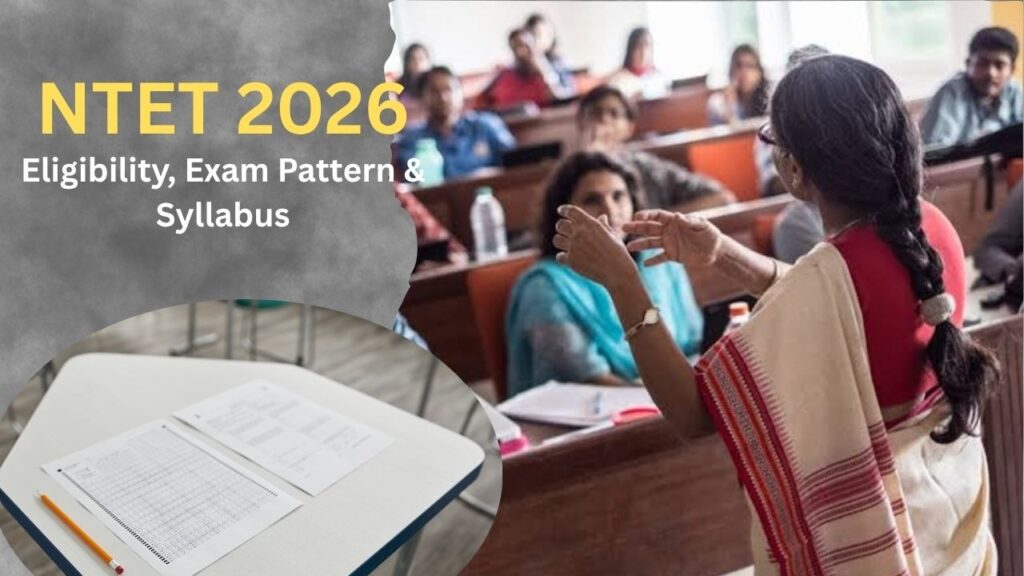
NTET 2026: Complete Information on Eligibility, Exam Pattern & Syllabus

NTET 2026

Do you want to develop the future of healthcare education in India? If you intend to apply for the post of Assistant Professor, Associate Professor or Professor in ISM or Homoeopathy, then the first step is to qualify the NTET 2026.

National Teachers Eligibility Test (NTET) for teaching in AYUSH Institutions (PCM/PCB) NCISM NCH has notified the conduct of National Teachers Eligibility Test (NTET) for educators in AYUSH colleges. From Minimum Eligibility Criteria, Exam Pattern, Syllabus, to preparation tips, this complete, evergreen guide dresses up all the essential aspects for NTET. 

Let us check out the details to start your academic career. 

What is the NTET 2026 Exam?

The National Teachers Eligibility Test (NTET) is a country level AYUSH teachers suitability test that aims at testing potential teaching capabilities, communication skills and knowledge of educational psychology of prospective AYUSH teachers. Be it Ayurveda, Unani, Siddha or Homoeopathy, the NTET 2026 is a mandatory requirement for teachers to keep abreast with contemporary teaching methods to train future doctors. It tests your teaching potential, not your medical know-how, which you have already been through a sufficient number of times in your postgraduate medical degree. 

NTET 2026 Eligibility Criteria

Cooperating with the rules of UPSC before applying to NTET is the right choice because you can waste your time if you’re not eligible for the examination. Whether it’s a document or age criteria, make sure you lie on the guidelines. NTET is solely for post graduates and final year students of certain medical and para-medical disciplines.

Here is the list for the minimum eligibility criteria:

Basic educational qualification: Must complete your masters in whatever field you have chosen. Graduated students can pursue any of these postgraduate degrees in Ayurveda, Unani, Siddha, Homoeopathy or allied areas to be eligible. 

Related fields: The candidates should have valid bachelor’s degree in AYUSH (BAMS, BUMS, BSMS, BHMS) withMaster of Public Health (MPH) or M.Sc in Anatomy, Physiology, Biochemistry orMicrobiology. 

Students in their final year of education can take the exam if you are progressing and have completed at least 30 months of your masters program. 

Career Stage: Only first time aspirants to the teaching profession (Assistant Professor) at the entry level are required to qualify in this exam. It is also necessary for higher teaching positions if the candidate is coming to teaching from clinical practice or research for a number of years and not for the first time. 

NTET Exam Pattern

FeatureDetails
Mode of ExaminationComputer-Based Test (CBT)
Total Duration120 Minutes (2 Hours)
Total Questions100
Question TypeMultiple Choice Questions (MCQs) with 4 options
Maximum Marks100 Marks
Marking Scheme+1 mark for every correct answer
Negative MarkingNo Negative Marking
Medium of PaperEnglish and Hindi
Difficulty Distribution40 Easy, 40 Medium, 20 Difficult questions

Detailed NTET 2026 Syllabus

The NTET 2026 syllabus is concerned only with teaching techniques, management of the class and human mind. It has been segmented into 8 modules. Here you go, this is What to Study:

Teaching & Training

  • Definition, aims, and levels of teaching (to teach at Memory Level, to teach at Understanding Level, to teach at Reflective Level).
  • Features of adult and youth learners (Educational, Social, Emotional, and Intellectual).
  • Contemporary methods of teaching, clinical teaching and teaching at the bedside.
  • VARK learning style (Visual, Aural, Reading/Writing in Learning, Kinesthetic). 

Communication

  • Definition, nature, types and barriers of communication.
  • Verbal vs non-verbal and intercultural communication.
  • Teacher-Learner and Doctor-Patient communication models.
  • Place of mass media in society and contemporary education.

Classroom Management

  • Maintaining studious engagement, and motivated learning in heterogeneous classrooms.
  • disciplinary management and discipline and positive, inclusive learning environments.
  • Work with real teaching environments such as OPDs, clinical labs, skill labs, and community outreach programs. 

Methods of Evaluation

  • The formative and summative assessment processes in learning.
  • Evaluation mechanisms under the CEC procedures.
  • Evaluation of clinical competence by OSCE (Objective Structured Clinical Exam), long case and short case.
  • Importance of organised feedback in learning.

Educational Technologies

  • The emergent and shifting terrain In medical education: ICT and its management.
  • The utilization of the Internet, e-mail and video conferencing in the contemporary teaching environment.
  • Knowledge of online teaching environments and MOOCs (e.g. SWAYAM and SWAYAMPRABHA). 

Educational Psychology

  • The cognitive development from childhood to adult with storing knowledge and learning through life experience by the human mind.
  • Psychological theories of relevance to teaching: Piaget’s cognitive development, Vygotsky’s sociocultural perspective, Bronfenbrenner’s social context.

Educational Andragogy 

  • Get to know Andragogy (the designated way and technique of teaching adult learners).
  • The principles, needs and characteristics of adult learning.
  • Building Skills for Self-Directed and Lifelong Learning.

Learning and Pedagogy

  • Fundamental notions and sequential procedures of pedagogical analysis.
  • Critical pedagogy and the development of particular learning outcomes.
  • A few guidelines to facilitate doing student-centred teaching-learning workflow effectively.
  • Eligibility Conditions and Validity of the Certificate

Examination Result: 

The candidates are required to obtain the minimum of 50% marks (without any rounding off) in the examination to be considered as “NTET Qualified”.

Certificate Validity: 

On clearing the NCTET, your NTET Eligibility certificate is valid for 10 years from the date of passing. If they fail to join teaching within the 10 years or take a career break of above 10 years, they would need to take up and clear the test once again to continue in teaching. 

Read More:- DECE-LE Admission Form 2026: Apply Online, Eligibility, Exam Date & Full Details

Tips to Crack the NTET 2026

Since teaching is what the NTET 2026 tests and not medical science, your prep plan needs to adjust slightly.

  • Learn the Pedagogy Fundamentals: To learn some of the main educational psychology concepts, read some of the key texts by Piaget, Vygotsky and from contemporary educational models.
  • Concentrate on Clinical Teaching: The usual pedagogy holds only tenuously when considering the OPD and in AYUSH teaching. Attending clinical, bed side and OPD teaching methods, they are very practical.
  • Manage Your Time: There are 100 questions in 120 minutes. Time is more than sufficient, but reading the lengthy scenario-based teaching method questions can be consuming. You will be building your reading speed with regular mock tests.
  • Take Advantage of the ‘No Negative Marking’ Rule: Have a guessing game plan for hard questions. Do not leave a question unanswered on your CBT screen.
  • Keep Abreast with Ed-Tech: Keep track of the latest digital education tools and steps taken by the Indian government in the education sector. 

Conclusion

The NRIMT or NTET 2026 is one of the excellent, forward-looking measures by NCISM & NCH to bring about a unified quality in the AYUSH education throughout the country. This idea of focusing on “how to teach” rather than “what to teach” makes future doctors be taught by qualified, caring and extremely capable teachers.

So with this article, get yourself prepared to land on the hot seat of the National Teachers Eligibility Test. Go in depth with your syllabus and learn to think like the psychology of adult learners and you are on your way to a very successful and satisfying career as a medical teacher.

7 Tips to Get a Scholarship as an Indian Student That Actually Work in 2026

Scholarship

Whether you’re dreaming of an IIT, a top private university in India, or a fully funded degree in Germany or Canada, the cost of education can feel like a wall. But students can fulfill their dreams with the help of thousands of crores worth of scholarship money that goes unclaimed every year because students don’t know how to apply, or they apply the wrong way.

So with the help of this blog, you can learn what is necessary to apply for different websites that help you get higher studies. These are 7 real, practical tips that really can increase your chances of getting a scholarship – be it a government scheme, grant from a private foundation, or an international prize. 

Why Scholarships Matter For Indian Students

Education costs in India have gone up significantly. A four-year private engineering degree can cost anywhere between ₹4 lakh to ₹15 lakh. Study abroad? That easily runs into ₹30–₹60 lakh for a master’s degree.

Scholarships are not just for “toppers” or students from economically weak backgrounds. There are scholarships for:

  • Merit-based students (high percentages)
  • Need-based students (family income criteria)
  • SC/ST/OBC/Minority students
  • Girls in STEM
  • Students from specific states
  • Students applying for specific courses like law, medicine, engineering

The point is — there’s likely a scholarship for you. You just have to find it and apply smartly.

Don’t Miss this Career Boost Guide: Skill Development Course For Indian Students

Tip 1: Start Early — To Avoid Last Minute Server Down

The most common mistake of Indian Students is that they found this opportunity and the application portal was already closed. 

International scholarships give 6 to 18 months to fill the application before the academic session begins. Search and fill the scholarship 6 months before applying to study abroad in the next year. 

If students want to study in India and are looking for a government scholarship then the National Scholarship Portal (NSP) is a good option. The applications typically open around June–July for the upcoming academic year. The portal hosts 50+ central government schemes — from pre-matric scholarships for Class 9-10 students to post-matric scholarships covering graduation and post-graduation.

What you should do right now:

  • Bookmark scholarships.gov.in (NSP’s official website)
  • Make a spreadsheet of 5–10 scholarships you’re eligible for
  • Note down their deadlines and set calendar reminders 2–3 months in advance

Get your all valid documents ready, don’t wait for “scholarship season” to begin for preparing documents. 

Tip 2: Match the Scholarship to YOUR Profile 

A lot of students waste their time by applying for the scholarship without providing qualifying criteria as eligibility for every scholarship is mandatory. Some common ones include:

  • Minimum percentage in study — usually 60% to 85% in your last qualifying exam
  • Low income family — government scholarships ask about your annual family income, as they give scholarships to students whose family income is below ₹2.5 lakh to ₹8 lakh.
  • Category reservation — students belong to SC/ST/OBC/EWS/Minority-specific schemes that’s why they get scholarships easily.
  • Course and college type — some scholarships are only for students admitted to IITs, NITs, or government colleges
  • State of domicile — many state scholarships require you to be a resident of that state

Before applying, make a simple checklist:

  • Do I meet the academic requirement? 
  • Does my family income fall within the limit? 
  • Am I in the right course/college category? 
  • Is this scholarship open to my state/category?

If all boxes are checked — apply. If any one of the things you missed then don’t apply and stop wasting your time. Get on to the next one. Applying to well-matched scholarships gives you a higher success rate.

👉 Which Job is Best SSC or Banking See Full Details

Tip 3: Keep Your Documents Ready Before the Deadline

Here’s something nobody tells you: bad documentation gets you rejected even if you qualify perfectly.

A common and painful example — many students get rejected on the NSP because they submitted an outdated income certificate. The government requires that your income certificate be issued on or after April 1st of the current financial year. A certificate from January of the same year? Technically invalid.

These small document errors can silently kill your application.

Documents you typically need for Indian scholarships:

  • Class 10 and 12 mark sheets
  • College admission letter or bonafide certificate
  • Family income certificate (issued by a Tehsildar or SDM)
  • Caste certificate (if applicable)
  • Aadhaar card
  • Aadhaar-linked and NPCI-seeded bank account passbook
  • Passport-size photograph
  • Domicile certificate (for state scholarships)

International scholarships eligibility:

  • Valid passport
  • University admission offer letter
  • Statement of Purpose (SOP)
  • Letters of Recommendation (LORs)
  • Good scores in any one of these – IELTS/TOEFL/GRE depending on the country.

Tip 4: Write a Killer SOP or Personal Statement

There are a lot of students who also are applying like you. To stand among thousands of students, you must need your unique Statement of Purpose (SOP) or personal essay that can make or break your application.

Most of the Indian students write something like:

“I am a top student and good in studies with a 90% ranking. I come from a humble family. I want to pursue engineering to serve my country.”

That’s not a personal statement. That’s a template that sounds like thousands of other applications.

What a strong SOP actually looks like:

  • It tells your specific story — a challenge you overcame, a moment that shaped your goals
  • It clearly explains why you chose this particular course and institution.
  • It shows what you will do with this education — not just for yourself, but for others.
  • It connects your past experiences to your future plans in a logical, compelling way.
  • It answers: “Why do you deserve this scholarship over others?”

Don’t prolong each topic, just be specific. Scholarship committees read hundreds of applications — so they are experienced to understand generic essays in a second.

If you are not good at English, you can write the draft in your own language first, and then translate and refine it. It is more important to be genuine than to have perfect grammar. 

Tip 5: Apply on Multiple Platforms 

Don’t apply single application if you want to increase your chances to get a scholarship then apply on 2-3 platforms. You just have to know how to apply.

Government Sources:

  • NSP — Most common and easily accessible under various Central government schemes
  • State government portals — State-wise scholarships like UP Scholarship Portal, Maharashtra Scholarship Portal, and more.
  • AICTE/UGC scholarships — Specifically provide every year for engineering and university students
  • PM Scholarship Scheme — For wards of ex-servicemen

Private & Corporate Scholarships:

  • Reliance Foundation Scholarship is the most popular and bigger private scholarships
  • Tata Scholarship — Low income families students can approach it easily
  • Aditya Birla Scholarships — To study at top IITs, IIMs, and law schools
  • L’Oréal India For Young Women in Science — For women in STEM

International Scholarships (for study abroad):

  • Fulbright-Nehru Fellowship — For postgraduate studies in the USA
  • Chevening Scholarship — UK government scholarship for master’s programs
  • DAAD Scholarship — Fully funded studies in Germany
  • MEXT Scholarship — Japanese government scholarship
  • Türkiye Burslari — Fully funded scholarship in Turkey (no IELTS required for many programs)

Useful Platforms to Discover More:

Tip 6: Don’t Ignore Internal College Scholarships

This is one of the most underrated tips and most students completely miss it. Almost every college and university in India whether they are private or government has its own internal merit scholarships, fee waivers, and financial aid programs. You may not know because they don’t advertise them loudly.

A lot of these scholarships go unclaimed every year simply because students never ask.

How Can You Get Scholarship From College?

  • During admission, go to the scholarship office in a college to check and ask about scholarships.
  • See if your college has connections with foundations or corporates for special scholarships
  • Ask seniors – they usually are aware of opportunities that aren’t officially listed 

Also have a look at your university’s official portal in the pages under “Financial Aid”, “Scholarships” or “Students Welfare.” A large university may have half a dozen scholarships based on alumni gifts or CSR funding that are never publicized. 

A 10-minute conversation with the right person in your college can sometimes save you lakhs in fees.

Tip 7. Nail the NSP Registration Process 

If you want to apply for any central government scholarship in India, visit National Scholarship Portal (NSP) official website. You can find the application in a scholarship tab. 

But here’s the thing — the NSP process has a few technical steps that trip up a lot of first-time applicants.

Step 1 — OTR (One Time Registration). The government has made OTR mandatory to prevent fraud. You need to download the “NSP OTR App” (official NIC app) and complete face authentication to generate a unique 14-digit Student Reference ID.

Step 2 — Aadhaar-Seeded Bank Account. Your bank account must be linked (seeded) with Aadhaar on the NPCI server before you apply. This is required because scholarship money is transferred via Direct Benefit Transfer (DBT). Just having a bank account isn’t enough — it must be specifically NPCI-seeded.

Step 3 — Fresh Income Certificate. If you’re applying for income-based scholarships, your income certificate must be issued on or after April 1st of the current financial year. An older certificate — even a valid one — can cause a “document mismatch” error and get your application rejected.

Step 4 — Institute Verification. When you submit your application, it is sent to your college/institute for verification. If your institute fails to verify it in time, your application will not be processed. Follow up with your institution’s scholarship coordinator — don’t assume it will happen automatically.

Read More 👉 Allahabad High Court RO / ARO / CA Recruitment 2026 For 543 Seats

Common mistakes to avoid on NSP:

  • Using old documents from the previous academic year
  • Entering wrong Aadhaar or bank details
  • Waiting for the last day to apply (server issues are common)
  • Not following up with your institute for verification
  • Applying in the wrong scheme/category

Quick Scholarship Checklist for Indian Students 

  • I meet the eligibility criteria 
  • All documents are current and valid 
  • Income certificate is issued after April 1 (if applicable) 
  • Bank account is Aadhaar-seeded on NPCI 
  • SOP/personal essay is specific and genuine 
  • I’m applying through the official website 
  • I’ve noted the deadline and set a reminder 
  • I’ve informed my institute/college to verify 

Conclusion

Getting a scholarship isn’t just about being the smartest student in the room. It’s about being the most prepared and most strategic student.

Start early. Pick scholarships that fit your profile. Keep your documents airtight. Write an honest, specific SOP. And don’t overlook the less obvious opportunities — internal college scholarships, private foundation grants, and international programs that many students don’t even know exist.

Scholarship money is out there. It’s waiting for students who take the effort to find it and apply properly.

RRB ALP Syllabus 2025: CBT‑1, CBT‑2 & CBAT Exam Topics

RRB ALP Syllabus 2025: CBT‑1, CBT‑2 & CBAT Exam Topics

Candidates who wish to crack this exam should understand the complete RRB ALP Syllabus 2025 to stay first step ahead. Knowing the crucial topic will help you to focus on smart preparation and beat the competition. Assistant Loco Pilot is a competitive exam by RRB for job recruitment in the Indian Railway sector.

RRB ALP Exam Pattern 2025

FeaturesCBT 1CBT 2 – Part ACBT 2 – Part B
Duration60 min90 min60 min
Total number of Questions7510075 
SubjectsMathematics, Reasoning, General Science, and Current AffairsMathematics, Reasoning, Science, Basic EngineeringPost-specific question ( based on selected postQualifying minimum marks 35%
Negative MarkingYes, 1/3rd marks deducted for wrong answer

RRB ALP Syllabus 2025: Detailed Section-Wise Exam Topics

CBT 1 Syllabus 2025: Topic-Wise

MathematicsNumber System: Natural numbers, whole, integer, rational & irrational
Bodmas: Application of order, Power, roots, division, multiplication, add, sub
Decimal & Fraction: Operations, Conversion, Comparison, Simplification
LCM & HCF: including word problem
Ratio and Proportion: Calculation, application in problem-solving
Percentage: Increase & decrease of percentage, various contexts
Mensuration: Measurement of Areas and volume, and geometric shapes
Time, Work & Distance: Speed, distance, time work done, relative speed, average speed
Profit and Loss: cost price, selling price, profit, loss, discount
Algebra: Basic algebraic operations, linear equations and quadratic
Simple and Compound Interest:principal, rate, and time for both simple and compound
Geometry and Trigonometry: geometric figures, angles, triangles, circles, trigonometric ratios
Statistics: Mean, median, mode
Square Root, Age Calculations
Reasoning & General IntelligenceAnalogies: identifying and figuring out  relationships between pairs of words, numbers
Alphabetical and Number Series: Recognize patterns in sequences
Coding and Decoding: Decode messages or words based on a given pattern
Mathematical Operations: basic mathematical rules or operations to numbers, letters
Relationships: identifying relationships from given information.
Syllogism: analyzing the statements and deduce logical theory
Jumbling: Rearrange jumbled words or sentences 
Venn Diagram: Use Venn diagrams to solve set relations, and logical grouping.
Data Interpretation and Sufficiency: Analyze and interpret data presented in various forms (tables, charts, etc.)
Conclusions and Decision Making: Draw valid conclusions from given statements or given information in the statements
Similarities and Differences: examine the similarity and difference  among words, numbers,
Analytical Reasoning: Solve complex logical problems involving patterns and sequences
Classification, Directions, Statement: Arguments & assumptions
General SciencePhysics: Concepts of motion, speed, velocity, Laws of Motion and Force, Work, Power, Energy, Heat & TemperatureLight: Reflection, RefractionSound, Electricity, Magnetism, Simple Machines, atmospheric pressure
Chemistry: Elements, Compounds, chemical bonding, atomic structure, acid, base, salts, metals & non-metals, Periodic Table, Environment Chemistry, Water Properties
Biology: Human body systems & functions, photosynthesis, reproduction, microorganism, nutrition & Health, Reproduction, Basics of genetics
General AwarenessCurrents Affairs: day-to-day national & International topics, 
Science & Technologies: latest discoveries, innovations Sports: tournaments, related news
Culture: heritage of India
Strong Personalities: political leaders, richest man
Economic: Policies, global economy, surveysPolitics,
Awards, Art & Culture and Government Schemes

CBT 2 (Part – A) Syllabus 

The CBT 2 Part A questions contained mostly the topics of CBT 1 syllabus. The slight difference in CBT 2 Part A is more advanced concepts on the same topics and more number of questions in the examination. It requires more effort and time on each section: Mathematics, Reasoning, General Awareness, General Science. 

CBT 2 (Part B) – Post-Specific Syllabus

This section involves the post specific test which is required in the field of choosing by the candidates at the time of registration. Some popular posts mentioned below and their key topics to cover in the CBT 2 Part B exam. Make sure you study from your ITI Trade books and NCVT curriculum for this part-

ElectricalElectrical Instrument, Refrigeration, Mechanic
Mechanical EngineeringFitter, Turner, maintenance, Refrigerator
Mechanic (Motor/Diesel)Tractor Mechanic, Heat Engine, Air-conditioning
Electronics MechanicalRadio and TV, Electronic Mechanic

CBAT – Computer-Based Aptitude Test (For ALP Only)

After clearing CBT 2 candidates will reach the next stage of CBAT. No negative marking in this test but require at least 42 marks in each test battery to clear out the exam. Focusing on exam syllabus and exam pattern will help you to beat this competition among lakhs of candidates. Your final merit for ALP will be based 70% on CBT 2 Part A + 30% on CBAT.

Conclusion 

To secure a government job you must study hard and stay focused on the preparation. The exam pattern and syllabus topic help you to learn strategy wise. The RRB ALP 2025 syllabus might look vast, but with smart planning and consistent efforts, you can master it. Keep practicing the aptitude question on each section and stay updated with Current Affairs.

Difference Between CBSE and ICSE: Which Board is Better for Your Future?

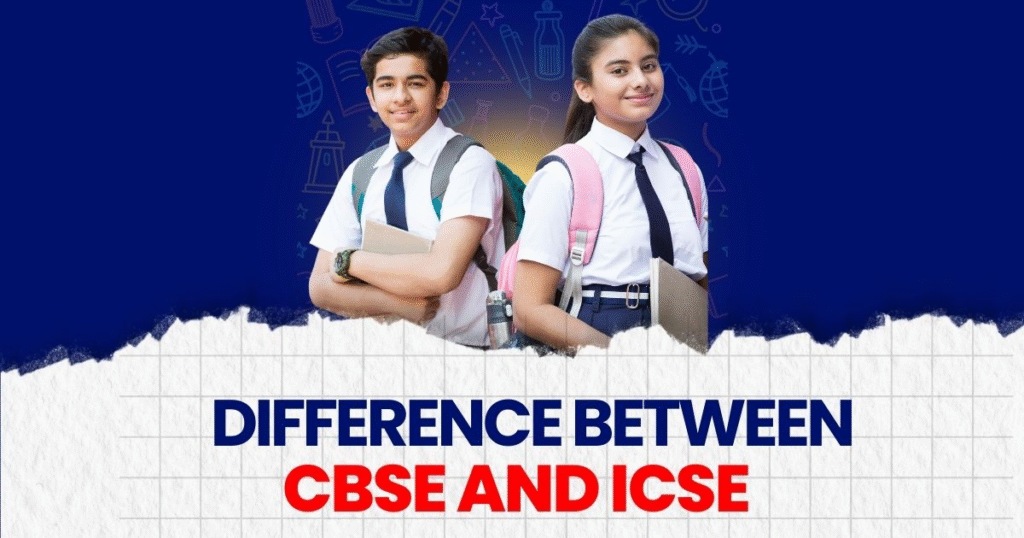
Students studying in classrooms representing CBSE and ICSE boards, highlighting differences in learning styles

Finding out the Difference Between CBSE and ICSE is important because it matters for the future of students. In India, ICSE (Indian Certificate of Secondary Education) affiliated schools are expensive but recognized internationally, and have become popular among students who want to achieve international opportunities. 

And CBSE (Central Board of Secondary Education) has a wide range of affiliated schools which makes it cheaper but effective for national-level exams. Both have different teaching methods, syllabus structure, exam pattern & marks, and career opportunities.

This comparison is not for making it good or bad, showing their strengths and weaknesses will help students to decide better for their future.

Overview of CBSE and ICSE

CBSE – Central Board of Secondary Education

  • CBSE board is run under the Government of India.
  • A wider range of schools are affiliated to CBSE.
  • It is more on the side of theoretical education and focuses on subjects like Science & Maths.
  • Popular among aspirants of NEET, JEE, NDA, and UPSC as it covers all the exams syllabus concisely. 

ICSE – Indian Certificate of Secondary Education

  • Council for the Indian School Certificate Examinations (CISCE) is a private education board which governs ICSE board.
  • As compared to CBSE, schools affiliated to ICSE in India and abroad are less in numbers.
  • It focuses on both theoretical and practical knowledge equally on all subjects including arts, science, and languages.
  • Its balanced education is valued internationally.

Curriculum and Teaching Style

CBSE curriculum is more structured and straightforward, it does not contain any extra details on any topic which makes it less but precise for exams. It prioritizes subjects like Science and Mathematics, designed with theoretical conceptual knowledge which makes it ideal for competitive exams. Other subjects like English and Hindi have fewer chapters and syllabi in comparison to ICSE. It is best for the engineering, medical, or government exams focused students.

ICSE curriculum is designed with lengthy explanations and balanced across subjects. It also focuses on other subjects like Literature, language and practical projects for balanced education. ICSE boards students have to study in-depth of each subject. That feels burdened sometimes but it improves analytical ability. It is best for overall knowledge, communication skills, and global recognition opportunities seeking students.

Read More 👉 Meet the Best History Teacher for Competitive Exams Who Can Boost Your Score

Difficulty Level

CBSE is easier in comparison to ICSE as it has a concise syllabus that covers easily within less time. It encourages more theoretical knowledge than projects. Students can easily clear exams with less academic pressure but it improves basic knowledge. ICSE is more detailed on every topic and stressing on projects, lab world, internal assessments making it heavier for children to cover. But it is best for building overall skills that improves analytical thinking.

Examination Pattern and Grading System

CBSE follows a continuous and comprehensive evaluation system to reduce exam stress and declaring results in CGPA Cumulative Grade Point Average system. Questions in the exam are based on the NCERT books. 

ICSE follows marks-based evaluation and grades are assigned according to the percentage. Questions asked in exams need both depth of knowledge and analytical ability to represent the answer. In the final result, 20-30% makes are dependent on the internal assessments so projects are becoming necessary.

Recognition in India and Abroad

CBSE is recognized in major schools in India, making it best for students who plan to continue study in India. It is popular among the JEE, NEET, NDA and UPSC aspirants. ICSE is recognized globally by foreign universities. Developing language and communication skills with its english-oriented syllabus can help students to continue their studies in foreign universities. 

Language and Communication Skills

If students want to continue their studies abroad, develop communication skills, and aim for jobs where language like English will be needed then ICSE is the best option because CBSE is more focused on Science and Maths. However, CBSE emphasizes English and Hindi but not on the higher level.

Which is More Expensive?

Many government schools are affiliated to CBSE board which make it affordable for the students. Private CBSE schools also have affordable fees in comparison to ICSE affiliated schools. More expensive due to their huge curriculum, projects, and emphasis on quality teaching.

Career and Competitive Exams

Competitive exams aspirants prefer to study in CBSE affiliated schools because it covers a more concise syllabus on important subjects like Economics, Maths and Science. However, ICSE boards schools produce creative minds. They emphasize on English Language & Literature, and analytical skills to help students secure their career in international companies.

Pros and Cons at a Glance

CBSE ProsCons
Easier syllabusLack of strong foundation in English and humanities
Affordable FeesLimited application-based learning
20,000+ schools
Ideal for competitive exams
ICSE ProsCons
Tough syllabusMore-time consuming
International RecognitionExpensive schools
Strong English and analytical skillsLess useful for Indian competitive exams
Encourages overall development

Which Board Should You Choose?

It totally depends on your future goals, aiming to make your career in the medical field, engineering, or government sector then CBSE is a good option because it contains an overall concise syllabus that is needed to study in most of the Indian entrance exams. CBSE board students also can go abroad but they have to study hard even on their english and communication skills. Where ICSE is providing overall development, students can go abroad for higher studies with strong language skills and well-rounded knowledge. 

Both boards have their strengths and weaknesses, for making the right decision, students should choose their board according to their interest, learning style, and career plan. 

FeatureCBSEICSE
Curriculum FocusScience & Math oriented, exam-basedBalanced syllabus, includes languages & arts
Difficulty LevelEasier, conciseDetailed, more challenging
Teaching StyleTheoretical, less projectsPractical, project-based, strong English focus
RecognitionBest for Indian exams (NEET, JEE, UPSC)Internationally valued, good for global studies
EvaluationCGPA/percentage, NCERT-style questionsMarks-based, detailed assessment + projects
LanguageModerate EnglishStrong English & literature
AvailabilityWidely available, govt. & private schools, affordableLimited, mostly private and costlier
ExtracurricularAcademics priority, fewer activitiesEqual focus on academics & extracurriculars
Best ForStudents preparing for Indian competitive examsStudents aiming for holistic or overseas education

Conclusion

Which board is best is a little bit complex, you must know the Difference Between CBSE and ICSE before you select your board. Students and parents both have to understand what are the career goals and which board is good for their children. Some students are not able to handle the tough syllabus of ICSE and some students want to go abroad, so it should be according to your plan not by other people’s recommendation.

Bihar DElEd Entrance Result 2025 OUT: Check Marks, Rank & Admission Status

Bihar DElEd Entrance Result 2025 OUT

On November 26, 2025, the BSEB Bihar DElEd Result 2025 was formally announced by the authority. Candidates who filled the applications in a period from January 11, 2025, to February 5, 2025 can check their result for Bihar D.El.Ed 2025 from the link given below. You need the date of birth and roll number to access the scorecard. Now the result is here of those applicants, so visit the official website to download the scorecard and check merit list/cut off marks or copy the link given below & paste it in the new tab of the window. 

Application Start Date11/January/2025
Application Last Date05/February/2025
Fee Payment Last Date06/February/2025
Correction Date13 —- 17 May/2025
Exam Date26/August/2025
Answer Key Date11 —- 13/October/2025
Result Date26/November/2025

Eligibility & Application Fee Key Details For BSEB DElEd

The two-year Bihar DElEd course is open to the candidates who have passed 12th standard or an equivalent examination from a recognized board or institution in India. Candidates who are above 17 years old can apply and there is no age limit. 

Reserved category candidates are required to pay ₹760, and those belonging to the General/OBC/EWS categories are required to pay ₹960. It is advised to read BSEB Bihar DElEd Exam Notification 2025 for full fledged details. 

Read More 👉 IIT BHU Fees for BTech: Tuition, Hostel & Other Charges Explained

Step-By-Step Guide to Download Result 

The result of the diploma is on The Bihar School Examination Board (BSEB) Patna official website. For the marks print out you need to kindly follow these steps:

1. Go to the official website which is mentioned in the below section.

2. Link with naming “BSEB Bihar DElEd Result 2025” is posted, you can find and click on it.

3. Fill in the roll number/ application number and date of birth.

4. Press the “Submit” button.

5. Now BSEB Bihar DElEd Result 2025 will be appeared on your screens.

6. Download and take a printout of your scorecard or keep it for future reference.

Make sure to have all the necessary credentials in order to make the process hassle-free. 

Useful Links
Check ResultClick Here
NotificationClick Here
Official WebsiteClick Here
Scroll to Top