HSSC CET Group D Recruitment 2026: Get All the Details to Apply 

HSSC CET Group D Recruitment 2026

If you’re planning to join the government sector then prepare well to apply for HSSC CET Group D Recruitment 2026. Get all the details from the official notification which was released on 18/June and check if you are eligible or not. This is a high paying job which sets your career and opens the door for government perks. You are going to be recruited by the Haryana Staff Selection Commission.

The endless refreshing of official websites, the daily rumors on Telegram groups, the anxiety of crossing the upper age limit, and the sheer pressure of exam preparation—it’s a heavy load to carry. But today, you can take a deep breath. 

Continue reading the blog to understand the requirement and instruction on how you have to try for selection in HSSC CET Group D Recruitment 2026.

Important Dates You Simply Can’t Miss

When it comes to government competitive exams, missing a deadline is the ultimate heartbreak. Follow these dates and mark it on your calendar to stay alert for the updates. 

EventDate 
Official Notification Release Date18/June/2026
Online Application 19/June/2026 
Last Date for Online Application03/July/2026 
Fee Payment Last Date06/July/2026 
Application Correction 7–9/July/2026
Date of ExaminationTo be announced

Read More 👉 Online or Offline Coaching Which is Better For You? 

Eligibility Criteria For HSSC CET Group D Recruitment 2026

You can’t just apply by filling out an application, make sure your education, age and marksheet aligns with the eligibility criteria of HSSC CET Group D. This is an amazing, accessible opportunity for a massive number of candidates across Haryana.

1. Educational Qualifications

Group D post required 10th marksheet from a recognized educational board. Candidates who have it can apply for this post along with other mandatory requirements.

Additionally, Hindi or Sanskrit must be studied by you as subject to the matriculation level. Only lower level job posts get relaxation from this language requirement, other than that every post asks for it.

2. Age Limit Requirements

You must come under the specific age range that is set by the commission to allow maximum participation. As of the closing date of registration (July 3, 2026), you must fall within this range:

  • Minimum Age: 18 Years
  • Maximum Age: 42 Years

What is Age Relaxations?

You don’t have to worry about the upper age if you belong one of these categories as Haryana government set some age relaxation for specific reserved categories:

  • SC and Backward Classes: Relaxation of 5 years.
  • Persons with Benchmark Disabilities (PwBD): 10-year relaxation (which increases up to 15 years when the candidate is also a part of the SC/BC/EWS categories).
  • Women Categories: Unmarried women, widows and legally divorced women can avail 5 years relaxation.
  • Ex-servicemen: Relaxation is the period of their military service plus 3 years. 

Application Fees Breakdown

Applicant CategoryApplication Fee
General Category (Male – Haryana Resident)₹500
General Category (Female – Haryana Resident)₹250
SC / BC / EWS (Haryana Resident)₹250
Ex-Servicemen (ESM) / PwBD₹250
Non-Residents of Haryana (Male – All Categories)₹1,000
Non-Residents of Haryana (Female – All Categories)₹500

How to Apply Online for HSSC CET Group D Recruitment 2026

You don’t have to go anywhere to fill the application, the entire application process is completely online through the official portal of the Haryana government. Follow these instruction to apply:

Head to the Official Portal: Open your web browser and navigate securely to the Website.

Registration or Login: Register yourself with your mobile number and verify it though OTP. Then login with your registration number and find the HSSC CET Group D recruitment. 

Fill in Your Details: Click on Apply now for entering into the application portal and enter your personal information, educational background, and select the post. Double-check everything! Because any error could disqualify you during the document verification stage later on.

Upload the Required Documents: Make sure that all the documents are clear and text is visible in the image. You need:

  • Your 10th-class marksheet.
  • A clear and white background recent passport-size color photo
  • Your signature.
  • Any relevant category certificates (Ensuring they are freshly dated per the new notification rules—e.g., EWS/BC certificates issued on or after April 1, 2026).
  • The handwritten Undertaking/Declaration as prescribed in Annexure VIII.

Pay the Fee and Submit: Complete the online fee payment through UPI, debit card, or net banking. Finally, submit your form.

Print Your Receipt: Always save a PDF and print a hard copy of the final submitted application and the payment receipt. You will absolutely need these when it’s time to download your admit card or attend document scrutiny.

Read More 👉 Allahabad High Court RO / ARO / CA Recruitment 2026 For 543 Seats

Selection Process & Exam Pattern: What to Expect

The best part about the HSSC Group D recruitment is the streamlined selection process. There is no two stage exam, or interview process for your selection like it happens in Group C or higher-tier exams. Your selection depends entirely on the score of the Common Eligibility Test (CET).

Exam Pattern: 

ComponentDetails
Mode of ExamOffline (OMR-Based) 
Total Questions100 Multiple Choice Questions (MCQs)
Total Marks100 Marks
Duration1 hour 45 minutes
LanguageBilingual (Hindi and English)

The Syllabus Weightage:

  • 75% of the Exam: Covers main topics from General Knowledge, Logical Reasoning, Mathematics, English, and Hindi.
  • 25% of the Exam: Focuses on current affairs of Haryana. So you must prepare the history of Haryana along with Literature, Geography, Civics, Climate and Environment and connect dots with current affairs.

There is no negative marking for choosing the wrong answer. You can leave the answer by filling the fifth bubble/circle on the OMR sheet. 

Read More 👉 How To Prepare Current Affairs For Government Exams: A Complete Strategy

Conclusion

Getting a government job is a marathon, not a sprint. It requires commitment, late hours and buckets of patience. The notification has been released, the application portal is live and now the onus is on you.

Use today to get all your paperwork in order, get that online application in without a hitch this week, and then get 100% of your attention focused on your studies. Focus heavily on the Haryana-specific GK, practice offline OMR mock tests to manage your time, and stay positive.


Leave a Comment

Your email address will not be published. Required fields are marked *

UPSC Civil Services IAS/IFS Pre Recruitment 2026:  Notification, Dates & Apply Complete Guide

UPSC Civil Services IAS IFS

Union Public Service Commission (UPSC) has released the Civil Services (IAS) and Indian Forest Service (IFS) Prelim 2026 notification, now apply for 933 prestigious Union Government posts in Civil Services (IAS) and IFS 2026.

The online application process to fill up the posts began on February 04, 2026. Eligible candidates who aspire to join India’s top administrative services can apply through the official website on or before February 24, 2026. 

Prelims will be held on 24 May 2026, Admit cards to be issued soon. Mains follow in August, but focus on Prelims first. 

Follow These Event Dates For UPSC Civil Services IAS/IFS Pre Recruitment 2026

EventDate
Online Apply Start Date04/February/2026
Last Date for Fee Payment24/February/2026
Pre Exam Date24/May/2026
Admit CardBefore Exam
Result DateUpdated Soon
Application Fees
General/OBC/EWS,₹100
SC/ST/PwD/womenNIL

Eligibility Essentials

  • You should have a bachelor’s degree from a recognized university. 
  • Age Limit: The age of the applicants for this post should be between 21 to 32 Years (as on 01/August/2026) i.e. they should not be born before 02 August 1994 and after 01/August/2005.
  • Age Relaxation: As per Govt. Norms, the relaxation in age will be given- 3 yrs for OBC candidate, 5 yrs for SC/ST candidate, more relaxation would be admissible for PwD and Ex-servicemen candidates. 
  • Citizenship: The rules are applicable for Indian citizens or as. 

Read More:- BSc Medical Laboratory Technology (MLT): Course, Fees, Career & Scope in India

How to Apply: Step-by-Step

  1. Go to the official website (upsc.gov.in) to apply. or upsconline.nic.in. 
  2. Apply through the pre-registration (One-Time Registration or OTR) if new
  3. Complete Part I (personal information) and Part II (upload photograph and signature, pay fee). 
  4. Charges: ₹100 for General/OBC/EWS, no charge for SC/ST/PwD/women. 
  5. Verify all before you submit the application. 
  6. Print the form for future reference

What is Exam Pattern

Prelims consists of two papers: GS Paper I (200 marks, counts for merit) and CSAT (qualifying). There is also negative marking, so approach is important. It’s your way to Mains — only rankers move ahead. 

Useful Links
Apply NowClick Here
Download NotificationClick Here
Official WebsiteClick Here

Leave a Comment

Your email address will not be published. Required fields are marked *

UPPSC APO Admit Card 2026 Out: Check Exam Center and Date

UPPSC APO Admit Card 2026

The wait has ended for thousands of law graduates in Uttar Pradesh. UPPSC APO Admit Card 2026 Out – Download Uttar Pradesh Public Service Commission Assistant Prosecution Officer Hall Ticket at official website of UPPSC. If you’ve been studying the books, memorizing sections of the newly written laws, and keeping track of every notification, this is the “green light” you’ve been waiting for.

The post of Assistant Prosecution Officer (APO) is among the most prestigious posts in the state’s legal system, and with 182 vacancies this year, the competition is fierce as ever. This is your ultimate guide to everything on the admit card, about the exam and how to survive the last days of your preparation. 

Key Dates for UPPSC APO 2026

EventImportant Date
Admit Card Release Date12/March/2026
Exam Date22/March/2026
Exam Timing9:00 AM – 11:30 AM (Single Shift)
Official WebsiteClick Here

UPPSC APO eligibility

Candidates should have done LLB from a recognised university by UGC and approved by Bar Council of India. They should be citizens of India (or in case of special provisions for subjects of Nepal/Bhutan, Tibetan refugees prior to 1962, or certain migrants). The reservation benefits are applicable for the Uttar Pradesh Domicile holders only, rest of the candidates will be treated in unreserved category. 

Age Criteria

From 21-40 years old candidates are allowed for this exam and age relaxation detail given below: 

CategoryAge RelaxationMax Age
SC/ST/OBC (UP)+5 years45
PwD (UP)+15 years55
Women (UP domicile)+5 years45
Ex-servicemenService yearsPer 

The 2026 Exam Pattern

This year is crucial as the syllabus is revised to include the repeal of old colonial-era laws and their replacement with the new Indian legal regimes. The Prelims are a screening test, your marks for them will not get added to your final merit list, but you will have to clear the cut-off for them to be eligible for Mains. 

Prelims Structure (150 Marks)

General Knowledge (50 Marks): This section includes Indian History, National Movement, World Geography and Current Affairs.

Law (100 marks): The big change here is you’re no longer tested on the old IPC, CrPC and Evidence Act, but on the Bharatiya Nyaya Sanhita (BNS), Bharatiya Nagarik Suraksha Sanhita (BNSS) and Bharatiya Sakshya Adhiniyam (BSA).

Add U.P. Police Act and the Indian Constitution both for better preparation.

Beware of Negative Marking! There is a penalty or mark deduction of 0.33 (1/3rd) for every incorrect answer. If you don’t know the answer, you’re usually better off not guessing blindly. 

Follow These Steps to Download Your UPPSC APO Admit Card 2026

The process has been made digital and is fairly simple to execute through the One-Time Registration (OTR). How to download hall ticket without any glitch:-

  1. Go to the Portal: Visit the website of UPPSC.
  2. Locate the Link: Find the “Important Alerts” section. A link will be available to Download UPPSC APO Admit Card 2026.
  3. Input Your Information: To retrieve your hall ticket, you must have OTR number, Date of Birth and Gender.
  4. Confirmation: Type Captcha as is or select Captcha as you are told to from the screen.
  5. Download, Print and Save: As soon as your admit card is displayed on your screen, download it. 
  6. Pro-tip: Print at least 2–3 copies. Put one in your bag, one in your house for backup. 
CategoryFee (₹)
General/OBC/EWS125
SC/ST/Ex-Servicemen65
PwD25

Selection Stages

  • Preliminary Exam: Paper objective type with negative marking (150 marks, 2 hours) on General Knowledge and Law; only for screening, with 0.33 negative marking.
  • Mains Exam: 500 marks of question paper came which you have to solve in Descriptive manner. It contains law and general studies questions and its important one as the marks are included in the final merit list.
  • Interviews (50 marks) are given on the basis of their interview which is conducted mostly on legal knowledge, communication and suitability.

Read More:- Indian Navy Agniveer SSR / MR Recruitment 2026: Eligibility, Dates, Salary & Apply Online

Merits Stage-Wise

StageMarksPurpose
Prelims150 (qualifying)Screening
Mains500Core evaluation
Interview50Personality 

Success Roadmap

Next StepsAction
TodayDownload/print admit card (OTR no. + DOB needed)
Daily (Mar 16-21)2 mocks + weak area revision (new laws priority)
Exam DayCarry ID and Admit Card, Arrive on Time

Preparation Tips

It’s important to prepare well for 150-mark prelims as it’s an entry gate for the mains and avoid guesses because of 0.33 negative marking. After prelims, focus on descriptive Mains (500 marks) where your legal depth will shine, and an interview of 50 marks that tests clarity and conviction. You’ve already the qualification, and you have paid the fees, and you’ve cleared the first hurdle — now take the plunge with discipline for one of 182 most coveted legal posts in UP. 

Conclusion

The UPPSC APO Admit Card 2026 release is coming near and it is a final chance for those follower who is wants to get 182 APPO post in Uttar Pradesh. The exam is set to be held on March 22, so candidates can now gear up for their last phase of preparation by revising important legal concepts, attempting mock tests, and making sure that they have all the requisites for the exam day. 

Leave a Comment

Your email address will not be published. Required fields are marked *

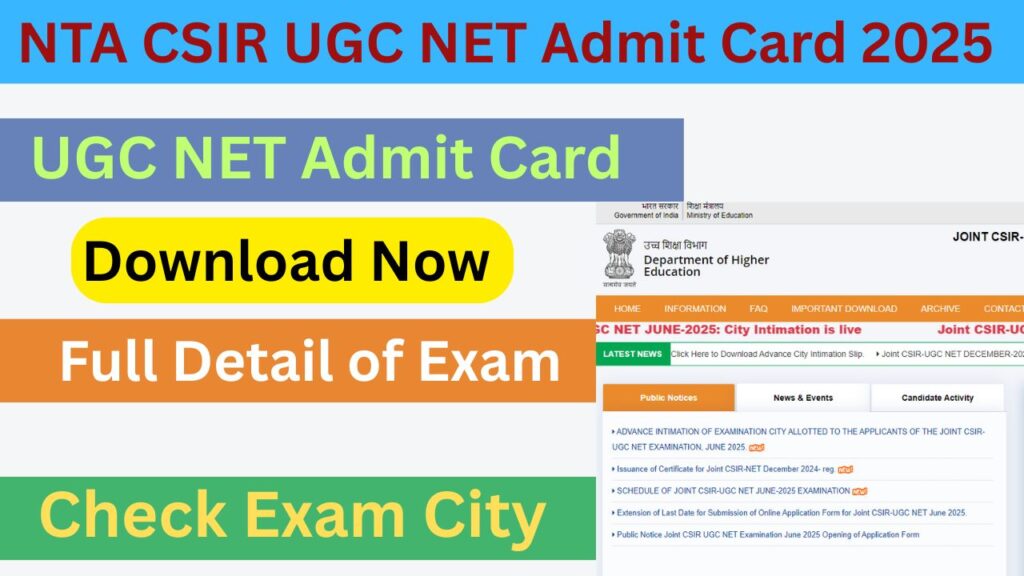
NTA CSIR UGC NET Admit Card 2025 Released – Check Exam City & Download Now on Gov Update Wala!

NTA CSIR UGC NET Admit Card

Candidates who have applied for the UGC NET exam can check their NTA CSIR NET Admit Card 2025 on the official website. Candidates must download their admit card to know the exact location of the exam centre. The admit card consists of Name, Exam centre, Exam Name, Shift Timing, Roll Number, etc. 

There are a total of three parts – A, B, and C where part A contains objective-questions from general aptitude, the rest of the two parts are based on the subjects. Negative marking is applicable, so candidates must prepare well for this exam.

Qualifying candidates will be eligible for different opportunities such as Junior Research Fellowship, Assistant Professor, and PhD admission

Short Details for the NTA CSIR UGC NET Admit Card

Exam NameUGC NET
Exam Conducting BodyNational Testing Agency
StatusAdmit Card Released
PurposeUGC NET is a national-level exam to open the path for programs in research and scientific fields.
Exam Date28/July/2025
Exam ModeOnline
Duration of Exam180 minutes
Official WebsiteClick Here

NTA CSIR UGC NET Admit Card 2025 Dates

Application Date03–23 June, 2025
Last Date for Fee Payment24/June/2025
Exam Date26, 27, & 28/July/2025
Admit Card DateJuly/2025 (before exam)
Exam City Intimation19/July/2025

For the latest update on the admit card, candidates should check the official website. The admit card will be released soon (before the exam date).

Guide to NTA CSIR UGC NET Admit Card Download 

  1. You need to click on the link to the Official NTA Website.
  2. Then navigate the login section or click on the direct link to log in from this article.
  3. Candidates must enter an application number and password to log in.
  4. After logging in, you can download your admit card or exam city slip to your system.
  5. Save it for future reference.
Important Links
Log inClick Here
NotificationClick Here
Short NoticeClick Here
Official WebsiteClick Here

Leave a Comment

Your email address will not be published. Required fields are marked *

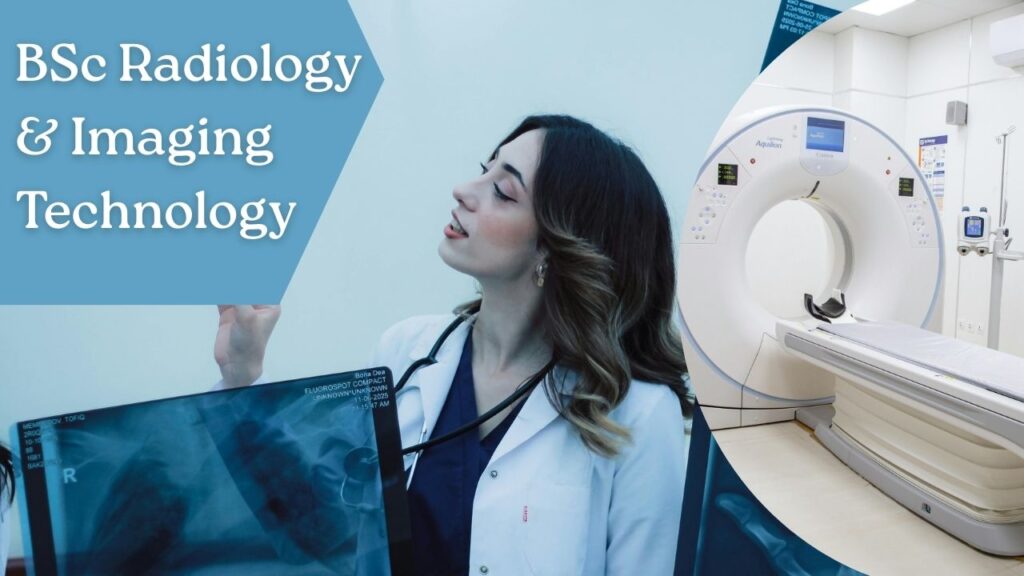
BSc Radiology and Imaging Technology: Course, Eligibility, Fees & Career

BSc Radiology and Imaging Technology

BSc Radiology and Imaging Technology is a three-year program (with one-year internship that is mandatory in most of the institutions) that equips the students with the knowledge of medical imaging. The core science portion of the curriculum (focusing on physics, chemistry, and biology) is integrated with clinical imaging courses including: anatomy and pathology, radiographic procedures, sonography techniques, ultrasound physics, computed tomography (CT), magnetic resonance imaging (MRI), and radiation protection. 

The Bachelor of Science in Medical Radiology and Imaging Technology is becoming the backbone of diagnostic medicine today. This transformation is being driven by three coalescing factors: the full enforcement of National Commission for Allied and Healthcare Professions (NCAHP) Act 2021, the adoption of advanced artificial intelligence (AI) in diagnostic workflow, and the growing world-wide need for expert imaging technologists. 

The course is intended to prepare competent technologists (“radiographers”) who will be well versed in the operation of contemporary imaging equipment and have a solid foundation in the science of diagnostic radiology. 

Who is a Radiology Technologist?

The Radiology Technologist/Radiographer is a clinical scientist who holds at least a B.Sc. or M.Sc. degree in Radiography. They don’t just know how to run the machines, they understand the physics behind the formation of images, the physiological basis of pathology and the important issues surrounding patient safety and radiation protection. 

Why Has This Course Become Important in Diagnostics?

Imaging is at the heart of diagnostics, which are critical to contemporary medicine; more than 80% of hospital care relies on them. B.Sc. In addition to machinery handling the Technician holder needs to perform a large part in the day to day imaging workflow by the year 2026 MRIT graduates holders can expect to be involved with state of the Art technology like PET-MRI, SPECT-CT, Protocol Optimization, Post Processing, QC. 

Also this line job is work during recession. There is a long-term demand for skilled radiographers, particularly those trained in PACS and RIS, as the population of India grows older, lifestyle ailments become more common, and digital healthcare is enhanced under the ‘Ayushman Bharat Digital Mission’. 

Entrance Exams & Eligibility Details For Admission 

NEET UG 2026

National Eligibility cum Entrance Test (NEET UG) shall be the single entrance examination for admission to all the undergraduate allied and healthcare courses like BSc Radiology and Imaging Technology from the academic year 2026-27, according to NCAHP. 

AIIMS — 2026 Paramedical Entrance Test

Along with NEET, there is the AIIMS entrance Test which is held by AIIMS for paramedical courses leading to B.Sc. and M.Sc. The date of AIIMS B.Sc. Paramedical 2026 exam is tentatively on 30 May 2026. 

Note:- Candidates are requested to cross-check this with official notification as some calendars mention July for Examination, however May is the only projected window as per academic calendar.

How to apply:

  • Basic Registration: The schedules released in 2026 March/April. You can create a Registration ID.
  • Final Registration: Involves the generation of a Unique Code (RUC), payment of application fee, usually in May 2026.

Test Format: This computer-based test will consist of 90 multiple-choice questions (MCQs) on biology/mathematics, chemistry, and physics and will last for 90 minutes. Any wrong answer can take away ⅓ marks.

Admissions at JIPMER & PGIMER

JIPMER (Puducherry): B.Sc admissions The admissions to the B.Sc shall be The Allied Health Science at JIPMER (Puducherry) for the year 2026 will be on the basis of the NEET UG scores. JIPMER normally holds its own counseling for these seat(s). 

PGIMER (Chandigarh): The institution holds a separate CBE, these are usually conducted in the months of August/September. The process of application normally commences in June. 

State and Private University Tests

CUET (Common University Entrance Test): Central universities, such as Banaras Hindu University (BHU), utilise the CUET. The essential subject combination for Radiology is Physics, Chemistry, and Biology / Mathematics.

Manipal: in MAHE, Phase 1 is scheduled for April 2026 for admission test, and the next Phase 2 for May 2026. 

CMC Vellore: It is a tough Institute level CBT (Computer Based Test) followed by a Step-2 evaluation (Practical tests and interviews.) 

Eligibility Criteria 2026

Educational qualification: Should be passed class 12th board with physics, chemistry and biology (pcb) and English. Some of the institutes like AIIMS allow mathematics (pcm) for Radiology courses.

Minimum Marks: For the general/EWS/OBC category, it is 50% aggregate and for the SC/ST category, it is 45%.

Read More:- Supreme Court Law Clerk Recruitment 2026 Notification Details

List of Colleges For BSc Radiology and Imaging Technology

There are 140+ colleges around India that offer BSc Radiology and Imaging Technology without taking too much fees, especially in government colleges. If you have interest in lab technologies or figuring out body structures and making reports then take admission for securing your career in this field.

CollegeLocationApprox. FeesNotes 
AIIMS—New DelhiDelhi₹4,500Elite training facility as it is Top-ranked college
PGIMERChandigarh₹10,500Members are mindful and placements opportunities
JIPMERPuducherry₹94,000Excellent internships
AIIMS—RishikeshUttarakhand₹46,000High packages up to ₹24L
GMCHChandigarh₹39,000Affordable govt option
Integral UniversityLucknow, UP₹3.15LGood infra, local pick
Parul UniversityVadodara₹4.6LPrivate, placements ₹6L avg
SGT UniversityGurgaonVariesModern facilities

Academic Curriculum for the Course 

Theory and laboratory practice are included in the curriculum of BSc Radiology and Imaging Technology. The following topics were covered: Human anatomy/physiology, Imaging Physics, General Radiography, Ultrasound Imaging, CT Scanning, MRI Basics, Radiobiology and Radiation Protection, Digital Image Processing, and General Patient Care. 

BSc Radiology and Imaging Technology is a four year degree course. The first three years were spent attending didactic lectures, practical laboratory courses, and clinical observations. The fourth year is a required, full-time clinical internship during which the student serves as a student technologist at a hospital. 

PhaseDurationFocus Areas
Year 1Semesters 1-2Basic Medical Sciences, Communication Skills, Computer Basics
Year 2Semesters 3-4Core Radiography, Radiation Physics, Conventional Imaging
Year 3Semesters 5-6CT, MRI, USG, etc Interventional Radiology
Year 4Semesters 7-8Clinical Internship, Logbook, Project Work

The 2026 Curriculum is intended to establish progressively developing competencies. 

Year 1: The Foundation

The goal is to give the student a foundation in the human body and the hospital setting.

  • Human Anatomy & Physiology: This Is Not a “Fly By” Tour Students are required to study detailed osteology (bones) to learn how to position for radiographic.
  • They are taught body systems physiology to understand how to administer contrast media.
  • General Physics: The basic laws of physics applicable to the production of radiation.
  • Clinical Pathology & Biochemistry: Basics of blood tests (creatinine, urea) which are important prior to contrast administration.
  • English & Communication: Necessary to describe techniques to patients and to calm them. 

Year 2: The Core

Students access the realm of diagnostic imaging in BSc Radiology and Imaging Technology.

  • Radiation physics: The production of X-rays, their interaction with matter, and the design of X-ray tubes.
  • Radiographic Positioning, the science and art of positioning the patient to radiograph the body part (i.e. Towne’s view for skull, Skyline view for patella).
  • Darkroom to Digital: Darkrooms may be a thing of the past, but knowing the history is key. Emphasis is placed upon Computer Radiography (CR) and Direct Digital Radiography (DR) modalities.
  • Radiation Protection: Students learn the ALARA (As Low As Reasonably Achievable) concept along with shielding and dose limit for worker and patient. 

Year 3: The Advanced Frontier

This is the year when the high-end modalities that shape contemporary radiology are covered.

  • Computed Tomography (CT): CT Physics, generations of scanners, helical vs. axial scanning, and protocols for different body regions.
  • Magnetic Resonance Imaging (MRI): Principles of the complicated physics of nuclear magnetic resonance, safety issues related to ferromagnetic materials, and pulse sequences.
  • Ultrasonography (USG): Essentials of acoustics, transducer design, and the technologist’s function in the operation of the sonographer.
  • Interventional Radiology (IR): Orientation to the Cath Lab Sterility and Equipment utilized in Angiography.   
  • Radiation and Radioactivity in Nuclear Medicine Basics of PET-CT Handling of Radioisotopes including Technetium-99m. 

Year 4: The Internship

The purpose of the internship is to transition a student to a worker. Interns rotate through different departments, including X-ray, CT, MRI, Emergency and ICU. They need to keep a logbook of cases they have done, and are evaluated on their technical skills and dealing with patients. 

BSc Radiology and Imaging Technology Career Scope & Salary

Skilled radiographic professionals are sought after in India’s growing healthcare sector. Radiology technicians also work in public and private hospitals, diagnostic laboratories (pathology and imaging centres), government health schemes, private practitioners and emerging digital health platforms including teleradiology and artificial intelligence (AI) imaging start-ups. 

BSc Radiology and Imaging Technology

Clinical Roles

  • Radiologic Technologist: The typical baseline position. Duties are to perform x-rays, triage patients and maintain radiation safety .
  • CT Technologist: So, what’s the place in the hierarchy. Knowledge of cross-sectional anatomy and contrast administration is required.
  • MRI Technologist: A step up. MRI scanners are complicated, and patient safety (screening for metal) is critical. The technologists here typically make 20-30% more than a general radiographer.
  • IR Technologist: The Cath Lab Experience. In a stressful environment, high volume dealing with cardiac and vascular interventions. You’ve got to wear thick lead aprons for long hours – but when you’re done, you’re king and you’ve got money in your pocket.
  • Mammographer: Expert in breast imaging. Because of the sensitive nature of the exam, female technologists are preferred for this position. 

Sector & Role Wise Salary (2026)

RoleExperienceSectorApprox. Monthly Salary (INR)
Jr Technologist0-2 YearsPrivate sector Hospital Rs 18–25k
Jr Technologist0-2 YearsAIIMS/Govt (Contract)Rs 25–35k
Sr Technologist5+ YearsCorporate HospitalRs 45–60k
MRI Specialist3-5 YearsDiagnostic ChainRs 35–50k
Application Specialist2-5 YearsMedical Device Co.Rs 50–80k + other allowance
Govt. PermanentEntry LevelGovernmentRs 45–55k (Initial + Allowance)

Who is Ideal For this Course?

BSc Radiology and Imaging Technology course is for students who like science and technology and want to work in the health sector. The ideal candidate: is detail oriented, is able to follow protocols which are critical for safety, is comfortable using computers and complex machinery, and can interact with patients (explain procedures, position patients). A BSc radiology student should be well versed with biology and physics and should also be calm and responsible because any mistake in imaging can impact the diagnosis. 

Future Value of BSc Radiology and Imaging in Healthcare

In India’s upcoming healthcare scenario, BSc Radiology and Imaging Technology are a must-have. With the proliferation of private hospitals and diagnostic chains in Tier II/III cities, the need for imaging services is on the rise.

Technologies, such as AI-based image analysis, hybrid imaging (e.g. PET/CT), etc, indicate that the profession will continue to be hitech. So BSc (Hons) in Radiography graduates will play a vital role in connecting technology and patient care. The course produces practical professionals who can contribute immediately to hospitals’ diagnostic teams, which is critical in a country like India, where there is a shortage of doctors. 

Conclusion

In a day and age when technology and medicine are coming together closer than ever, the Radiology Technologist is at the controls of the medical world’s most powerful machines. For individuals who are detail-oriented, have a caring nature, and technical mind, BSc Radiology and Imaging Technology offers a fulfilling, stable and ever-changing career. 

Leave a Comment

Your email address will not be published. Required fields are marked *

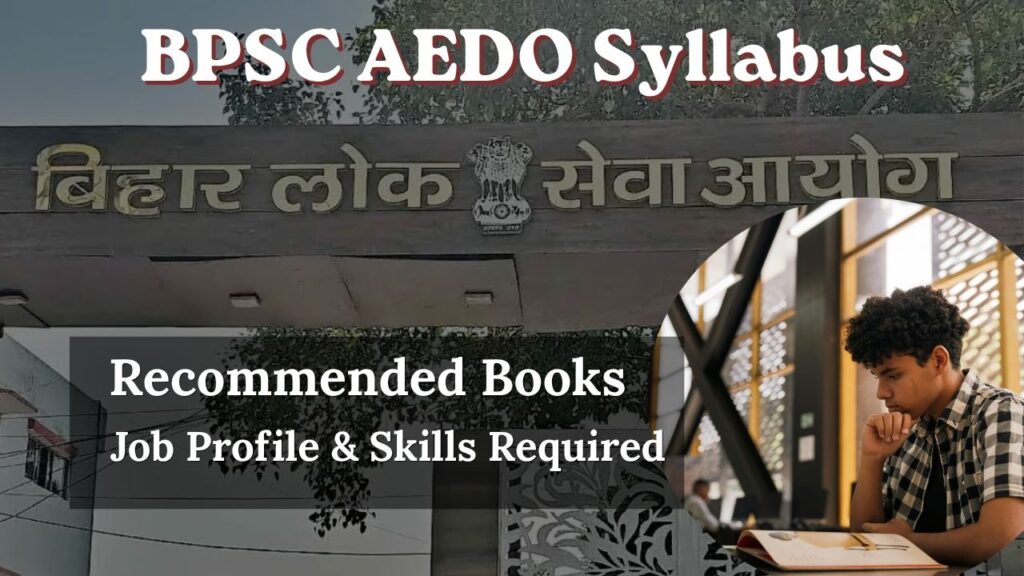
BPSC AEDO Syllabus, Recommended Books, Pattern, Job Profile & Skills Required

BPSC AEDO

BPSC AEDO Syllabus: It gives me immense pleasure to believe that a graduate can make such a difference by choosing to be in the education sector or education administration and directly impacting the lives of so many students. The Bihar Public Service Commission (BPSC) has recently made the entry for the position of Assistant Education Development Officer (AEDO). With 935 posts available, this is a golden chance for the candidates who want to get permanent and reputed government jobs in Bihar. l

But clearing a state level competitive exam is not a cakewalk. It needs a very strategic planning, strong study schedule and well understanding of examination pattern. Decoding the BPSC AEDO Syllabus is your starting line and most vital step, however attaining the job also depends on knowing fully the position that you are going to fill. 

This is the complete guide for BPSC AEDO syllabus in which you can get each and every information regarding this exam. From understanding the job profile and expected salary to analyzing the syllabus and best books, this article is your guide for everything you should know. 

What is the BPSC AEDO Job Profile?

The reality of the job must be understood before beginning preparation. The Assistant Education Development Officer (AEDO) post is a combined administrative and supervisory post. The AEDO is the vital link between the state’s education department and the schools at the ground level. 

As an Assistant Education Development Officer, you ensure the execution of educational policies and keep a watch on schools in that area to see if they adhere to the minimum standards of education and infrastructure. 

Key Responsibilities of an AEDO:

  • Educational Supervision: AEDO officers must check the working of government schools in their region consistently to speed things.
  • Scheme Implementation: Monitoring every government schemes to be implemented properly.
  • Analysis & Reporting: To generate believable reports with information such as student enrollments, attendance rates, dropout rates, and pass rates for students across courses.
  • Administrative Mediation: Redressing grievances of teaching staff, resolving logistical issues, ensuring adequate supplies and proper functioning of schools.
  • Quality Control: To conduct inspections for up keep the good quality in teaching and to ensure the syllabus is covered as per the state board. 

There is no typical desk day in this position. You’ll need to be out in the field or on campus, talking regularly with staff at schools, and taking the lead on identifying and addressing any administrative roadblocks. 

Salary and Perks: Why is the AEDO Role Highly Sought After?

Apart from the prestige and societal level impact associated with the post, the BPSC AEDO post provides very good salary and excellent job security. 

Salary is given under the Pay Level 5 as the government’s pay matrix.

Basic Pay: ₹29,200 per month.

Allowances:

  • Dearness Allowance (DA), 
  • House Rent Allowance (HRA), 
  • Travel Allowance (TA), 
  • Medical Allowances

The initial in-hand salary ranges between ₹40,000 to ₹45,000 per month.

Growth/Promotion: One can become a DEO or take up other high administrative posts in the Bihar Education Department from an AEDO with the experience of years and departmental promotions. 

Eligibility Criteria and Essential Skills Required

Educational & Age Criteria:

CategoryMinimum AgeMaximum Age
Educational QualificationAny Stream’s Bachelor’s Degree in any discipline from a recognized university 
Unreserved (UR) Male21 years37 years
Women (All Categories)21 years40 years
OBC/EBC21 years40 years
SC/ST21 years42 years

Essential Skills for Success:

  • Fluency in Hindi and English: You need to have good communication skills in Hindi and English while dealing with teachers, government officials and the public.
  • Analysis: Reporting requires you to collect data on student enrollment, for example, or financial records then analyze that information to come to conclusions.
  • Leadership and Mediation: You may need to negotiate disputes within administration to hold the line on discipline and maintain orderly learning conditions.
  • Versatility: You were to expect to go and work at different blocks, and more than you expects at getting curve balls in logistics. 

Complete BPSC AEDO Syllabus and Exam Pattern

Understanding the exam pattern very well will only help you to crack the written exam. Here is a brief about BPSC AEDO exam pattern 

The BPSC AEDO papers are in the objective type questions (MCQs) format spread over three papers. The two-hour papers are of 100 marks each. 

Guideline on Negative Marking: 1/3rd of the mark allocated to the question will be deducted for each wrong answer. Precision is just as important as the number of tries. 

PaperSubjectTotal MarksDurationNature of Exam
Paper 1General Language (English – 30, Hindi – 70)1002 HoursQualifying (Min. 30% in both separately)
Paper 2General Studies1002 HoursEvaluated for Merit
Paper 3General Aptitude1002 HoursEvaluated for Merit

The Detailed BPSC AEDO Syllabus

A focused plan of preparation depends on the exclusive understanding of the given official BPSC AEDO Syllabus. Let us now discuss each paper:

Paper 1: General Language (Qualifying)

This exam is to check your basic grammar knowledge. You will have to obtain a minimum score of 30% in both English and Hindi parts minimum for your other papers to be evaluated. 

English (30 Marks): 

  • Basic Grammar, 
  • Vocabulary, 
  • Synonyms & Antonyms, 
  • Idioms & Phrases, 
  • Sentence Correction, 
  • Reading Comprehension.

Hindi (70 Marks): 

  • Hindi Vyakaran (Grammar), 
  • Sandhi, 
  • Samas, 
  • Paryayvachi Shabd (Synonyms), 
  • Vilom Shabd (Antonyms), 
  • Muhavare (Idioms), 
  • Unseen passages.

Paper 2: General Studies (Merit-Based)

  • History: Indian History both old and new. Bihar contribution in Independence of India. 
  • Geography: Indian Geography. Focus on Bihar economic and physical geography which covers Drainage, soil and mineral wealth of Bihar. 
  • Indian Polity & Economics: Indian Constitution, governance and Policies implemented by the Central Government. 
  • Basic Science: Biology, Physics, and Chemistry of 10th class. 
  • Current affairs & General Knowledge: Big events and global summit of India specifically current events of Bihar in last 10-12 months. 

Paper 3: General Aptitude (Merit-Based)

General Quantitative Aptitude should best be learned by building your fundamentals with clear concepts of class 6th to 8th level books that are worked on in a very plain and simple way on all the necessary things. Concentrate on the following Chapters – Number Systems, Ratio and Proportion, Simplification, Averages, Profit and Loss, Percentages, Simple and Compound Interest, Time and Work, Speed and Distance and some Basic of Mensuration (2D and 3D). 

Also, reasoning plays a vital role, so you must practice topics like Number and Alphabet Series, Analogies, Coding Decoding, Blood Relations, Syllogism and non-verbal reasoning topics like Mirror Images & Paper Folding on a regular basis. 

The data interpretation is also very important aspect in the exams, where you have to frame questions on the basis of tabular data, pie chart and bar graph and solve them, so on these fronts you need along with gre speed you also require gre accuracy. 

Best Books for BPSC AEDO Preparation

With so much information out there, it’s natural to feel intimidated about where to start. The trick is to have a small number of dependable books, go through them a few times and not to hoard too much revision material. Below are some of the best books recommended for each section: 

For General Language:

  • Objective General English by S.P. Bakshi (Arihant Publications)
  • Samanya Hindi by Lucent Publications

For General Studies:

  • General Knowledge by Lucent Publications
  • Bihar Samanya Gyan by Manohar Pandey or Crown Publications
  • NCERT Books (Class 6th to 12th)
  • Monthly Current Affairs Magazines or News Paper

For General Aptitude:

  • Quantitative Aptitude for Competitive Examinations by R.S. Aggarwal (S. Chand)
  • Fast Track Objective Arithmetic by Rajesh Verma (Arihant)
  • A Modern Approach to Verbal & Non-Verbal Reasoning by R.S. Aggarwal

Pro Preparation Strategy to Crack the Exam

Having the right textbooks and knowing the syllabus is only half the battle. How you organize your daily study routine, now that’s the killer, that’s what’s really going to make or break you.

Don’t Disregard Paper 1: Many students end up underestimating the language paper because it is “acting as a gatekeeper”. But if you are not getting minimum 30 per cent in both Hindi and English, you will be disqualified no matter how many marks you are getting in others papers. Form a habit of completing at least 45 minutes language sessions daily.

Concentrate on Bihar-centric issues: Geography, history and current affairs of Bihar carry more weightage in GS. Consider “Bihar Special” as a separate paper and study accordingly. 

Be good at managing your time: You have 100 questions in the Aptitude section to be solved in 120 minutes. It provides you 1 minute for each question. Practice learning to skip the harder and more time-consuming questions and answering the simpler questions first. 

Mock Tests are non-negotiable: Start taking full-length mock tests not later than 2 months prior to the exam. It will get you used to the 1/3rd negative marking pattern. Analyze the questions you get wrong to see where you are weak and to improve your guessing. 

Revise Consistently: Use your weekends to go over everything you learned during the week. Keep your notes brief and clear so you can quickly review them in the last weeks.  

Read More :- UPSSSC Excise Constable Recruitment 2026 Complete Guide to Prepare Early

Conclusion

BPSC AEDO exam is a good way to get a respected and secure job in government service. The competition will be hard but well disciplined based on complete knowledge of BPSC AEDO Syllabus and Exam Pattern will make you ahead from the rest. Get your material, prepare a realistic timetable and start your preparation now. To qualify the state level public service exams, constancy counts more than severity. 

Leave a Comment

Your email address will not be published. Required fields are marked *

Scroll to Top