RRB ALP Admit Card 2026 Released: Download CBT-1 Hall Ticket Now

RRB ALP Admit Card 2026

The link is active now for RRB ALP Admit Card 2026 for the candidates who prepare for CBT–1 exam. They can download the RRB ALP Admit Card 2026 from 9th February 2026, and Hall tickets can be now downloaded from the official websites of the RRBs. Exam candidates for February 13, 16, 17, 18 can now download admit cards. Get yours before the test dates! 

RRB ALP Admit Card 2026 Release Dates

The release of the RRB ALP Admit Card 2026 is after the notification on exam dates, which stated that candidates have enough time to prepare. 

Exam DateAdmit Card Release Date
13th February 20269th February 2026 (Released)
16th February 202612th February 2026 (Released)
17th February 202613th February 2026 (Released)
18th February 202614th February 2026

Age Limit

Applicants must fall within the age limit of 18-30 years as on 1st July, 2025. There are age relaxations – such candidates from certain categories can apply under relaxed age limits:

Age relaxation of 5 years is applicable for the SC/ST candidates.

3 years age relaxation for OBC candidates only. 

Required Qualifications

The eligibility criteria is that he should be passed in matriculation(10th) from a recognized board and he should be either ITI pass in the respective trade or diploma in engineering from any recognized institute.  

It is necessary for the candidates to check their qualifications and their technical skills because it is most required for the post of Assistant Loco Pilot. 

Fitness Requirement

The candidates should fulfill the prescribed medical and physical standards of RRB to be considered fit for the work. 

How to Access The Admit Card For ALP Exam

  1. To download the admit card, candidates are required to visit the official website of RRB. 
  2. Find and click on the RRB ALP Admit Card 2026 section, candidates have to login using their registration details to get the download link of the document. 
  3. Candidates should hold the hard copy of the admit card on the day of the exam as the admit card is mandatory for the entry to the exam center. 
  4. Admit Card contains examination center name, city, date of exam, subject name, candidate’s name and roll number.

Salary

The RRB ALP salary 2026 is structured to offer competitive pay. The starting salary of the candidates selected for the post of Assistant Loco Pilots are entitled to Rs 19,900 to Rs 35,000 per month as per the 7th Pay Commission salary.

The salary is made up of the basic pay and several allowances. These allowances include the following – Dearness Allowance, Night Duty Allowance, Special Allowance.

The total salary is likely to further increase with the course of time as there are promotions. When the aspirants grow in their careers, then also increments come, taking their earnings to some more sums. 

Selection Process

The selection for RRB ALP 2026 consists of multiple stages intended to test the ability of the candidates. The process normally consists of:

  • Computer Based Test (CBT) Stage I: This first qualifying examination is of 75 marks and covers various subjects.
  • Computer-Based Test (CBT) Stage II: Those who qualify in the first stage will go to the second stage, which is even more detailed.
  • Computer Based Aptitude Test (CBAT): Candidates also are required to appear for the CBAT on their application for certain positions within the Loco Pilot organization to measure their suitability for the job.
  • Document Verification: The successful candidates will be subjected to verification of their qualifications and credentials after the assessment tests.
  • Training: who cleared all the above stages can now get trained and start their job. 

Read More:- Institute of Banking Personnel Selection (IBPS) 2026: Complete Exam & Recruitment Guide

Exam Structure and Topics

The procedure is separated into several parts, focusing primarily around a Computer-Based Test (CBT). 

Exam Pattern

CBT—Stage 1

ParameterDetails
Test StageComputer-Based Test—Stage 1 (CBT-1)
Duration60 minutes
Total Questions75
Maximum Marks75
PurposeScreening test to assess candidates’ preliminary knowledge in various subjects

CBT—Stage 2

ParameterDetails
Test StageComputer-Based Test —Stage 2 (CBT-2)
StructureTwo parts: Part A and Part B
Part A SubjectsMathematics, General Intelligence & Reasoning, Basic Science
Part B SubjectsTechnical Ability

Computer-Based Test for Aptitude and Trade (CBAT)

The test has been made mandatory for the eligible candidates for some Loco Pilot posts and it checks their suitability for the work. 

Verification of Documents 

To establish the eligibility and credentials of the candidates. Candidates must provide valid documents of the information they claim to have.

Medical Examination 

The final selection will include a medical examination for candidates who qualify the document verification. It is mandatory to check any disease, or health issue in the candidates that makes the post inconvenient.

Syllabus for RRB ALP 2026

The syllabus for RRB ALP 2026 primarily encompasses on Number system, decimal, fraction ratio and more from mathematics, logic and reasoning for increase critical thinking using analogies, series, sequence, syllogism, General science focus on basic bio, chemistry, and physics that helps in understanding simple phenomena. General Knowledge from history, events, and current affairs are important then technical abilities will give you clear engineering and technology questions from the ALP exams.

Useful Links
Download Admit CardClick Here
Official WebsiteClick Here

Leave a Comment

Your email address will not be published. Required fields are marked *

WBSSC Result 2025 Declared – Direct Link to Check Your Score & Rank

WBSSC Result 2025

The WBSSC Result 2025 is available on the official site from 16.11.2025 to 14.12.2025. By submitting your Roll Number / Application Number and Blind Box Number on the website, you can check your result. WBSSC SLST has officially opened the link to download the SLST exam result which will fill the 35,726 positions. For your convenience, we also played with a link to download the result. 

The candidates are suggested to verify the cutoff marks and the merit list to know the next stage of selection process. For more information and updates, the candidates are advised to regularly visit the WBSSC website. 

Key Dates to Follow Up

Application Start16/June/2025
Last Date to Apply Online14/July/2025
Exam City AvailableAs Per Schedule
Admit Card Date15/August/2025
Exam Date (Class 09–10)07/September/2025
Exam Date (Class 11–12)14/September/2025
Result Date07/November/2025
Interview Date17/November/2025

Class 09 to 10 Assistant Teacher Salary

Basic Pay₹33,400 per month
Pay LevelPay Level 11
House Rent Allowance₹4,008 (12% on basic)
Medical Allowance₹500
Dearness Allowance (3% on basic)₹1,002
Gross Salary₹38,910
Professional Tax (PTax)₹150
In-Hand Salary₹38,760

Class 11 to 12 WBSSC SLST Salary

Basic Pay₹42,600 per month
Pay LevelPay Level 15
House Rent Allowance₹5,112 (12% on basic)
Medical Allowance₹500
Dearness Allowance (3% on basic)₹1,278
Gross Salary₹49,490
Professional Tax (PTax)₹200
In-Hand Salary₹49,290

Selection Process for WBSSC SLST Teacher Position 

There are various stages in the WBSSC SLST 2025 selection process to test the aspirants in different aspects. Initially, candidates appeared for a written examination to assess their expertise in the domain. Then officials scrutinize school records, to verify the education and value. Those who pass now go on to a panel interview that assesses speaking ability, subject matter expertise, and job fit. Followed by a teaching demo to assess teaching skills and classroom management. Top choices then confirm that the papers are real. A health check is the last to fulfil basic fitness criteria. That’s the step-by-step process to getting the right people for the job.

Read More 👉 IIT Delhi MTech Fees Structure — Complete Details of Tuition, Hostel & Other Charges

Guide to Follow for Downloading the WBSSC SLST Result

  1. Visit the official site to download the WBSSC SLST Result 2025 or simply click on the direct link which will be updated on this page. 
  2. Search for the option to “download the result” link and click on it. When the page opens, provide Your Roll Number or Application Number and Your Date of Birth. 
  3. Hit the Submit button to continue. 
  4. After confirming, a result will be shown on your screen. 
  5. Download/save your scorecard or take a print if required for further reference. 
  6. Verify all the details twice, so that there are no mistakes in the procedure. 
Useful Links
Download ResultClick Here
Official NotificationClick Here
Official WebsiteClick Here

MPPSC ADPO Recruitment 2026: Everything Law Graduates Need to Know 

MPPSC ADPO Recruitment 2026

LLB students should prepare themselves for MPPSC ADPO Recruitment 2026 because the notification was dropped by the Madhya Pradesh Public Service Commission. It’s already revised the vacancy count once and reopened the application window. Those students who missed the chance before can now apply and don’t miss the second chance. The application window will close soon. 

Check all the details here before applying and be prepared for the exam.

MPPSC ADPO 2026 Notification

The original notification for the Assistant District Public Prosecution Officer post was published on 10 March 2026, and the online applications were available from 9 April 2026 to 8 May 2026. By then the number of vacancies was fixed at mere 17 posts. 

Then, on 6 July 2026, MPPSC did something candidates should pay close attention to: it revised the vacancy count upward — dramatically to 107 posts, and reopened the application form from 10 July to 24 July 2026. So if you haven’t submitted your form yet, this is not a “check it out next week” situation.

In case you missed the deadline, you can submit an extra ₹3,000 late fee for submissions between 25–31 July 2026. So don’t lose it because if you lose and then after that, a steeper ₹25,000 late fee applies from 1 August through 23 September 2026. That second window is punishing but it exists only for those who are stuck in any situation.

The admit card will be released before the written exam which is scheduled for 18 October 2026.

CategoryApplication Fee
General / Other State Candidates₹500
EWS / OBC / SC / ST / PwD (PH)₹250
Late Fee (09–15 May 2026)₹3,000
Late Fee (16 May–23 Sep 2026)₹25,000
Correction Fee (if applicable)₹50

One thing worth flagging honestly: several sources still describe the current vacancy revision and application reopening as based on limited official detail, with full notification specifics like sectional exam pattern and fee breakup expected to be confirmed alongside the final notification PDF. If you’re relying on this article weeks from now, cross-check the numbers against the notification hosted at mppsc.mp.gov.in before you finalize anything — MPPSC has already shown once this cycle that it will revise figures mid-process.

Eligibility: Who Can Actually Apply

The qualification bar is straightforward on paper but worth reading carefully.

You need a Bachelor’s Degree in Law (LLB) from a recognized university. That’s the baseline. Beyond that, candidates with a First Division in Law, or two or more years of completed legal practice, or a higher legal qualification, will be given preference at the final selection stage — so it’s not just a qualifying criterion, it can actually move your rank.

Age limits: students who are above 21 and below 40 years can apply, calculated as on 1 January 2027. Relaxation is given only to reserved category candidates under MP government rules; you can check the exact limit on official notification of MPPSC ADPO recruitment 2026 rather than believing in the previous cycle.

CategoryMaximum Age Limit (years)Relaxation (years)
General (Unreserved)40–
SC / ST / OBC (MP domicile)45+5
Women (MP domicile)45+5
Government Servants (MP)45+5
PwD (Persons with Disabilities)As per govt rulesAs per govt rules
Ex‑Servicemen40 + service period + 3 years*Service + 3 years

On domicile: reserved category vacancies (SC/ST/OBC/EWS/Women/Divyang) are applicable only to Madhya Pradesh domicile candidates, while out-of-state candidates will be considered only for unreserved posts. This matters if you’re a law graduate from outside MP hoping to use a reservation category — you can’t, for this recruitment.

Read More 👉 UPSC Principal and Vice-Principal Recruitment 2026: Must Check Complete Details

Selection Process and Pay-Scale for this Position

Selection runs in two stages: a Computer-Based Test (CBT), followed by an Interview. The CBT is an objective exam testing general awareness and legal knowledge, and Part A of the paper has 50 questions worth 150 marks, weighted heavily toward Madhya Pradesh’s history, geography, politics, and economy. The law component forms the second part of the written test, though the exact question count and marks split for the law section hasn’t been confirmed in what I could find — don’t assume it mirrors GK proportionally without checking the syllabus PDF.

Salary: expect Pay Matrix Level 10, with basic pay ranging roughly from ₹56,100 to ₹1,77,500 per month, plus DA, HRA, and other standard allowances under MPPSC service rules. One older source lists an outdated pay-scale figure (₹9,300–34,800 grade pay), which reflects the pre-revised pay commission structure — go with the Pay Matrix figures, since those reflect the current system.

Important Update for This Year on MPPSC ADPO Recruitment 2026

Two things separate the MPPSC ADPO recruitment 2026 cycle from a routine annual notification. 

First, the six-fold vacancy jump — from 17 to 107 — inside four months is unusual and suggests MPPSC recalibrated its Home Department requirement estimates mid-cycle, possibly to align with actual prosecutor shortages across MP’s districts. 

Second, the syllabus for this cycle is explicitly built around India’s new criminal codes: BNS, BNSS, and BSA now form the core of prosecution work, alongside Constitutional Law and MP-specific special legislation. 

If you were preparing off IPC/CrPC/Evidence Act notes from a 2023 or earlier cycle, that material is now legacy reference at best because the exam is built on the replacement codes.

Read More 👉 NICL Assistant Online Form 2026: Apply Online & Eligibility

One Prep Tip That Actually Matters

Don’t split your remaining prep time evenly across GK and Law. 

With Part A alone carrying 150 marks concentrated on Madhya Pradesh-specific history, geography, and current affairs, and the law section demanding fluency in three brand-new codes most law schools only started teaching seriously in the last two years, your highest-leverage move between now and October is building a tight comparison chart mapping old IPC/CrPC sections to their BNS/BNSS equivalents. 

Coaching platforms like Drishti Judiciary have already published BNS-BNSS-BSA comparative material — use that as your spine rather than trying to reconstruct it from bare acts alone.

Conclusion 

If you’re eligible and haven’t applied for MPPSC ADPO Recruitment 2026, today (24 July 2026) is your last day before late fees kick in. If you’ve already applied, your next concrete date is 8 October for the admit card and 18 October for the exam — everything in between is prep time, and the BNS/BNSS/BSA transition is where marks will actually be won or lost this cycle. 

Keep the official MPPSC portal bookmarked; given how this notification has already changed once, treat every number here as current-as-of-today rather than fixed until the exam.

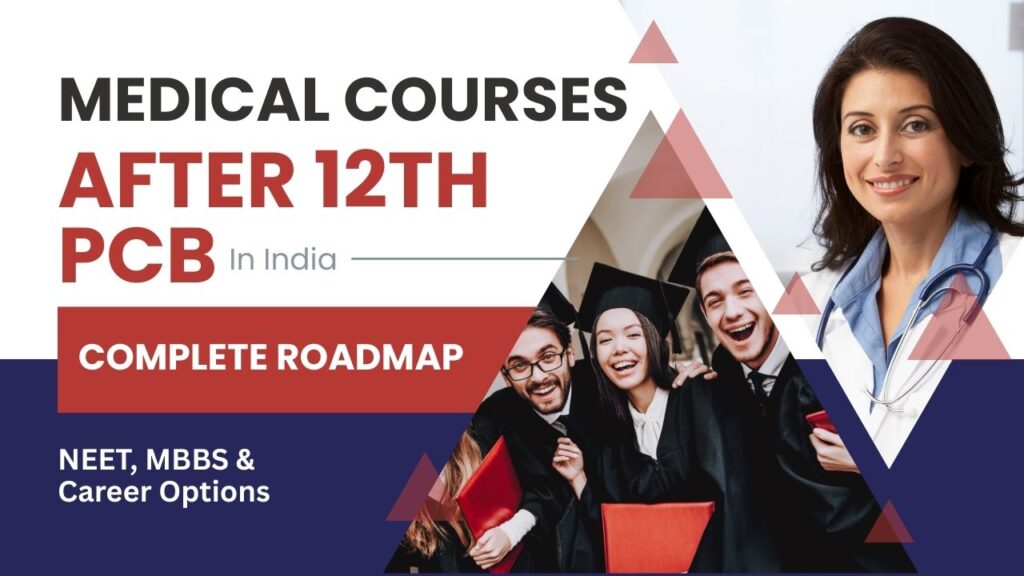
Medical Courses After 12th PCB in India: Complete Roadmap, NEET, MBBS & Career Options

Medical Courses After 12th PCB in India

To become a medical sciences professional in India, students have to opt for the Bachelor of Medicine, Bachelor of Surgery (MBBS) degree, which is an arduous and comprehensive five-year program that aims to develop the students into healthcare professionals. But the path to Medical Courses After 12th PCB in India is a confusing maze of courses and entrance exams (the most important is National Eligibility-cum-Entrance Test (NEET).

NEET entrance exam has played a pivotal role in making the process of admission of MBBS more transparent and ensuring the method of admission on merit basis and curbing malpractices in India. 

The usual path through medical training is to go straight from medical school into a foundation program, then core training, higher specialty training and then either general practice or hospital specialist/consultant. This lengthy, complex training process exists to make certain that doctors have the critical foundational knowledge, the practical skills unique to their specialty, and the clinical understanding needed to safely contribute to patient care. 

Other than MBBS, there are plenty of other medical and paramedical courses out for students PCB which are Bachelor of Dental Surgery (BDS), Bachelor of Ayurvedic Medicine and Surgery (BAMS) and Bachelor of Homeopathic Medicine and Surgery (BHMS). 

Medical Courses After 12th PCB in India

Most Popular and Hard-Level Courses

These courses offer a variety of specializations in the healthcare domain for the interested and the ambitious. For example, MBBS is a course on allopathic medicine while BAMS and BHMS are courses on Indian and homeopathy systems of medicines respectively which have profound history in India. Such classic systems, such as Ayurveda, are conceptually coherent and dynamically insightful intellectual traditions with unique theories of physiology.  

The content in medical education is constantly being updated to reflect advances in science and to prepare students adequately for clinical practice. For instance, personalized medicine is more and more being implemented in undergraduate medical education by using spiraled learning approaches. This design exposes undergraduates to evidence-based and clinically pertinent personalized medicine principles during all four years in medical school. 

Easy Courses in Biomedical Science

In the same vein, growing awareness of the need to incorporate artificial intelligence (AI) – a tool that enhances patient management and care in specialties like radiology and pathology in biomedical science education to foster healthcare education advancement is emerging. 

EBM Courses in Medical Courses After 12th PCB

Today’s medical education demands that students gain scientific foundational knowledge and not only practical exposure and clinical reasoning skills. Pragmatic EBM courses, such as the one at our institution, are intended to prepare students to sift through large bodies of evidence to answer clinical questions preparing them for the transition from undergraduate to graduate medical education. 

Cultivating systems thinking in medical education may contribute to educating scientists and clinicians of the future by counteracting dwindling interests in science through early involvement, hands-on experience, and improved coordination between educational phases. 

Professional Exams — Membership of the Royal Colleges of Surgeons

Medical education is organized into levels that sequentially increase in complexity. Following primary medical education, a phase of practical training under supervision, e.g. postgraduate residency training, is essential in order to convert theoretical knowledge into applied skills in the delivery of care to patients. 

This stage is said to be a formalised apprenticeship, to guarantee that practitioners are ready to work on their own. Passing professional exams, such as the Intercollegiate Membership of the Royal Colleges of Surgeons (MRCS) exam, is required for candidates to begin advanced specialty training in a number of specialties. 

Practical Specialization in Medical Science

Practical Specialization in Medical Science

The number of specialties open to students is huge and they can focus on general practice or pursue a highly specialised field. For instance, these are pediatric rehabilitation medicine physicians who are subspecialists working to optimize the health and function of children with disabilities across the lifespan. 

Specialties can also provide their own focus training on particular aspects, such as behavioral health, as behavior disorders are frequently seen in children and pediatric residency training in India is now having integrated behavioral health modules. Consideration is also being given to global health challenges of the future, for example increasing paediatric surgery provision in low and middle-income countries. 

Other Specializations Paths

There are also other specialist routes besides the core medical degrees. The radiation biology, dosimetry, and imaging aspects of medical physics intertwine with biology, anatomy, and physiology, and are subject to the rigorous education and training that is needed for safe and quality patient care. 

Medical physics educational programs range from undergraduate to doctoral level to facilitate the collaborative practice of physicists and physicians in a clinical environment. Likewise, clinical chemistry and biochemistry are recognized specialties requiring dedicated postgraduate training.

Choosing The Right Path in Medical is Important

Becoming a health care provider is challenging, and continuous learning and adaptation are necessary. Medical education curricula are regularly revised to be more integrated and competency based with an emphasis on the application of knowledge and on the development of problem-solving skills. This prepares future clinicians to manage complex medical knowledge and varied patient demands. 

Students need to be provided with necessary information to help them make right decisions regarding their career option after 12th class as choosing the right course is a crucial decision which will determine their future. 

In addition to MBBS being a popular-choice, it is also important to know different career options in healthcare and non-healthcare fields. Different admissions routes are being introduced into Medical Courses After 12th PCB, which enable students from under-represented groups to access medicine and aim to widen participation in the selection process are being developed. 

Conclusion

The path of Medical Courses After 12th PCB in India is the jack of all trades’ requiring preparation for entrance exams like NEET and dedication towards lifelong specialized training. The curriculum is changing as constantly evolving science, including personalized medicine and AI, is being introduced and the next generation of healthcare professionals will take on the challenges of the modern medical field. 

The option isn’t only MBBS, now there are other streams like dentistry, Ayurveda, Homeopathy and scientific specializations under Medical Courses After 12th PCB which can be integrated into healthcare. 

7 Tips to Get a Scholarship as an Indian Student That Actually Work in 2026

Scholarship

Whether you’re dreaming of an IIT, a top private university in India, or a fully funded degree in Germany or Canada, the cost of education can feel like a wall. But students can fulfill their dreams with the help of thousands of crores worth of scholarship money that goes unclaimed every year because students don’t know how to apply, or they apply the wrong way.

So with the help of this blog, you can learn what is necessary to apply for different websites that help you get higher studies. These are 7 real, practical tips that really can increase your chances of getting a scholarship – be it a government scheme, grant from a private foundation, or an international prize. 

Why Scholarships Matter For Indian Students

Education costs in India have gone up significantly. A four-year private engineering degree can cost anywhere between ₹4 lakh to ₹15 lakh. Study abroad? That easily runs into ₹30–₹60 lakh for a master’s degree.

Scholarships are not just for “toppers” or students from economically weak backgrounds. There are scholarships for:

  • Merit-based students (high percentages)
  • Need-based students (family income criteria)
  • SC/ST/OBC/Minority students
  • Girls in STEM
  • Students from specific states
  • Students applying for specific courses like law, medicine, engineering

The point is — there’s likely a scholarship for you. You just have to find it and apply smartly.

Don’t Miss this Career Boost Guide: Skill Development Course For Indian Students

Tip 1: Start Early — To Avoid Last Minute Server Down

The most common mistake of Indian Students is that they found this opportunity and the application portal was already closed. 

International scholarships give 6 to 18 months to fill the application before the academic session begins. Search and fill the scholarship 6 months before applying to study abroad in the next year. 

If students want to study in India and are looking for a government scholarship then the National Scholarship Portal (NSP) is a good option. The applications typically open around June–July for the upcoming academic year. The portal hosts 50+ central government schemes — from pre-matric scholarships for Class 9-10 students to post-matric scholarships covering graduation and post-graduation.

What you should do right now:

  • Bookmark scholarships.gov.in (NSP’s official website)
  • Make a spreadsheet of 5–10 scholarships you’re eligible for
  • Note down their deadlines and set calendar reminders 2–3 months in advance

Get your all valid documents ready, don’t wait for “scholarship season” to begin for preparing documents. 

Tip 2: Match the Scholarship to YOUR Profile 

A lot of students waste their time by applying for the scholarship without providing qualifying criteria as eligibility for every scholarship is mandatory. Some common ones include:

  • Minimum percentage in study — usually 60% to 85% in your last qualifying exam
  • Low income family — government scholarships ask about your annual family income, as they give scholarships to students whose family income is below ₹2.5 lakh to ₹8 lakh.
  • Category reservation — students belong to SC/ST/OBC/EWS/Minority-specific schemes that’s why they get scholarships easily.
  • Course and college type — some scholarships are only for students admitted to IITs, NITs, or government colleges
  • State of domicile — many state scholarships require you to be a resident of that state

Before applying, make a simple checklist:

  • Do I meet the academic requirement? 
  • Does my family income fall within the limit? 
  • Am I in the right course/college category? 
  • Is this scholarship open to my state/category?

If all boxes are checked — apply. If any one of the things you missed then don’t apply and stop wasting your time. Get on to the next one. Applying to well-matched scholarships gives you a higher success rate.

👉 Which Job is Best SSC or Banking See Full Details

Tip 3: Keep Your Documents Ready Before the Deadline

Here’s something nobody tells you: bad documentation gets you rejected even if you qualify perfectly.

A common and painful example — many students get rejected on the NSP because they submitted an outdated income certificate. The government requires that your income certificate be issued on or after April 1st of the current financial year. A certificate from January of the same year? Technically invalid.

These small document errors can silently kill your application.

Documents you typically need for Indian scholarships:

  • Class 10 and 12 mark sheets
  • College admission letter or bonafide certificate
  • Family income certificate (issued by a Tehsildar or SDM)
  • Caste certificate (if applicable)
  • Aadhaar card
  • Aadhaar-linked and NPCI-seeded bank account passbook
  • Passport-size photograph
  • Domicile certificate (for state scholarships)

International scholarships eligibility:

  • Valid passport
  • University admission offer letter
  • Statement of Purpose (SOP)
  • Letters of Recommendation (LORs)
  • Good scores in any one of these – IELTS/TOEFL/GRE depending on the country.

Tip 4: Write a Killer SOP or Personal Statement

There are a lot of students who also are applying like you. To stand among thousands of students, you must need your unique Statement of Purpose (SOP) or personal essay that can make or break your application.

Most of the Indian students write something like:

“I am a top student and good in studies with a 90% ranking. I come from a humble family. I want to pursue engineering to serve my country.”

That’s not a personal statement. That’s a template that sounds like thousands of other applications.

What a strong SOP actually looks like:

  • It tells your specific story — a challenge you overcame, a moment that shaped your goals
  • It clearly explains why you chose this particular course and institution.
  • It shows what you will do with this education — not just for yourself, but for others.
  • It connects your past experiences to your future plans in a logical, compelling way.
  • It answers: “Why do you deserve this scholarship over others?”

Don’t prolong each topic, just be specific. Scholarship committees read hundreds of applications — so they are experienced to understand generic essays in a second.

If you are not good at English, you can write the draft in your own language first, and then translate and refine it. It is more important to be genuine than to have perfect grammar. 

Tip 5: Apply on Multiple Platforms 

Don’t apply single application if you want to increase your chances to get a scholarship then apply on 2-3 platforms. You just have to know how to apply.

Government Sources:

  • NSP — Most common and easily accessible under various Central government schemes
  • State government portals — State-wise scholarships like UP Scholarship Portal, Maharashtra Scholarship Portal, and more.
  • AICTE/UGC scholarships — Specifically provide every year for engineering and university students
  • PM Scholarship Scheme — For wards of ex-servicemen

Private & Corporate Scholarships:

  • Reliance Foundation Scholarship is the most popular and bigger private scholarships
  • Tata Scholarship — Low income families students can approach it easily
  • Aditya Birla Scholarships — To study at top IITs, IIMs, and law schools
  • L’Oréal India For Young Women in Science — For women in STEM

International Scholarships (for study abroad):

  • Fulbright-Nehru Fellowship — For postgraduate studies in the USA
  • Chevening Scholarship — UK government scholarship for master’s programs
  • DAAD Scholarship — Fully funded studies in Germany
  • MEXT Scholarship — Japanese government scholarship
  • Türkiye Burslari — Fully funded scholarship in Turkey (no IELTS required for many programs)

Useful Platforms to Discover More:

Tip 6: Don’t Ignore Internal College Scholarships

This is one of the most underrated tips and most students completely miss it. Almost every college and university in India whether they are private or government has its own internal merit scholarships, fee waivers, and financial aid programs. You may not know because they don’t advertise them loudly.

A lot of these scholarships go unclaimed every year simply because students never ask.

How Can You Get Scholarship From College?

  • During admission, go to the scholarship office in a college to check and ask about scholarships.
  • See if your college has connections with foundations or corporates for special scholarships
  • Ask seniors – they usually are aware of opportunities that aren’t officially listed 

Also have a look at your university’s official portal in the pages under “Financial Aid”, “Scholarships” or “Students Welfare.” A large university may have half a dozen scholarships based on alumni gifts or CSR funding that are never publicized. 

A 10-minute conversation with the right person in your college can sometimes save you lakhs in fees.

Tip 7. Nail the NSP Registration Process 

If you want to apply for any central government scholarship in India, visit National Scholarship Portal (NSP) official website. You can find the application in a scholarship tab. 

But here’s the thing — the NSP process has a few technical steps that trip up a lot of first-time applicants.

Step 1 — OTR (One Time Registration). The government has made OTR mandatory to prevent fraud. You need to download the “NSP OTR App” (official NIC app) and complete face authentication to generate a unique 14-digit Student Reference ID.

Step 2 — Aadhaar-Seeded Bank Account. Your bank account must be linked (seeded) with Aadhaar on the NPCI server before you apply. This is required because scholarship money is transferred via Direct Benefit Transfer (DBT). Just having a bank account isn’t enough — it must be specifically NPCI-seeded.

Step 3 — Fresh Income Certificate. If you’re applying for income-based scholarships, your income certificate must be issued on or after April 1st of the current financial year. An older certificate — even a valid one — can cause a “document mismatch” error and get your application rejected.

Step 4 — Institute Verification. When you submit your application, it is sent to your college/institute for verification. If your institute fails to verify it in time, your application will not be processed. Follow up with your institution’s scholarship coordinator — don’t assume it will happen automatically.

Read More 👉 Allahabad High Court RO / ARO / CA Recruitment 2026 For 543 Seats

Common mistakes to avoid on NSP:

  • Using old documents from the previous academic year
  • Entering wrong Aadhaar or bank details
  • Waiting for the last day to apply (server issues are common)
  • Not following up with your institute for verification
  • Applying in the wrong scheme/category

Quick Scholarship Checklist for Indian Students 

  • I meet the eligibility criteria 
  • All documents are current and valid 
  • Income certificate is issued after April 1 (if applicable) 
  • Bank account is Aadhaar-seeded on NPCI 
  • SOP/personal essay is specific and genuine 
  • I’m applying through the official website 
  • I’ve noted the deadline and set a reminder 
  • I’ve informed my institute/college to verify 

Conclusion

Getting a scholarship isn’t just about being the smartest student in the room. It’s about being the most prepared and most strategic student.

Start early. Pick scholarships that fit your profile. Keep your documents airtight. Write an honest, specific SOP. And don’t overlook the less obvious opportunities — internal college scholarships, private foundation grants, and international programs that many students don’t even know exist.

Scholarship money is out there. It’s waiting for students who take the effort to find it and apply properly.

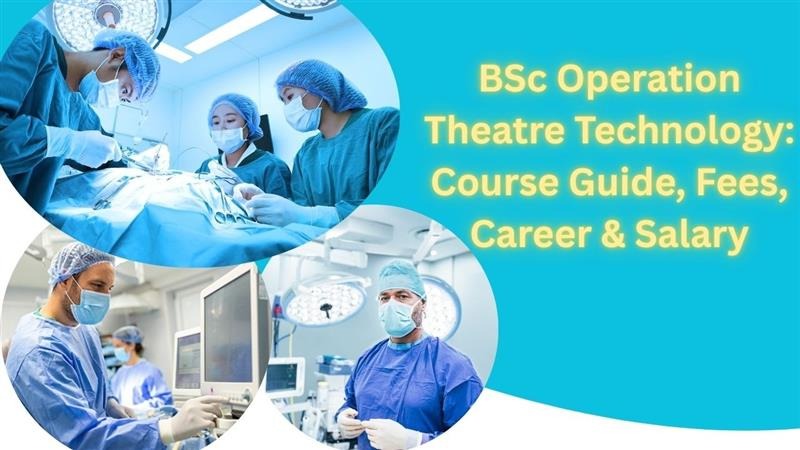
BSc Operation Theatre Technology: Course Guide, Fees, Career & Salary

BSc Operation Theatre Technology

If you’ve ever seen a surgical scene in a film, the camera almost always lingers on the surgeon. While behind every successful operation, there is a team, who make everything run smoothly silently in the background. One of the most vital members of the team is Operation Theatre Technologists. Degree in BSc Operation Theatre Technology (BSc OTT) trains students to undertake this pivotal position in the healthcare organisation. 

It is a professional undergraduate course for aspirants who wish to collaborate with surgeons, anesthesiologists and nurses within the operating room. From instrument preparation to ensuring sterility to direct procedure support, OT technologists are paramount to patient safety and managing successful surgeries.

For the students who are interested in medicine but do not want to do MBBS, BSc Operation Theatre Technology course has emerged as a very lucrative career option with rising demand in hospitals across India and abroad. 

What is BSc Operation Theatre Technology About?

BSc OTT (BSc Operation Theatre Technology) is an undergraduate course which makes you ready to be the backbone of surgeries. OT professionals ensure the operating theater is clean, equipment works flawlessly and patients are protected during their surgical journey, above and beyond what the surgeons have time to do themselves. The training enables you to work as a surgical technologist with surgeons and anesthesiologists in the operating room, as a surgical instrument sterilizer, and an assistive user of the advanced technology on which today’s surgical procedures rely.Consider it the technical conductor of an orchestra where every instrument must play perfectly in time. 

Course Duration and Structure: What to Expect

This is the interesting part and also the part you should keep a very close eye on because it changes depending on where you study.

Standard Duration: BSc Operation Theatre Technology is a 3-year course and accompanied by the attendance of a 6 month to 1 year mandatory internship.However, a few top listed universities such as SRM University, Apollo University provide the option of pursuing it as a 4 year course.Professional training in anesthesia technology is provided along with OT management. 

Welcome to Year 1, Are you ready to make a start all you need to do is dust off your knowledge for the big four; Anatomy, Physiology, Biochemistry and Microbiology. But it’s not like just cramming textbooks. You will also begin to understand more general nursing principles, as well as the language that healthcare professionals really speak on a daily basis. Think of it as learning to walk before you run.

The second year is when things start to get a bit more “real”. You’ll advance into pharmacology, gain surgical skills, and for the first time — enter the realm of OT management and sterilization techniques. That’s when you start to realize how all that stuff you learned in Year 1 actually relates to what takes place in an operating room.

Year 3 is where it gets real. You will be learning advanced surgical procedures, anesthetic methods and intensive care. There’s a similar emphasis on quality control, because in medicine, precision and responsibility aren’t optional, they are everything.

Then you do the Internship and that is where everything changes. No more simulations. No more hypotheticals. You’ll be in a real hospital operating theatre, assisting in real surgeries on real patients. Yes, it’s intense. And I was tested in ways I never thought I would be. After all, it is the final stage of your training, but also the most important one, because this is when you stop being a trainee and start becoming a practitioner.  

Are You Eligible For BSc Operation Theatre Technology?

Check your qualification before applying for the admission into this course, Here’s what you need based on official university guidelines:

Educational Background: You need to have done Class 12 (10+2) in Science stream with Physics, Chemistry And Biology (PCB) as core subjects. Some universities allow Mathematics instead of Biology, but the latter is the better choice.

Minimum Marks: Most organizations expect you to have minimum 50% aggregate marks in your PCB. While 55% and 60% needed for the top colleges like AIIMS Delhi and Brainware University.

Age Limit: Starting from 17 and the upper age limit is usually 40 years, with 5% relaxation for reserved categories.

Medical Fitness: A compulsory medical certificate of fitness from a government medical officer must make sense since you’ll be hectoring life. 

Admission Process: How to Get In

If you’ve been panicking over entrance exams, here’s some relief. The cut throat competition is not that much higher as compared to BSc Operation Theatre Technology when it comes to MBBS seats. It’s really not too bad if you know what to expect.

For most colleges, both government and private, it all boils down to your Class 12 PCB percentage. That’s it. If you work hard in your board exams, that work directly opens doors for you here. No complicated formulas, no years of entrance prep — just your actual academic performance talking.

A few universities want to play it their own way. There is no one all India entrance test for BSc Operation Theatre Technology but a few institutions/universities conduct their own tests or they accept students based on their CUET scores for admission. 

Course Fee

As we all presume that it’s not always a career choice that’s based on passion, but also what makes practical sense for you and your family. 

BSc Operation Theatre Technology fees: The good news here is BSc Operation Theatre Technology is really one of the less costly healthcare courses you will find anywhere, more so if you get a government college seat. We’re talking anywhere from ₹10,000 to ₹50,000 per annum and that is fairly affordable when you compare with most private medical courses. For a lot of students, this is what separates the dream from the doable. 

Private colleges have, as one would expect, a more varied selection. Most are in the range of ₹50,000 to ₹2,50,000 per annum, but among the premium institutions the total cost of the course can go up to ₹10 lakhs for the entire programme. 

That’s a big cost, so you should consider what you’re getting in return — facilities, faculty, hospital partnerships, and placement assistance all make a difference. Other expenses like books and hostel costs are not included in these fees.

A majority of the government hospitals and colleges provide scholarships or stipends for pursuing internships. It is helpful for taking ideas on how things work. So look into what assistance you’re eligible for before you commit anything. That one conversation or Google search could save you a pretty meaningful amount of money over four years. 

Where Can Your Career Take You?

Here’s where your heart might skip a beat (and I mean that in the best possible way). The Indian healthcare sector is booming and OT technologists are highly demanded.

  • OT Technician/Technologist: Your main role will be to assist in surgeries and help in the theatre
  • Anesthesia Technologist: Role required to keep monitor patients and machines.
  • Surgical Assistant: Assisting doctors/surgeons during operations.
  • CSSD Technician: Crucial industrial service in central sterile supply departments
  • Emergency Care Technician: Managing Critical Care and Trauma Cases 

Salary Expectations

You can have a good career in this field and it no doubt grows much better with intense experience. For freshers 0-1 years experienced, they get paid from 15k to 25k in government hospitals with job security, pension and all other benefits.

Private hospitals salary ranges from minimum 20k to 35k and maximum 40k in top corporate chains.

₹ 30,000 to ₹ 50,000 per month – With 2 to 5 years Experience Team leader Position holders And Private sector job holders.

Senior Experienced – If you are a senior with 5+ years of experience, you can earn anywhere between 50,000 to 80,000+ Rs per month, be it managerial role or any other specialized area. So, this just build up that how much you can get financial support and more out of this career.  

Read More:- Bihar BPSC APO Recruitment 2026: Eligibility, Vacancy & Apply Online

The Next Step After BSc Operation Theatre Technology Course

Having gained experience in BSc Operation Theatre Technology, expanses of job associated with go up in professional life are endless. Experts may become teachers to mentor and educate students who want to become OT technologists, or they may apply their skills in medical equipment sales, with firms such as Siemens or GE Healthcare, which can be quite rewarding. 

Also, a career in hospital management through MBA in Hospital Management can lead to the door to the top management. 

Specialization is also a viable option for career growth with specialized certifications in robotic surgery, endoscopy and critical care. Learning always pays off for career growth. 

Postgraduate studies such as MSc in Operation Theatre Technology or Anesthesia Technology allow individuals to take on advanced clinical roles, while MBA in Hospital Administration qualifies one for leadership opportunities. 

PG Diplomas in Critical Care or specific Surgical Procedures, along with Certifications in Robotic Surgery, Laparoscopy or Medical Coding, also enhance the career prospects. It is through these career paths that professionals can grow both personally and professionally but at the same time make a meaningful impact on the healthcare sector. 

Conclusion

BSc Operation Theatre Technology is not only a degree, it’s an opportunity to be a crucial part of life saving surgeries. With the healthcare industry in India expected to grow to $638 billion by 2025 and the medical device market expanding at 28% per year, the need for talented OT practitioners is strengthening.

You’ll be at the heart of the hospital, seeing medical miracles every day, and have a stable, respectable career with real upward mobility. If you envisage a career in India’s best AIIMS hospitals or want to work abroad, this degree takes you there.

The operating room isn’t for everyone—it’s stressful, physically and mentally exhausting, and you have to be totally exact. But for those who have the passion for healthcare and the disposition to work in a high-pressure set-up, BSc Operation Theatre Technology provides a career path, that allows you to make a difference in the lives of patients — each and every day. 

Scroll to Top