Voice-to-Notes Tools for Students: Study Faster Without Typing

Voice-to-Notes Tools

Voice-to-Notes Tools are really helpful from turning large study lectures into simple notes in just few minutes. Writing everything down is an old fashion technique that takes a lot of time for a few pages notes but everything is going easy with fast pacing technologies. Whether it’s hours of session or long research sheets, enabling speech to text is the smarter way to take notes. 

You’re forty minutes into a lecture, the professor has moved through three concepts, and your notes still say “photosynthesis — light reaction —” because your hand gave up before your brain did. Speaking runs at roughly 150-160 words a minute while typing tops out around 40 for most people. 

That gap is the entire case for Voice-to-Notes Tools , and for Indian students juggling coursework in English, Hindi, or a regional language, the tool you pick matters more than the concept itself — because most of the tools were built for American office meetings, not for Indian classrooms. 

Best Voice-to-Notes Tools For Indian Students 

There are plenty of tools that can turn your voice into text but then you find an error — spelling, whole different word (except, accept), not able to turn your regional language — that’s because it doesn’t understand. Some AI integrated voice tools that turn your every word into text without major errors is here:

Gboard Voice Typing — free, and it’s already on your phone

Before downloading anything, check what you have. Google’s Gboard keyboard has an in-built voice typing feature which you can use by clicking on the mic icon. If the icon is invisible then enable it from the setting so Voice-to-Notes can be easy and quick without downloading any new app.


It works in Hindi plus eight regional languages — Bangla, Gujarati, Kannada, Malayalam, Marathi, Tamil, Telugu, and Urdu — Indian students can use this keyboard in any app that takes input in the same language, not just Google’s own apps. 

For a student jotting quick revision notes in Hindi between classes, this is the lowest-friction option because there is no signup, no subscription, no separate app to remember to open.

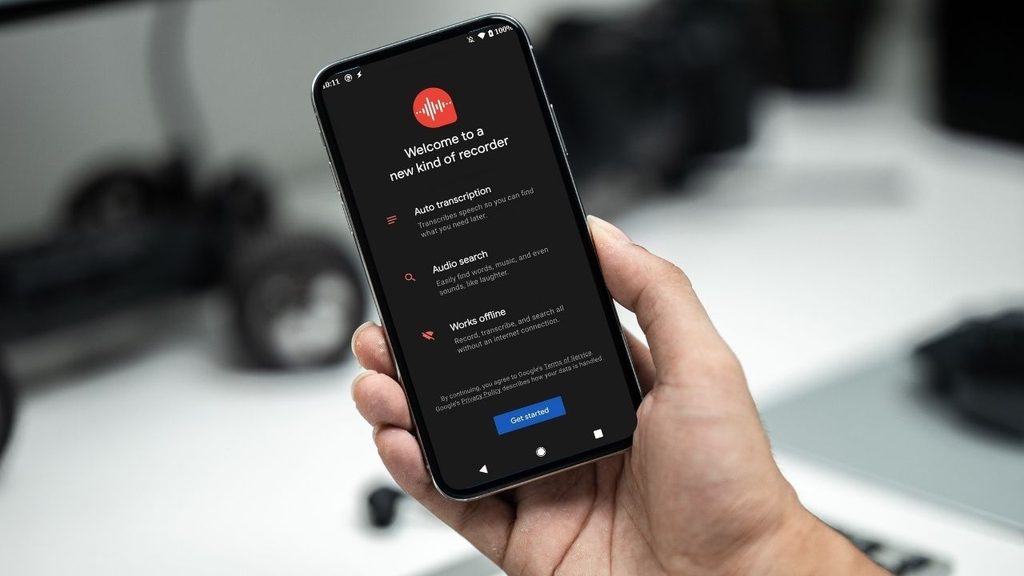
Google Recorder — real-time transcription, best if you have a Pixel

Google Recorder transcribes live as you speak and runs the processing on-device, which matters if your hostel Wi-Fi is unreliable. The catch: it’s tied to Pixel phones for its full real-time transcription experience, so if you’re on a different Android device or iPhone, this one’s off the table.

Otter.ai — good for English lectures, but it skips Hindi entirely

Otter is the name that comes up first in most “best Voice-to-Notes Tools” lists, and for English-medium lecture capture it’s genuinely capable — live transcription, speaker labels, searchable transcripts. 

The free tier gives you 300 minutes of transcription a month, capped at 30 minutes per recording, which covers maybe eight or nine standard lecture sessions before you hit the wall. The Pro plan runs $16.99/month billed monthly, or roughly $8.33/month if you pay annually (about $99.99/year). 

But for Indian students: Otter’s transcription supports English and a small set of other languages — Spanish, French, German, Japanese, Chinese depending on the source you check — but not Hindi or Indian regional languages. If your coursework happens in Hindi medium, Otter simply won’t understand you, no matter which plan you’re on.

Wispr Flow

Wispr Flow is the strongest option because it works inside almost any application. Students who want long-form writing and fast drafting can use this tool but unlimited dictation requires a subscription, which costs around $15 per month or $12 per month when billed annually. Since it supports more than 100 languages and gives accuracy for names and jargon along with AI editing, the cost is worth it.

VoiceToNotes.ai 

Its features include real-time transcription, grammar correction, AI summaries so it can become a useful tool for students which turn spoken thoughts into structured notes. Some professionals consider this tool as more affordable than many full-featured AI assistants but free usage is limited. The catch: accuracy still depends on microphone quality and background noise.

Mindgrasp

Mindgrasp is primarily an AI learning and content-understanding platform. Students can use it for lectures and study material — it helps in creating flashcards and quizzes automatically. Best for exam preparation and research but some features are tied to specific subscription tiers. 

Lisup 

Lisup focuses on accessibility and hands-free writing. It can be used across desktop applications so access will be easy and it is specifically designed for in-place speech-to-text features. It’s not built for broader use but enough for students to take notes easily. 

Soniox — the app actually built for Hindi dictation

Soniox is less well-known in student circles but solves exactly the gap Otter leaves open. It handles Hindi across regional varieties like Khariboli and Braj Bhasha, works system-wide across any app or text field on your phone rather than locking you into one note-taking interface, and covers 60-plus languages total with the ability to switch languages mid-sentence. 

It’s useful if you naturally code-switch between Hindi and English while explaining a concept to yourself. It’s free to start, with weekly free credits rather than a hard monthly cap, and the company states it doesn’t store your recordings or use them for model training, which is worth knowing if you’re dictating exam-prep notes you’d rather keep private.

Sarvam AI — worth watching, not quite a student app yet

Sarvam is India’s most-funded sovereign AI company, and its speech models (Saaras v3) handle 22 Indian languages with genuinely strong accuracy claims. But as of now, Sarvam’s product lineup is built mainly for enterprises — voice agents for banks and government call centers, APIs for developers — rather than a polished consumer app you’d install and use for lecture notes. 

A consumer-facing voice app was announced in February 2026, aimed at exactly this kind of mass-market, multilingual use case, but a public launch isn’t happening right now.

Read Also 👉 Why ChatGPT Ads Deserve a Place In Your 2027 Media Plan 

Why Do Students Need These Tools?

Most of the time students missed points while trying to understand the same topic simultaneously. Writing it down on paper or in a mobile is the same thing — it consumes a lot of time and misses points. So, these Voice-to-Notes Tools help students take notes without tiring their hands. 

There are some free and some paid tools, if you just need to take notes of what your processor is explaining then a free tool is enough for you. But if you are a Ph.D student or you need to do heavy research, organize every note, and make summaries from online content, you need a tool which can handle all of that, even if it costs you a little.

Which Speech-to-Text Tools are Best For Studies?

Google’s Gboard keyboard is the best free Voice-to-Notes Tools which I have used personally and crafting many documents in English, Hindi and Urdu. I recommended to students who wanted to take notes before exams and stop writing everything manually and waste their time. 


Gboard offers unlimited access to use on any other applications like docs, word, and on any device (mobile or laptop). Most of the students take their mobile to the college, so it runs smoothly. But sometimes it makes minor errors in spelling which you can edit later. 

Second is Wispr Flow but you have to pay after a limited use and many students can’t afford it but those who can afford can consider Wispr Flow as the best tool for making notes.

Read Also👉 Upgrade Laptop Like New Model In Low Budget

Conclusion for Voice-to-Notes Tools

The world is changing and for solving traditional problems by adapting new technology. One of the old problems is taking notes in a mid-session in your classrooms. Students have to understand the topic and write down their important concepts — two jobs at once.

If they forgot, they have to ask other students and it appears a problem if you don’t have a lot of friends. So the problem is solved now, you can spend your time to understand the topic without worrying about the notes as these Voice-to-Notes Tools do that job for you.


Leave a Comment

Your email address will not be published. Required fields are marked *

O Level Course 2025: Complete Guide to Fees, Syllabus, Duration & Job Benefits

O Level Course 2025

Students who are interested in the Technical Field can achieve great heights in their career after pursuing NIELIT ‘O’ Level. It opens up the door in both private and government sectors as the requirement of an IT employee is needed everywhere. The world is evolving more into digitalization which has made this field wider and open more vacancies for the candidates. If you also want to make your career stable with a good career path, high-salary, and less hectic job then grab this course now.

Why NIELIT ‘O’ Level Matters in the Digital Age

Chasing after stable and well-paying jobs in India, job-seekers are often driven towards the public sector, where security of jobs and strong perks are widely considered as givens. In today’s increasingly digitised world, being in possession of a recognized and accredited Information technology qualification is not just an advantage – it is a requirement. The NIELIT ‘O’ Level course is at the Midnight of this requirement. 

It is officially considered the same as a Foundation Level CA course. This government approval is really important and gives you the edge that private not accredited courses can never get. The value of this certification is further ratified with its inclusion in the national framework, having been recognized under the National Skills Qualifications Framework (NSQF) at Level 4. 

What Job Roles Can You Get After NIELIT ‘O’ Level

The O Level was structured in such a way as to be responsive to the short-term technical needs of the then contemporary public and private sectors. The stated goal is to prepare students with the skills needed to work in today’s IT-enabled jobs. Among these targeted profiles are User Interface (UI) Designer, Web Designer, Web Publication Assistant, Office Automation Assistant, and IoT Application Integrator.These intentional integration with operational IT rather than simple clerical data entry clearly situates the course as a practical instrument for aspirants to take on current digital workplace requirements. 

Detailed Eligibility Criteria

The basic eligibility criteria require either passing 10+2, or holding a one-year ITI Certificate after Class 10, along with a minimum of one year of experience in the area related to the IT industry. 

The applicants who have passed second year of polytechnic engineering diploma after 10th standard from a government recognized institute are also eligible to apply. 

O’Level Course Duration 

The six-month timeline for graduates enables them to get this commonly required IT credential quickly, thereby reducing the amount of career time lost while waiting for certification. Hence, the ‘O’ Level serves as an important means for enhancing one’s eligibility in a short span of time after the completion of the degree. However, this registration remains valid for five years.

Why Is O’Level Course Value Increasing Day-By-Day?

Mastery in the Revised Syllabus

The importance of NIELIT ‘O’ Level certification in the present high technology world is that O level syllabus is regularly revised and updated which in turn helps to keep the students updated with the latest information and technology available. This syllabus is much beyond the basic knowledge of computing which is now considered old to cater to the demand of the industry for the skills and the industries supported the potential of having high paying jobs. 

Structure and Examination Pattern

The course is staffed with four core theoretical modules, the compulsory practical component, and a project. The four theory modules are:

M1-R5: Information Technology Tools and Network Basics

M2-R5: Web Designing & Publishing

M3-R5: Programming and Problem Solving through Python

M4-R5: Internet of Things and its Applications 

Detailed Module Analysis

All theory subjects will be assessed by a three hours written examination carrying 100 marks. Besides these theory papers candidates are required to pass one full practical examination (PR1-R5) based on the contents of all 4 theory modules, also carrying 100 marks and of three hours duration. Practical work is usually done at the institutionally approved places offering the course. A Project Work (PJ1-R5) is also necessary for certification. 

Read More 👉 Which Entrance Exam Is Best for MBA Abroad in 2025?

Official NIELIT Fees 

The cost a candidate has to bear when applying directly through NIELIT (without availing external tuition) is surprisingly small:

  • Registration Fee is Rs.500 and this registration is valid for 5 years. 
  • A Fee of ₹100.00 is applicable for processing exam applications per examination cycle.
  • The O’ level course fees for each module in the Revision 5 is 1,000 Rs. The total of four modules fee is Rs 4,000.
  • O Level Project Fee (once only for PJ1-R5 submission) The compulsory O Level project fee PJ1-R5 is only ₹100. 

Candidates pursuing O’Level courses from private institutions can get different fees or entire course fees. So, check the total fees amount for this course from the institutions you choose.

Career Pathways in the Private Sector and High-Paying Roles

The NIELIT O Level certification is an address both for private and government jobs. Although the public sector is considered to be the most stable, the private sector has many points of entry and is an important source of early career experience. 

Target Job Profiles 

The level of competence proven through ‘O’ Level is very applicable. There are plenty of O level benefits in government jobs. The roles targeted include vital gating roles such as UI Designer, Web Designer and IoT Application Integrator. Outside these roles, the certification still strongly validates the holder’s knowledge of key IT skills, such as being computer literate, managing data efficiently, using office automation tools, creating simple web applications, and handling databases. These skills are necessary for help desk, IT support, and web maintenance positions in a broad range of private industry. 

Salaries Offered by IT Sector

The average O level course jobs salary in the Private Sector after doing NIELIT ‘O’ Level is around 3 LPA (Lakhs Per Annum). This base figure amounts to roughly ₹ 25,000 per month which is considered as the minimum expectation for blue-collar jobs at the level of data entry operators, junior IT support, or clerical jobs with some know-how of office automation. 

However, In the government sector, For certain technical posts, including Scientific Assistant and some Assistant Programmer positions, that require or consider the O Level equivalency, the Basic Pay can be as high as ₹35,400 even at the entry level. The resulting In-Hand Salary typically settles between ₹45,000 and ₹50,000 per month.  

The Future After O’Level Course 

The NIELIT ‘O’ Level is not a standalone qualification, but it is the essential beginning in a standardized, government-approved system of IT certification that focuses on sustained career advancement. This Systematic faire up Turn is called the DOEACC octuplet. 

From ‘O’ to ‘A’ Level: Advanced Diploma Equivalence

Students may take NIELIT ‘A’ Level after successful completion of ‘O’ Level based on NIOS. This allowed the applicants to expand their skill set to a great extent in specialized areas like Advanced Post Graduate Diploma in Computer Application (APCDCA) or Advanced Diploma (AD) in Computer Hardware Maintenance and Networking. Passing of ‘A’ Level also allows access to mid-level private sector work and makes one more eligible for higher grade government technical posts. 

‘B’ Level and MCA Equivalence

For aspirants to senior management, software developer or research positions the NIELIT route ends with the B Level course. The ‘B’ Level is the high-end among the course level certifications of NIELIT and is professionally recognized by MHRD to be equivalent to Master of Computer Applications (MCA) Degree Course. 

Conclusion

The NIELIT ‘O’ Level is the anchor, pocket friendly and the only entry-level based examination for aspirants who aim at getting a high paying job along with stable income from Indian Public Sector IT for immediate term. It is the basic qualification that enables the accredited path to further study that is comparable to a Master’s degree, so a career begun in government IT isn’t just safe, it has a well-defined and boldly optimistic path for growth. 

BBA in Artificial Intelligence: Course Details, Admission, Fees and Career Scope

BBA in Artificial Intelligence

Changes in the world are happening so fast, and artificial intelligence is at the center of them all. If you are a Class 12 student considering your future course of study, the Bachelor of Business Administration in Artificial Intelligence (BBA in AI) is more than just a degree—it’s your chance to shape the future while earning a stable career in one of the most in-demand areas today. This programme stands for an exceptional blend of business management and state of the art AI technology that is transforming the business operations around the world.

Why BBA in AI Matters More Than Ever

You may have heard the term “artificial intelligence” (AI) thrown around a lot, but what does that actually mean for your job? AI isn’t some far-off science fiction concept anymore, it’s baked into the apps you use every day, from Netflix recommendations to banking fraud alerts. Businesses in every sector — healthcare, finance, manufacturing, e-commerce — are scrambling to adopt AI in their operations. That means there is a great opportunity for graduates with knowledge of business strategy and AI technologies. 

Instead of traditional BBA programs that just teach the basics of business or engineering degrees that focus only on technical skills, a BBA in AI is really both. You study business principles such as management, finance, and marketing as well as machine learning, data analytics, and applications of AI. With this cross-domain training, you have an extremely strong value proposition to potential employers as you can convert AI technicalities to business use cases and create meaningful innovation. 

Understanding the SET 2026 Pathway

If you want to pursue the BBA in AI through SET 2026, then here’s what you need to know. The Symbiosis Entrance Exam (SET) is your pathway to Symbiosis Artificial Intelligence Institute (SAII), IILM, IIMT, & many more. SET 2026 Exam will be held on 2nd May and 10th May 2026. There are approximately 760 seats in total through the SET at the Symbiosis institutes, which is a very competitive but rewarding process of selection. The application form from these universities is expected to be released From December 2025 to March 2026 for admission. ​

You should have passed Class 12 with at least 50% aggregate marks (45% for SC/ST students) to be eligible. The good news is that you can also apply if you have not got your Class 12 result, but will need to upload your certificate of passing later. The SET exam itself is simple – it’s a one-hour online test with multiple-choice questions (MCQs) in English and there’s no negative marking. 

The syllabus includes the following: General English, Logical Reasoning, Quantitative Skills, and General Awareness. The application fee is INR 2,250, and the test is held in over 80 cities across the country, so you have no excuse for not knowing where you can take it. 

Read More :- CTET Exam Date 2026: Notification, Exam Schedule, Application Dates and Complete Details

BBA in AI Curriculum

The SAII BBA in AI program curriculum is well planned as per the NEP 2020 directives and it provides an exit policy which is flexible. This means you can earn qualifications progressively — a Certificate after Year 1, a Diploma after Year 2, or proceed to complete your full Bachelor’s degree after Year 3, with an option for Honours or Honours with Research in Year 4.​

This isn’t just a matter of learning about theoretical concepts. Practicing real industry issues in project-based courses, obtaining hands-on experience in AI-specialized laboratories and studio spaces, receiving industry mentoring, and doing internships that connect the theory studied in classrooms and application in real industry.

Students can use the core curriculum to learn the basics of AI, machine learning, statistics and programming alongside more traditional business course topics. You will also study a number of specialist modules tailored to your individual interests, whether you want to work in healthcare technology, financial services, marketing analytics, or in the creative industries. 

Career Opportunities After BBA in AI

BBA in AI pass outs are earning good salaries and have excellent career options. New graduates usually receive packages ranging from 6 to 10 LPA followed by huge pay hikes as they gain experience and specialization. AI/ML Researchers or Data Scientists at mid-level earn ₹7-14 LPA, and a senior AI/ML Architect commands ₹10-20 LPA or more.​

The career options are extremely varied. I can imagine it as being either AI Business Analyst – making the data-driven business decisions for a company. You could be a Product Manager for AI platforms and guide the building of new solutions. 

Digital Strategy Consultants With AI Credentials Are Especially Needed as Organizations Seek to Transform Digitally. Data Science to Business Strategy Business Intelligence Experts While there are numerous talented experts in business intelligence, few possess a robust knowledge of both data science and business strategy, making their services highly sought after in today’s economy. 

More than 74% of Indian employers are expected to recruit freshers for AI jobs in 2025, witnessing a 22% year-on-year growth in fresher opportunities. Top companies including Amazon Web Services (AWS), Microsoft, Google Cloud, Meta, IBM, Infosys, TCS, HCLTech and Tech Mahindra are aggressively hiring freshers with skills in AI and business. Even startups and fintech firms are engaged in a bidding war for talent, paying lip smacking packages and offering work on bleeding edge projects. 

The Skills You’ll Need

For this profession you need communication and technical skills. Technical background is having knowledge in programming languages, mainly python, the standard of the industry for AI and ML. You also have to be well versed in math, statistics, and data science. As a part of your toolkit, you will have to understand machine learning algorithms, deep learning methodologies and frameworks such as TensorFlow and PyTorch.

But it’s not all code and algorithms. You’ll also need to be a critical thinker, a problem solver, and an effective communicator — because at the end of the day you’ll be explaining some pretty complex AI concepts to non-technical stakeholders in business environments. Creativity and an open mind are critical since you will have to solve new problems that may not have textbook answers. 

Fees and Financial Considerations

Cost transparency is important. BBA in AI from top Symbiosis institutes are between ₹1 lakh to 3 lakhs per annum but it depends on your chosen institute and mode of delivery. The range of total fees for 3 years for top institutions is around ₹ 3 lakhs and ₹ 9 lakhs but it varies from one institute to another. There are a few cheaper BBA programs through online or distance mode, where the entire program costs between ₹1.5 and ₹1.68 lakhs.​

So important to add that most schools do provide scholarships/financial aid in some way for need or merit – so don’t let fees be the only thing that stops you from applying if this is your passion. 

There are a number of colleges in India that provide BBA in Artificial Intelligence (AI)/ BBA in Data Analytics or BBA in Machine Learning, as per the demand in emerging field of business over the technology. Important information regarding fees, admission procedure, and recognitions including accreditations for particular colleges are mentioned in the following paragraphs, which are curated from authentic sources. 

CollegeProgram NameTotal Fees (INR)Admission ProcessRecognition
IIMT University, MeerutBBA in Data Analytics & AI (3 years)2.25 Lakh ​10+2 merit, assessment test, PI, CUET UG accepted, ₹2,000 application fee ​UGC approved, NAAC A Grade ​
IILM University— GurgaonBBA (Hons.) for 4 years with AI13.60 Lakh ​Eligibility-based (10+2), specific process via official site ​Private university (UGC implied) ​
Jagannath University—-NCRBBA in Artificial Intelligence in Business 1.50 Lakh (₹37,500/semester x 4) ​10+2 with 50%, merit/JUEE entrance + PI; ₹500 application fee ​Private university ​
LPU—- (Lovely Professional University)BBA in AI & ML3.00-7.20 Lakh (₹1-2.4 Lakh/year) ​10+2 with 45-60%; LPUNEST/CUET ​UGC recognized, high rankings ​
Graphic Era University— DehradunBBA in AI & Data Science (3 years)5.04-5.27 Lakh ​Online application (₹1,500 fee); 10+2 eligibility ​NAAC A+ Grade, UGC

Note that fees are the estimated total tuition fees (excluding one-time fees such as registration fee), and are subject to change, please check with the official website.

Conclusion

Selecting a BBA in AI with SET 2026 is opting for an opportunity laden future. The blend of business and technology results in graduates who are in high demand in today’s market place. You’re not just earning a degree — you’re staking your claim at the convergence of two powerful currents: strategic business thought and transformative technology.

Generic graduates are not what the world needs—it needs industry-ready professionals who can leverage AI to solve business problems, bring innovations, and deliver business value. If you’re inquisitive, analytical, enjoy problem solving, and want to make a difference with a rewarding career, BBA in AI through SET 2026 may just be what you are seeking. Begin to prepare for SET today, and the future of business and technology. 

HPSC Recruitment For PGT Post Graduate Teacher (PGT) Computer Science 2026

HPSC Recruitment

The HPSC Recruitment for 2026 Post Graduate teacher (PGT) Computer science Vacancy is out. There are a total of 1,672 posts and the process of application is going on. Those interested in this job can apply on-line from 16/February/2026 to 09/March/2026. Here is a golden opportunity  for all the aspirants who want to become a teacher in Haryana. 

Candidates should meet the eligibility criteria as per the HPSC to apply for the Teaching Posts. There is full information regarding eligibility, application fees, exam pattern and selection procedure in the notification. Applicants are advised to go through this notification carefully of HPSC Recruitment to ensure that they meet the eligibility criteria. 

Application Fees of HPSC Recruitment

CategoryFee
General/EWS/OBC₹1,000
SC/BC/PwD/Ex-Serviceman₹250
Females₹250
PH (Divyang)No fee

Schedule For Haryana HPSC PGT Teacher

EventDate
Notification Release5/February/2026
Online Application Start16/February/2026
Application Deadline9/March/2026 
Fee payment deadline9/March/2026

Education Requirement

QualificationDetails
M.Sc. Computer Science2-year regular course 
MCA3-year regular course
BE/B.Tech in Computer Science/ITFrom recognized university, minimum 55% aggregate 

Age Limit

CategoryAge Range
Minimum18 years
Maximum42 years (relaxations apply) 

Application Process

  1. View the Official Notification Or Apply Online: Interested candidates can apply online through the HPSC website.
  2. Now, go to the “Recruitment” section, check and click on the advertisement for PGT Computer Science.
  3. Select the option for Online Registration. Make sure you provide the correct number and DOB for registration in this step.
  4. Then, after registering for an account, you can complete your application form with the necessary details. It includes the details of educational qualification, ID, etc.
  5. Now, make the payment of the application fee as specified in the notification. You need to ensure that you do this step otherwise your application will not proceed further.
  6. After filling the form and making the payment of the fee, you may attach the required documents and submit the application. 

NOTE: Do keep a printout of your application form and payment slip for your reference. 

Read More:- BSc Dialysis Technology: Course Details, Eligibility, Salary & Career Scope

Selection Process and Exam Pattern 

The PGT selection procedure of HPSC Recruitment is meant to be a just and fair assessment through a simple two-tier exam system where your basic knowledge as well as expertise in the subject is tested.

1. Screening Test:

This is the initial level of screening. It combines your general knowledge with rudimentary knowledge of your subject to get rid of the non-serious and non-able candidates.

2. Subject Knowledge Test:

This is the main exam phase. It examines more deeply into your subject and examines what extent your conceptual clarity, understanding and hold of the subject is.

The selected candidates may be called for interview which will be concentrated for personality, communication/interactive skill and teaching aptitude after these written tests. 

Total Questions100 
Total Marks100 
Marking Scheme+1 mark per correct answer (0.25 negative marking in screening test) 

Syllabus for the HPSC PGT Exam

The HPSC PGT syllabus is very well crafted, as it is designed to impart teaching basics along with in-depth subject knowledge, guiding candidates to prepare in a comprehensive and methodical manner. It’s not just a test of what you know—it’s also a test of how well you know teaching.

General Topics (Applicable to all Subject)

These components are designed to focus on developing effective teaching practices:

Educational Psychology: Provides knowledge of how students learn, think, and grow, as well as some significant theories of learning and development.

Pedagogy: Practical teaching techniques, teaching in the classroom as well as learning to learn.

TLM (Teaching-Learning Materials): Related to production, use and management of TLM for efficient and effective classroom learning. 

Subject Specific Knowledge 

Each PGT subject has its own defined detailed syllabus by HPSC which is depth orientated and specialised.

For instance: For example, in Computer Science — Data structures, searching and sorting, algorithm analysis, graph theory getting solid computational and logical foundations.

English: A focus on reading comprehension, critical thinking and analysis of texts is effectively promoted by the syllabus. 

Conclusion

The application for HPSC Recruitment for PGT Computer Science 2026 is expected to be filled with aspiring candidates who wish to establish their career in the teaching field through this Haryana Public Service Commission Teaching jobs. With 1,672 vacancies dealing with a transparent selection process & a well-structured exam pattern, this recruitment serves as the best platform to enter into Haryana education. 

If you qualify for the eligibility and have the enthusiasm to teach, now is your time to take the plunge. Smart Preparation, Strategic Syllabus, brief Application Procedure & Get all Official Notifications. HPSC Recruitment 2026 can be the stepping stone for a bright and safe career in the Haryana’s Education System with hard work and integrity. 

GovUpdatewala is your trusted source for real-time updates on government exams and jobs in India. We provide verified info on SSC, UPSC, Banking, Railways, Defense, and Teaching exams. From syllabus and patterns to important dates and career tips — we support aspirants at every step.

Junior Assistant vs Clerk: Complete Guide of Job Profiles, Responsibilities And Career Growth 

Junior Assistant vs Clerk

Junior Assistant vs Clerk debate is a common topic of discussion for office and government jobs more than you could imagine. On the surface, the two positions appear to be very similar – dealing with files, processing data and helping to keep the office running. But as you start to identify responsibilities, skills and career movement, you’ll start to see more differences emerge.

If you’re studying for competitive exams or just confused about which job suits you more, a differentiation between Junior Assistant and Clerk can really help. In this guide we will explain everything in straightforward practical terms which will help you in taking the right decision for your future. 

Junior Assistant vs Clerk: What’s the Real Difference?

The Classic Office Hero: What is a Clerk?

A clerk is just the spine of the work of day to day office handling. They are the book keepers of the business or department of government. In the old days, this was ledgers and file cabinets. Now, the most part is spreadsheets, databases and digital archives. 

Clerk is responsible to Maintain the Accuracy of Data entry and paperwork organization on daily basis so that everything is at its place. 

Key Responsibilities:

  • Data entry is the act of entering or updating data into a computer system, most commonly data bases and sheets. 
  • Document Organization: Organizing critical paperwork (in a filing cabinet or online), ensuring it’s easy to locate when needed.
  • Dealing with Correspondence: Receive orderly, incoming mail, and send out letters, in an orderly way.
  • Simple Procedures: Processing standard requests, such as changing a customer’s address or checking simple form information. 

It’s a job that needs immense precision. Maybe the clerk isn’t making the big executive decisions, but if the clerk puts a typo in a financial ledger, the entire department might have a fiery meltdown at month’s end. It is very regimented, routine-laden, and unbelievably important. 

The Modern Multitasker: Enter the Junior Assistant

If the clerk is the one safeguarding the records, the Junior Assistant is the one helping the office function with those records.

The word “Assistant” is the important one here. It suggests that you are assisting someone—typically senior officers, managers or a particular department—in carrying out their day to day tasks.It’s a somewhat more active role and frequently serves as liaison between the clerical personnel and management team. 

Though a Junior Assistant may still perform some data entry, their role is typically far broader and a little more contemporary. They are not simply filing information; they are sometimes required to write documents, speak to people, and assist with the office’s workflow. 

Key Responsibilities: 

  • Drafting and Typing — Checking Email and responding to them, official memos and reports receiving and sending to senior staff.
  • Liaison – Communicating with and between departments, scheduling meetings and possibly some light event planning.
  • Public/Client Contact: Handling Telephone calls, answering public enquiries or serve as a first point of contact for an office.
  • Tech-Savvy To Do List: Preparing Power Point presentations; managing electronic calendars; doing background Web research for a project.  

The Junior Assistant definitely skews more fluid. One minute you’re formatting a Word doc and the next you’re on the phone with a vendor trying to find out why the office internet is down. 

1. The Nature of the Work

The main difference is that it’s routine work versus dynamic work. A clerk’s job is fundamentally routine, the chore of repetitions that has become predictable through rules. All days start with a to do list, and they pretty much know what they’re going to do. 

The role of Junior Assistant is a little different with tasks, depending on more adaptability. Their work can change on a weekly basis as required by the office or their supervisors, so they have to be flexible and attentive.  

2. Skill Requirements

To be a great clerk, the only superpowers you really need are accuracy and speed. You will find typing speed is tested in a big way in clerical exams (such as ibps for banks or ssc ldc). You have to be methodical, organized, and able to do repetitive work.

For Junior Assistant, although typing is still essential but communication skills matter more. You’ve got to know how to write a polite but firm email. If you plan to work in an office, you need to know your way around MS Office (and not just Excel, Word and PowerPoint as well). Good interpersonal skills are a huge bonus as you’ll be speaking to a lot more people. 

3. Career Growth and Promotions

Now, this is where things get really interesting, especially if you’re talking government jobs.

Historically “Clerk” is a low-level position. A Lower Division Clerk(LDC) is promoted to an Upper Division Clerk (UDC) then maybe to a Head Clerk or Office Superintendent.

The Junior Assistant is regarded as a modest elevation from a plain clerk if not identical rank with increased modern potential. A Junior Assistant is promoted to Senior Assistant, and from there, they can often leap far more quickly into administrative or executive officer positions. Junior Assistants often have more contact with management and drafts, and consequently are sometimes faster to acquire the skills to move upward in the family or corporate hierarchy. 

4. The Prestige Factor

Let’s be honest, people care about titles. These days, many organisations – both government and private ones – have begun changing the titles of their “Clerk” positions to “Junior Assistant” just because it sounds more hip and professional. The word “clerk” has a somewhat antiquated, dusty-file-cabinet feel for some, while “assistant” feels more active, involved and excited. So a Junior Assistant could be a fancy new name for a clerk depending on which application you are using! 

Government vs Private Sector Reality

The Government Sector lines are very clearly demarcated by pay scales and gazetted that. An LDC (Clerk) and a Junior Assistant may have a little varied pay, different exam and certain strict duties.

In the Private Sector, though? In the private sector it’s the wild west. A startup will label you a Junior Assistant but you’re essentially a clerk, an HR manager and the coffee-runner all bundled into one. Corporations rarely use the term “clerk” anymore unless its within the accounting department (i.e., Accounts Clerk, Payroll Clerk). They are UBER-heavy on “Assistant” or “Coordinator” titles. 

Which Path is Right For You?

If you’re standing at a crossroads wondering which exams to take or which jobs to apply for, think about your personality.

Do you love orchestrated chaos? Do you like to Put Your Headphones On, Get Into a Giant Spreadsheet, and Investigate Every Single Number Balances Out Perfectly Without Being Distracted by a Phone that Rings Every Five Minutes? The clerical route brings huge stability and a straightforward workday. 

Do you enjoy writing, engaging with people, and tackling the daily challenges of your team? And do you plan on moving up into management at some point? If that sounds like you, going for a Junior Assistant position is going to provide you with the exposure and fast paced environment to excel. 

Read More:- IIT JEE Advanced Online Form 2026: Registration, Eligibility, and Key Dates

Conclusion

At the end of the day, neither position is intrinsically “better” than the other. Both of them were essential to the functioning of offices would collapse within 48 hours without them. The Clerk is an important position because all the data is recorded and finding is their responsibility. And Junior Assistant roles provide a smooth workflow with their day-to-day tasks. Whatever your title ends up being, give thanks to yourself for being the glue that holds the workplace together. 

GovUpdatewala is your trusted source for real-time updates on government exams and jobs in India. We provide verified info on SSC, UPSC, Banking, Railways, Defense, and Teaching exams. From syllabus and patterns to important dates and career tips — we support aspirants at every step.

MPSC Group C Various Post Recruitment 2026: Full Details on Job Profiles

MPSC Group C Various

The MPSC Group C jobs include important administrative and technical staff of the state government in Maharashtra. These are non-gazetted entry-to-mid level jobs under departments of the state which appeal an annual MPSC Group C Various Post Recruitment 2026.

These jobs are in high demand among the graduates and technical diploma holders who want to have a stable career with the state government. 

Here is everything you need to know before you sit down to fill the form — what the posts actually involve, who qualifies, how the selection unfolds, and the dates that matter most.

What Falls Under MPSC Group C Various Post

Group C Different Post is not a single vacancy but a multiple recruitment for variety of positions under class III (non-gazetted) posts, which government department of maharashtra require every year. This year MPSC is issued for five posts: 

Clerk-Typist holds the considerable number of vacancies at 1,864 posts and it also has the maximum competition among candidates. It is a desk-based administrative role — drafting, record-keeping, correspondence, and typing work across various government offices.

Tax Assistant with 282 vacancies is a job role within the state revenue and tax departments that includes assessment support, providing documentation, and other related tasks associated with tax collection and compliance. 

Assistant Motor Vehicle Inspector (AMVI) has a total of 461 vacancies. This technical field post under the Motor Vehicles Department includes inspecting vehicles, testing for safety and emission standards, and  supporting road transport regulation. 

Industry Inspector is open for just 9 vacancies. The work under this position includes overseeing compliance and technical inspection duties tied to industrial establishments within the Directorate of Industries.

Technical Assistant rounds out the list with 3 vacancies. This is a hybrid responsibility, desk-and-technical role requiring both a degree and typing proficiency.

So that is 2,619 seats between them that are vacant — though as always with these things, there are thousands of candidates who are ready to take these role. If you wanna beat them, you just have to prepare yourself.

Eligibility: Who Can Actually Apply

Eligibility is divided by post, and this is also the reason why so many candidates waste time in applying for which they were never going to be even remotely eligible. 

Education Qualification

For Clerk-Typist, Tax Assistant, and Technical Assistant, any bachelor degree is enough to apply for these positions. In addition, a typing test is required for Clerk-Typist and Technical Assistant. So if your typing speed needs some polishing, this is the time to start practising and not after the mains exam. 

AMVI works differently — it does not need a full degree. A 10th pass certificate combined with a three-year diploma in Automobile or Mechanical Engineering gets you in the door, along with the department’s specific physical standards for the role.

Industry Inspector requires a degree or diploma in Civil Engineering.

Age Requirements

Age-wise, the general category window is 18 to 38 years, calculated as on 1 October 2026, while SC, ST, OBC, EWS, and sportsperson categories get relaxation up to 43 years, in line with standard government norms. If you are applying under a reserved category, make sure that box is ticked correctly on the form — MPSC has been explicit that reservation benefits will not be extended to anyone who fails to declare their category at the time of application.

One more thing worth flagging: candidates who are still waiting on results for their qualifying degree are not eligible to apply this cycle. The qualification has to be in hand, not in progress.

Selection Process: What the Journey Looks Like

MPSC runs Group C selection through a layered process, and each stage narrows the field further.

It starts with a Preliminary Examination — a 100-mark, 100-question, computer-based test on General Awareness, to be completed in 60 minutes, with a quarter-mark deducted for every wrong answer. This is purely a screening round; it does not count toward your final merit.

Clear the prelims, and you move to the Main Examination, which is where the real evaluation happens. It is split into three papers — a Language paper testing Marathi and English (100 marks combined, one hour), a General Knowledge paper (100 marks, one hour), and a Special Knowledge paper specific to your chosen post (100 marks, one hour), covering subject matter relevant to Clerk-Typist, Tax Assistant, Technical Assistant, or Industry Inspector roles.

From there, depending on the post you applied for, candidates go through a Skill or Physical Test — typing speed checks for Clerk-Typist and Technical Assistant, and physical standards verification for AMVI. This is followed by Document Verification, a Medical Examination, and finally the Final Merit List, after which selected candidates receive their joining letters.

It is a long process by design — MPSC is filtering thousands of applicants down to a few thousand seats, so patience and steady preparation across each stage matter more than trying to peak for just one round.

Read More 👉 IDBI Bank Specialist Officer Recruitment 2026: Check Every Detail Before Apply

MPSC Group C 2026 Vacancies Breakdown

To lay it out plainly, here is how the 2,619 vacancies split across posts:

PostVacanciesQualification Needed
Clerk-Typist1,864Bachelor’s degree + typing test
Tax Assistant282Bachelor’s degree
Assistant Motor Vehicle Inspector46110th pass + diploma in Automobile/Mechanical Engineering
Industry Inspector9Degree/diploma in Civil Engineering
Technical Assistant3Bachelor’s degree + typing test

Clerk-Typist is clearly where most of the competition — and most of the opportunity — lies this year, simply on volume alone.

Important Dates You Cannot Afford to Miss

Mark these dates in your calendar to not miss the event. If you have filled the form, start preparing for the exam but make sure to check on the official website for any update.

EventsDetails
Application open date & time27 June 2026
Application close date & time17 July 2026
NoteIf reading near closing date, treat as urgent
Fee — General category₹544 (online payment only)
Fee — SC, ST, Female₹344 (online payment only)
Accepted payment methodsDebit card, Credit card, Net banking

The Preliminary Examination will be held on 27 September 2026 as a computer-based test at the designated centres in Maharashtra which gives the candidates enough time to prepare.

Exam Pattern of MPSC Group C in Detail

With applications closed, the real preparation starts now, and it helps to understand exactly what each stage is testing before you open a single book.

The Preliminary Examination is a single 100-mark paper of 100 objective questions, to be finished in 60 minutes, with 0.25 marks deducted for every wrong answer. It exists purely to screen candidates through to the mains; your prelims score does not carry forward into the final merit, so the goal here is simply to clear the cut-off, not to maximise the score.

The Main Examination is where selection actually happens, and it is split into three papers. Paper 1 tests language ability — 60 marks from Marathi and 40 from English, both within a single one-hour sitting. Paper 2 is General Knowledge, another 100 marks in an hour, drawing from history, geography, polity, economy, and current affairs. 

Paper 3 is Special Knowledge, post-specific and worth 100 marks in an hour, testing subject matter tied directly to the role — administrative and clerical knowledge for Clerk-Typist, taxation and civics-linked topics for Tax Assistant, and technical subject knowledge for Industry Inspector and Technical Assistant.

Candidates shortlisted for Clerk-Typist and Tax Assistant then go through a typing skill test, while AMVI candidates are evaluated against the department’s physical standards, before the process moves to document verification and medical examination.

Syllabus Breakdown of MPSC Group C Posts

The syllabus for prelims is vast and the syllabus is designed that way, which includes current affairs (national and state level), history with focus on Maharashtra and the Indian freedom struggle, geography of India and Maharashtra, Indian political system and Indian constitution, general science at the level of roughly Classes 8 to 10, simple arithmetic and numerical ability, and a reasoning or intelligence test portion that looks at how fast and accurately you can think through a problem. 

The Language paper in the mains exams tests Marathi and English through grammar, vocabulary and comprehension – no exotic stuff, but here depth is not as important as consistency. The General Knowledge paper is an advance on prelims on the same general areas, but demands crisper memory and more awareness of current affairs, including government plans, developments in the economy and social issues. 

The post-specific Special Knowledge paper is where the syllabus branches out. Clerk-Typist and similar administrative posts draw questions from general knowledge, reasoning, basic mathematics, and general science. Tax Assistant candidates can expect civics, constitutional provisions, current affairs, and questions tied to economic reforms and laws. Technical Assistant and Industry Inspector papers lean into subject-specific technical knowledge relevant to their departments, alongside a share of general aptitude and reasoning questions.

How to Prepare for MPSC Group C Posts

Given that the prelims exam falls on 27 September 2026, you are looking at roughly two and a half months from today — enough time to build a real strategy, provided you don’t spend the first month deciding where to start.

Start by treating current affairs as a daily habit rather than a last-week cram. A brief daily read of a newspaper involving national news and developments in Maharashtra, and a monthly review in the form of a compilation, generally serves this section better than any one book could. 

For History & Geography, you must be ready with both the national syllabus as well as Maharashtra related topics as MPSC places a lot of importance on the history, culture and geography of the state. Standard Indian NCERT books are a must, but having one dedicated book on Maharashtra GK will give you an upper hand. 

As far as Political Science is concerned, make the Indian Constitution, governance, public administration and some important concepts of public policy should be your study focus because these topics are most asked in both, Prelims and Mains exam. 

Questions on general science do not go beyond the school-level knowledge, so NCERT-class 8 to 10 science is good for preparation. Mathematics and reasoning sections require the candidates to be both fast and accurate, so daily timed practice of arithmetic and reasoning problems is much more useful than irregular long study sessions. 

Once understand the core syllabus, and start revising according to the pattern by solving previous years’ MPSC Group C papers and full-length mock tests under timed conditions. It makes you familiar with the 60-minute-pressure of each paper, and lets you know specific topics MPSC tends to repeat.

Read More 👉 RRB Section Controller 2026: Job Role, Eligibility, Salary, and How to Apply

Salary for MPSC Group C Recruitment 2026 

Everyone is curious what they can get in MPSC recruitment at Group C level. So the salary breakdown is mentioned in round-figures as the exact salary amount is only shared by the official members of the department.

PostPay LevelSalary (Basic Pay)
Assistant Motor Vehicle Inspector (AMVI)S-14₹38,600 – ₹1,22,800
Industry InspectorS-13₹35,400 – ₹1,12,400
Technical AssistantS-10₹29,200 – ₹92,300
Tax AssistantS-8₹25,500 – ₹81,100
Clerk-Typist (Marathi/English)S-6₹19,900 – ₹63,200

Conclusion

The MPSC Group C 2026 recruitment is a huge chance for anyone looking to join the Maharashtra state government, with over 2,600 positions up for grabs. Only apply for those posts for which you are eligible and interested, keep all required documents ready and submit the application well before the last date to avoid any problem at the end. An early application and concentrated study can do wonders for your chance of success. 

If you have already submitted your application, practice and revise the core syllabus of your exam and beat the competition. Wait for the results and take a seat at the state’s department to have a stable life.

Scroll to Top