United India Insurance Company Limited (UIICL) has officially released the Phase-II (Mains) Admit Card for the recruitment of Administrative Officers (Scale-I). Candidates who qualified in the Preliminary Examination—with 5,806 aspirants shortlisted across 225 vacancies (200 Generalist and 25 Hindi Officer posts)—can now download their Mains admit card from the official UIICL portal.
UIICL Administrative Officers AO Phase-II Admit Card 2026 Overview
UIICL Administrative Officers AO Phase-II Eligibility Details
Education: You must have been declared shortlisted in the UIICL AO Phase-I result for the 225 AO vacancies.
Post
Required qualification as on 30 June 2026
AO Generalist
Graduate or postgraduate degree in any discipline—such as Arts, Science, Commerce, Engineering, Agriculture, or Data Science—from a recognised university, with 60% marks in either graduation or postgraduation. SC/ST/PwBD candidates need 55%.
AO Hindi Officer
Master’s degree from a recognised university with 60% marks (55% for SC/ST/PwBD), in one of the prescribed Hindi–English subject/medium combinations.
What You Carry In an Exam Hall: Bring a print out of your Phase 2 Admit Card, a valid original photo identity proof (Aadhaar Card/ PAN card/ Passport/ Voter ID), duplicate photo identity proof, and 2 recent passport size photographs.
Documents While Applying: Meeting the original educational, age, nationality, and category-reservation conditions remains necessary; clearing Phase-I does not relax those requirements.
Age Limit: The base limit is 21–30 years; reserved-category relaxations apply as follows.
Computer Skills: Both AO Generalist and Hindi Officer applicants were required to have working knowledge of computers.
How to Download the UIICL AO Phase-II Admit Card 2026
Visit the official website of United India Insurance Company Limited at uiic.co.in.
Navigate to the Careers or Recruitment section on the homepage.
Click on the link titled Recruitment of Administrative Officers 2026 – Download the admit card.
Enter your Registration Number / Roll Number along with your Password or Date of Birth and complete the captcha verification.
Submit the credentials to view your admit card.
Download the PDF and print at least two clear copies on A4-size paper for exam day.
UIICL Administrative Officers AO Selection Process and Application Fees
UP ITI Admissions 2025 is beginning now and you can apply before the last date of registration. If you’re interested in stabilizing your future with a government then this is the golden opportunity for you. It is the vocational training program to train the candidates after the 12th for both engineering and non-engineering posts. Apply online from an official website or direct link given in this article. Check out the eligibility criteria and postcode wisely before filling out the application form.
Exam Conducting by
State Council for Vocational Training (SCVT), Uttar Pradesh
Post
Engineering and non-engineering posts
UP ITI Admissions 2025 Apply Online
This is training programming for candidates who are interested in establishing their careers in the technical field
Best Hindi Teacher: If you aim to clear the competitive exams like SSC, UPSC, RRB, & state-level exam, right guidance for best scoring is important. And for that, the choice of a teacher matters. While preparing for other subjects likeGeneral Knowledge, Mathematics, Reasoning, and English. Don’t forget to focus on Hindi because it is most important in many government exams. Hindi teachers not only help you by providing the core syllabus but they will prepare strategically for the exam. These teachers have a unique teaching style that will help you understand grammar, comprehension, Letter Writing, Unseen Passages and vocabulary.
Aspirants can learn easily through their guidance including exam pattern, mock test, and shortcut methods that will help you to memorize. Few teachers provide live sessions, recorded videos, notes, and quizzes, so you can easily prepare for the examination.
Mock test series will help you in revision and remember that every teacher has their unique way to explain hindi. Take a demo class to select the right teacher whose explanation reaches into your mind.
Explore best Hindi teachers, they are known for their deep knowledge, best teaching style and make complex concepts of grammar easy for students.
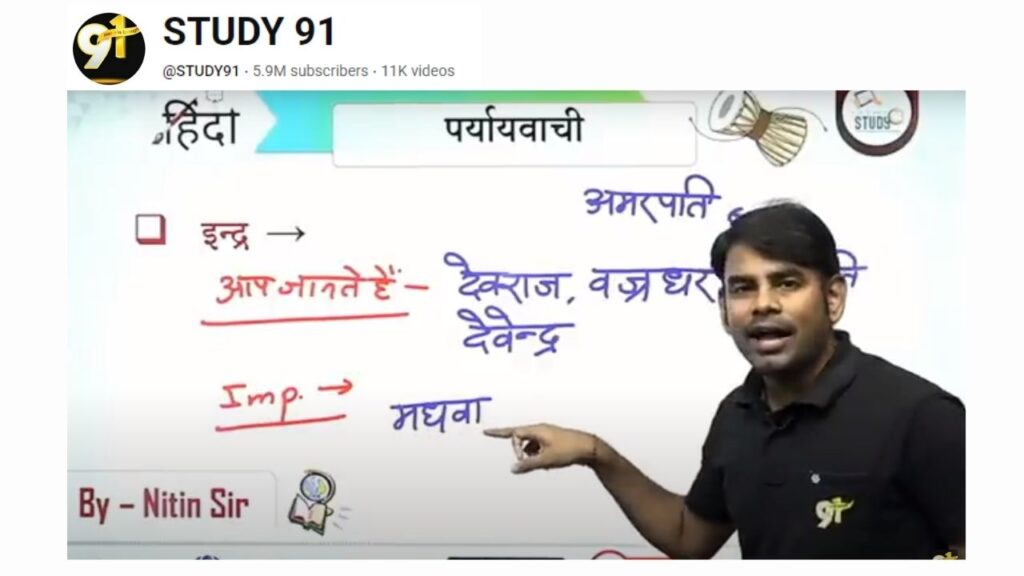
Nitin Sir
Nitin Sir from Study91 is known for clear explanations with a practical approach. He doesn’t just explain from books but tries to relate with real-life examples from newspapers or stories to make the hardest grammar rules easy for students to understand.
Students easily memorize it, but most importantly they understand why grammar rules are used. He also gives plenty of questions to practice which is the real key to success.
Vivek Sir
Vivek Sir’s creative style of teaching makes him one of the best Hindi teachers in India. Hindi is a language of culture and creativity, according to Vivek Sir. That clearly showed his mastery of story-based teaching style which makes grammar memorable. He uses humour, short stories that don’t make students bored in Hindi classes.
Ideal for those who don’t memorize anything easily and it’s hard for preparing Hindi for exams like Railway, SSC or TET. His method is effective to recall in exams quickly, so these techniques will make students remember even under pressure.
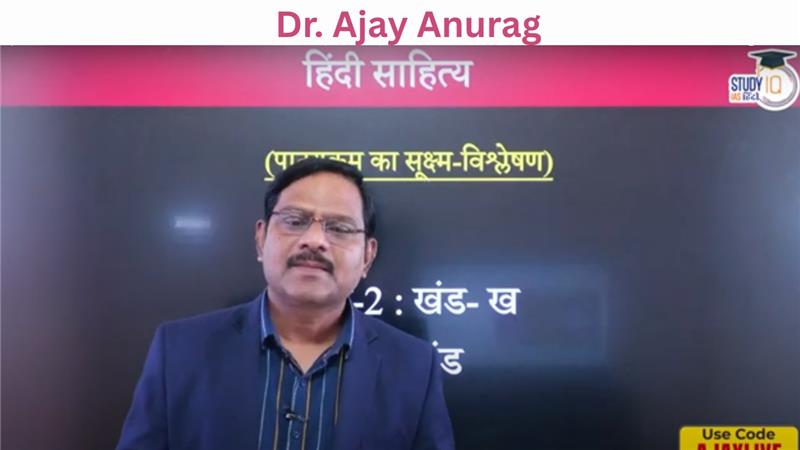
Dr. Ajay Anurag
Dr. Ajay Anurag is a best educator of Study IQ and reputed for his deep knowledge in Hindi grammar and literature. Students looking for one teacher who can teach them both grammar and literature, Ajay Sir is the best choice.
His concept-based teaching makes you understand each topic easily in minimum duration. But he doesn’t rush topics, he explains “why” behind every grammar rule.
Students who don’t just want to learn but understand Hindi topics can easily access his systematic and well-structured lessons. He also provides study material which is so detailed and exam-focused that it makes it easier for the students who are preparing for government exams.
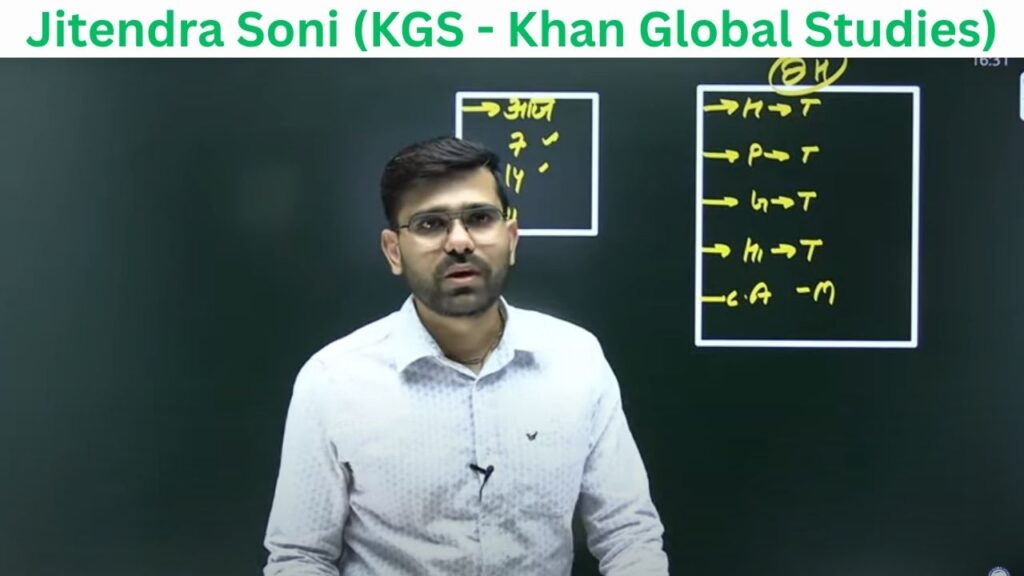
Jitendra Soni (KGS – Khan Global Studies)
He is the best educator of KGS who is extremely popular for his Hindi Foundation Batch. Jitendra Soni is focused on friendly-tone, conduct doubt-clearing sessions, and handwritten notes.
Students can simply understand every topic due to his explanation of lengthy stories, complex topics of grammar, and comprehension. Once you have taken his demo class or follow on YouTube, you will know how interactive and energetic his sessions are.
Vishal Sir (Mission Selection)
Vishal Sir is a well-known Hindi teacher on the growing platform Mission Selection. Vishal Sir is popular among the students because of his exam-oriented preparation method. His short explanations are impactful, he helped many students with shortcuts, tricks, and practical approaches.
He is the best teacher for Police, SSC GD, Railway, Constable, and state-level exams preparations. Students who want to complete this subject within less time, they can follow Vikas Sir.
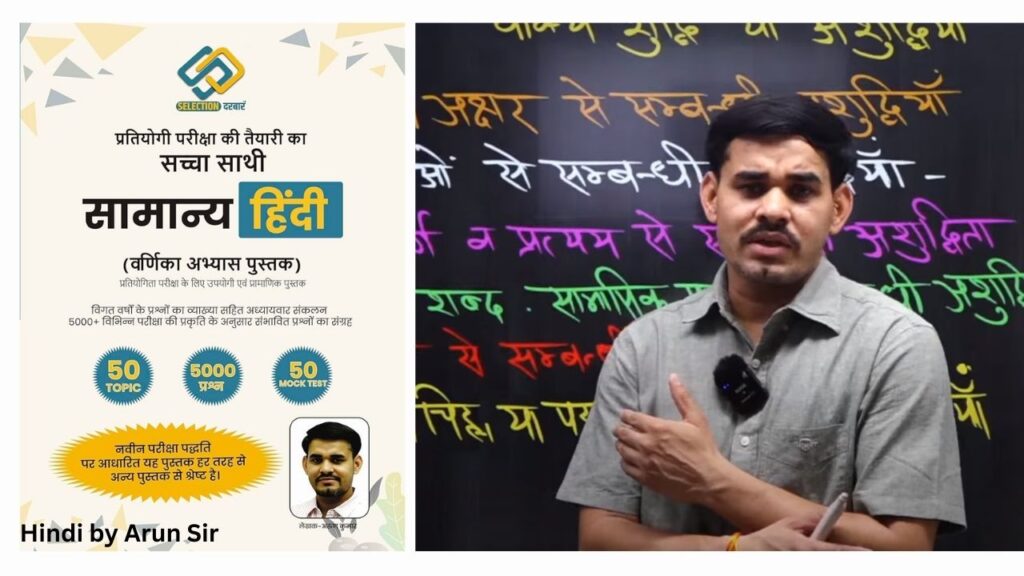
Arun Sir
Arun Sir is an excellent teacher who teaches many students for the competitive exams. He focuses on Hindi grammar complex topics to provide a detailed explanation which can help students to understand Hindi in more depth. His command over vocabulary, comprehension, and writing are valuable for the exams like SSC, Railway, and UPSC.
Students can easily understand his way of teaching as breaking complex topics into simpler parts including real-life examples. He helps students to practice mock tests and previous year questions for building their strong foundation on Hindi.
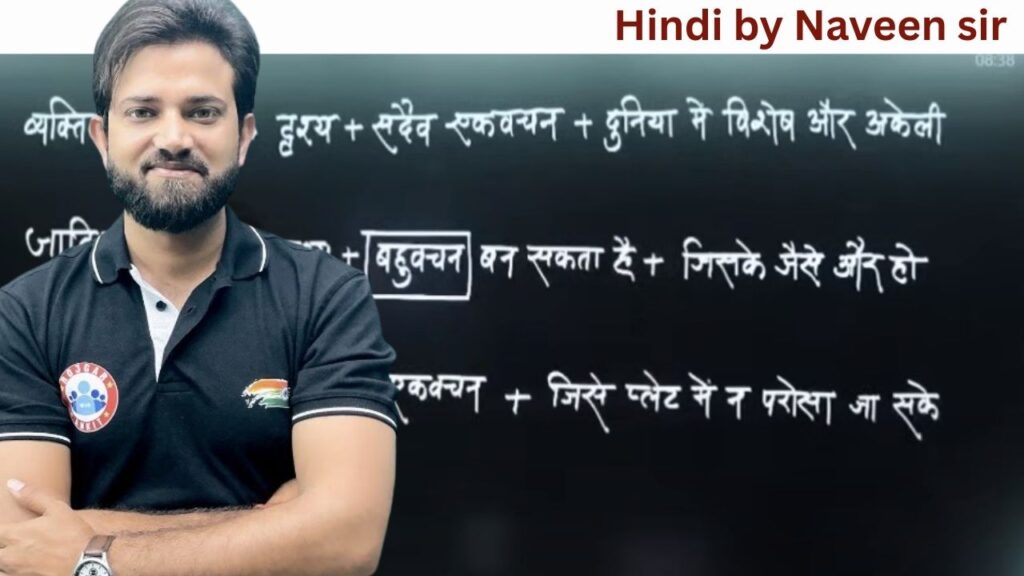
Naveen sir
Naveen Sir is a master of answer writing, if you are preparing for UPSC or state exam then you should make your descriptive writing good in Hindi. You will become an expert in essay writing, letter writing, and precise writing in Hindi with his consistent training.
He is an ideal teacher for students who want to improve their writing skills and present their answers in clean, structured, and detailed.
Other Recommended Hindi Teachers
Apart from the above names, there are a few more respected teachers who can provide you best lessons for Hindi in competitive exams:
Dr Vikas Divyakirti (Drishti IAS) – He teaches Hindi Literature with depth and clarity, making him ideal for UPSC aspirants.
Alok Sir (Adda247) – Alok Sir is focused on short-trick and not go for lengthy explanations that makes him ideal for SSC aspirants
Ritesh Sir – he also helps students to prepare for the SSC exam because he makes Hindi grammar easy through continuous practice.
Apart from their unique teaching styles, they have the same common qualities that make them best Hindi teachers.
Simple explanation – they explain every topic in easy language that helps every student to understand easily.
Practical Approach – their style including examples from newspapers, current events, and daily-life that make Hindi more understandable.
Focus on Practice – continuous practice of questions from previous year and test series, they ensure that every student solves enough questions to mentally prepare for the exam.
Motivation & Support – Hindi is so difficult for some students who came from convent schools, these teachers inspire them to make learning enjoyable.
When students are focusing on tough subjects to clear competitive exams, they often forget to prepare Hindi to fuel their score. With the right teacher, Hindi can become your strongest subject. These Best Hindi Teachers for Competitive Exams have already taught many successful students now you could become next.
If you give you full potential for your exam with their guidance, you can clear the most toughest exams. They focus on exam patterns and important topics that need to be prepared well for government exams.
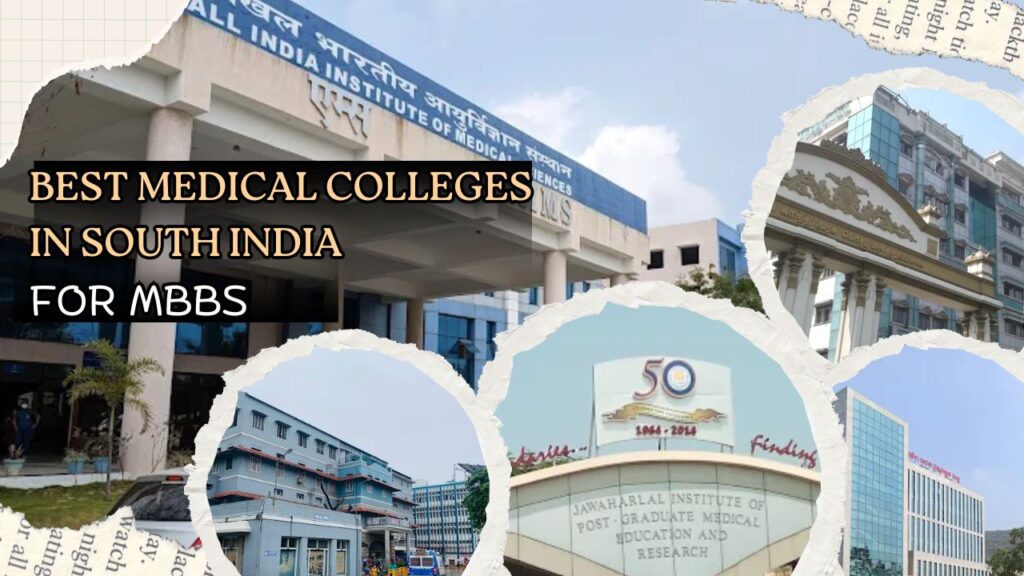
There are world-class Best Medical Colleges in South India for MBBS which provides quality education and excellent training to produce doctors. The well-established states including Karnataka, Tamil Nadu, Kerala, Andhra Pradesh, and Telangana come under the region of South India. Taking admission in any of these colleges is the right choice for starting your medical journey. South India offers both private and government colleges in a wider range.
Let’s look into these prestigious colleges which offer both theoretical and practical medical education for students.
How Did They Become the Best Colleges?
They are equipped with strict regulations to provide strong curriculum, advanced training, hospital exposure, experienced faculty, and support for career growth. After monitoring college prospects and record of successful students, NIRF ranked them as the top colleges of India. The ranking made it easy for students to choose their best college for their higher education.
Top Government Medical Colleges
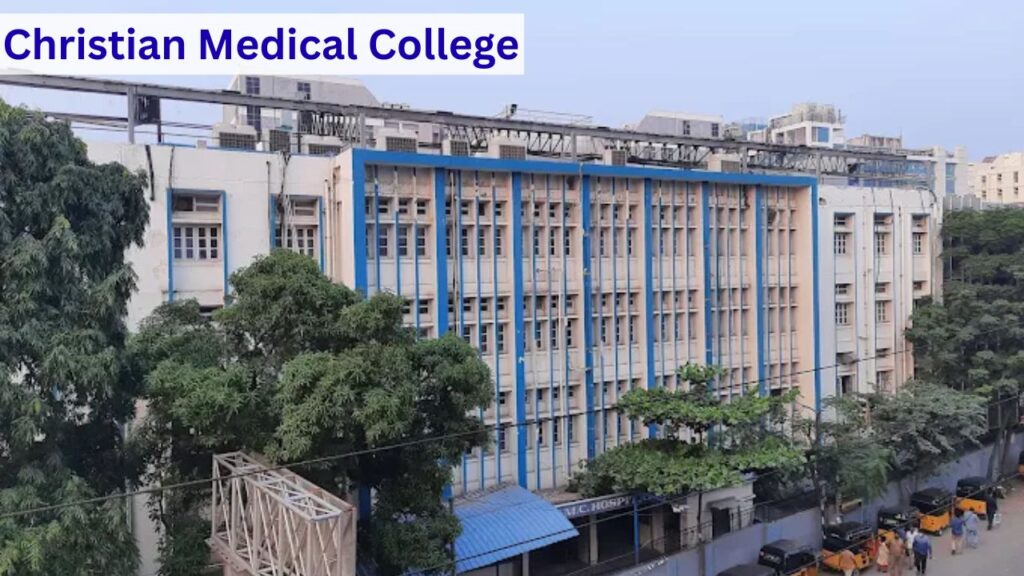
Christian Medical College
Christian Medical College, Vellore is private but offers the best education at affordable fees of just Rs. 13,500 yearly for MBBS. This college became a crown jewel of South India and ranked at 3rd position domestically by NIRF due to its top education and low fees.
Image credit: Christian Medical College
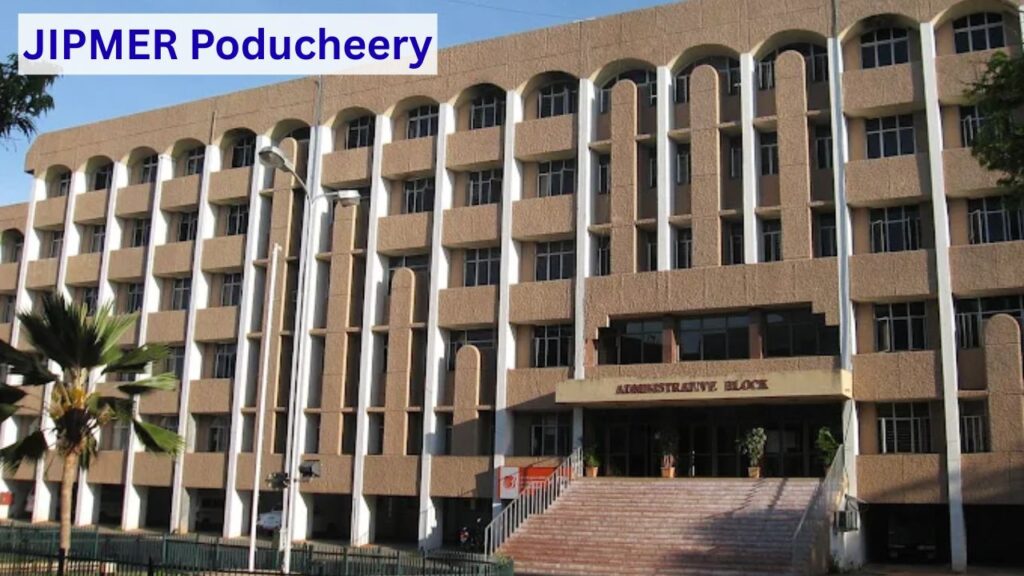
JIPMER Poducheery
Jawaharlal Institute of Postgraduate Medical Education and Research became a best known college for MBBS as it has a strong alumni network. It produces world-class doctors at low fees around Rs. 6000 yearly. It ranked at 4th position in NIRF 2025 due to its exceptional medical education. It is the top medical college of South India, but students need to score well in NEET to get admission here.
Image credit: JIPMER
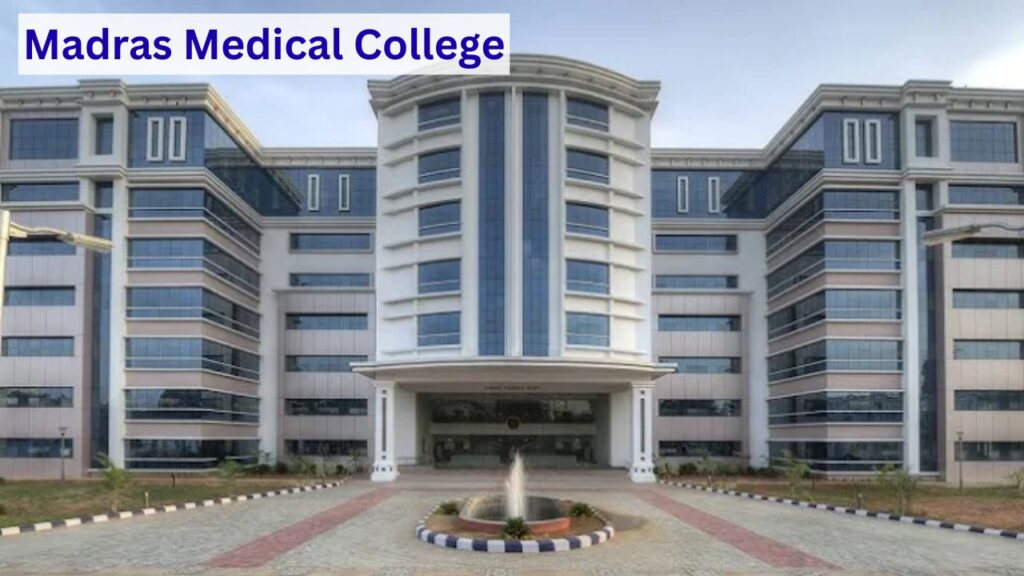
Madras Medical College
Chennai offers best government colleges including Madras Medical College which was established in 1835 and ranked at 16th among top medical institutions in India. Students need to score around AIR 944 in NEET for securing a position among 250 MBBS seats.
Image credit: Madras Medical College
AIIMS Network in South India
All India Institute of Medical Sciences has set its footprints in the South India region with highly ranking among global medical institutions. Students aiming to get their MBBS degree from AIIMS can turn their dream into reality without relocation.
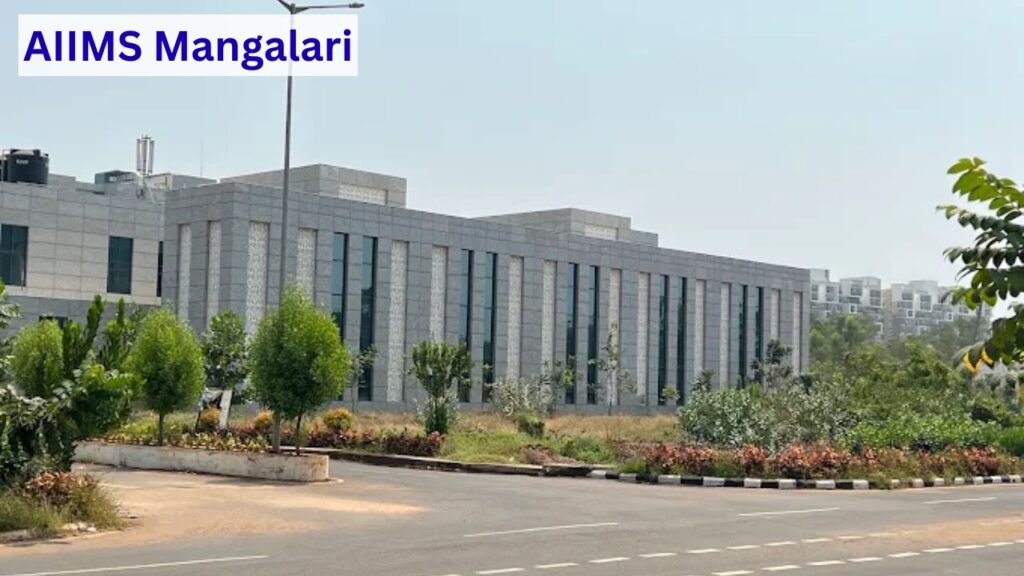
AIIMS Mangalari
AIIMS Mangalari – Andhra Pradesh has become the 29th best medical institution in India by NIRF ranking. It offers a strong curriculum and practical training in a 5 years MBBS program at low fees of around Rs. 15,760 yearly.
Image credit: AIIMS Mangalari
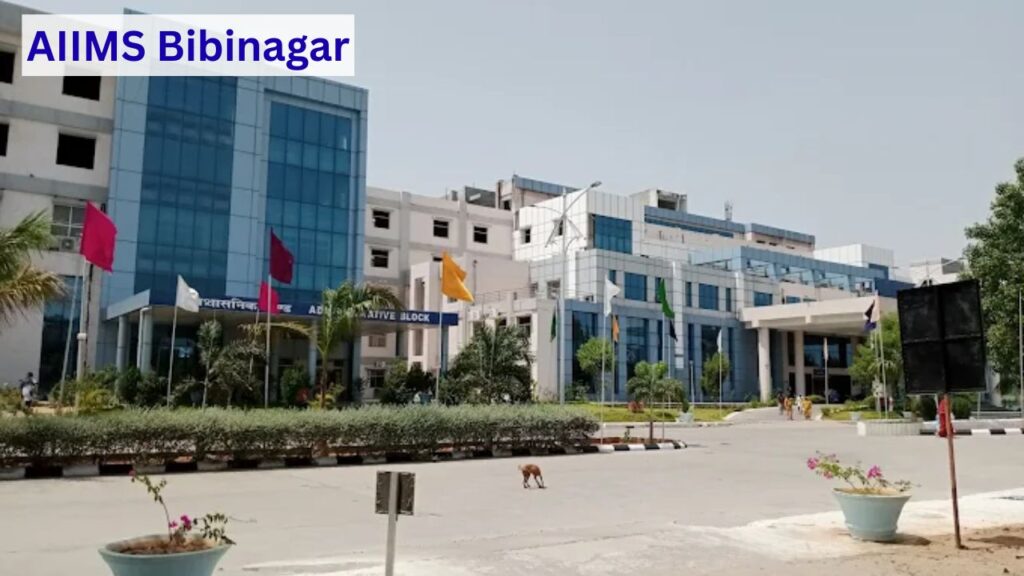
AIIMS Bibinagar
Telangana also has the best medical college and hospital — AIIMS to provide students hospital exposure for getting real knowledge. This one was established recently but still manages to rank in the top medical institutions of India.
Image credit: AIIMS Bibinagar
State-wise Government College For MBBS
Tamil Nadu
There are more than 39 government colleges in Tamil Nadu but the top medical colleges can establish your career faster and stronger.
Madras Medical College
Stanley Medical College
Coimbatore Medical College
Government Kilpauk Medical College
Karnataka
Bangalore Medical College
Mysore Medical College
Karnataka Institute of Medical Sciences
Kerala
Government Medical College, Kozhikode
Government Medical College, Thiruvananthapuram
Government Medical College, Kottayam
Telangana
AIIMS Bibinagar
Gandhi Medical College, Hyderabad
Osmania Medical College, Hyderabad
Andhra Pradesh
AIIMS Mangalagiri
Sri Venkateswara Medical College, Tirupati
Andhra Medical College, Visakhapatnam
Top Private Medical Colleges
Kasturba Medical College
Kasturba Medical College is ranked under top 10 manipal medical institutions for its top-tier education. It offers MBBS at annual fees of around Rs. 17,80,000 and KMC Mangalore also has the same fee structure but both colleges have different cutoffs. KMC Manipal accepts students with AIR 40,258 and KMC Mangalore accepts at AIR 57,207 NEET cutoff.
Amrita School of Medicine
Amrita School of Medicine is located in Kochi and offers best medical education to their students. They have experienced faculty and strong curriculum, making it the highest-ranked private medical college in South India. It has ranked at 9th in NIRF ranking and it offers MBBS at fees around Rs. 18,50,000.
St. John’s Medical College
St. John’s Medical College of Bangalore offers MBBS program at fees around Rs. 8,11,285 yearly. It ranked 30th among Indian medical institutions and needed a cutoff AIR 11,483 for admission in the course.
MS Ramaiah Medical College
MS Ramaiah Medical College is also located in Bangalore and comes under top 50 in medical colleges. It offers MBBS at cost Rs. 25,15,750 approx. It is the best college because of its excellent faculty, attached to multi-speciality hospital, and strong alumni network.
JSS Medical College
JSS Medical College, Mysore is also a top medical college that provides MBBS around Rs. 18,86,900. Admission is accepted for students who do have a cutoff around AIR 122,228 in NEET.
Sri Ramachandra Medical College
Chennai best college – Sri Ramachandra Medical College, ranks among best medical colleges. It is best for MBBS education at fees. Rs. 10,00,000. Students need AIR 313,535 cutoff for admission in this college.
Admission Requirements & NEET Cutoffs
Government colleges are more strict on the NEET cutoffs because of their top-tier education in low fees. They categorized from top to mid-tier colleges, colleges like AIIMS and JIPMER need AIR 1000–5000 NEET cutoffs for students’ admission. While mid-tier colleges require AIR 5000–15,000 NEET cutoffs for admission.
Private colleges have wider variation in NEET cutoffs, top private colleges require AIR 10,000–50,000 and some colleges need AIR 50,000 — 200,000.
But NEET cutoffs significantly depend on the state, year and college type, so check out the college official brochure for admission that mentioned exact NEET score for admission.
Fee Structure Analysis
Government colleges such as AIIMS and top-tier central institutions have offered MBBS programs in a lower range of fees Rs 6000 – Rs 16,000 annually. While state government colleges have a slightly higher range from Rs. 60,000 to 110,000 annually for MBBS. According to the management quota, government college fees range between Rs 6–12 lakh annually.
Private colleges have divided their range between Deemed university and Private colleges, according to management quota which significantly ranges between Rs. 25 lakh to 50 lakh annually. It may slightly lower around Rs. 8 – 12 lakhs in some private colleges.
Conclusion
South India’s Medical colleges offer prestigious opportunities for aspiring doctors to take their MBBS degree at an affordable price. Private institutions fees are higher, so aim for the government colleges which offer both excellent academic resources and clinical exposure to medical graduates. These Best Medical Colleges in South India for MBBS will provide you not only a degree but the best education and research ecosystem to become a doctor.
The RRB RPF Sub-Inspector exam is considered as one of the toughest national level exam in India and it is conducted by Railway Recruitment Board under the Ministry of Railways. The exam is held to select eligible and committed candidates for the post of Sub Inspector in Railway Protection Force, a specialized security force which ensures the safety of railway passengers, railway premises, and vital rail components in every zone of Indian Railways.
RPF SI Recruitment is prestigious post and government job and it has good salary package, so, that is way it is most demanded exam in our country. The exam is conducted as computer based test (CBT) in 15 languages apart from English such as Hindi, Urdu, Tamil, Telugu, Kannada, Odia, Malayalam, Marathi, Gujarati, Bengali, Assamese, Punjabi, Manipuri and Konkani, for the convenience of candidates from all corners of the country.
Eligibility Rules for RPF Sub-Inspector
Will you be entitled for the RPF Exam or not? Those who fulfill the Railway Protection Force eligibility criteria can apply for this prestigious job.
Age Limit: The upper age is 28 years on 1st July of the year of recruitment and the lower is 20 years. However, various relaxations applicable for different categories is stated as below:
SC/ST
5 years
OBC
3 years
domiciled Candidates from J&K and LadakhOR Central Government employees
UR/EWS – 5 yearsOBC – 8 yearsSC/ST – 10 years
Widows
UR/EWS – 2 yearsOBC – 5 yearsSC/ST – 7 years
Educational Qualification: The candidate should possess a Bachelor’s Degree in any stream from a recognized university for RPF Sub-Inspector exam. The requirement of Graduation is in place to get a basic intellectual knowledge which is required to hold duties of administration and leadership in security services.
Nationality: You must be an Indian citizen for this recruitment.
Physical Fitness Standards: Basic eligibility does not specifically state this, nonetheless candidates have to be physically fit to meet with the standards laid down in the efficiency test and physical measurement which are critical to the selection procedure.
Posting choices are due to the candidates holding down their preferred location during the filling of the preference form as the posts are spread across multiple railway zones in India which include Eastern Railway, Southern Railway, RPSF (Railway Protection Special Force) and many other zones. Since candidates can opt for postings near their home state/region, this zonal arrangement makes the exam less inaccessible.
Exam Pattern and Question Distribution
The knowledge of exam pattern is needed for the strategic preparation. The RPF SI exam is a single level exam which is conducted in the form of an online computer-based test, having multiple choice questions, which is of 2 hours duration.
There are three sections in the RPF SI Exam:
General Awareness (50 Questions, 50 Marks): This section is an evaluation of your knowledge about Indian history, the Indian constitution, polity, geography, Indian economy, the general science, sports, current national and international events and also a few questions on current governments recently introduced. The questions test both your static and dynamic awareness or knowledge of current affairs.
Arithmetic (35 Questions, 35 Marks): The arithmetic section includes questions on number systems expansion, simplification by BODMAS rule, ratio and proportion, percentage, profitable loss, interest calculation on SI and CI, time and work question average time related queries and simple topic of algebra.
General Intelligence and Reasoning (35 Questions, 35 Marks): Assess your ability to think logistically and solve problems through verbal and non-verbal reasoning and General Intelligence via questions on Analogies, Classifications, Coding Decoding, Series Completion, Blood Relations, Directions, Logical Reasoning and Pattern Recognition.
To promote accuracy rather than the recklessness of wild guesses, each correct answer is awarded one mark, while for each wrong answer one-third of a mark is deducted. The exam is available in fifteen different Indian languages but most of the candidates opt either Hindi or English.
Topic-Wise Syllabus Breakdown
General Awareness Topics
Domestic and International news, political scenes, social conditions, notable events and progress, awards and accolades.
Indian history is divided into independence movements, ancient India, medieval India, modern India and significant historical personalities.
Indian Constitution: Sections and their significance, process of making amendments, rights to the individuals and guiding principles of state policy
Physical and Global geography, environmental concerns, and Indian geography basics.
General Science: All Physics, Chemistry and Biology topics for Class 10–12
Athletics, such as football, great players, artistic genres, music, dance, literary, performing arts performances sport and culture.
Arithmetic Topics
Number system: prime and composite numbers, divisibility, whole numbers, and HCF, and LCM
Simplification: BODMAS rule application, square roots, decimals, and fractions
Ratio and Proportion: Sharing issues, partnerships, direct and indirect proportion, and mixtures
Percentage: Simple percentage calculations, percentage increase or decrease
Cost price, selling price, profit and loss, discount and percentage of profit and loss
Simple and compound interest: applications of principal, rate and time, and formulae
Time and Work: Pipe and cistern problems, work and work efficiency, work with wages
Average: Weighted averages, age-related averages, and averages formulas
Algebra: Basics of algebraic expressions and linear equations
General Intelligence and Reasoning Topics
Analogies: Finding relationships between word pairs
Classification: Categorizing similar items and identifying the odd one out
Coding- Decoding: Decoding the pattern of coded messages
Finding pattern in numerical or alphabetic series is called Completion of series.Blood Relations: Understanding family relationships
Directions: Solving puzzles on directions
Logical Reasoning: Understanding the statement and making the argument
Finding unseen patterns in logical or visual series
Selection Process For RPF Sub-Inspector
RPF SI Selection Process is the multi-level RPF SI selection process that aims to assess the candidates on various parameters. Understanding all stages enable you to be prepared in every possible way.
Computer-Based Test (CBT) at Stage 1: The initial challenge is a 90-minute pen and paper test consisting of 120 questions. A high score is required to advance to the second stage, as this round finishes off a large number of applicants.
Stage 2: The candidates who clear the CBT are called for the Physical Efficiency Test (PET) and Physical Measurement Test (PMT). The PMT is a measurement of height and chest for male applicants, and height for female applicants. The Physical Efficiency Test examines physical stamina by way of demanding routines.
Stage 3Document Verification (DV): The PET/PMT qualified candidates are called for the document verification. At this stage, the information provided by the candidates is matched with the original educational certificates, caste certificate and identity proofs.
Stage 4 involves a complete Medical Examination by CAPF/Govt. Your medical examination confirms that you have the physical ability to do your demanding job.
Salary and Job Benefits
The RPF Sub-Inspector post is attractive for various reasons like good income, stable government job and good facility.
Salary Structure
The 7th CPC has fixed the minimum pay for RPF SI as Rs 35,400 per month with a grade pay of Rs 4,200. Yet the net pay, after subsidy and deductions, is Rs. 43,000 and Rs. 54,162 per month.
Additional Allowances and Benefits
Medical Facilities: Comprehensive coverage for the healthcare of you and your family
Travel and Transfer Allowance: Assistance with relocating and traveling for work
Pass and Privilege Ticket Orders: Discount train travel for you and your family
Education Support: Support for your children’s education
Provident Fund (PF): A provident fund is a savings cum retirement benefit scheme available to all salaried classes of individuals
Gratuity: Lumpsum on exit
Application Fee and Where To Apply
The fee structure is designed keeping in mind everyone and also in compliance with the government norms. Rs 500 as the fee for General, OBC, and EWS candidates. SC, ST, PH ( hearing impaired) candidates and all women candidates are required to pay only Rs.250.
You do the entire application online at the RRB site (rpf.indianrailways.gov.in). This allows you to apply from anywhere in India.
Preparation Tips and Strategy
Success in RPF SI exam requires a solid study plan along with theoretical knowledge and that of practicing. Candidates must focus on the General Awareness section by keeping them updated with current affairs on a monthly basis, practice regular mock test for improving accuracy, and to be able to perform in a limited time. The sensible marking scheme and relatively small extent of syllabus make this test attainable with concentrated 4-6 months of preparation.
Conclusion
The RPF SI exam provides a golden opportunity to all the educated candidates to get a respectable government job. It means steady work, good pay and a major part in keeping the nation safe. Determination, good Study material and regular Practice can make your Dream of becoming RPF Sub-Inspector into Reality.
BPSC AEDO Syllabus: It gives me immense pleasure to believe that a graduate can make such a difference by choosing to be in the education sector or education administration and directly impacting the lives of so many students. The Bihar Public Service Commission (BPSC) has recently made the entry for the position of Assistant Education Development Officer (AEDO). With 935 posts available, this is a golden chance for the candidates who want to get permanent and reputed government jobs in Bihar. l
But clearing a state level competitive exam is not a cakewalk. It needs a very strategic planning, strong study schedule and well understanding of examination pattern. Decoding theBPSC AEDO Syllabus is your starting line and most vital step, however attaining the job also depends on knowing fully the position that you are going to fill.
This is the complete guide for BPSC AEDO syllabus in which you can get each and every information regarding this exam. From understanding the job profile and expected salary to analyzing the syllabus and best books, this article is your guide for everything you should know.
What is the BPSC AEDO Job Profile?
The reality of the job must be understood before beginning preparation. The Assistant Education Development Officer (AEDO) post is a combined administrative and supervisory post. The AEDO is the vital link between the state’s education department and the schools at the ground level.
As an Assistant Education Development Officer, you ensure the execution of educational policies and keep a watch on schools in that area to see if they adhere to the minimum standards of education and infrastructure.
Key Responsibilities of an AEDO:
Educational Supervision: AEDO officers must check the working of government schools in their region consistently to speed things.
Scheme Implementation: Monitoring every government schemes to be implemented properly.
Analysis & Reporting: To generate believable reports with information such as student enrollments, attendance rates, dropout rates, and pass rates for students across courses.
Administrative Mediation: Redressing grievances of teaching staff, resolving logistical issues, ensuring adequate supplies and proper functioning of schools.
Quality Control: To conduct inspections for up keep the good quality in teaching and to ensure the syllabus is covered as per the state board.
There is no typical desk day in this position. You’ll need to be out in the field or on campus, talking regularly with staff at schools, and taking the lead on identifying and addressing any administrative roadblocks.
Salary and Perks: Why is the AEDO Role Highly Sought After?
Apart from the prestige and societal level impact associated with the post, the BPSC AEDO post provides very good salary and excellent job security.
Salary is given under the Pay Level 5 as the government’s pay matrix.
Basic Pay: ₹29,200 per month.
Allowances:
Dearness Allowance (DA),
House Rent Allowance (HRA),
Travel Allowance (TA),
Medical Allowances
The initial in-hand salary ranges between ₹40,000 to ₹45,000 per month.
Growth/Promotion: One can become a DEO or take up other high administrative posts in the Bihar Education Department from an AEDO with the experience of years and departmental promotions.
Eligibility Criteria and Essential Skills Required
Educational & Age Criteria:
Category
Minimum Age
Maximum Age
Educational Qualification
–
Any Stream’s Bachelor’s Degree in any discipline from a recognized university
Unreserved (UR) Male
21 years
37 years
Women (All Categories)
21 years
40 years
OBC/EBC
21 years
40 years
SC/ST
21 years
42 years
Essential Skills for Success:
Fluency in Hindi and English: You need to have good communication skills in Hindi and English while dealing with teachers, government officials and the public.
Analysis: Reporting requires you to collect data on student enrollment, for example, or financial records then analyze that information to come to conclusions.
Leadership and Mediation: You may need to negotiate disputes within administration to hold the line on discipline and maintain orderly learning conditions.
Versatility: You were to expect to go and work at different blocks, and more than you expects at getting curve balls in logistics.
Complete BPSC AEDO Syllabus and Exam Pattern
Understanding the exam pattern very well will only help you to crack the written exam. Here is a brief about BPSC AEDO exam pattern
The BPSC AEDO papers are in the objective type questions (MCQs) format spread over three papers. The two-hour papers are of 100 marks each.
Guideline on Negative Marking: 1/3rd of the mark allocated to the question will be deducted for each wrong answer. Precision is just as important as the number of tries.
Paper
Subject
Total Marks
Duration
Nature of Exam
Paper 1
General Language (English – 30, Hindi – 70)
100
2 Hours
Qualifying (Min. 30% in both separately)
Paper 2
General Studies
100
2 Hours
Evaluated for Merit
Paper 3
General Aptitude
100
2 Hours
Evaluated for Merit
The Detailed BPSC AEDO Syllabus
A focused plan of preparation depends on the exclusive understanding of the given official BPSC AEDO Syllabus. Let us now discuss each paper:
Paper 1: General Language (Qualifying)
This exam is to check your basic grammar knowledge. You will have to obtain a minimum score of 30% in both English and Hindi parts minimum for your other papers to be evaluated.
English (30 Marks):
Basic Grammar,
Vocabulary,
Synonyms & Antonyms,
Idioms & Phrases,
Sentence Correction,
Reading Comprehension.
Hindi (70 Marks):
Hindi Vyakaran (Grammar),
Sandhi,
Samas,
Paryayvachi Shabd (Synonyms),
Vilom Shabd (Antonyms),
Muhavare (Idioms),
Unseen passages.
Paper 2: General Studies (Merit-Based)
History: Indian History both old and new. Bihar contribution in Independence of India.
Geography: Indian Geography. Focus on Bihar economic and physical geography which covers Drainage, soil and mineral wealth of Bihar.
Indian Polity & Economics: Indian Constitution, governance and Policies implemented by the Central Government.
Basic Science: Biology, Physics, and Chemistry of 10th class.
Current affairs & General Knowledge: Big events and global summit of India specifically current events of Bihar in last 10-12 months.
Paper 3: General Aptitude (Merit-Based)
General Quantitative Aptitude should best be learned by building your fundamentals with clear concepts of class 6th to 8th level books that are worked on in a very plain and simple way on all the necessary things. Concentrate on the following Chapters – Number Systems, Ratio and Proportion, Simplification, Averages, Profit and Loss, Percentages, Simple and Compound Interest, Time and Work, Speed and Distance and some Basic of Mensuration (2D and 3D).
Also, reasoning plays a vital role, so you must practice topics like Number and Alphabet Series, Analogies, Coding Decoding, Blood Relations, Syllogism and non-verbal reasoning topics like Mirror Images & Paper Folding on a regular basis.
The data interpretation is also very important aspect in the exams, where you have to frame questions on the basis of tabular data, pie chart and bar graph and solve them, so on these fronts you need along with gre speed you also require gre accuracy.
Best Books for BPSC AEDO Preparation
With so much information out there, it’s natural to feel intimidated about where to start. The trick is to have a small number of dependable books, go through them a few times and not to hoard too much revision material. Below are some of the best books recommended for each section:
For General Language:
Objective General English by S.P. Bakshi (Arihant Publications)
Samanya Hindi by Lucent Publications
For General Studies:
General Knowledge by Lucent Publications
Bihar Samanya Gyan by Manohar Pandey or Crown Publications
NCERT Books (Class 6th to 12th)
Monthly Current Affairs Magazines or News Paper
For General Aptitude:
Quantitative Aptitude for Competitive Examinations by R.S. Aggarwal (S. Chand)
Fast Track Objective Arithmetic by Rajesh Verma (Arihant)
A Modern Approach to Verbal & Non-Verbal Reasoning by R.S. Aggarwal
Pro Preparation Strategy to Crack the Exam
Having the right textbooks and knowing the syllabus is only half the battle. How you organize your daily study routine, now that’s the killer, that’s what’s really going to make or break you.
Don’t Disregard Paper 1: Many students end up underestimating the language paper because it is “acting as a gatekeeper”. But if you are not getting minimum 30 per cent in both Hindi and English, you will be disqualified no matter how many marks you are getting in others papers. Form a habit of completing at least 45 minutes language sessions daily.
Concentrate on Bihar-centric issues: Geography, history and current affairs of Bihar carry more weightage in GS. Consider “Bihar Special” as a separate paper and study accordingly.
Be good at managing your time: You have 100 questions in the Aptitude section to be solved in 120 minutes. It provides you 1 minute for each question. Practice learning to skip the harder and more time-consuming questions and answering the simpler questions first.
Mock Tests are non-negotiable: Start taking full-length mock tests not later than 2 months prior to the exam. It will get you used to the 1/3rd negative marking pattern. Analyze the questions you get wrong to see where you are weak and to improve your guessing.
Revise Consistently: Use your weekends to go over everything you learned during the week. Keep your notes brief and clear so you can quickly review them in the last weeks.
BPSC AEDO exam is a good way to get a respected and secure job in government service. The competition will be hard but well disciplined based on complete knowledge of BPSC AEDO Syllabus and Exam Pattern will make you ahead from the rest. Get your material, prepare a realistic timetable and start your preparation now. To qualify the state level public service exams, constancy counts more than severity.