There are many good opportunities for those looking for government jobs in Punjab in 2025. Government jobs give you job security, good salary, and respect in society. If you are a youth of Punjab and want to start your career with a government job, then this blog will be very useful for you.
In this blog, we will tell you about the top 15 government jobs in Punjab which will be very popular in 2025. You will also get the department, eligibility, and official website link of every job from where you can get more information and apply.
In the table given below you will get information about the best government jobs in Punjab, after reading which you can choose the right job for yourself.
If you are waiting for a job in NICL Assistant Online Form 2026 then it is the right time to apply for the Assistant (Class III) position since there are a total 500 vacant seats, your chance of selection is high. National Insurance Company Limited opens the application portal until August 7, 2026, so apply early to secure a seat into a reputed government job in the insurance sector.
There is a lot of time for candidates to register and upload the documents. But before you start filling this online form, you must know a few important points to not get rejected.
Event
Date
Application Start Date
18 July 2026
Last Date to Apply Online
7 August 2026
Last Date for Fee Payment
7 August 2026
Phase I — Prelims Exam
27 August 2026
Phase II — Mains Exam
30 October 2026
Apply early, don’t wait until the final week. Government websites are known to slow down or crash when thousands of applicants access them on the final day, and a deadline missed here means waiting for the next cycle.
Vacancy Details
NICL will hire for 500 Assistant posts in the Class III cadre, with selected candidates getting posted to different states and union territories on regional lines. The job includes routine office and field work at the NICL Branch Point or the Branch Office.
Before you start filling the form, make sure you tick these boxes:
A graduation degree in any subject with a good score from any recognized university.
NICL Assistant 2026 age limit is 21 to 30 years. Reserved categories are given only reserved category candidates, you can check in the official notification.
It is important to know the regional language of the state you are applying for, as the Recruitment is held through a Regional Language Test.
Note: Choose the state where you are familiar with and know their native language to handle the job smoothly. If you select multiple locations, you application can get rejected so easily.
Application Fee
Category
Fee
UR, OBC, EWS
₹850
SC, ST, PwBD, Ex-Servicemen
No fee
Selection Process
NICL Assistant recruitment happens in three stages:
Preliminary Examination — objective-type, online
Main Examination
Regional Language Test
Only those candidates who qualify in the prelims can appear for the mains, and only those who qualify in mains can feature in the language test. Remember this tiered format when you are considering your preparation — there is about a two month gap between prelims and mains which is sufficient to address weak points if you start early.
Open NICL website and find the recruitment section or click on the link “Recruitment of 500 Assistant (Class III) 2026-27”.
If you are new then register yourself using a valid email ID or mobile number. Once you get the registration number, login again with that credentials.
Fill the entire application form for the NICL Assistant Online Form 2026 role and re-check every detail.
Select your preferred examination state and language.
Prepare your passport-size photograph, signature, left thumb impression, and certificates to upload it immediately.
Make a payment for the application by using a net banking or card (this step is skipped for those who are exempted).
Preview the form carefully before hitting final submit — once submitted, corrections aren’t usually allowed.
Download and save a copy of the final application form and payment receipt for your records.
A Few Things Worth Remembering
Offline applications aren’t accepted — this is an online-only process.
Remember to save your progress at each stage by clicking on “Validate Your Details” and “Save & Next” to avoid losing data halfway.
Have all your documents scanned and ready in the correct file size and format so you aren’t rushing to get everything together at the final step.
If you’re eligible and considering a stable, long-term career in the public-sector insurance space, this is a solid opportunity to apply for. Just don’t leave the form for the last two days.
Conclusion
Eligible candidates should fill the NICL Assistant Online Form 2026 right now and grab a chance to secure a seat in the Indian public-sector insurance company. NICL offers 500 vacant spaces which will be filled under a three-tier selection procedure.
Verify your eligibility, select the appropriate State and Regional language, and keep all requisite documents handy to avoid last-minute hassles before applying. And most importantly, submit your application in advance of the deadline on7 August 2026 to avoid any last minute technical problems and to allow yourself some time to start studying for the Preliminary Exam which is held on 27 August2026.
Changes in the world are happening so fast, and artificial intelligence is at the center of them all. If you are a Class 12 student considering your future course of study, the Bachelor of Business Administration in Artificial Intelligence (BBA in AI) is more than just a degree—it’s your chance to shape the future while earning a stable career in one of the most in-demand areas today. This programme stands for an exceptional blend of business management and state of the art AI technology that is transforming the business operations around the world.
Why BBA in AI Matters More Than Ever
You may have heard the term “artificial intelligence” (AI) thrown around a lot, but what does that actually mean for your job? AI isn’t some far-off science fiction concept anymore, it’s baked into the apps you use every day, from Netflix recommendations to banking fraud alerts. Businesses in every sector — healthcare, finance, manufacturing, e-commerce — are scrambling to adopt AI in their operations. That means there is a great opportunity for graduates with knowledge of business strategy and AI technologies.
Instead of traditional BBA programs that just teach the basics of business or engineering degrees that focus only on technical skills, a BBA in AI is really both. You study business principles such as management, finance, and marketing as well as machine learning, data analytics, and applications of AI. With this cross-domain training, you have an extremely strong value proposition to potential employers as you can convert AI technicalities to business use cases and create meaningful innovation.
Understanding the SET 2026 Pathway
If you want to pursue the BBA in AI through SET 2026, then here’s what you need to know. The Symbiosis Entrance Exam (SET) is your pathway to Symbiosis Artificial Intelligence Institute (SAII), IILM, IIMT, & many more. SET 2026 Exam will be held on 2nd May and 10th May 2026. There are approximately 760 seats in total through the SET at the Symbiosis institutes, which is a very competitive but rewarding process of selection. The application form from these universities is expected to be released From December 2025 to March 2026 for admission.
You should have passed Class 12 with at least 50% aggregate marks (45% for SC/ST students) to be eligible. The good news is that you can also apply if you have not got your Class 12 result, but will need to upload your certificate of passing later. The SET exam itself is simple – it’s a one-hour online test with multiple-choice questions (MCQs) in English and there’s no negative marking.
The syllabus includes the following: General English, Logical Reasoning, Quantitative Skills, and General Awareness. The application fee is INR 2,250, and the test is held in over 80 cities across the country, so you have no excuse for not knowing where you can take it.
The SAII BBA in AI program curriculum is well planned as per the NEP 2020 directives and it provides an exit policy which is flexible. This means you can earn qualifications progressively — a Certificate after Year 1, a Diploma after Year 2, or proceed to complete your full Bachelor’s degree after Year 3, with an option for Honours or Honours with Research in Year 4.
This isn’t just a matter of learning about theoretical concepts. Practicing real industry issues in project-based courses, obtaining hands-on experience in AI-specialized laboratories and studio spaces, receiving industry mentoring, and doing internships that connect the theory studied in classrooms and application in real industry.
Students can use the core curriculum to learn the basics of AI, machine learning, statistics and programming alongside more traditional business course topics. You will also study a number of specialist modules tailored to your individual interests, whether you want to work in healthcare technology, financial services, marketing analytics, or in the creative industries.
Career Opportunities After BBA in AI
BBA in AI pass outs are earning good salaries and have excellent career options. New graduates usually receive packages ranging from 6 to 10 LPA followed by huge pay hikes as they gain experience and specialization. AI/ML Researchers or Data Scientists at mid-level earn ₹7-14 LPA, and a senior AI/ML Architect commands ₹10-20 LPA or more.
The career options are extremely varied. I can imagine it as being either AI Business Analyst – making the data-driven business decisions for a company. You could be a Product Manager for AI platforms and guide the building of new solutions.
Digital Strategy Consultants With AI Credentials Are Especially Needed as Organizations Seek to Transform Digitally. Data Science to Business Strategy Business Intelligence Experts While there are numerous talented experts in business intelligence, few possess a robust knowledge of both data science and business strategy, making their services highly sought after in today’s economy.
More than 74% of Indian employers are expected to recruit freshers for AI jobs in 2025, witnessing a 22% year-on-year growth in fresher opportunities. Top companies including Amazon Web Services (AWS), Microsoft, Google Cloud, Meta, IBM, Infosys, TCS, HCLTech and Tech Mahindra are aggressively hiring freshers with skills in AI and business. Even startups and fintech firms are engaged in a bidding war for talent, paying lip smacking packages and offering work on bleeding edge projects.
The Skills You’ll Need
For this profession you need communication and technical skills. Technical background is having knowledge in programming languages, mainly python, the standard of the industry for AI and ML. You also have to be well versed in math, statistics, and data science. As a part of your toolkit, you will have to understand machine learning algorithms, deep learning methodologies and frameworks such as TensorFlow and PyTorch.
But it’s not all code and algorithms. You’ll also need to be a critical thinker, a problem solver, and an effective communicator — because at the end of the day you’ll be explaining some pretty complex AI concepts to non-technical stakeholders in business environments. Creativity and an open mind are critical since you will have to solve new problems that may not have textbook answers.
Fees and Financial Considerations
Cost transparency is important. BBA in AI from top Symbiosis institutes are between ₹1 lakh to 3 lakhs per annum but it depends on your chosen institute and mode of delivery. The range of total fees for 3 years for top institutions is around ₹ 3 lakhs and ₹ 9 lakhs but it varies from one institute to another. There are a few cheaper BBA programs through online or distance mode, where the entire program costs between ₹1.5 and ₹1.68 lakhs.
So important to add that most schools do provide scholarships/financial aid in some way for need or merit – so don’t let fees be the only thing that stops you from applying if this is your passion.
There are a number of colleges in India that provide BBA in Artificial Intelligence (AI)/ BBA in Data Analytics or BBA in Machine Learning, as per the demand in emerging field of business over the technology. Important information regarding fees, admission procedure, and recognitions including accreditations for particular colleges are mentioned in the following paragraphs, which are curated from authentic sources.
Note that fees are the estimated total tuition fees (excluding one-time fees such as registration fee), and are subject to change, please check with the official website.
Conclusion
Selecting a BBA in AI with SET 2026 is opting for an opportunity laden future. The blend of business and technology results in graduates who are in high demand in today’s market place. You’re not just earning a degree — you’re staking your claim at the convergence of two powerful currents: strategic business thought and transformative technology.
Generic graduates are not what the world needs—it needs industry-ready professionals who can leverage AI to solve business problems, bring innovations, and deliver business value. If you’re inquisitive, analytical, enjoy problem solving, and want to make a difference with a rewarding career, BBA in AI through SET 2026 may just be what you are seeking. Begin to prepare for SET today, and the future of business and technology.
Candidates who are waiting to apply for the Peon post in various departments such as Rajasthan High Court, State Judicial Academy, Legal Services, District Court, and District Legal Services can apply now. Rajasthan High Court Peon Recruitment 2025 process starts from 27 June 2025. Candidates are advised to fill out the application form before the last date of registration.
Recruitment Steps for the Rajasthan High Court Peon Recruitment
The selection for this post happens in 5 stages – written exam, candidates who have passed the exam are eligible for the interview. Document verification, Medical examination, and when candidates have passed all these stages, his/her name is shortlisted in the list.
Click on the link given on the official website or directly from this article.
Fill out the empty boxes with the required details.
Attach the necessary documents with the application.
You have to pay an application fee to complete your application and submit it.
Save it for future reference.
Eligibility For Rajasthan High Court Peon
Candidates must pass their 10th for applying to this position. Good knowledge of Devnagri and Rajasthan culture. Candidates are advised to check these eligibility details more from the notification.
Uttar Pradesh is one of the most agriculturally capable states in India and its Top Agriculture Colleges in Uttar Pradesh are a testimony to this heritage. Whether you are a student passionate about sustainable farming, agricultural innovation, or agribusiness, Uttar Pradesh state has some of the best centers to develop your career in this important sector. If you want to study agriculture in UP, this blog is for you to see the list of top colleges, know about courses, fee structure and the admission process.
Why Choose Agriculture Education in Uttar Pradesh?
Farming in Uttar Pradesh isn’t just small-scale ploughing anymore. The state’s agricultural schools combine research and state-of-the-art technology with practical work in the field to give students the skills necessary for 21st-century farming.
In areas such as crop science, agricultural engineering, agribusiness and sustainable farming methods, these colleges provide students with the tools to become leaders in the agricultural industry.
The Top Agriculture Colleges in Uttar Pradesh
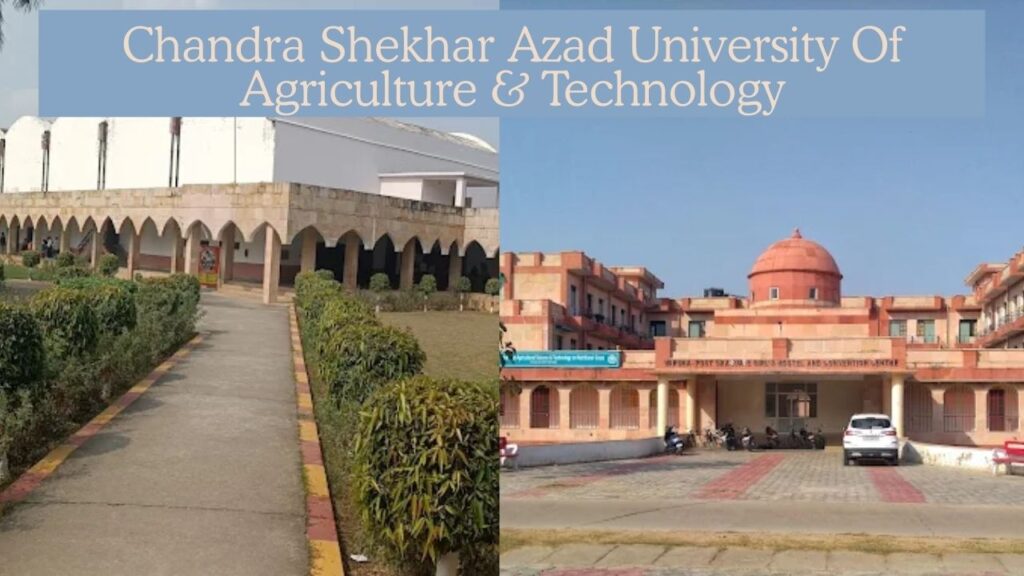
1. Chandra Shekhar Azad University — (CSAUAT), Kanpur
The CSAUAT is a leading Indian agricultural university and played a pivotal role in laying the foundation for the development of the university system of agriculture in the state right from the beginning in 1975. Located in the heart of the agro-based state of Uttar Pradesh, this Government institute has built a name for itself for a long time now.
Courses Available –B.Sc.(Hons) Agriculture, B.Tech in Dairying Technology, B.Tech Dairying, M.Sc. Agri in different specializations like Agronomy, Plant Pathology, Soil Science, and Ph.D. courses.
Fees: The B.Sc. (hons.) The annual fees of B.Sc Agriculture is about ₹1.07 lakhs per semester (The total fee is ₹4.28 lakhs for 4 years), which is very reasonable under this course. B.Tech courses are charged at about ₹1.50-1.64 lakhs per annum.
Admission: Applicants can apply if they are passed 10+2 with 50% minimum marks (with PCM/PCB subjects) and applicable for the UPCATET entrance exam. The counseling procedure is on merit.
Placement & Career Growth: It will let you earn around ₹3-5 LPA package which is quite enough for freshers. Some even receive packages as high as ₹7 LPA, depending on their skills.
2. Sam Higginbottom Agriculture University, Prayagraj
A leading private deemed university, SHUATS is recognized for its integrated approach of farming systems and industry relevant curriculum. The campus is located at Prayagraj and has state of the art infrastructure for imparting agricultural education.
Courses are B.Sc Agriculture, B.Tech in Agricultural Engineering, M.Sc Agriculture in various disciplines, PG Diploma/ Diploma in food technology.
Fees: B.Sc. (Hons.) Agriculture fees is ₹1,08,000-1,20,000 per year at various universities in India. But SHUATS is much better when it comes to scholarships, candidates who are eligible can get waivers ranging from 30-40% on the fees, plus additional concessions for christian students.
Eligibility: Candidates must have passed 10+2 in PCM/PCMB/PCB with minimum of 45% marks. The admission is merit based on an entrance test conducted by the university, usually in the month of May.
Placement & Career Prospects: The salary package is exceptional, the one can earn around ₹6.20 lakhs. The package is based on the skills of the students that can be up to ₹3 LPA.
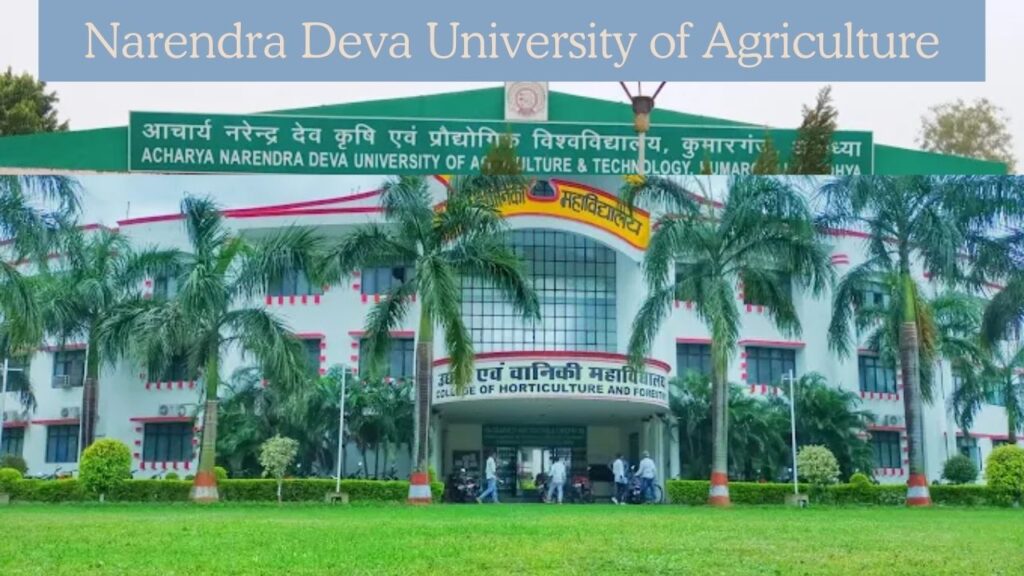
3. NDUAT — Narendra Deva University of Agriculture
The NDUAT is an agricultural university, It focuses primarily on horticulture and crop science. It is a government institution in Ayodhya and provides good quality education at low cost.
Courses available: B.Sc. (Hons) in Agriculture, B.Tech specialisations, M.Sc. courses in B.V.Sc. & A.H. (Veterinary), as well as B.F.Sc. (Forestry).
Fees: The B.Sc. (Hons.) Agriculture course fee is around ₹1.05 lakhs for 4 years, while B.Tech fees range between ₹1.64-1.70 lakhs.
Admissions: The minimum qualification is 10+2 with 50% marks in the PCB/PCM group of subjects. Admission is based on UPCATET entrance examination and then counseling on merit.
Placement & Career Prospects: The candidates who graduated have a placement with an average package of ₹3 LPA in both private and government sectors.
4. Sardar Vallabhbhai Patel Agriculture University
SVPUAT is the best university which is located in Meerut, making it easy for students. With all the government funding support, SVPUAT is known for its research on crop improvement and agriculture mechanization.
Fees: The fees for the whole course in AY is around ₹45,000 which is one of the cheapest in the state.
Placement: The strong ties with agribusiness companies, research institutes and government agencies enable graduates to obtain good placements.
5. Teerthanker Mahaveer University (TMU), Moradabad
TMU is one of the best private universities in uttar pradesh with world class infrastructure and industry oriented syllabus.
Course Offered: B.Sc. Agriculture, M.Sc. Agriculture courses based on ICAR norms.
Fees details: The total duration of B.Sc. (Hons. ) Agriculture at TMU is 4 years The fees for B.Sc. (Hons.) The duration of B.Sc Agriculture is 3 years and for M.Sc. Agriculture 2 years. The tuition fee is Rs 45,000 per semester for MSc Agronomy.
Facilities: There are world-class labs, practical training, and strong linkages with the industry, in the university.
Understanding the UPCATET Entrance Exam
Most of the government agricultural universities in Uttar Pradesh take their admissions via UPCATET(Uttar Pradesh Combined Agriculture and Technology Entrance Test).
Here’s what you need to know:
Exam Details: The exam is held every year in offline mode by the universities. For UG courses, the exam is generally conducted in June.
Eligibility: 10+2 passed students having science subject (PCM, PCB or with Agriculture subject) with a minimum of 50% marks are eligible to apply. There is a benefit for reserved category students, they can get marks relaxation up to 5%.
Exam Pattern: The UPCATET contains 200 questions from general knowledge, agriculture science, mathematics, and English. The examination will last for 3 hours.
Age Limit: Applicants must be aged between 16-22 years for UG courses at the time of admission.
The first years of agriculture in UP colleges are generally the basic courses in crop production, soil science, plant pathology, entomology and agricultural economics. Students specialize as well, choosing from such options as horticulture, seed technology, agricultural extension, agricultural engineering.
A number of courses have fieldwork components and the Rural Agricultural Work Experience (RAWE) allows students to work with farmers as they confront challenges of farming in the field.
Career Growth & Salary Package
There are many opportunities for the graduates of agriculture. For the freshers agriculture college students —- the packages will be near about ₹20,000-35,000 per month for job profiles like agricultural assistant and farm supervisor etc in the entry level The amount varies with the university from which students have passed.
Professionals at an intermediate level with 2-3 years of experience can earn around ₹40,000-60,000 per month. The salary of Agriculture Officer or Agriculture Development Officer in the government lies between 35,000 – 60,000 Rs per month.
Conclusion
Selecting an agriculture college in Uttar Pradesh is all about shaping the future of India. Be it a renowned government college like CSAUAT or a up-to-the-minute private university like SHUATS, you will find a route that leads you both with practical experience in the real world of life and a theoretical academic purity.
With manageable fees, quality faculty, research opportunities and robust placements, the agriculture colleges in UP prove to be the best when it comes to anyone with a zeal and passion to bring a change in the agriculture scenario of India.
Your resignation letter is signed, the new offer is accepted, and you’re ready for switching Jobs but what happens to the EPF account and should the new company’s NPS enrollment change anything about how you’re already investing through mutual funds? Don’t Ignore your EPF, NPS and Mutual Fund which most people already are doing.
The EPF vs NPS vs mutual funds decision isn’t really one choice — it’s three separate accounts with three different rules, and a job switch is exactly the moment most people either transfer things correctly or lose track of money they’ve already earned.
What Is EPF, NPS, and Mutual Funds
EPF — 8.25% for FY 2025-26, third year running at that rate, govt-backed, EEE (contribution, interest, withdrawal all tax-free if you cross 5 years’ continuous service). Mandatory for salaried staff at covered establishments; you don’t really “choose” this one, you’re already in it.
NPS — Market-linked, mix of equity/debt/govt bonds you can allocate; extra ₹50,000 deduction under 80CCD(1B) on top of the 80C limit. At exit, minimum 40% of the corpus must go into an annuity — you don’t get the whole pot in cash, and annuity payout rates in India have historically been mediocre (5–6% range).
Mutual funds — No lock-in except ELSS (3 years); LTCG/STCG taxed, no EEE treatment. Best long-run equity return potential of the three, but zero forced discipline — nothing stops you from redeeming during a panic.
Don’t Ignore Your EPF, NPS, and Mutual Funds After Switching Job
Your EPF doesn’t “carry over” automatically. A lot of people assume EPF just follows them to the new job. It doesn’t — not unless you actually transfer it.
When you leave a company, your EPF account under that employer becomes inactive. Your new employer opens a fresh account. If you don’t link the two using your UAN (Universal Account Number), you end up with multiple EPF accounts scattered across your career. Each one earns interest for a while, but an account that stays inactive for 36 months stops earning interest altogether.
How To Set Up Your EPF Account After Job Switch
Use the “One Employee One EPF Account” (OEEOA) transfer request on the EPFO portal, or let your new employer initiate it.
Don’t withdraw your EPF just because it feels like “extra cash” during the job switch. Withdrawing before 5 years of continuous service makes it taxable, and you lose out on decades of compounding.
Check your UAN is correctly linked to Aadhaar and your new employer’s establishment ID — half of all transfer delays come from mismatched KYC details.
The instinct to cash out is understandable when you’re between Jobs and expenses are piling up. But EPF is one of the few instruments giving you a stable, tax-free return over the long run. Treat withdrawal as a last resort, not a bonus.
Your NPS account isn’t tied to your employer at all. It’s tied to you, through your PRAN (Permanent Retirement Account Number). So technically, nothing needs to be “transferred.”
But there’s a catch. If your NPS contribution was happening through your employer under the corporate NPS model, that contribution stops the day you resign. Your new employer may or may not offer an NPS benefit. If they don’t, your account doesn’t close but it goes silent unless you start contributing on your own through the eNPS platform or a POP (Point of Presence).
What to check:
Confirm your new employer’s NPS deduction is active and linked to your existing PRAN — don’t let them create a second one by mistake.
If your new company doesn’t offer NPS, decide if you want to keep contributing voluntarily. Many people simply let it sit, which defeats the purpose of consistent, long-term retirement investing.
Update your bank and nominee details after the switch — this is the most commonly skipped step.
NPS rewards discipline more than any other retirement product because of how compounding and low fund management costs stack up over 20-30 years. A gap of even a couple of years in contributions has a real, measurable impact on your final corpus.
Mutual funds: the SIPs nobody remembers to check
Job switches usually come with a change in salary account, and that’s where mutual fund SIPs quietly break. If your SIP auto-debit was linked to your old salary account and you close that account (or stop maintaining the minimum balance), your SIP simply fails. Most people don’t notice for months — until they check their portfolio and realize three or four SIP cycles never went through.
What to do immediately after switching:
Re-link your SIP mandates to your new primary bank account, or keep enough balance in the old one until the transition is smooth.
Review your asset allocation. A new job often means a new salary, new expenses, maybe new financial goals (relocation, higher rent, a shorter or longer commute cost). Your SIP amounts should reflect your current life, not your old one.
If you got a signing bonus or relocation allowance, resist the urge to let it sit in a savings account. Even a lump sum top-up into an existing fund puts that money to work instead of losing value to inflation.
What Happens If You Neglect These Procedures
None of this is complicated. It’s just easy to postpone because nothing about it feels urgent in the middle of a job change. But delayed EPF transfers lose interest. Paused NPS contributions lose compounding years you can’t get back. Broken SIPs mean missed market cycles.
A Jobs switch is one of the few moments where you’re forced to look at your entire financial setup at once — new salary, new perks, new expenses. Use that moment. Spend one weekend afternoon logging into EPFO, checking your PRAN, and confirming your SIPs are active. It’s boring, unglamorous work. It’s also the difference between a retirement corpus that actually reflects your career and one that has quiet, unexplained gaps in it.
Your new job deserves your excitement. Your old investments deserve five minutes of your attention before you move on.
Switching Jobs is exciting but don’t ignore your EPF, NPS, and mutual funds investment as it is a chance to reset your financial checklist. Your EPF needs to be transferred, your NPS needs to stay linked to your PRAN, and your mutual fund SIPs need to keep running without interruption.
You don’t have to choose between EPF vs NPS vs mutual funds, understanding the role each plays in your long-term financial plan is important. EPF provides retirement stability, NPS adds a dedicated retirement investment option, while mutual funds offer greater flexibility and growth potential.