RRB Group D Recruitment 2026 — Check Vacancy and Link

RRB Group D Recruitment 2026

Good news for job seekers in India! The Railway Recruitment Board (RRB) has released RRB Group D Recruitment 2026 notification with approximately 22000 Level-1 posts. This drive, for CEN 09/2025 will fill posts of Track Maintainer, Assistant (Workshop), Pointsman and the like and is suited for 10th-pass youngsters aspiring for handsome coach packets jobs in railways. 

Key Dates at a Glance

Short Notification19/Jan/2026
Online Registration Start31/Jan/2026
Application Deadline02/March/2026
Detailed NotificationUpdate Soon

Application Fee For RRB Group D Recruitment 

General/OBC/EWS : Rs. 500 per person

Female/SC/ST/PWD : Rs. 250/-

Eligibility Essentials For RRB Group D Recruitment 2026

Candidates who have 10th pass (or ITI from NCVT/SCVT for certain posts) are qualified to apply for this job. Age must be above 18 and below 33 years (relaxation for SC/ST/OBC). No degree required, so it’s open to millions. Physical health and rudimentary abilities are important also.

CriterionRequirement
Education10th Pass / ITI
Age Limit18-33 years
NationalityIndian Citizen
Age relaxation is provided for reserved category 

Selection Process Breakdown 

The procedure of selection is conducted in phases: at the beginning, a Computer-Based Test (CBT) includes the subjects Mathematics, General Awareness, Science, and Reasoning (100 questions within 90 minutes). 

Then, there is a Physical Efficiency Test (PET), consisting of running and lifting, among other things. This is followed up by Document Verification and Medical Examination. 

Aspirants are shortlisted in accordance with merit, so begin your preparations for the PET right away. 

Salary and Perks

Get the job and enjoy Level-1 pay: Basic 18,000 + DA, HRA, TA – take-home 22,000-25,000 a month. Throw in job security, pensions, free travel and prospects for advancement. 

Follow These Steps To Apply

  1. Go to Official Website via direct Link given in the below section
  2. Under the ‘Notices’, click on the Railway Recruitment 2026 and find registration form
  3. Once the link will be active to the application portal, you can fill up your details and submit.
  4. While submitting it requires you to pay the amount and print out the offline copy of the application.
Important Links
Short NoticeClick Here
Official website Click Here

Leave a Comment

Your email address will not be published. Required fields are marked *

SSC Combined Graduate Level CGL Online Form 2025 Released – Apply Now for 14582 Posts!

SSC Combined Graduate Level CGL Online Form 2025 Released

SSC CGL Online Form 2025: SSC Combined Graduate Level CGL Online Form 2025 Released for multiple posts in government sector. Candidates who graduated from any stream can apply to appear in the exam. There are a total of 14582 vacancies, for online form check the link in this article and apply directly to join Combined Graduate Level Exam.

SSC Combined Graduate Level CGL Online Form Details

Recruitment AgencyStaff Selection Commission (SSC)
Exam NameCombined Graduate Level Exam
SSC CGL Notification 2025 Click Here
Post Vacancies14582
Exam modeOnline (CBT)
SSC CGL Exam Dates Tier 1 202513 to 30 August 2025
Online Form Click Here
Official WebsiteClick Here

Application Fee for SSC Combined Graduate Level CGL 

General / OBC / EWSSC / ST / PHAll Category FemaleCorrection Fee 1st TimeCorrection Fee 2nd Time
100/-00200500

Application Form Expected Exam Dates

Start Date9-June-2025
End Date 4-July-2025
Correction Date9 to 11 – July-2025
Admit Card – Tier 1August 2025
Exam Date Tier 113-30 – August-2025
Exam Date Tier 2December-2025

Department-Wise Post Detail for SSC Combined Graduate Level CGL Online Form 2025

Post NameAge-LimitEligibility
Auditor in AG or otherMinistries, Accountant in AG or Other, Sr Secretarial Assistant in Electronics, IT, UDC, CSCS, Tax Assistant in CBDT, CBIC, CBN18-27 YearsBachelor in Any Stream
Sub Inspector in NIADivisional Accountant in OfficesResearch Assistant, Assistant in Other ministriesInspector in Central Narcotics, DOP, CBIC, in Income Tax (CBDT)18-30 yearsBachelor in Any Stream
Sub Inspector in CBI 20-30 yearsBachelor in Any Stream
Junior Statistical Officer in MSPI18-32 YearsBachelor in Any Stream with Statistics as Statistics

RBI Bank Office Attendant Recruitment 2026: Notification, Apply Online & Details

RBI Bank Office Attendant

RBI has released an official notification for Office Attendant posts for the year 2026. The Board has issued the notification on 15 January 2026 and invites applications from the candidates who have qualified 10th standard. The registration process for the online application has started with the notification release. 

The Starting Salary for an RBI Office Attendant is ₹24,250 Per Month in the PAY SCALE 24,250–53,550. Employees also receive allowances like DA, HRA, CCA, Grade Allowance etc. along with the basic pay. 

RBI Bank Office Attendant Dates

EventsDates
Notification Release Date15th/January/2026
Online Application Process15th/January/2026
Closure for Editing Application Details4th/February/2026
Admit Card Release DateFebruary/2026
Online Exam Date28th February and 1st March 2026
CategoryApplication Fee
SC/ST/PwBD/EXSRs. 50/- (Intimation Charges) 
OBC/EWS/General candidatesRs. 450/- (Exam fee + Intimation Charges) 

Read More 👉 RSSB Agriculture Supervisor Recruitment 2026 — Get Details & Link To Apply

Are You Eligible for RBI Office Attendant 2026 

Age Criteria

Age Limit
Min age18 years 
Max age25 years
DOBBetween 02/January/2001 and 01/January/2008

Your Education 

RequirementDetails
Minimum Qualification10th Pass (SSC/Matriculation)
BoardRecognised board of concerned State/UT
Graduation StatusMust be undergraduate (Graduates not eligible)
Ex-Servicemen Qualification10th Pass + minimum 15 years defence service (not graduated outside Armed Forces)

Steps to Apply Online for RBI Office Attendant Recruitment 2026

  1. Go to the RBI official site at rbi.org.in.
  2. Scroll down and tap on “Recruitment Related Advertisement”.
  3. Choose ‘Recruitment for the Office Attendant posts in RBI.’
  4. Hit the ‘New Registration’ and register.
  5. Enter basic information to get Registration Number & Password (via email/SMS).
  6. Use your credentials to log in and apply.
  7. Upload the necessary documents: photograph, signature, left-thumb impression and handwritten declaration. 
Apply NowClick Here
Download NotificationClick Here
Official WebsiteClick Here

How To Prepare Current Affairs For Government Exams: A Complete Strategy

Current Affairs

Ask the former aspirants who cleared government exams about how they cracked the current affairs section, and they mostly advice to apply ‘read less and revise more’ strategy. While you are already dealing with tons of syllabus, don’t bother yourself with a question on How To Prepare Current Affairs for Government Exams because here you are going to understand what to cover, what to leave, and where you get to revise. 

Do not follow all at once such as daily newspapers, three YouTube channels, two monthly magazines, and a Telegram channel that posts forty notifications a day. By month three, you’re going to feel exhausted and still can’t recall what happened in January. Your memory is fine but processing information in the right way can be great.

This guide breaks down exactly which government exams test current affairs, what topics actually carry weight in each, and how to build a Current Affairs Preparation routine that survives contact with a real exam hall.

Which Government Exams Include Current Affairs?

Competitive Exam Current Affairs is not a field or a subject, it’s tested in every major government exam. The weightage and style of questions differ, but focus on updated events, schemes and development across India. These major exams have 

ExamSection NameApprox. Weightage
UPSC Civil Services (Prelims & Mains)General Studies (woven throughout)30-40% indirectly
SSC CGL / CHSL / MTSGeneral Awareness20-25 questions
IBPS PO / Clerk, SBI PO / ClerkGeneral Awareness (Banking & Static)40-50 questions (Mains)
RRB NTPC / Group D / ALPGeneral Awareness15-20 questions
State PCS (UPPCS, BPSC, etc.)General StudiesSignificant, scattered
UPSSSC (PET, Pharmacist, etc.)General Knowledge10-15 questions
Judiciary Exams (RO/ARO, court assistants)General KnowledgeModerate
NDA / CDSGeneral KnowledgeModerate
Teaching Exams (CTET, state TET)General Awareness (some states)Low-moderate

Notice the pattern: banking exams lean heavily on financial and economic current affairs, railway and SSC exams favor sports, awards, and government schemes, while UPSC and State PCS demand depth — they want you to connect a news event to its policy background, not just recall a date.

Read More 👉 SSC vs UPSC: The Ultimate Showdown for India’s Most Demanding Government Job Exams

Important Current Affairs Topics for Each Exam Type

1. UPSC Civil Services

  • Government schemes and policies (objectives, implementing ministry, budget allocation)
  • India’s relations with Foreign countries and organizations 
  • Updated Union Budget keypoints and Economic Survey
  • Environmental updates in India and national missions
  • Science and technology developments that affect government policies 
  • Global ranking and reports on hunger and development

2. SSC (CGL, CHSL, MTS)

  • Sports events, tournaments, and award winners
  • National and international days with themes
  • Important appointments (government and international bodies)
  • Books and authors released recently
  • New missile or mission under defence latest information
  • Connecting current events with static GK to expand your knowledge.

3. Banking Exams (IBPS, SBI)

  • RBI policy updates like repo rate changes 
  • New initiatives like digital banking in Banking that are in the news 
  • Latest financial schemes updates by the Government 
  • Large and new businesses updates in the news and how it impact on economic 
  • Basic rules of banking and new schemes on financial investments 

4. Railways (RRB NTPC, Group D, ALP)

  • Railway specific news including launch of new train, recent events and expansions 
  • Sports like cricket, football and olympics and their winners
  • Noble prizes, national films award and Padma
  • Government scheme names and launch details

5. State PCS and UPSSSC Exams

  • Budget news and new State government schemes updates
  • Current event and officers at state-level department
  • National news about the schemes that impact central departments
  • Cultural and heritage-related news tied to the state

Pro tip: State level exams are highly focused on state-specific news. Preparing current affairs which involve the state’s national policy that are going to affect the specific state is non-negotiable.

Read More 👉 Meet the Best Current Affairs Teacher for SSC CGL Who Can Boost Your Score

How to Prepare Current Affairs for Government Exams

This step-by-step Current Affairs Study Plan will help you understand how to cover Competitive Exam Current Affairs without loading too much on your head.

Step 1: Pick One Primary Source, Not Five

Getting information from too many sources that just repeat the same current affairs in different formats can confuse you. Stop making this mistake and choose only one verified source like a daily newspaper of Indian Express for UPSC/PCS aspirants; any standard Hindi daily like Dainik Jagran works fine for SSC/Railway-level prep and one monthly compilation magazine. That’s it. Stop adding more.

Step 2: Make Notes the Same Day, Not “Later”

Stick those relevant news cuttings from the daily newspaper in notebook or register so you don’t have to write it over, just highlight points to keep it remembered. When you open it daily for just 30 minutes, your mind captures one-line entries easily. So write them under categories: Schemes, Appointments, Awards, Sports, International, Economy. 

Step 3: Keep Revising for Competitive Exam Current Affairs

Do not just stick or write them in a notebook and wait to open them before the exam. You must give 15-30 minutes daily or one hour every Saturday to revise the entire week’s notes. So you get familiar with the events and schemes that will make you remember eventually.

Step 4: Use Monthly and Yearly Compilations Strategically

Don’t wait to read magazines 30 days before the exam. Instead, use them to fill gaps — if you’ve been making weekly notes consistently, the monthly compilation becomes a quick cross-check rather than a fresh reading exercise. Prepare your Competitive Exam Current Affairs with consistency.

Step 5: Practice with Quizzes, Not Just Reading

Reading creates familiarity; quizzes create recall. Attempt daily or weekly current affairs quizzes from a reliable source related to your specific exam. This forces active retrieval, which is what you’ll need under exam pressure, not passive recognition.

Step 6: Link News to Static GK

High-scoring aspirants don’t treat current affairs and static GK as separate boxes. If a new dam project is in the news, they revise the river system around it. If a country’s Prime Minister is in the news for visiting India, they quickly revise that country’s capital, currency, and basic facts. This linking technique multiplies the value of every current affairs item you read. That’s how they did Government Exam Preparation.

A Realistic Daily Time Allocation

  • Newspaper reading and note-making: 30-40 minutes
  • Quiz practice: 15-20 minutes
  • Weekly revision (once a week): 60 minutes

That’s roughly 45-60 minutes a day. If you’re spending more than that on current affairs alone while neglecting your core subjects, you’re over-investing in a section that, for most exams, carries less weightage than reasoning, quantitative aptitude, or your optional subjects.

Read More 👉 IIT vs NIT: Which Is Better for Placements, Curriculum & Career Growth?

Conclusion 

If you are panicking while thinking about how to prepare Current Affairs for a government exam then do not worry because this guide will help you understand where to focus and where to leave. Government Exam Preparation isn’t about who reads the most; it’s about who retains and recalls the most under exam conditions. 

Choose one source of News for Current Affairs Preparation and make notes. It is a way to keep your mind remembering without pressuring it too much. Revise it once a week and connect news to static facts. Keep doing this until you enter the exam hall with a current affairs section that feels less like a guessing game and more like familiar territory. 

Bank PO vs SSC CGL: Which Offers Better Salary and Career Growth?

In India, the two powerful career paths in government jobs have always been in debate — Bank PO vs SSC CGL, both are highly competitive, prestigious, and give assurance for lifetime financial stability. Students aiming for a government job will probably get confused in one question – which one is better? By exploring both Bank PO and SSC CGL post details will help you make a decision, but make sure that your interest aligns with the job.

What is Bank PO?

A Bank PO is an entry-level job in the government banks. Candidates must clear the main exams including IBPS PO and SBI PO to get selected and complete the training and probation period to become Assistant Manager. 

What is SSC CGL?

SSC CGL is offering Group B and Group C posts in different central government departments. The recruitment process is conducted by Staff Selection Commission through exams for jobs in ministries, CBI, tax department and more.

Eligibility Criteria For a Bank PO & SSC CGL

It has some eligibility criteria, for this job candidate’s must match to this criteria:

The nationality of the candidate must be Indian. Candidates subjected to Nepal/Bhutan and Tibetan refugees who came before 1 january 1962 to Indian permanently are also eligible for this post. 

Candidates completed their graduation from a recognised university or college are eligible for a Bank PO job. Age limit must vary between 20 to 30 years, as per government rules age relaxation is given to reserved category. 

For SSC CGL, candidates must have a degree of graduation in any field and age must vary between 18 and 32 years old. 

Also Read: Best Online Coaching for Bank Exam

The Financial Showdown: Salary and Allowance

This is often the main point for the comparison in these two job posts because of their attractive salaries. Here is the detailed salary structure for your help in this decision.

Bank PO Salary

The entry-level job in various ministries is offering an attractive pay, especially in leading banks like the SBI or IBPS. The initial salary for an entry-level is around Rs. 48,480. It will become higher when you add allowance and perks. 

The total monthly salary will be around Rs 70,000 to Rs 85,000 for a new Bank PO. It also provide very generous perks of this job that includes:

Dearness Allowance: Due to inflation, regular adjustment in the basic pay will happen on the basis of your salary package. 

House Rent Allowance: Banks often provided House to PO, especially on relocations.

City Compensatory Allowance: Bank will provide compensation for higher cost of living in metro cities.

Medical Finances: For any health issues, you can get 100% medical coverage.

Low-Interest Loans: Bank PO can get the most beneficial offer of availability of personal, home, and car loans with lower interest.

Other allowances like travel can also provide you.

Also Read: IBPS PO vs SBI PO Which Is Better?

SSC CGL Salary

The SSC CGL salary varies upon the level -– 7th Pay Commission. But its salary is based on the specific post and Pay Level it falls under. Overall, Pay-Level includes the highest paying job is Assistant Audit Officer and Assistant Accounts Officer offers basic pay salary around Rs 47,600 which falls under the Pay Level 8. Posts like Inspector of Income Tax or Assistant Section Officer have a basic pay around Rs. 44,900 that falls into Pay Level 7. 

In-hand salary for a high-level SSC CGL post can range between Rs. 65,000 and Rs 70,000. It can go higher with the experience and post level that will reach around Rs. 75,000 to Rs 80,000 per month. The allowance pay also given to employee:

Dearness Allowance: Based on the percentage of the basic pay.

House Allowance: It is given to almost every SSC CGL employee according to the city, it gets higher for metro cities.

Transport Allowance and Other Allowance like leave travel concession, medical coverage are also given.

Career Growth and Promotions

Aspirants need to check growth opportunities, not just paycheck because now these two paths have different roads.

Bank PO Career Growth

Career growth is fast in the banking sector as it depends on the candidate’s performance and experience. A PO can aspire to become a Manager of the Bank’s branch by clearing internal exams. The promotion can be stepped up with hard work and dedication. Candidates can reach to the higher positions like Deputy General Manager within a few years of hard work. It’s proven that most of the managing directors in public sector banks started their career as Probationary Officer (PO).

The promotion hierarchy (lowest to higher positions) for a Bank PO is as follows:

  • Probationary Officer (Assistant Manager)
  • Deputy Manager
  • Manager
  • Chief Manager
  • Assistant General Manager
  • Deputy General Manager
  • General Manager

SSC CGL Career Growth

Central government jobs have slower career growth, the promotion is based on the years of commanding and departmental exams. It varies upon the department’s number of vacancies. An Income Tax Inspector can get their first promotion after 7-9 years experience. Job security and financial stability is guaranteed but rapid promotions are not as fast as the Banking sector. SSC CGL freshers will have to spend long years to reach the highest level position.

The promotion hierarchy for SSC CGL employee as (Inspector in a department)

  • Inspector
  • Income Tax Officer/Superintendent
  • Assistant Commissioner
  • Deputy Commissioner
  • Commissioner
FeatureBank PO (SBI/IBPS etc.)SSC CGL Officer (AAO/Income Tax/Excise/Other posts)
Job ProfileManagerial, customer-facing, target-drivenMostly administrative, desk-based, or inspection-focused
Starting Salary (in-hand)₹70k – ₹85k+ with attractive perks₹65k – ₹75k+ depending on post and location
Career GrowthVery fast, performance-based. Quick promotions possibleSlower, mostly seniority-based. Predictable but gradual
Work-Life BalanceLess balanced, long hours, high pressureGenerally good, fixed hours, comparatively stress-free
TransfersFrequent, including rural postingsLess frequent, relatively more stable
Ideal For…Ambitious, dynamic individuals aiming at fast career growthThose preferring stability, work-life balance and job security

How to Make the Right Choice?

No definite answer for this because it depends on the candidate’s personal perspective and life priorities.

If a candidate wants to thrive quickly and handle a target-driven environment can choose a Bank PO job. It offers rapid career growth and high income. When the priority is work-life balance and job security, you have to patiently wait for career growth. So, candidates who are willing to settle down with a desk-job in one place can choose the SSC CGL path.

Conclusion

It has always been a Bank PO vs SSC CGL because both offer respectable career paths and financial stability for entire life. This article will provide you with detailed information on the salary and career growth for both professional paths. It helps you to make the right decision for your career. The right choice will shape your life, so make it correct.

Government Teaching Jobs in India 2026: Latest Vacancies, Eligibility & Recruitment Updates

Government Teaching Jobs in India

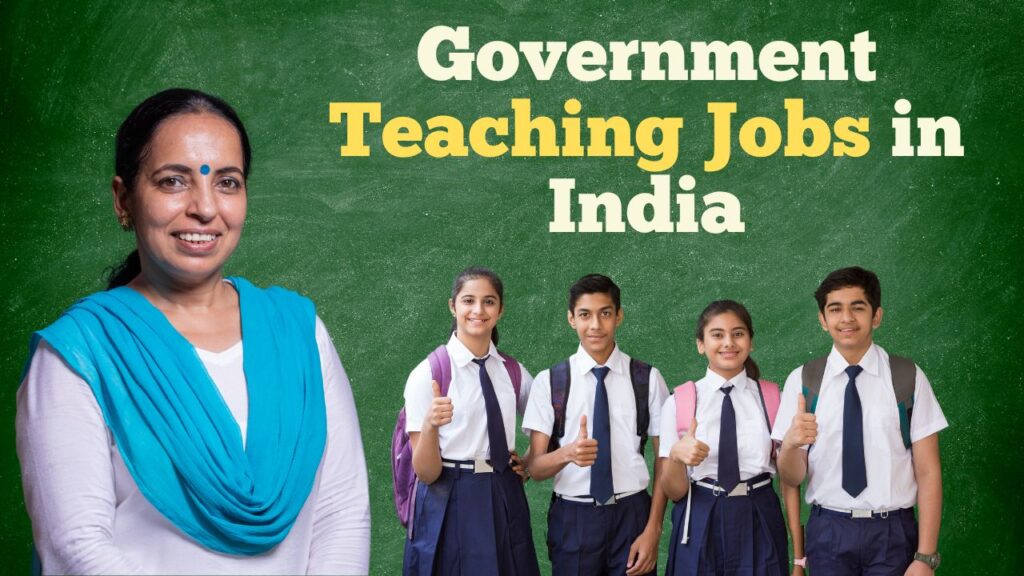
If you have ever wanted to impact society on a large scale and have a stable, secure job with great benefits, teaching for the government might be just right for you. In 2026, the government’s education department in India is experiencing a massive surge in job offerings and thousands of opportunities are available in schools and colleges across the country. Whether you’re a new graduate with a teaching degree, or a career changer, there has never been a better time to pursue a Government Teaching Jobs in India.

The beauty of governmental teaching jobs is not just the competitive salary packages, but the unbeatable job security, lifetime pension benefits, and the gratification of making a difference in the lives of young minds. With India making massive investments in education infrastructure, the need for qualified teachers has never been greater. 

The Current Recruitment Landscape

2026 is going to be a critical juncture for aspiring teachers in India. Big organizations are hiring at a scale that’s never been seen before:

Kendriya Vidyalaya Sangathan (KVS) has released the notification for 9126 posts for both teaching and non-teaching posts. These elite central government schools provide some of the best teaching jobs in the country for Trained Graduate Teachers (TGT) and Post Graduate Teachers (PGT) in several subjects.​

Navodaya Vidyalaya Samiti (NVS), which runs high standard residential schools all over rural India is also inviting application for 5841 posts. If you love to deliver quality education in rural areas and you have commitment then NVS is the best place to do that. 

Delhi Subordinate Services Selection Board (DSSSB), India’s largest recruiter, has thrown open the window with 5,346 vacancies for Trained Graduate Teachers and 1,180 vacancies for Primary Teachers. If you have your heart set on becoming a teacher in the capital of India, never let a spring pass without applying for some of the most competitive jobs on the planet.​

Uttar Pradesh, the most populous state in India, is also to recruit around 2 lakh (200,000) teachers in three phases by 2026. This montage of recruitment speaks volumes of the opportunities that exist for Indian teachers!

However outside of these large providers numerous Sainik Schools, state governments and educational boards release notifications throughout the year making teaching opportunities a steady flow. 

What You Need to Qualify

One of the biggest myths is that there are complex eligibility criteria to apply for teaching jobs. Actually the rest is simple, and the ones that are should have been enough to allow talented people to get into the profession.

When it’s About Becoming Primary Teachers 

Along with the 12th standard or its equivalent examination with at least 50% aggregate from a recognized board, you also need to clear the Central Teacher Eligibility Test (CTET) or your State Teacher Eligibility Test (TET) and have either a 2-year Diploma in Elementary Education (D.El.Ed. or 4-year Bachelor of Elementary Education (B.El.Ed.). 

When it’s About Becoming Trained Graduate Teachers 

You must have 50% marks in your subject along with B.Ed. You have to qualify CTET as well as state TET exam. TGT teachers usually teach classes 6-10. 

For Post-Graduate Teachers (PGT)

For the dreamers who still went for higher education. A minimum of 50% marks in a master’s degree in your subject along with the B.Ed qualification is required. Classes 11-12 and specialisations are handled by PGT teachers.​

For Railway and Sainik School Teaching Posts

The eligibility is almost same, but with minor changes as per organization type. Age limit varies from 21 to 40 years as per category.​

The CTET Advantage In Teaching Jobs

The Central Board of Secondary Education (CBSE) the Central Teacher Eligibility Test (CTET) is a boon for teachers in the making. Why it’s so good: 

Validity of CTET Score: It is now clear that CTET score validity has been increased – CTET scores will now be your lifelong companion, which means you don’t have to sit again for the exam even after years of so-called re-preparation.​

Pan-India Mobility : After qualifying CTET, you can apply to teach in central government schools such as Kendriya Vidyalayas, Navodaya Vidyalayas or union territory schools throughout the nation—not just in your native state.

Exams Advantage: Performing well in CTET examination also enhances your chances to get superior teaching job in central govt schools for which the pay and perks are the most lucrative.

The CTET examination for 2026 is scheduled for the 8th of February, and the application process is already open. The Paper I is conducted for the aspirants who want to teach classes 1 to 5 and Paper II is conducted for the aspirants want to teach 6 to 8 classes. Percentage required — You should a minimum of 60% to qualify! 

Salary and Benefits: Why Government Teaching Pays Off

Teaching is no longer a low paying job. Teaching professionals in India have a lot to smile now as they receive an extremely attractive pay scale:

Primary Teachers: A primary teacher will start with approx ₹35,400 as basic pay (₹42,000-₹45,000 with allowances) and can go up to ₹50,000+ in a decade through promotions and increments.​

Trained Graduate Teachers (TGT): with a basic pay of ₹44,900 (₹59,282 with allowances) and it can go up to ₹ 60,000-70,000 with incentives and experience. 

Post-Graduate Teachers (PGT) : Having the highest salaries at school level at a basic pay of ₹47,600 (₹ 56,320 with allowances) and may go beyond ₹75,000-80,000 per month with allowances and increments.​

Apart from the salary, teachers of the government get:

Dearness Allowance (DA): At present DA is about 38% of the Basic Pay and it is revised twice a year considering inflation

House Rent Allowance (HRA) : An additional monthly allowance is given to the employee based on his/her duty Station/location of post.

Transport Allowance: Very good for teachers and further higher in urban.

Medical Facility: Free medical treatment for you and your family in any hospital recognised by the bank’s medical cell.

Gratuity: A lump-sum amount on retirement

Pension Security: Immerse your lifestyle in wealth, NPS is the default pension plan for civil servants which guarantees a lifelong pension of fixed amount in return for financial security in old age.

Leave Benefits: Maternity Leave – 180 days, Paternity Leave – 15 days.

Benefits for Education of Your Children: Education benefits for your children, and your own kids’ education, consider scholarships and fee concessions. 

Read More 👉 Top IET Lucknow CSE Placements – Highest Packages, Recruiters & Career Growth in 2025

Types of Government Teaching Jobs

If you want to teach in India, these are some of the options that attract different types of teachers.

Central Government Schools 

KVS and NVS posts provide the most secure, stable and highest paid teaching jobs along with good perks and national level working.

State Government Schools 

Every state holds its own TET recruitment which provides the benefit of local stability and a home state posting ideally if you want to stay close to your family.

Railway Schools

Recruitment of teachers through Railway Recruitment Board (RRB) which invites applications from eligible candidates for the post of Teacher in various categories with attractive salary and benefits.

Sainik Schools

These elite military backed schools provide teacher with added advantage of working in a disciplined teaching, with great infrastructure and exposure to.

Delhi Government Schools 

The DSSSB recruitment leads to some of the best schools in India at Delhi, now opened for applications. 

The Selection Process

Knowing what to expect in the selection process enables you to be strategic in your preparation. Usually the procedure the candidates have to go through includes a written test to check your subject knowledge and teaching methodology (for TGT/PGT), verification of your qualification in which your educational certificates are scrutinized and in some cases a demo class/test on teaching is conducted where you have to teach a subject to a panel.​

This regimented process guarantees that only the most dedicated, and highest qualified teachers make it to the system. 

Preparation Tips

  • Start by preparing seriously for the CTET or your state TET – these are the pillars of your teaching career. 
  • Enroll in coaching centers if necessary, concentrate on the subject and solve the question papers on a regular basis. 
  • Have good communication skills and be aware of the policies of education. 
  • And more than anything, have a real love for teaching – that comes across waves in interviews and demo classes. 

Conclusion

Government teaching jobs in India will be more than just a job—they will provide a chance to contribute to building India’s future, along with monetary compensation and social prestige. With tens of thousands of vacancies, competitive pay, generous benefits, and a defined career ladder, now is an excellent time to enter this noble profession.

Whether it is the joy of imparting knowledge, the stable job and pension benefits, or the chance to do something for society, government teaching remains a profession that earns you respect for life. The options are there, the way is clear, and your teaching future is just around the bend. So take that leap of faith today—register for CTET, prepare well and stake your claim as an educator of India’s tomorrows. 

Scroll to Top