The Railway RRB ALP Admit Card 2026 for the CBT 1 is live on the official website for the candidates who have applied for the post can now download the admit card from below and appear for the exam to get a dream job in the Indian Railways. Upon its schedule from 13 February 2026, the admit card is the official ticket telling off that you are going to the exam hall.
If you have been studying for this exam for months, it’s time to calm down, stay focused, and get organized. Download your hall ticket well in advance and check all the particulars in it thoroughly and also make arrangements to link your transport to the examination centre.
Now, with a total of 9,970 ALP vacancies to be filled and lakhs of candidates competing for them, every little step now matters — and it all begins with your hall ticket.
Quick Exam Schedule Guide
Stage
Details
Timeline/Status
CBT 1 Exam
Held RRB-wise for 9,970 total vacancies
16—-18/February/2026
CBT 1 Admit Cards
Released online via regional RRB sites
Out since Feb 9, 2026
CBT 1 Results
Merit lists prepared with normalization for multi-shifts
Expected 2-3 weeks post-exams
CBT 2 Shortlisting
Around 150,000 total candidates shortlisted
Based on CBT 1 merit
CBT 2 City Slip
Advance info on exam city
3-4 days before CBT 2 (pattern-based)
CBT 2 Admit Card
Download from regional sites
3-4 days before test date
CBT 2 Tentative
Per RRB Calendar 2026
March—April/2026
Railway RRB ALP Admit Card 2026 Release Update
The Railway RRB ALP Admit Card 2026 has been released on 09th February 2026 on all the regional websites of Railway RRB. This is in regard to the Computer Based Test (CBT 1) to be held on 13, 16, 17 and 18 February. There are no hard copies to be sent—it’s all online, so don’t wait till the last moment. Thousands of aspirants registered for a total of 9,970 vacancies, so this was a golden chance in Indian Railways.
The process of downloading is simple, just make sure you follow the steps properly to avoid bugs:
Go to your regional RRB site (like rrbcdg.gov.in for Chandigarh, rrbapply.gov.in for Hyderabad) or the consolidated link at rrb.digialm.com.
Click on the ”RRB ALP CBT 1 exam admit card 2026″ link.
Fill in the Registration Number/User ID and Password/Date of Birth.
Hit “Submit” or “Login,” and your hall ticket will pop up.
Check the details, download the PDF and take 2-3 printouts. Save your backups!
Pro tip : If you panic, forget your password, just click on “Forgot Password” right there. Test Your Login Early to Avoid Getting Clogged Up on Exam Eve. Test your login early to dodge any server rush issues on exam eve.
What’s Inside Your Admit Card
Detail
Why It Matters
Candidate’s Name
Confirms identity
Roll/Registration No.
For entry and verification
Photo & Signature
Must match your ID
Exam Date & Shift
Note reporting time (usually 1-2 hrs early)
Centre Address
Plan your travel now
Duration & Instructions
CBT 1 is 60 mins, 75 questions
CEN No. (01/2025)
Links to your application
Documents to Carry in Exam
Remember to carry these following document as it is get you enter the examination hall:
Bring a hard copy of your admit card and a recent passport size photograph.
a valid original photo ID for verification.
Black or blue ballpoint pen.
Please note:
Accessories, bags, and eatables are strictly prohibited in the examination centre.
The gate will be shut prior to 8-9 AM, even if you have a late shift.
Further stages after CBT 1 are: CBT 2, CBAT, document verification (DV), and medical examination.
Exam Pattern
Part
Subjects
Questions
Marks
Duration
Notes
A
Mathematics, Logic & Reasoning, General Science
100
100
90 mins
Qualifying cut-offs: 40% must secure by UR/EWS category candidates/ above 30% for OBC/SC/ 25% for ST
The scenario of higher education in India has been a significant transfigurement in last 10 years. It is no longer the case that the best private universities in India are the only standard setters for excellence. Private universities today are reinventing the world-class education allowing them to differentiate in quality academics, through leading-edge innovation and creating environments where students are not just learning but also creating, discovering and leading.
Well, if you are looking for higher education in India then it is important to know what the differences are in the top private universities. They are not simply teaching bodies but they are breeding grounds for tomorrow’s captains of industry, researchers and innovators who will chart courses through industries and address global challenges.
The Top Contenders
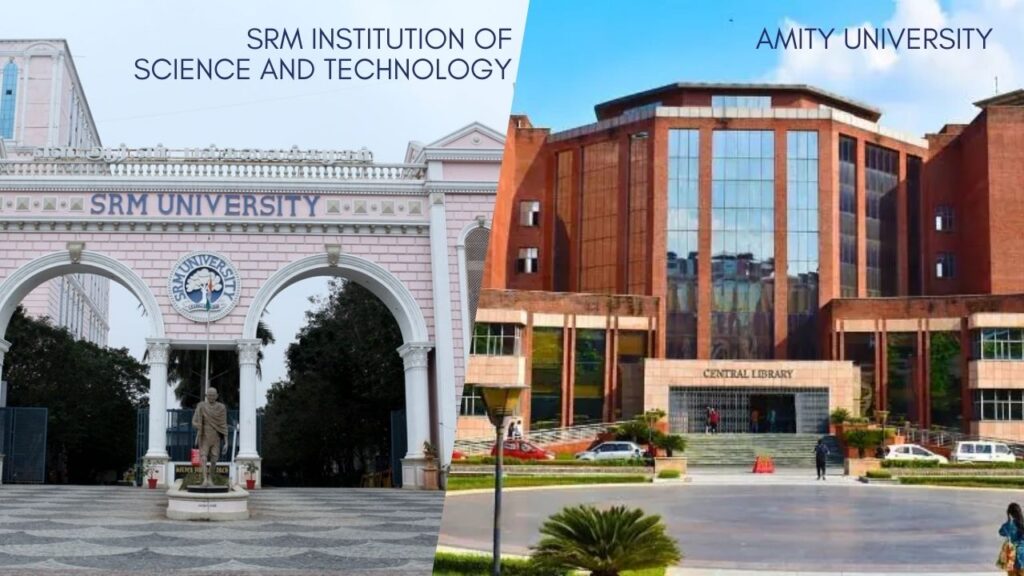
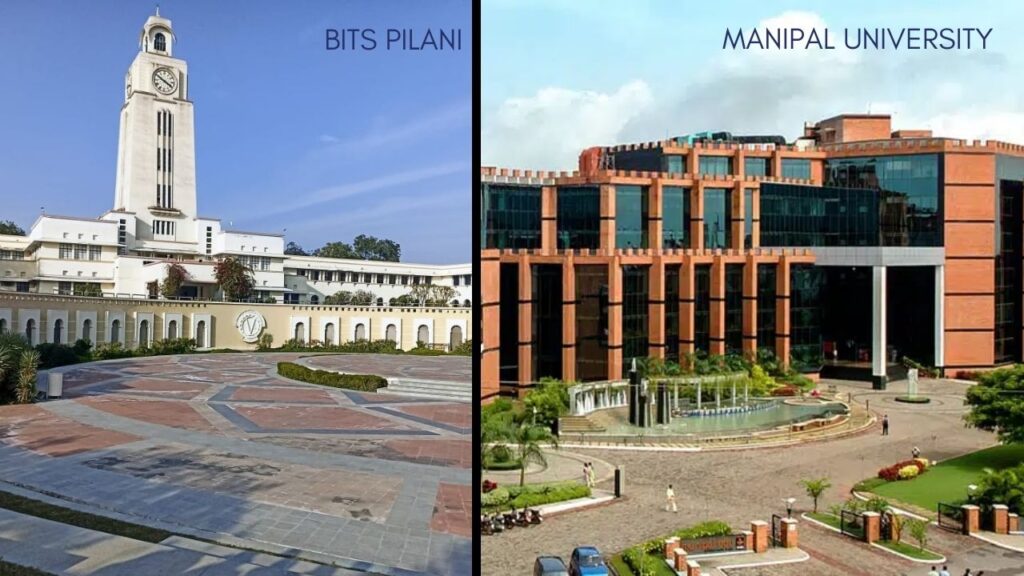
In the NIRF 2025 rankings, the private university sector is led by a few good institutions. The Manipal Academy of Higher Education (MAHE) emerges 3rd among universities across the country and stands as the best private university in the country. Closely following are BITS Pilani at rank 7, Amrita Vishwa Vidyapeetham at rank 8, VIT Vellore, LPU, Amity University and SRM Institution of Science and Technology at rank 11.
However, not only in rankings, Ashoka University is transforming Indian higher education. Ranked as the best new-age private university and awarded as the “University of the Year (Emerging)” in 2025 at the FICCI Higher Education Summit, Ashoka is the future of liberal arts and interdisciplinary education in India.
Manipal Academy of Higher Education (MAHE)
Amrita Vishwa Vidyapeetham
BITS Pilani
VIT Vellore
SRM Institution of Science and Technology
Amity University
Ashoka University
Lovely Professional University (LPU)
What Makes These Universities Stand Out?
Research and Innovation at the Core
Today’s private universities know that good teaching without innovation is half-truth. BITS Pilani has been especially creative in institutionalizing research amongst students. The institute, since 2023, has published more than 6,500 research papers in journals with average impact factor more than 4.1, filed 325+ patents, completed 13+ technology transfers, and incubated 138+ deep-tech startups with a combined valuation of over USD 300 million.These are not simply figures—they represent actual technology developed by students and professors that are reshaping markets and addressing real-world problems.
The Manipal Academy too has made huge investment in innovation infrastructure. Its Innovation Centre is a dynamic ecosystem that offers seed funding, incubation support, mentorship for patent filing and commercialization. The university has a state-of-the-art Central Analytical Instrumentation Facility (CAIF) with world class instruments such as SEM, NMR, XRD which enables interdisciplinary research in emerging areas like material science, biotech etc.
Ashoka University has now set up the Ashoka-Zeiss Core Imaging Facility, the first such facility in India, which caters to high end research in Cell Biology, Biophysics and Structural Biology. Inspiringly, in 2025, Ashoka was awarded the highest distinction for its research and innovation activities, demonstrating a strong commitment to advancing the frontiers of knowledge.
Faculty Excellence and Academic Rigor
The standard of faculty decides the standard of education. These elite private colleges have gone all out in trying to hire outstanding scholars, researchers, practitioners. Amity University has right faculty student ratio to provide quality education in meaningful mentorship and is supported by 2,100+ well experienced faculty members in helping 37,000 students in different campuses.
The curriculum at these schools is more than just textbooks. Many elite private universities weave in industry perspectives into their curriculum through guest lectures, internships and group work. That means students learn not only the theoretical underpinnings, but real-world applications and evolving industry issues.
Global Partnerships and International Exposure
It is always true that in a connected world, you need global exposure to get a good education. Ashoka University, one of India’s leading liberal arts universities, has partnered with 60+ prestigious institutions globally across 28 countries and five continents including Yale University, Sciences Po, University of Melbourne, EYH Paris. Partner organizations also provide opportunities for interaction with group and field trips during semester exchanges, summer programs, research collaborations and faculty exchange.
Similarly, Manipal University holds joint research programmes with top-notch institutions worldwide and is funded for research by various agencies such as DST, CSIR, AICTE. This global network ensures that students have access to an array of perspectives and world class academic resources.
Placement Excellence and Career Readiness
Quality education in the end translates into job opportunities. Manipal Academy secured more than 90% placement in 2025, with 8,000+ students placed across multiple programs. The highest package for engineering students went up to ₹69.25 LPA with average package of ₹12.31 LPA. Top recruiters: Microsoft, Amazon, Deloitte, IBM, Standard Chartered, and BookMyShow.
Inclusive Accessibility and Scholarships
Although being good quality generally carries a cost, many leading private universities understand that that should be manageable. These schools provide merit-based scholarships, aid packages and need-based grants so that gifted students aren’t turned away because of money.
The Innovation Ecosystem
What really sets the best private universities of today apart is their strategies for innovation across the board. BITS Pilani has created a number of innovation tracks to address a range of contexts – SPARKLE for transdisciplinary problem solving, SOLVE for applied innovation and PIEDS (Pilani Innovation & Entrepreneurship Development Society) along startup development.
Ashoka University launched the Young Scholars Programme: Innovators in Science & Tech (YSP IST). It’s for the high schoolers and it’s a 10 day live-in camp. It enables them to learn difficult subjects such as environmental chemistry, neuroscience, quantum computing and genetic engineering. These camps help create future inventors. They also ignite science curiosity at a young age.
Choosing a university is a very personal matter. If you are interested in a multidisciplinary education close to industry, Manipal Academy is excellent if you like comprehensive education with strong links to industry. If you want the best research and entrepreneurship route, BITS Pilani is unparalleled. Ashoka University, for those interested in liberal arts with a global outlook, provides a new frontier in Indian higher education.
What matters most is knowing what you want. Are you a basic researcher? Do you want to build startups? Are you looking for global exposure? The finest private Indian universities today cater to such journeys
The Future of Private Higher Education
The Indian private university sector is evolving fast. They are not simply copying public universities, they are innovating, conducting cutting edge research and drawing talent from around the world. This focus on quality, innovation, research and international collaboration is indicative of a vibrant, competitive ecosystem, and students stand to gain immensely from this.
Keep in mind as you start your higher education journey, Rankings are just one measure. What makes a school is its learning community, the quality of its faculty, the substance of its research, and its aspiration to produce not just accomplished professionals but responsible global citizens. India’s finest private universities are increasingly making the case that they can indeed deliver exactly that.
Conclusion
India’s leading private universities are transforming higher education with cutting-edge research, global outlook, industry-centred curriculum, and incubators of innovation. From BITS Pilani’s entrepreneurial culture to MAHE’s research excellence and Ashoka’s revolutionary liberal arts model, you will find a way to map out a future-ready career.
So when you’re picking your uni, focus on what suits your ambitions – be it research, startups, global learning or industry know-how.
Ultimately, these top private colleges in India are showing that they can shape not just degrees, but the leaders of tomorrow.
Students who want to start a business while studying that will grow with time when they get passed out but don’t know how to start a mineral water business, stay consistent and understand everything step-by-step. Why the Mineral Water Business ? Because it’s easy and needs less investment so students can easily work it out.
In every area there’s someone on a bicycle, two or three 20-litre cans strapped to the back seat, making rounds before the 9 a.m. lecture. And you’re wondering about the cost per can, number of houses in the block, weekly demand and deciding to start a mineral water business. It sounds like the side income you’ve been looking for.
It’s not a bad instinct. Even if you don’t have six months of free time, and lakhs of rupees sitting idle. You can still set up your small business amid juggling a timetable, a hostel curfew, and exam weeks. Here’s what actually applies if you’re starting this while you’re still enrolled.
Mineral Water Business Is Different From Packaged Drinking Water
The label gets used loosely, and that’s where a lot of first-time entrepreneurs trip up. Under Indian standards, “natural mineral water” (IS 13428) and “packaged drinking water” (IS 14543) are two different categories. The natural mineral water is sourced from a protected mineral spring, while packaged drinking water is the RO-and-UV purified water in cans and bottles that almost every local plant actually sells.
If you’ve ever seen a delivery guy with unbranded 20-litre cans, that’s packaged drinking water, not mineral water in the technical sense — even though everyone calls it “mineral water” on the street.
It matters because both categories legally require BIS certification if you’re selling them in a sealed, labelled container under a brand name. FSSAI registration is a separate, additional requirement that applies to anyone in the food and water supply chain — manufacturer, distributor, or reseller.
Skipping either one isn’t a grey area; local FDA teams do seal unlicensed plants, and it happens more often than people expect. If you don’t have much money then you can apply for FSSAI certification to start with.
The Reality of Setting Up A Brand of Water
If the plan is to manufacture and bottle your own brand, here’s the honest range, based on current supplier and consultancy listings — treat these as ballpark figures and verify locally, since they shift by state, capacity, and vendor:
BIS/ISI certification facilitation through a consultant typically runs somewhere in the ₹35,000–₹70,000 range.
Entry-level packaged drinking water machinery (RO plant, filling, capping) starts around ₹2.4 lakh for lower-capacity units and climbs past ₹13 lakh for higher-capacity setups.
A full project — machinery, water-testing lab, premises — can land around ₹25 lakh once you include everything, which is roughly the scale seen in real project reports built for government-backed loans like PMEGP, financed mostly through a bank loan plus KVIC margin-money subsidy.
None of that is pocket money, and the setup timeline — BIS testing cycles, layout approval, machinery installation — usually runs months, not weeks. It’s a business for after you graduate, or for a family that already owns a plant.
How to Start a Mineral Water Business While Studying
The workaround isn’t to skip compliance — it’s to skip manufacturing. Instead of building a plant, tie up with a local packaged drinking water plant that already holds FSSAI and BIS certification, and become their reseller or delivery partner in a specific area you can actually cover between classes.
You’ll still need your own FSSAI Basic Registration — it’s mandatory for anyone distributing or reselling food and water products, not just manufacturers, but it’s a low-cost, online process aimed at businesses with turnover under ₹12 lakh a year. No lab, no machinery, no factory inspection required at this tier.
However, you can’t put your own brand name on someone else’s water without their manufacturer backing you under their BIS license. Either sell openly under the supplier’s existing brand as their authorized reseller, or have a documented dealership arrangement. Your own labelled brand is the manufacturing route above — a later-stage move, not a starting point.
How to Manage Your Business While Attending Classes
A few things make the difference between this staying manageable and it eating your semester:
Keep the radius tight. Your own hostel block, one PG cluster, or a few shops near campus — something you can cover in under 15 minutes so it fits around lecture slots.
Vet suppliers in person. Visit two or three candidate plants, ask to physically see their FSSAI certificate and BIS license number rather than taking their word for it.
Apply for FSSAI Basic Registration early — it’s inexpensive and doesn’t take long, but it’s not something to leave until customers are already asking for it.
Run subscriptions, not daily orders. A weekly or monthly can subscription over WhatsApp is far easier to manage during exam weeks than fielding one-off orders every day.
Budget for the deposit cycle. Most local can systems run on a refundable can deposit — commonly in the ₹50–100 range per can, though this varies by supplier. That money is tied up as working capital until the empty can comes back, not profit you can spend.
GST registration only becomes mandatory once turnover crosses ₹40 lakh a year for goods in most states (lower in a few special-category states). Most student-run operations won’t hit that in year one.
Where Student Water Businesses Usually Fail
Three patterns show up repeatedly, and they’re worth naming before you start rather than after:
Treating it as passive income when it’s really a logistics job — someone has to physically move 20-kilogram cans at a fixed time, every week, including exam season. Letting the deposit-cash mismatch creep up — if thirty cans are out with customers and only ten deposits have come back, the working capital gap is real and it stalls reorders.
And trying to compete on price against an established local operator who already owns the plant and the delivery network — a student reseller almost never wins that fight, and shouldn’t try. The actual pitch is convenience: reliable timing around class hours, UPI payment, water dropped right at the door.
Skip the machinery quote for now. Call two local packaged drinking water plants and ask if they take resellers.
Apply for your FSSAI Basic Registration online.
Then run a 20-can pilot in your own hostel or nearby block before spending a rupee on anything beyond that.
If the pilot survives one full exam cycle without a missed delivery, you’ll know whether this is a real business or just a good week.
Conclusion
Understanding how to Start a Mineral Water Business as a student is different from starting as a manufacturer. So don’t follow large-level business instruction points, begin with less investment and short area to cover.
While attending your classes, you can set up your side business for passive income and it gets succeeded then you can turn it into a large-scale business. Apply FSSAI registration and track down your reliable provider who already has a water plant industry. Expand the network in the hostel and nearby block to easily deliver the mineral water cans.
Stay consistent and don’t get bored in just one week, keep up with the idea and you’ll get a success.
If you’re a CS student or a developer with two years of experience, you’ve probably worried about AI will replace Software Developers. Then it’s valid to worry about that. So, are Software Developers at risk? Some of them are, and it’s not the group most people assume.
Indeed shows software developer openings increased 11% yoy, marketing an increase faster than postings overall, with an April 2026 permanent software developer occupations higher than one year earlier. It still directs software developer work to rise 15% through 2034.
When postings rebounded, 71% of the increase came from senior roles. Indeed’s data shows senior postings up 13.5% since January 2025 while entry-level postings fell 6.3%. The profession isn’t shrinking. The door at the bottom is getting narrower.
Why Freshers Are Feeling It First
Stanford’s 2026 AI Index found that employment for Software Developers aged 22 to 25 has fallen nearly 20% since late 2022. The same report puts AI’s productivity boost in software development at 26%.
When you combine these two facts, the logic is apparent. The tasks that trained junior engineers — boilerplate code, fixing a few bugs frequently, test cases and little CRUD screens — are what AI tools are good at the most. One engineer can now cover more ground, thus a manager wonders whether they need to hire another fresher.
Take the exact percentages with some caution. Different studies measure different things and different time windows. Entry-level postings are down 28% from their 2022 peak and 6.3% since early 2025. The direction is consistent. The size of the drop isn’t.
Companies that rethink what a junior does, less typing code and more reviewing, testing and understanding systems, still want juniors. Companies that simply stop hiring are the ones driving the numbers down. What the IBM move suggests is that the job isn’t disappearing. It’s being redefined.
TCS, Infosys, HCLTech and Tech Mahindra have restarted or expanded fresher hiring for FY27, with an emphasis on AI/frontier-engineering skills. Accenture has pulled out of a custom-software-engineer role at least one time.
Writing code is turning into the cheap part. The real value lies in knowing whether the code actually works. Developers who analyze AI-mistakes that leave security risks, understand scalability issues in that code and align technical decisions with business goals. These tasks are much harder than simply writing a code.
That’s why senior demand is holding up. It’s also the awkward catch-22 for freshers: companies want judgment, and judgment normally comes from years of doing the work AI now handles.
What Indian Developers Should Do Now
You can’t out-type an AI tool, so don’t try. Here’s what moves the needle.
You want to build something that runs. If you have developed any tool that runs and deployed then its value is higher than any certificate on a side project that hasn’t been deployed. Hiring managers look for proof you can ship, debug, and not just recite.
Open AI tools use, and then begin to audit them. Develop code with them and then debug it. Interviewers are not less, but more concerned with you being able to avoid a bad suggestion.
The code itself is surrounded by so much. That is where design, databases, testing, cloud basics, and security play in where human judgment is still needed.
Aim at places that still train juniors. Agencies, product startups and firms with structured fresher programs are likelier to hire and mentor you than a team that’s trimming headcount.
Pick a project you already built and add a section to its README called “What the AI got wrong.” Document three real mistakes an AI tool made while you built it and how you fixed them. That one page shows exactly the skill the market is paying for.
Conclusion
The profession isn’t ending. But the old route of learning syntax, joining a big team and getting trained on the job is getting shaky. The developers who do well from here will be the ones who can prove they think, not just type. AI Is Changing Tech Jobs so polished your skills to become eligible for the current open positions.
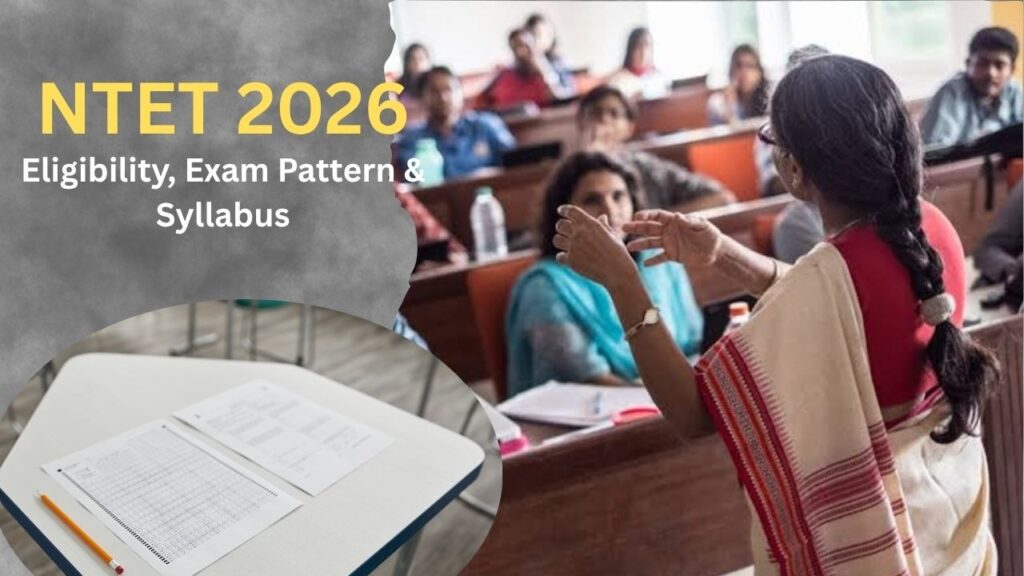
Do you want to develop the future of healthcare education in India? If you intend to apply for the post of Assistant Professor, Associate Professor or Professor in ISM or Homoeopathy, then the first step is to qualify the NTET 2026.
National Teachers Eligibility Test (NTET) for teaching in AYUSH Institutions (PCM/PCB) NCISM NCH has notified the conduct of National Teachers Eligibility Test (NTET) for educators in AYUSH colleges. From Minimum Eligibility Criteria, Exam Pattern, Syllabus, to preparation tips, this complete, evergreen guide dresses up all the essential aspects for NTET.
Let us check out the details to start your academic career.
What is the NTET 2026 Exam?
The National Teachers Eligibility Test (NTET) is a country level AYUSH teachers suitability test that aims at testing potential teaching capabilities, communication skills and knowledge of educational psychology of prospective AYUSH teachers. Be it Ayurveda, Unani, Siddha or Homoeopathy, the NTET 2026 is a mandatory requirement for teachers to keep abreast with contemporary teaching methods to train future doctors. It tests your teaching potential, not your medical know-how, which you have already been through a sufficient number of times in your postgraduate medical degree.
NTET 2026 Eligibility Criteria
Cooperating with the rules of UPSC before applying to NTET is the right choice because you can waste your time if you’re not eligible for the examination. Whether it’s a document or age criteria, make sure you lie on the guidelines. NTET is solely for post graduates and final year students of certain medical and para-medical disciplines.
Here is the list for the minimum eligibility criteria:
Basic educational qualification: Must complete your masters in whatever field you have chosen. Graduated students can pursue any of these postgraduate degrees in Ayurveda, Unani, Siddha, Homoeopathy or allied areas to be eligible.
Related fields: The candidates should have valid bachelor’s degree in AYUSH (BAMS, BUMS, BSMS, BHMS) withMaster of Public Health (MPH) or M.Sc in Anatomy, Physiology, Biochemistry orMicrobiology.
Students in their final year of education can take the exam if you are progressing and have completed at least 30 months of your masters program.
Career Stage: Only first time aspirants to the teaching profession (Assistant Professor) at the entry level are required to qualify in this exam. It is also necessary for higher teaching positions if the candidate is coming to teaching from clinical practice or research for a number of years and not for the first time.
NTET Exam Pattern
Feature
Details
Mode of Examination
Computer-Based Test (CBT)
Total Duration
120 Minutes (2 Hours)
Total Questions
100
Question Type
Multiple Choice Questions (MCQs) with 4 options
Maximum Marks
100 Marks
Marking Scheme
+1 mark for every correct answer
Negative Marking
No Negative Marking
Medium of Paper
English and Hindi
Difficulty Distribution
40 Easy, 40 Medium, 20 Difficult questions
Detailed NTET 2026 Syllabus
The NTET 2026 syllabus is concerned only with teaching techniques, management of the class and human mind. It has been segmented into 8 modules. Here you go, this is What to Study:
Teaching & Training
Definition, aims, and levels of teaching (to teach at Memory Level, to teach at Understanding Level, to teach at Reflective Level).
Features of adult and youth learners (Educational, Social, Emotional, and Intellectual).
Contemporary methods of teaching, clinical teaching and teaching at the bedside.
VARK learning style (Visual, Aural, Reading/Writing in Learning, Kinesthetic).
Communication
Definition, nature, types and barriers of communication.
Verbal vs non-verbal and intercultural communication.
Teacher-Learner and Doctor-Patient communication models.
Place of mass media in society and contemporary education.
Classroom Management
Maintaining studious engagement, and motivated learning in heterogeneous classrooms.
disciplinary management and discipline and positive, inclusive learning environments.
Work with real teaching environments such as OPDs, clinical labs, skill labs, and community outreach programs.
Methods of Evaluation
The formative and summative assessment processes in learning.
Evaluation mechanisms under the CEC procedures.
Evaluation of clinical competence by OSCE (Objective Structured Clinical Exam), long case and short case.
Importance of organised feedback in learning.
Educational Technologies
The emergent and shifting terrain In medical education: ICT and its management.
The utilization of the Internet, e-mail and video conferencing in the contemporary teaching environment.
Knowledge of online teaching environments and MOOCs (e.g. SWAYAM and SWAYAMPRABHA).
Educational Psychology
The cognitive development from childhood to adult with storing knowledge and learning through life experience by the human mind.
Psychological theories of relevance to teaching: Piaget’s cognitive development, Vygotsky’s sociocultural perspective, Bronfenbrenner’s social context.
Educational Andragogy
Get to know Andragogy (the designated way and technique of teaching adult learners).
The principles, needs and characteristics of adult learning.
Building Skills for Self-Directed and Lifelong Learning.
Learning and Pedagogy
Fundamental notions and sequential procedures of pedagogical analysis.
Critical pedagogy and the development of particular learning outcomes.
A few guidelines to facilitate doing student-centred teaching-learning workflow effectively.
Eligibility Conditions and Validity of the Certificate
Examination Result:
The candidates are required to obtain the minimum of 50% marks (without any rounding off) in the examination to be considered as “NTET Qualified”.
Certificate Validity:
On clearing the NCTET, your NTET Eligibility certificate is valid for 10 years from the date of passing. If they fail to join teaching within the 10 years or take a career break of above 10 years, they would need to take up and clear the test once again to continue in teaching.
Since teaching is what the NTET 2026 tests and not medical science, your prep plan needs to adjust slightly.
Learn the Pedagogy Fundamentals: To learn some of the main educational psychology concepts, read some of the key texts by Piaget, Vygotsky and from contemporary educational models.
Concentrate on Clinical Teaching: The usual pedagogy holds only tenuously when considering the OPD and in AYUSH teaching. Attending clinical, bed side and OPD teaching methods, they are very practical.
Manage Your Time: There are 100 questions in 120 minutes. Time is more than sufficient, but reading the lengthy scenario-based teaching method questions can be consuming. You will be building your reading speed with regular mock tests.
Take Advantage of the ‘No Negative Marking’ Rule: Have a guessing game plan for hard questions. Do not leave a question unanswered on your CBT screen.
Keep Abreast with Ed-Tech: Keep track of the latest digital education tools and steps taken by the Indian government in the education sector.
Conclusion
The NRIMT or NTET 2026 is one of the excellent, forward-looking measures by NCISM & NCH to bring about a unified quality in the AYUSH education throughout the country. This idea of focusing on “how to teach” rather than “what to teach” makes future doctors be taught by qualified, caring and extremely capable teachers.
So with this article, get yourself prepared to land on the hot seat of the National Teachers Eligibility Test. Go in depth with your syllabus and learn to think like the psychology of adult learners and you are on your way to a very successful and satisfying career as a medical teacher.
If you are interested in joining AIF then it is a golden opportunity for you to apply for IAF AFCAT 02/2025 Recruitment Form. There are a total of 284 vacancies in AIF. Candidates can register online from the direct link in the article. Notification releases for this recruitment and vacancy are great in various branches. Anyone who has a graduation degree with a 60% score is eligible to apply.
Exam Conducting by
Indian Air Force
Total Vacancies
284
IAF AFCAT
Candidates who are interested in the Indian Air Force (IAF) can apply online. This recruitment process fills 284 vacancies in AIF.
Ground Duty Technical or Non-Technical: 20-26 Years
Educational Qualification
Flying Branch: Any Graduate with 60% marks and must have passed Physics and Mathematics in 10+2.
Ground Duty (Technical): Bachelor’s degree in the relevant engineering stream with 60% marks.
Ground Duty (Non-Technical): Graduate with any stream with 60% marks or equivalent.
Application Fee
AFCAT Entry (for all Candidates)
550/-
NCC Entry
NIL
Mode
Online
It is necessary to pay the Application fee for AFCAT entry candidates. The application deadline for paying the fee is 01/07/2025 ensure to pay the fee before the last date. The NCC special entry candidates are free from any fee. This step validates your application, and without it, your form will stay invalid.
Documents Required
Recent passport-sized photograph
Scanned signature
Class 10+2 and Graduation mark sheet
Caste and domicile certificates (if applicable)
Selection Process
Online Examination
AFSB Interview:
Medical Examination
Multiple-choice questions covering General Awareness, Verbal Ability, Numerical Ability, and Reasoning.
Shortlisted candidates will attend an interview conducted by the Air Force Selection Board.
The Final selection in AIF is based on the medical fitness and merit of the candidates.