Indian Navy Agniveer SSR / MR Recruitment 2026: Eligibility, Dates, Salary & Apply Online

Indian Navy Agniveer SSR

If you want a respectable job and interested in defence then this will be your best chance to enter the Indian Navy Agniveer SSR. Underneath the gleaming, wave-piercing hulls of the latest destroyers and over the thunder of carrier-based jets is a more basic change in the types of people who operate them. MR Recruitment 2026 Notification, Navy shows aggressive approach to shape a force that is youthful, tech-savvier and quickest.

Whether you’re a young aspirant staring at the blue skies or just someone curious to speculate on how India is evolving its maritime defence, 2026 cycle offers an interesting peek into the “Agnipath” model at play. 

The MR Recruitment 2026 Ecosystem

The MR Recruitment 2026 drive is not simply a call for applications, it is a ‘stress test’ for a new method of military talent management. With the Navy moving away from legacy long-term service models, it wants to reduce the average age of its ranks. This means that those on the front lines have the highest end physical and digital literacy needed to run modern sensor nets and high-end weapons. 

This cycle for Indian Navy Agniveer SSR is composed of three main pillars:

SSR (Senior Secondary Recruit): The fleet’s technical backbone.

MR (Matric Recruit): The ship’s vital logistic and support core.

SSR (Medical Assistant): A specialized cadre of combat lifesavers.

Critical Timeframes for Indian Navy Agniveer SSR

The Navy runs on “man-of-war precision,” and so too does the recruitment calendar. The period for submitting applications is deliberately short to discourage procrastination among candidates. 

EventDate
Online Applications Open14/March/2026
Application Deadline06/April/2026
Correction Window10 – 11/April/2026
Stage I (INET) ExamMay/2026
Induction (Batch 01/2027)December/2026

Who Can Apply?

The Indian Navy Agniveer SSR has a very particular group in mind. They seek people at the height of their “biological plasticity” — i.e., they are young enough to be shaped by strenuous training and old enough to take on the enormous duty of naval service.

Marital Status and Age

17.5 to 21 years old candidates are eligible for this post, neither below nor above. So check your age as you must have been born on or between the 1st day of December, 2004 — and the 31st day of October, 2009 to lie between these range cycles. 

And all applicants must be single. Intense mobilization and deployment are hallmarks of the four-year Agniveer stint. The Navy wants people who can keep their laser focus on the mission, not who have the immediate bureaucratic hassles of legal dependents. 

Education Standards

  • Indian Navy Agniveer SSR: You should have a 10+2 (Intermediate) education with Maths and Physics along with one more subject such as Chemistry, Biology, or Computer Science. 50% in aggregate is compulsory.
  • MR Recruitment 2026: A day scholar can be a simple pass in Class 10 (Matriculation) with 50% marks from a state-recognized board.
  • SSR (Medical Assistant): This is the most academically demanding route. Higher education with Science subjects, and gain at least 40–50% in Phy, Che, Bio to be eligible.

Stage I: The INET

The first barrier is the Indian Navy Entrance Test (INET). It’s not only a test of what you know, it’s a test of how fast you know it.

For SSR – 100 questions and 60 minutes. That’s about 36 seconds per question. This is the same high-pressure decision making you need in a navy emergency. The syllabus includes classical mechanics and thermodynamics ( necessary for engine rooms ), up to higher calculus ( needed for navigational work and missile trajectories ).

Note on Marking Scheme: You get a mark for every correct answer but a wrong answer deducts 0.25 marks. Random guessing is life-threatening in the Navy, you can’t be careless. 

Read More:- MPESB Group 5 Paramedical Recruitment 2026: Complete Guide to 291 Government Jobs in MP

Stage II: The Crucible of Physical Fitness

If you are successful in the written examination you get the physical test. Life aboard a warship is a physical ordeal. You’re always walking on rolling decks, carrying gear and going up and down steep ladders.

The Benchmarks

The given numbers are especially designed for men and women with different approach to give maximum smoothness in their fitness standard qualification:

Physical TestMaleFemale
1.6 km Run6m 30s8m 00s
Squats (Uthak Baithak)2015
Push-ups15–
Bent Knee Sit-ups1510

Additionally, a candidate’s height also matters in order to use shipboard systems including isolation valves and bridge consoles. So, for men, the min height required is 157cm and 152cm for women.

Life as an Agniveer

The Agnipath scheme’s fiscal mechanism is a 180-degree change from the past. It is meant to be a “capital infusion” rather than a long-term pension obligation.

The “Seva Nidhi” Package

It starts from Rs 30,000 to Rs 40,000 as it will increase every month for four years. But 30% is deducted and matched by the Government.

At the completion of your four-year stint, you walk away with the Seva Nidhi package, which is estimated to be around ₹11.71 Lakh. Importantly, this sum is completely tax-free. That’s a huge financial leg-up for a 21-year-old to start a business, go for higher education, or head into a corporate job. 

The Medical Assistant Exception

Fascinatingly, the Indian Navy Agniveer SSR post as a Medical Assistant takes a different trajectory. Since medical training is highly specialized, the Navy likes to retain these people. After their initial training stipend, they are placed into the Level 3 Defence Pay Matrix (₹21,700 – ₹69,100), indicating that some niche skills are just too valuable for the standard four-year turnover. 

Conclusion

A recruitment year for I st year in Indian Navy Agniveer SSR and being a part of pioneering generation. You are the digital natives who will sail on the next generation of stealth frigates and indigenous aircraft carriers. Whether you are staying just for 4 years or for one permanent role (which about 25% of the batch will), the discipline and technical skill and financial foundation that you come away with, is unmatched.

Are you ready to take the watch? You have enough time to fill the application for Indian Navy Agniveer SSR and is available until 6/April/2026 for MR Recruitment 2026. 

Leave a Comment

Your email address will not be published. Required fields are marked *

Online or Offline Coaching Which is Better For You? 

Coaching

No matter how much you’re confused while choosing Online or Offline Coaching for your exam preparation, there is no one word answer for that. The better option is which one fits for you and your studies. Whether you are living in a rural or urban area, this choice totally depends on your lifestyle, learning habits, and mind adaptability.

If you understand from recorded sections, you can easily adapt to online coaching. Some students have doubts and need motivation to study, offline coaching works best for them.

Understanding the Purpose of Your Coaching?

Ask yourself, “I want to join a coaching for study content?” or you wanted a structure and motivation that comes from studying with peers. The purpose of your coaching will help you direct in the right path, try to find out that answer. There is no debate left for Online Learning vs Offline Learning.

If you can set your own deadlines to finish the syllabus and search answers to clear your doubts on your own then Online Coaching can be a highly effective option for you. However, if you need someone to keep you accountable and your mind is more attentive in a physical classroom environment then offline coaching is best for you.

Considering Online Coaching is poor is a biggest myth because some subjects find more better content such as faculty access, recorded lectures, and mock test quality in online coaching than offline. 

Advantages of Online Coaching

The online coaching landscape in India has completely transformed over the last five years. One of the best advantages of online coaching is the exposure of great teachers and their lectures through Youtube and learning apps. Students can join classes of best IAS, Mathematics or Science Teachers from different states though platforms like Unacademy, Physics Wallah etc., without having to relocate.

Online Learning vs Offline Learning Strengths

Online Coaching StrengthOffline Coaching Strength
Less expensive and easily affordableMaintain consistency for your studies
You can rewatch lecture in your free timeTrigger competition reflect and motivates through entire period
No need to relocate for best faculty to learnFace-to-face interaction allows better understanding of doubts
Most platform has mock tests, performance tracking and dashboard to monitor your studiesNo distraction from the house or anywhere, the environment is set and more focused on study.
Traveling time is saved and used for studiesPeer support and discussion can improve understanding and keep motivation high 

Fact About Offline Coaching That Nobody Talks About

So many students spend lakhs of rupees to pay the coaching fees, move to an unfamiliar city and live away from their parents, but success is still not guaranteed. Offline coaching does not automatically lead to better results. Be careful while choosing offline coaching, it must have the best teachers that get you, quality study and overall consistency. 

There is also a hidden cost in offline coaching: your traveling money and time. If you travel everyday and your coaching is far from your home then it will waste both your time and money. That valuable time could instead be used for revision, practice, or self-study. 

Which One Should You Choose?

Understand yourself and purpose for the coaching then make a decision for .

Choose Online Coaching If:

  • You are a working professional and wanted to prepare for exams
  • You live in a small town or rural area and don’t wanna move to the city where the best teachers are easily accessible.
  • You have a tight budget and want a cost-effective option. 
  • You are just comfortable with self-study and manage yourself to stay consistent.

Today, high-quality online content is available for major competitive exams like JEE Main, NEET, and UPSC, making online learning a strong choice for many students.

Choose Offline Coaching If:

  • You don’t keep yourself motivated and get easily distracted.
  • You are in Class 11 or 12 and surrounded with a lot of doubts.
  • You have the financial support to attend classroom coaching.
  • You want interaction with teachers and other students, and motivated by a competitive peer environment.

For some exams, especially medical entrance preparation, the quality of certain offline coaching batches is still considered among the best.

Hybrid Learning – Best Coaching Method for Students

Opt for hybrid learning because it combines structured routine of offline coaching with the flexibility of online resources, that gives you everything to crack the exam. With recorded lectures and test series, you can revise the topic whenever you get free or clear any doubts you have. Many top-performing students follow this strategy as it helps to keep them consistent and competitive by attending physical classes while getting extra practice and revision from online learning. It offers the best of both worlds. 

Exam categoryExample exams / authoritiesBest modeWhy (short)Stage note
Engineering EntranceJEE Main (NTA)OnlineHigh-quality online content (PW, Unacademy, Allen Online), much cheaper; superior mock analyticsFinal 3 months: add offline test series for exam-hall pressure practice
Engineering EntranceJEE Advanced (IITs)HybridNeeds deep problem-solving, peer discussion, instant doubt clearing—online alone misses thatBest combo: offline class batch + online for revision/extras; choose offline batch with top peers (Top 5% JEE Main scorers)
Medical EntranceNEET (UG – NTA/UGNMC)HybridBiology often benefits from offline teaching; top online platforms strong (PW NEET, Aakash Digital)Class 11: prefer offline; Class 12 & droppers: hybrid efficient; Physics & Chem may need offline doubt clearing
Civil ServicesUPSC CSE (Prelims, Mains, Interview)OnlineVast syllabus, comprehensive online materials; saves relocation costJoin local/offline test series for Mains answer-writing feedback; Interview prep must be offline mock panels
State PSCsUPPSC, MPPSC, BPSC, etc.HybridState-specific GS and current affairs covered better locally; general subjects onlineHindi-medium students often prefer offline; depends on state — e.g., Lucknow has strong UPPSC institutes
Banking & SSC (Banking)SBI/IBPS PO & ClerkOnlinePattern-based; purpose-built mock platforms (Oliveboard, Testbook, Adda247)Invest in mock test subscriptions rather than classroom fees
SSC (Staff Selection)SSC CGL / CHSLOnlineHighly pattern-driven; aptitude practice > concept depthTier 1: online mock platforms and YouTube suffice; offline often overpriced
RailwaysRRB NTPC / ALPOnlineBasic aptitude + GK; strong online resources availableUse Unacademy Railway, Testbook; self-study with mocks works well
DefenceNDA / CDS (written) + SSB (interview)HybridWritten exam: online prep fine; SSB: offline required for GTO and psych practiceSplit budget: online for written; offline only for SSB coaching

The Honest Pitfalls of Online Coaching

Online coaching actually fails when students start collecting videos instead of actually studying them. Self study is needed in both modes of education, downloading dozens of lectures without watching, revising, or practicing creates the illusion of preparation. In common languages, it’s a fake preparation trap when you have all the study material but you are not practicing or learning it.

No matter how premium the platform you got, online coaching is a waste for you. If you have 50 videos and don’t even watch properly any one of them. You can enroll in any of the best online learning platforms under your the best teacher classes, create a weekly study schedule, and commit to completing each week’s material on time.

Read More:- What Is Distance Education? Benefits, Learning Programs, and Career Opportunities

Conclusion 

Online or Offline Coaching just provides the structure, study content and ways to crack it easily. But you have to work hard on practicing it daily, understanding the topic, maintaining discipline and consistency. Lack of commitment will let you fall in your life whether you are taking Online or Offline Coaching.

Before selecting a coaching style, do an honest self evaluation. Understand your purpose of coaching and exams you are going to pitch for. In the end, it is consistent effort and discipline that counts more than the way you are learning. 

Online Learning vs Offline Learning, Best Coaching Method for Students, Online Education vs Traditional Education

UP GNM Entrance Test UPGET: Eligibility, Syllabus, and Selection Process

UP GNM Entrance Test UPGET

UP GNM Entrance Test UPGET is conducted for the aspiring Nurse. Nursing is a field of taking care of injured, weakened, and fighting for life in the hospital or private care center. It is considered as the most respected and important field in the medical field. If you enjoy helping people, being a nurse can provide a lot of personal reward and job security. 

In the case of students of Uttar Pradesh who want to pursue this noble field, it is the best way to begin with the General Nursing and Midwifery (GNM) diploma course. 

But how to get admission in the best nursing college in UP? That is exactly where the UP GNM Entrance Test (UPGET) enters the scene. 

If you are a student perplexed about the UPGET, thinking who is it for, for what reason is it conducted or what to prepare, you have landed at the right place. In this complete guide for UPGET, we will cover each and every information regarding the UPGET exam, which will provide you with the latest updates as well as a clear path for your career. 

What Is The UPGET Exam? 

UP GNM Entrance Test UPGET is a way to proceed admission for those selected candidates who prefer to study 3 years General Nursing and Midwifery (GNM) diploma course.

Earlier the norms for GNM course admission were merit-wise based on the marks a student scored in their 10th and 12th board exams in uttar pradesh. But now, in a bid to make the admissions process more transparent and uniform, the Atal Bihari Vajpayee Medical University (ABVMU), Lucknow has been given the responsibility to conduct the UPGET. 

This examination is for one time for all. After passing the UPGET, students will be admitted to any of the Government GNM Training Centers and Private Nursing Colleges. 

(Latest Update: ABVMU officially conducting UPGET 2026 for the students, form portal is active from 29th April 2026 and exam will be held on 16th June 2026.)

Who Is This Test For? 

UPGET is conducted for those candidates who aspire for a career in nursing and healthcare but not for 4-year B.Sc. Nursing degree. The UPGET is designed for the candidates who want to pursue a career in nursing and healthcare but do not wish to take the route for a four years B.Sc.Nursing course or are not qualified for the same.  

Recent 12th Graduates: Those who have completed 12th standard (Intermediate) recently and want to enter the healthcare workforce at the earliest by opting for a 3-year diploma. 

Students from Diverse Academic Backgrounds: Science students are the most preferred for medical fields, but through UPGET the GNM course opens doors for students belonging to Arts and Commerce stream too to apply for the same if they have English as one of the core subject and other minimum percentage bar is met. 

Registered ANMs: Registered Auxiliary Nurse Midwives (ANMs) who wish to upgrade their qualification and career path can take this exam to shift to the higher GNM post. 

Why Is The UPGET Conducted? 

You may be thinking why an additional entrance examination is necessary when 12th-board marks are already there. Changing from a merit-based system to an entrance-exam system (UPGET) went through for several very compelling reasons: 

  • Different education boards (CBSE, ICSE, UP Board) follow their own set of marking schemes. Some are very strict, some a bit lazy. UPGET is a fair examination where all candidates are assessed on the same question paper. 
  • Nurses are going to deal with human lives. The government also wants to test students for a basic proficiency in science, logical thinking and English before they can enter government-run hospitals and the best private ones. 
  • Students though would no longer have to run from private college to private college seeking to pay heavy donation fees, UPGET ushers a system of centralized counselling. You appear for one exam, get one rank and then you choose your college online on the basis of merit. 

Eligibility Criteria For UP GNM Entrance Test UPGET

  • You must be above 17 years old and have no max age limit for this exam.
  • Intermediate passed candidates are eligible for this exam, with above scoring of 40% marks. 
  • You must know basic English or study it as a subject in 12th.

Alternative Eligibility for ANMs 

If you have passed the vocational course of ANM with a minimum of 40% marks or if you are registered as ANM and have qualifying marks, then you can apply for the UPGET. 

Citizenship 

Only Indian citizens are eligible for this exam. Possession of a valid Uttar Pradesh domicile certificate also assists in availing the benefits of state-sponsored reservations (SC/ST/OBC/EWS). 

Syllabus: What To Study For UPGET? 

The good thing about UPGET is that the syllabus is manageable, as opposed to NEET. It evaluates your fundamentals. Try each question (100 MCQs) as there is no negative marking.

Syllabus breakdown for right preparation:

1. General Science (Class 10th Level) 

Basic aspects of Physics, Chemistry and Biology are discussed in this section. Nurses therefore understand the human body and chemicals at a fundamental level, so focus heavily on Biology (human anatomy, diseases, nutrition, cells) with a bit of basic Physio as well. 

The questions on physics and chemistry are very basic—like motion, light, simple chemical reactions, and acids/bases. NCERT Science textbooks from Class 9 and Class 10 are very helpful to prepare yourself.

2. English (Class 12th Level)

A nurse needs to read medical charts, know what a prescription says and talk to people. Basic grammar rules, vocab, syno/anto-nyms, and correcting the sentences basically checks your ability to check the fundamentals of English.

3. General Knowledge & Current Affairs (Class 12th Level)

This part tests your general knowledge. It is on basic Indian history, geography, civics and some of the major current affairs(especially in health, science, and national news). Specially focus on healthcare schemes launched by the UP Government and the Central Government that are currently in progress.

Passing Marks & Required Score 

Due to no negative marking for the UPGET exam, the average marks are on the higher side. But the criteria vary for the Government College and for a Private College. 

There are required marks for the admission, 50% for Unreserved/General categories candidates and 40% for those who belong to SC/ST/OBC category.

You need to secure a seat with a higher score, Out of 100, aiming for a score of 75 to 85+ to take a chance. Private institutes will take you if you pass the cutoff marks along with the counseling process.

Step-by-Step Selection Process

Step 1: Candidates should visit the ABWMU Official website when the notification is out (Expected in April/May). You have to register,mention your personal and educational details,upload a live photograph and signature and pay the examination fee. 

Step 2: Admit cards are mandatory as they act as an entry card in the examination. Candidates need to download them when the official release is declared a few days before the exam and visit their allotted examination center. 

Step 3: The results will be declared by ABVMU on their portal. According to the scores, a state-wide Merit List is formed. Your position in this list is everything. 

Step 4: Qualified applicants will apply for online counseling. You need to fill your “Choices” (Colleges you want to opt in the order of preference). 

Step 5: Your college will be allotted to you on the basis of your rank, category and the options submitted. You have to accept the seat and then go to the college along with your original documents (12th mark sheet, Aadhar Card, Caste Certificate, Domicile) for verification and submission of fee. 

What to Do If You Don’t Clear UPGET?

Failing an entrance exam can seem like the end of the world but in medicine, setbacks are par for the course. You have plenty of good backup options if you don’t get a high enough score for admission: 

  • Take a Drop and Re-attempt, a dedicated 6-month preparation plan will almost guarantee a great rank next year. 
  • You can also consider a 2-year ANM diploma course which is actually easier to get into. 
  • There are other diploma courses which are highly demanded and are offered by the UP State Medical Faculty, including D.Pharma, DMLT, X-Ray Technician, or Physiotherapy. 
  • If you are willing to pay a slightly higher fee, you can approach private institutions directly to inquire if they accept direct admissions without a top UPGET rank  

Conclusion 

The UP GNM Entrance Test UPGET is a big chance for the one who wants to make career in nursing and serving the people in the state of Uttar Pradesh. As the state government switches to entrance test system, it would now be merit-based and allowing students from diverse background to compete and make it to the top nursing institutions. 

The way to success in UPGET is to know the syllabus, read the basic 10th science, refresh your English and keep updated with GK.

CUET UG Answer Key 2025 Out – Check Now on Gov Update Wala!

CUET UG Answer Key 2025 Out – Gov Update Wala Official

The CUET UG Answer Key 2025 is officially released by NTA, it helps lakhs of aspirants to bring clarity and relief for the exam. Students must clear this exam to secure a seat in central universities across India. If you’ve prepared yourself then check the answer key to verify your answers. Check out the Answer Key 2025 directly from the link in this article. If you want to know more details about this exam, you visit the official website.

The answer key really matters to the aspirants because it provides self-evaluation to enhance the confidence and knowledge of aspirants. It builds trust in transparency for the evaluation system. If the students get confused after finding out the question then it is easy for them to understand quickly.

Exam NameCUET UG
Eligibility12th Passed Minimum Marks: 50% marks
CUET UG It is an entrance exam for admission to UG courses in the central government universities across India.
Application Starts01/03/2025
Application Ends24/03/2025
Correction Date26-27/03/2025
Exam Date8 May to 1 June 2025
Admit CardClick Here
Download Answer KeyClick Here
Check Answer Key NoticeClick Here
Official WebsiteClick Here

Read More 👉 Top Government Jobs After MBA in 2025 You Shouldn’t Miss!

How to Check the CUET UG Answer Key on Gov Update Wala

  • Visit official website https://cuet.nta.nic.in/
  • Click on the login and enter your details such as your application number and password to view the question paper.
  • Challenge the question to view answers, then download the PDF.
  • The question ID is shown next to the correct option.

Application Fee

General 1000/-
EWS/OBC900/-
SC/ST/PH800/-
Additional subject charges 
General400 for each
EWS/OBC375 for each
SC/ST/PH350 for each

How to Challenge the CUET UG Answer Key

  • Log in with your CUET application number and password.
  • Navigate to the challenge answer key section and click on that to challenge that question.
  • To claim, Input your correct explanation with clear proof for the answer.
  • Pay the amount of fee for each objection.

Conclusion

The CUET UG Answer Key 2025 is a reliable source for the correct answer to your questions. Aspirants can claim the objection with proof along with the payment. It helps improve an aspirant’s confidence and clarity for the exams. By offering the direct link, ensuring the announcement will reach the aspirants. So, never miss an update from the website about CUET UG.

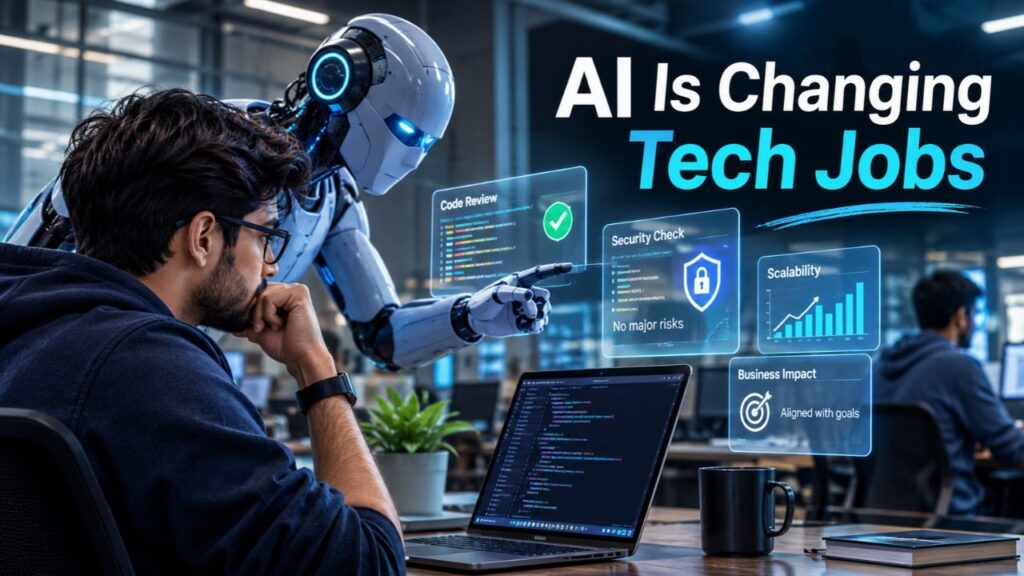
AI Is Changing Tech Jobs: Are Software Developers at Risk?

AI Is Changing Tech Jobs

If you’re a CS student or a developer with two years of experience, you’ve probably worried about AI will replace Software Developers. Then it’s valid to worry about that. So, are Software Developers at risk? Some of them are, and it’s not the group most people assume.

Indeed shows software developer openings increased 11% yoy, marketing an increase faster than postings overall, with an April 2026 permanent software developer occupations higher than one year earlier. It still directs software developer work to rise 15% through 2034. 

When postings rebounded, 71% of the increase came from senior roles. Indeed’s data shows senior postings up 13.5% since January 2025 while entry-level postings fell 6.3%. The profession isn’t shrinking. The door at the bottom is getting narrower.

Why Freshers Are Feeling It First

Stanford’s 2026 AI Index found that employment for Software Developers aged 22 to 25 has fallen nearly 20% since late 2022. The same report puts AI’s productivity boost in software development at 26%.

When you combine these two facts, the logic is apparent. The tasks that trained junior engineers — boilerplate code, fixing a few bugs frequently, test cases and little CRUD screens — are what AI tools are good at the most. One engineer can now cover more ground, thus a manager wonders whether they need to hire another fresher. 

Take the exact percentages with some caution. Different studies measure different things and different time windows. Entry-level postings are down 28% from their 2022 peak and 6.3% since early 2025. The direction is consistent. The size of the drop isn’t.

Companies that rethink what a junior does, less typing code and more reviewing, testing and understanding systems, still want juniors. Companies that simply stop hiring are the ones driving the numbers down. What the IBM move suggests is that the job isn’t disappearing. It’s being redefined. 

TCS, Infosys, HCLTech and Tech Mahindra have restarted or expanded fresher hiring for FY27, with an emphasis on AI/frontier-engineering skills. Accenture has pulled out of a custom-software-engineer role at least one time. 

You Know That Why Are Companies Replacing Employees With AI 

What Jobs Are Still Open For Freshers

Writing code is turning into the cheap part. The real value lies in knowing whether the code actually works. Developers who analyze AI-mistakes that leave security risks, understand scalability issues in that code and align technical decisions with business goals. These tasks are much harder than simply writing a code.

That’s why senior demand is holding up. It’s also the awkward catch-22 for freshers: companies want judgment, and judgment normally comes from years of doing the work AI now handles.

What Indian Developers Should Do Now

You can’t out-type an AI tool, so don’t try. Here’s what moves the needle.

You want to build something that runs. If you have developed any tool that runs and deployed then its value is higher than any certificate on a side project that hasn’t been deployed. Hiring managers look for proof you can ship, debug, and not just recite. 

Open AI tools use, and then begin to audit them. Develop code with them and then debug it. Interviewers are not less, but more concerned with you being able to avoid a bad suggestion. 

The code itself is surrounded by so much. That is where design, databases, testing, cloud basics, and security play in where human judgment is still needed. 

Aim at places that still train juniors. Agencies, product startups and firms with structured fresher programs are likelier to hire and mentor you than a team that’s trimming headcount.

Pick a project you already built and add a section to its README called “What the AI got wrong.” Document three real mistakes an AI tool made while you built it and how you fixed them. That one page shows exactly the skill the market is paying for.

Conclusion

The profession isn’t ending. But the old route of learning syntax, joining a big team and getting trained on the job is getting shaky. The developers who do well from here will be the ones who can prove they think, not just type. AI Is Changing Tech Jobs so polished your skills to become eligible for the current open positions.

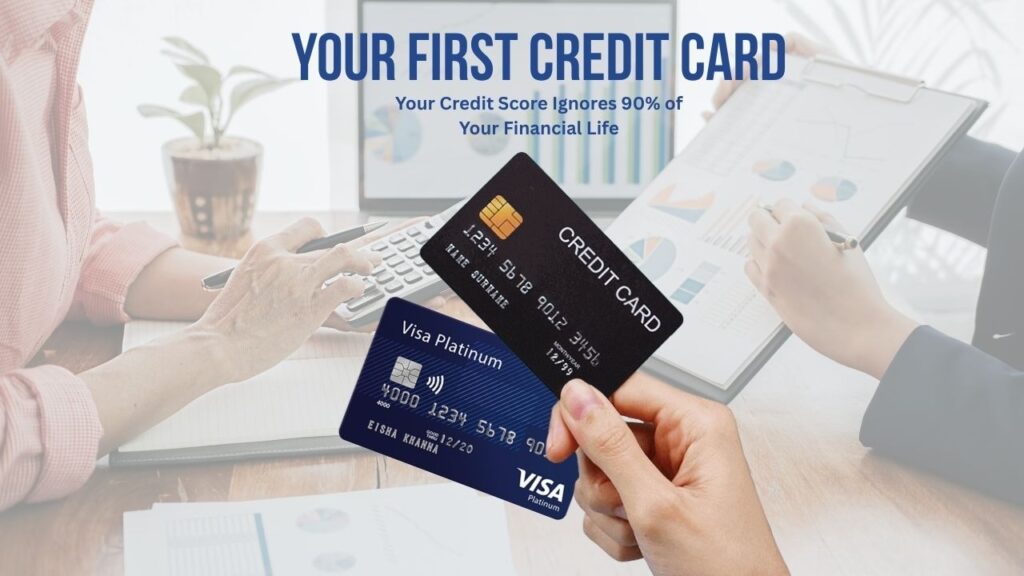
Your Credit Score Ignores 90% of Your Financial Life — What Your First Credit Card Changes 

Credit Score

Once your first credit card is approved, you probably think that you are eligible for loan or finance. But you’re wrong because your credit score matters and it is built from repayment history not from your financial status or expenses. There are four active bureaus (CIBIL, Experian, Equifax, CRIF High Mark) in India and they all sit between 300 and 900 score. 

And it doesn’t know your salary, your savings account, your mutual fund SIPs, or the fact that you’ve never once missed a rent payment. It tracks exactly one thing closely: how you’ve handled borrowed money. 

That gap between what the score sees and what your financial life actually looks like is where most first-time cardholders get caught off guard.

What Your Credit Score Measures in Your Financials

A score is built almost entirely from repayment behavior. FICO, the US model most bureaus borrow their logic from, publishes its weighting: payment history (about 35%), credit utilization (about 30%), length of credit history (about 15%), credit mix (about 10%), and new credit inquiries (about 10%). 

It breaks it down, the ingredients look roughly like this:

  • Payment history — whether you’ve paid EMIs and card bills on time. This carries the heaviest weight, often estimated at around 30-35%.
  • Credit utilization — how much of your available credit limit you’re actually using. Maxing out a card, even if you pay it off in full, can quietly hurt you. 
  • Length of credit history — how long your oldest active account has been open. This is exactly why closing your first credit card years later can lower your score instead of helping it. 
  • Credit mix — a blend of secured loans (car, home) and unsecured ones (credit cards, personal loans) reads better than having only one type. 
  • New credit inquiries — every time you apply for a loan or card, a “hard inquiry” gets logged, and too many in a short window signals risk to lenders. 

CIBIL doesn’t publish its exact formula, but the underlying behavior it rewards and punishes is the same. None of this touches your bank balance. It only starts once you’ve borrowed something — a loan, an EMI, a credit card and shows how consistently you paid it back.

Read More 👉 Best App To Get Instant Loan Without Salary Slip

The 90% of Credit Score Never Sees Your Financial Life

Your salary doesn’t appear on your first credit card report. Neither does your savings balance, your fixed deposits, your stock or mutual fund portfolio, property you own, freelance or side income, or rent you’ve paid on time for years (unless you’ve specifically enrolled in one of the newer rent-reporting services, which are still rare in India). Utility bills and UPI spending don’t count either, since none of that is borrowed money. 

This cuts both ways. Someone with a strong income and zero loans can be “credit invisible” — no score at all, simply because they’ve never borrowed. Someone drowning in personal debt but paying the minimum on time every month can carry a technically decent score while their actual finances are falling apart. The number reflects repayment discipline, not net worth.

Why This Number Still Runs Your Financial Life

Even though it’s a narrow measurement, it’s the one lenders trust most. A home loan applicant with a score above 750 might get an interest rate a full percentage point lower than someone below 650 — on a 20-year loan, that gap alone can add up to lakhs of rupees in extra interest. 

Your score also decides which credit cards you qualify for and what limit you’re offered, and in some sectors — finance, banking, occasionally government roles — employers run a credit check as part of background verification. 

Landlords in a few metro markets have started asking for credit reports too. None of that is about how much you earn. It’s entirely about whether you’ve paid back what you owed, on time, before.

The Mistakes That Wreck a First-Time Cardholder’s Score

Paying Only the Minimum Due

The minimum due usually around 5% of the outstanding bill — keeps your account technically current, but the remaining balance starts accruing interest immediately, typically in the range of 3 – 3.5% a month, which works out to somewhere near 36–42% annualized. It’s one of the most expensive ways to borrow money that exists, and the balance compounds faster than most first-time users expect.

Maxing Out the Limit

Spending close to your full limit every month signals risk to lenders, even if you clear the bill in full. Keeping usage under roughly 30% of your available limit protects the score far more than people assume — this is often a bigger factor than the actual bill amount.

Applying for Multiple Cards in the First Year

Every new application triggers a hard inquiry, and each one dents the score slightly while sitting on your report for a couple of years. Several applications close together read to lenders as credit hunger, not creditworthiness.

Missing the Due Date, Even Once

A single day late usually just costs a late fee. But once a payment crosses roughly 30 days overdue, it typically gets reported to the bureau and that single entry can move the score sharply and stay visible for years.

Closing the Card Too Early

Shutting down  your first credit card within the first year shortens your average credit age, which is one of the more underrated factors in the score. A longer, active history — even on a card you barely use — tends to help more than starting fresh with a new one.

Read More 👉 How to Apply for an Education Loan Online

The Right Way to Spend From Your First Card

Treat it like a debit card with a receipt trail, not free money. Pick one or two recurring expenses — a mobile recharge, one subscription, fuel and route them through the card on autopay. This builds a steady, low-risk repayment pattern without tempting you into overspending. 

Pay the full statement balance every cycle, not the minimum. Check your statement monthly for errors or unfamiliar charges. Avoid withdrawing cash on the card entirely — interest usually starts from the day of withdrawal with no grace period, on top of a flat fee near 2.5–3%. 

And think twice before converting purchases to EMI, even “no-cost” ones; the discount you’d have gotten on the outright price is often quietly folded back into the total.

How Fast Can a Credit Score Really Move?

Scores don’t jump in percentages — there’s no such thing as a score rising “by 90%.” They move in points, and how fast depends on which factor you’re fixing. 

Utilization moves quickest: pay down a high balance before your statement date, and the next reporting cycle, usually 30 to 45 days later, can reflect a meaningful jump, sometimes 50 or more points on the 900-point scale, because utilization updates almost as fast as your balance does. 

Payment history moves slower and compounds instead: one on-time payment barely registers, but six to twelve months of consistent on-time payments builds a track record lenders actually trust. Bureau errors — a closed loan still showing as open, a paid card marked as defaulted, can also produce a fast correction once flagged, sometimes within a single reporting cycle. 

For someone starting with a thin or nonexistent credit file, a workable, lender-friendly score in six to twelve months of disciplined use is a realistic target. Overnight is not.

Before Cardholder Swipe That First Time

Pull your free annual report from the bureau and note your starting number before you spend a single rupee. Set autopay for the full statement amount, not the minimum, and add a separate calendar reminder a few days before the due date as backup. 

Pick one recurring bill to run through  your first credit card and leave the rest alone for now. Then check the number again in three months, not three weeks — that’s roughly how long it takes the system to actually reflect what you did.

Read More 👉 Business Ideas for Students With Zero Investment — Easy Startup Guide

Conclusion

Your financial health doesn’t increase your Credit Score and it is important to maintain that score. It’s a way for lenders to understand how responsibly you’ve handled borrowed money, not how much you earn, save, invest, or own. 

For a first-time cardholder, utilization should be lower, pay the statement balance on time, do not fill unnecessary applications, be patient and give time for your credit history to grow. Treat your first credit card as a tool for building trust with lenders, so when you actually need a bigger loan or good credit, you can get it easily. 

Scroll to Top