UPTET 2027 Online Form portal will open on 24 November 2026. The portal will open to accept online applications through the Uttar Pradesh Education Service Selection Commission (UPESSC) site till 23 December 2026. The admit card will be released before the exam which is held in February 2027.
Candidates who are interested in Government Teacher Jobs can fill the form and complete the exam steps along with preparations to secure good scores. Check the eligibility, exam pattern, and important dates to stay early.
Event
Date
Notification release
24 November 2026
Online application begins
24 November 2026
Last date to apply and pay fee
23 December 2026
UPTET 2026 examination
26–27 February 2027
UPTET 2026 Eligibility
Before applying, candidates should ensure they meet the educational qualification prescribed for the paper they wish to appear in. Generally, Paper I is for primary-level teaching eligibility, while Paper II is for upper-primary-level teaching eligibility.
Paper I: Primary Level
Candidates who wish to teach Classes 1 to 5 should apply for Paper I. The exact qualification requirements will be mentioned in the official UPTET 2026 notification.
Paper II: Upper Primary Level
Candidates who wish to teach Classes 6 to 8 should apply for Paper II. Candidates who meet the requirements for both levels can apply for both papers.
The fee can change depending on category and the papers you pick. It seems like from the earlier UPTET 2026 details the expected structure is this.
Category
One Paper
Both Papers
General / OBC
Rs. 600
Rs. 1,200
SC / ST
Rs. 400
Rs. 800
Persons with Disabilities
Rs. 100
Rs. 200
Documents Required
Keep scanned copies of the following documents ready before starting the UPTET 2026 online form:
Aadhaar card or other valid photo identity proof
Passport-size photograph
Signature
Educational qualification certificates and marksheets
Category certificate, if applicable
Disability certificate, if applicable
Active mobile number and email ID
How to Fill UPTET 2026 Online Form
Open upessc.up.gov.in. and register yourself with email or phone number.
Click on the UPTET 2026 application link and login yourself with the given credentials.
Fill every detail without any error or spelling mistake then review the application form.
Attach your documents along with the application and pay the required fee.
Submit and print it to save a copy of your application.
Exam Pattern
Paper I: For candidates aspiring to teach Classes 1–5 (Primary Level).
Paper II: For candidates aspiring to teach Classes 6–8 (Upper Primary Level).
Candidates eligible for both levels may apply for both papers.
Paper
Teaching Level
Purpose
Paper I
Classes 1–5
Primary teacher eligibility test
Paper II
Classes 6–8
Upper primary teacher eligibility test
Conclusion
The candidates are advised to finish their OTR as soon as possible, maintain all the documents ready, and apply for the UPTET 2026 Online Form before the last date. Because after 23 December 2026 no application will be accepted.
You can check your updates on the official website of UPESSC. Check your eligibility before applying for this exam and choose the correct preferences.
If you are among the lakhs of aspirants who are going to appear in the UPSSSC PET Syllabus 2026 exam, you are already aware of the procedure — this exam is the filter. Clear it and a plethora of Group B and Group C government jobs in Uttar Pradesh awaits you. If you fail to clear it, and none of those Mains exams even become an option.
This is why having a proper understanding of the syllabus From day one is more important than just diving in and doing some random practice sets.
So, let’s analyze the UPSSSC PET Syllabus 2026. What is asked in the exam, marks distribution of each section and how you should prepare to crack the exam.
What Exactly Is UPSSSC PET?
UPSSSC PET refers to the Preliminary Eligibility Test, which is organized by the Uttar Pradesh Subordinate Services Selection Commission. Think of it less as a “final” recruitment test and more as a preliminary screen.
It’s compulsory — you cannot even fill out the application form without a valid PET scorecard. If you pass the PET test, your score is good for three years, so you can use it to apply for multiple positions during that period without having to retake the test.
The examination is offline on pen and paper using OMR sheet and it is for basic level aptitude and general awareness and not for anything very technical or domain specific.
Exam Pattern: The Numbers You Need to Know
Before diving into subjects, it helps to understand the shape of the paper:
Feature
Details
Total questions
100
Total marks
100 (1 mark per question)
Duration
2 hours
Negative marking
0.25 marks deducted for every wrong answer
Question type
Objective, multiple-choice with four options
That quarter of a mark negative marking is worth remembering — guessing blindly can damage your score, so accuracy is as important as speed here.
Subject-Wise Breakdown
The UPSSSC PET Syllabus is spread across roughly 15 sections, each with a fixed number of questions and marks. Here’s how it typically looks:
Indian History & Indian National Movement (5 questions, 5 marks each — 10 total) This spans a broad history, including the Indus Valley Civilization, Vedic culture, Jainism/ Buddhism, and leaves off at the Maurya, Gupta, Mughal dynasties and the freedom struggle. Questions on the Swadeshi Movement, Civil Disobedience Movement and the rise of revolutionary nationalism, the Quit India Movement, personalities like Netaji Subhash Chandra Bose and the Azad Hind Fauj.
Geography (5 questions, 5 marks) Topography of India and the world, lakes and rivers and their valleys, underground water, Himalayas, deserts, minerals, political mapping, weather conditions, India Times, and population trends and movements of people.
Indian Economy (5 questions, 5 marks) This is a narrative of India’s economic path from 1947 to 1991 and thereafter — the Five-Year Plans, the mixed economy model, the green revolution, bank nationalization, the 1991 economic reforms, and more recently GST and post-2014 structural/sector reforms.
Indian Constitution & Public Administration (5 questions, 5 marks) The Fundamental Rights and Duties, Directive Principles, parliamentary and federal system, relations between the Union and the States, the judiciary, and local government through Panchayati Raj institutions.
General Science (5 questions, 5 marks) Basic Physics, Chemistry, and Biology — roughly at a Class 12 difficulty level, so nothing too advanced, but you do need conceptual clarity.
Elementary Arithmetic (5 questions, 5 marks) Integers, percentages, basic calculations, square and cube roots, powers, means and such basic and general topics in math.
General Hindi (5 questions, 5 marks) Grammar-related — synonyms, antonyms, one-word substitutions, gender differentiation, homophones, idioms, and proverbs, frequent mistakes, and quizzes on famous writers and their productions.
General English (5 questions, 5 marks) Basic grammar rules along with an unseen passage to test comprehension.
Logical Reasoning (5 questions, 5 marks) A fairly mixed bag — blood relations, coding-decoding, number series, syllogisms, venn diagrams, direction sense, puzzles, statement-conclusion questions, and hysteresis. .
Current Affairs (10 questions, 10 marks) World and national events — that’s where being on top of the recent news really serves you well.
General Awareness (10 questions, 10 marks) A miscellany of neighboring countries, capitals and currencies, Indian states and UTs, national and international day, sports, art and culture, awards, famous books and authors and environment related issues.
Hindi Unseen Passages (10 questions, 10 marks) Two comprehension passages in Hindi to test reading and interpretation skills.
Graph Interpretation (10 questions, 10 marks) Two graphs, testing your ability to read and analyze data quickly.
Table Interpretation (10 questions, 10 marks) Similar to graph analysis, but with tabular data instead.
The following three sections — passages in Hindi, graphs and tables — carry 30 marks in total. That’s almost a third of your total marks, and it’s often the section that candidates underestimate the most.
Considering how dispersed this syllabus is, trying to learn everything at the last minute is just not going to cut it. A better way to think about this is to think of this as a marathon, not a sprint:
Prioritize the data interpretation sections. As graphs, tables and Hindi passages are for 30 marks, regular practice in this section can give you an advantage over other candidates who concentrate only on GK.
Don’t skip static GK for the sake of current affairs. History, geography, economy, and polity constitute 20 marks, and these topics remain static — once you study them thoroughly, they are yours forever.
Revise Hindi grammar rules actively. Many candidates, especially those confident in Hindi, tend to get careless here. Small grammatical nuances trip people up more often than expected.
Practice with a timer. Two hours for 100 questions sounds comfortable, but data interpretation and comprehension sections eat up time fast if you’re not used to them.
Use previous year papers. They’re one of the best ways to understand the actual difficulty level and question framing, rather than relying purely on assumptions about what “might” come.
The UPSSSC PET Syllabus isn’t designed to be intimidating — it’s designed to test whether you have a well-rounded, functional understanding of general knowledge, basic aptitude, and language skills. The trick isn’t studying harder in isolation; it’s studying smart, giving weight to sections based on their actual mark share, and revising consistently rather than in bursts.
A Bangalore family recently signed collateral papers for a ₹42 lakh loan to send their daughter to a Canadian university — three months before Canada cut its 2026 study permit intake by 7% and tightened who qualifies for a post-graduation work permit. Nobody at the bank mentioned it. The loan got sanctioned anyway, because the bank’s job is to assess your repayment capacity, not your visa odds. That gap between “the loan is approved” and “the degree pays for itself” — is where most families researching an MBBS or Master’s abroad get their planning wrong.
This piece walks through what six years of MBBS or two years of a Master’s actually costs by country in 2026, what banks and NBFCs will actually lend you, which government subsidy schemes are real versus discontinued, and one tax rule that changes whether you should even self-fund if you can afford to.
MBBS Abroad Costs in 2026 — Country-Wise Breakdown
An MBBS costs around ₹60 lakh to ₹1.5 crore for the full course of 4-5 years in any private Indian medical college. It is precisely the reason why 25,000 Indian students leave every year for Russia, Uzbekistan, US, Canada, and Georgia instead.
For more than 22 lakh NEET applicants per year, India has about 1.28 lakh MBBS seats is a second reason to leave for study abroad.
Country
Total 6-year cost (tuition + hostel + basic living)
Kazakhstan
₹15–25 lakh
Uzbekistan / Kyrgyzstan
₹15–25 lakh
Philippines (5.5 years)
₹15–25 lakh
Russia
₹18–40 lakh
Georgia
₹20–35 lakh
Ukraine
₹18–35 lakh
United States
₹1.5–3.0+ crore (tuition + living; varies widely)
United Kingdom
₹2.0–4.7 crore total
Canada
₹1.1–3.0+ crore total (CAD 20k–80k/year tuition; top schools higher)
Australia
₹2.5–4.5+ crore total
Germany
₹60 lakh–1.2+ crore total
Armenia
₹17–40 lakh (private to top government like YSMU)
Two facts matter more than the fee sticker. First, the National Medical Commission lays down several conditions for students planning to study medicine abroad. There are rules that require a minimum 54 months into the course, be taught entirely in English, and include a 12-month internship at the same institution.
More importantly, students must qualify NEET-UG before leaving India and clear Next test after returning to practice medicine in India.
Recent NExT/FMGE pass rates for foreign medical graduates have hovered around 18–30%. Budget for NExT coaching (₹50,000–₹1.5 lakh) as a separate line item, and start preparing from year one of the course, not the final semester.
Second, any agency quoting a full six-year package under ₹10 lakh is almost certainly hiding hostel, insurance, or exam-coaching costs — verify the NMC-approved college list and the all-in fee in writing before you sign anything.
Master’s Abroad Costs in 2026
The country-wise spread for a Master’s is wider than most students expect, and the headline annual tuition number often hides how long you’re actually paying it.
Country
Common Courses
Programme length
Total cost (tuition + living)
Germany
MS/ MSc /MBA
2 years
₹17–28 lakh
UK
MSc/MA /MBA
1 year
₹35–60 lakh
Canada
MS/MASc/MEng / MSc / MBA/ MFin, MGMT
2 years
₹50–80 lakh
Ireland
MSc / MBA
mostly 1 year
₹45–70 lakh
Australia
MS/Master of Engineering / Master of Data Science, AI, IT / MBA
2 years
₹55–90 lakh
USA
MS / MBA
2 years
₹65 lakh–1.8 crore
Germany’s number looks like an outlier until you understand why: public universities charge close to zero tuition for most Master’s programmes, with students paying only a semester contribution of €150–350. That’s also why Germany is drawing more Indian applicants who’d otherwise have defaulted to the UK or Canada purely on cost.
The UK’s one-year format keeps its total lower than Canada or Australia despite a higher per-year cost — worth factoring in if you’re comparing total loan exposure rather than annual fees.
Also built in currency risk: the rupee has moved from roughly ₹70/USD in 2021 to the ₹85–88/USD range through 2026, and that alone has added 20%+ to effective costs for anyone who was locked in a budget a few years ago.
Education Loan Limit For Study Abroad
The base case under RBI/IBA guidelines hasn’t changed: any bank will give you an unsecured loan up to ₹7.5 lakh with no collateral. Everything above that is where the real decision-making happens.
Lender
Unsecured limit
Secured limit
Starting rate (floating, indicative 2026)
SBI (Global Ed-Vantage)
Up to ₹50 lakh (collateral‑free for premier overseas institutions)
Up to ₹3 crore (with collateral)
~8.65%–9.15% for secured; ~9.15% for unsecured
HDFC Credila
Up to ₹75–80 lakh (USA); ~₹50 lakh for many other countries
Up to ₹1.5 crore+ (no hard cap with strong collateral/profile)
~9.95% secured; ~10.25%+ unsecured (profile & college‑linked pricing; can go higher)
Avanse
Up to ~₹1–1.25 crore (varies by country/course; often comparable to Credila)
Up to ~₹1.25 crore+ (case‑by‑case)
~10%–13%+ effective; base rate around 14.55% with discounts, so final rate depends heavily on profile
ICICI Bank
Up to ₹1 crore (for “Premium Select” universities; otherwise ₹20–50 lakh)
Up to ₹2–3 crore (collateral; depends on scheme)
~9%–10.5% for best‑tier unsecured; ~10.5%–12.75%+ for others; secured ~9%–11%
Bank of Baroda (Baroda Scholar)
Up to ₹7.5 lakh (standard collateral‑free threshold)
Up to ₹1.5 crore (premier institutions) / ~₹60 lakh (others)
~8.7%–10.45% for abroad (floating; female concession ~0.5%)
Axis Bank
Up to ₹7.5 lakh (typical unsecured threshold)
Up to ₹1–1.5 crore (varies by scheme & profile)
~9.5%–12%+ floating for abroad
IDFC FIRST Bank
Up to ₹7.5–20 lakh (unsecured, profile dependent)
Up to ₹1–1.5 crore (secured)
~10.5%–13%+ floating for overseas education
Punjab National Bank / Canara Bank / other PSUs
Typically ₹7.5 lakh unsecured
Up to ₹1–1.5 crore (secured, scheme dependent)
~8.5%–11% floating for abroad (often slightly above SBI/BoB best rates)
There are a few details that education-loan brochures often leave out. SBI’s secured education loans require collateral which needs to be near 90% of the loan value. For instance, a ₹60 lakh loan needs roughly ₹54 lakh in pledged assets.
While female applicants get a concession of 0.5% from public sector banks and co-applicant with a CIBIL score above 750 also get a chance for 0.25 – 0.5% off.
Processing fees have a huge difference:SBI charges a flat ₹10,000, loan size doesn’t matter as it’s a processing fee for all. On a ₹50 lakh loan size, Credila charges 1–1.25% plus GST, Avanse put 1.25–1.75% plus GST. So, when you calculate the percentage on the amount of loan it will be around ₹60,000–₹1 lakh which is way over a ₹10,000 fee at SBI.
NBFCs earn that gap back in speed: sanction in 7–15 days against 3–4 weeks at a public bank, which matters when your visa interview is already booked.
One RBI change from January 1, 2026 is worth building into your strategy: floating-rate loans to individual borrowers can no longer carry foreclosure or prepayment penalties. That makes a two-stage approach viable — take the faster NBFC loan now to lock in your visa timeline, then refinance into a cheaper public-bank loan later once your collateral or profile is stronger, with zero penalty for closing the first loan early. A 100-basis-point rate cut on a ₹50 lakh, 15-year loan saves roughly ₹7.5 lakh in total interest, so this isn’t a marginal optimization.
One Active Government Schemes That Offers Education Loan For Study Abroad
Students must check every scheme validity before signing anything. The Padho Pardesh scheme is closed now, which gave full interest subsidies on loans to students who belong to minority communities for study abroad.
The PM-Vidyalaxmi scheme is live where you can search and visit online since it offers collateral-free loans up to ₹10 lakh with a 3% interest. Students with ₹8 lakh a year family income can assess this loan but it’s for admission to Quality Higher Education Institutions in India, not abroad.
The Central Sector Interest Subsidy Scheme (CSIS), a 100% interest subsidy on loans up to ₹10 lakh for families earning under ₹4.5 lakh, is also India-only.
For study abroad, this is the only government scheme Dr Ambedkar Central Sector Scheme, which offers OBCs (family income ₹3 lakh) and EBC (₹2.5 lakh income) students interest subsidy. While general-category students going abroad are financing at full market rates through the Vidya Lakshmi portal’s partner banks.
Tax Rule That Can Change Your Study‑Abroad Budget
Under the Liberalised Remittance Scheme, self-funded education remittances above ₹10 lakh now attract 2% TCS from April 1, 2026 (down from 5% previously). But remittances funded through a qualifying education loan from a specified financial institution — one that qualifies for Section 80E interest deduction — carry zero TCS, regardless of amount. This is reclaimable against your tax liability if you do pay it, so it isn’t lost money, but it is a cash-flow hit at the exact moment you’re wiring tuition.
If your family can technically self-fund but the loan route avoids an upfront 2% TCS bite on a ₹50 lakh remittance — that’s ₹1 lakh running at least part of the cost through a bank loan is worth pricing against the interest cost before deciding to pay cash.
Loan Approval Isn’t the Same as ROI
A 15-year loan assumes years of post-study foreign income to service comfortably, and the post-study runway for Indian students has been shrinking across the destinations people borrow the most for.
US F-1 visa refusal rates for Indian applicants were reported at around 61% in 2025, up from roughly 36% two years earlier. The UK’s Graduate Route, currently 24 months of post-study work, shrinks to 18 months for anyone starting from January 2027. Canada capped 2026 study permits at 408,000 — a 7% cut from 2025 and narrowed PGWP eligibility toward specific fields rather than any programme. Australia has tightened its subclass 485 post-study visa caps in parallel.
None of this means don’t borrow — it means don’t build your repayment plan on the assumption that you’ll be working abroad within a year of graduating. Model your EMI against an India-return salary as the conservative case, not the best case.
How to Choose the Right Education Loan For Study Abroad
If cost and visa stability matter more than prestige, Germany for a Master’s and Kazakhstan or Uzbekistan for MBBS (with rigorous NMC-list verification) carry the lowest financial and immigration risk.
If you’re set on the US, UK, Canada, or Australia, price in the shrinking post-study work window before you sign a ₹50 lakh-plus loan, and structure it in two stages — a fast NBFC sanction to meet your visa deadline, refinanced into a cheaper bank loan once you’re settled, using the RBI’s new zero-penalty prepayment rule.
Confirm your actual eligibility for the Dr Ambedkar scheme before assuming no subsidy applies to you, and ignore anything that still mentions Padho Pardesh. Get at least three loan quotes through the Vidya Lakshmi portal before committing to the first one your consultant recommends — on a 15-year loan, a half-percent difference in rate is worth lakhs.
Conclusion
Choosing to study abroad in 2026 is no longer hard and student visa is not an actual obstacle, its financing decision for tuition fees, living cost, and rising currency movement among countries. check post-study work window, loan interest rates, and repayment options is mandatory before signing anything.
For an MBBS, Kazakhstan and Uzbekistan is best if you wanna keep the fees cost lower but university should meet NMC requirements. For MBA, MS, MSc in finance, economics, engineering, data science, AI, etc. Germany stands out on total cost, while the UK’s one-year format can limit the overall amount you need to borrow.
On taking education loan, compare everything from 2-3 lenders then decide so you don’t have to suffer later. Most importantly, don’t confuse loan approval with affordability. Build your repayment plan around a conservative scenario. Don’t think after a degree, you get a job abroad and repay the amount quickly, verify every government-scheme claim, and calculate the full cost in rupees before signing the loan papers.
Starting to prepare for the SSC CGL exam to establish your career in the government job is the dream success in many student’s lives. But understanding how you can achieve this success among the lakh of students is important. Many students give up because it is hard to achieve high rank for post selection. There — Best GC Teacher for SSC CGL is needed to strategically prepare and cover every topic.
Many students make a mistake to take the General Studies section lightly and get doomed. This part is crucial in this exam to boost your final score. Unlike Math or Reasoning, GS covers many subjects —
History
Geography
Indian Polity
General Science
Economics’
Static GK
So, let’s explore the Best GS teachers for SSC CGL exam, their unique styles and platforms.
Khan Sir
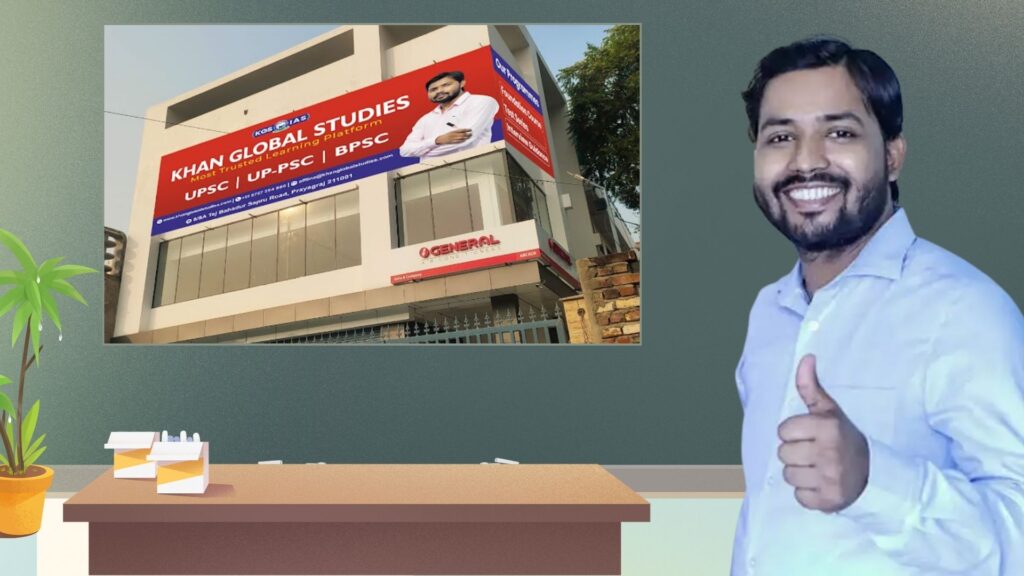
Khan Sir is an Indian educator who offers a wider range of courses through Youtube which makes 19 million subscribers within three years and is still consistently growing. He provides both offline and online coaching glasses with extensive coverage of core subjects. His general studies courses are designed for strategic preparation for competitive exams like SSC CGL. He motivates students through his lectures. He is using practical examples for simplifying the complex concepts of subjects including History (Ancient, Medieval, Modern), Geography (Physical, Indian, World), Polity (Indian Constitution), Economics, Science, and Current Affairs.
The “GS Crash Course by Khan Sir & Team,” is basically designed for SSC CGL aspirants to understand more precisely concepts. Khan Global Studies offers test series, daily quizzes, sessions for solving doubts, previous year questions and a vast range of study material.
Many students praised his teaching style and ability to explain every concept with real world examples which makes it easier to learn for students. KGS delivers high-quality education at an affordable price which makes it a well-equipped facility for rural students who are unable to join offline classes.
Manikant sir (The Study IAS)
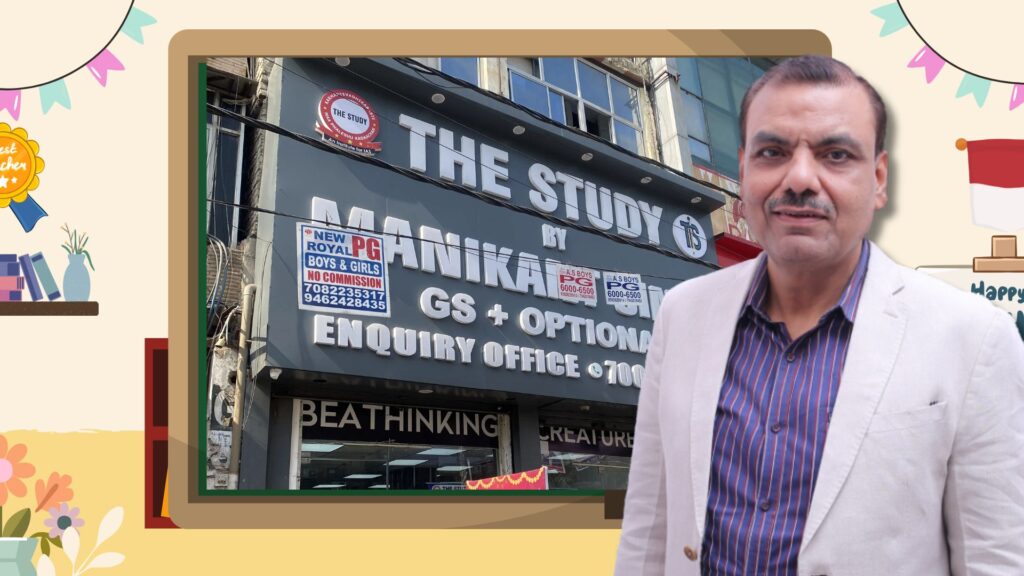
Manikant Singh is an experienced educator who offers a wider range of lectures which focuses on core subjects for competitive exams like SSC CGL. His strong fundamental pursuit of General Studies, especially History which is beneficial for the aspirants. The Study IAS offers both offline and online platforms for students to access all the available resources for the exam.
Students are showing good response because of his teaching style to explain each concept with clarity through his experience. His strong potential to provide strategic requirements for the preparation of SSC CGL exam is helpful.
Parmar Sir (Parmar SSC)
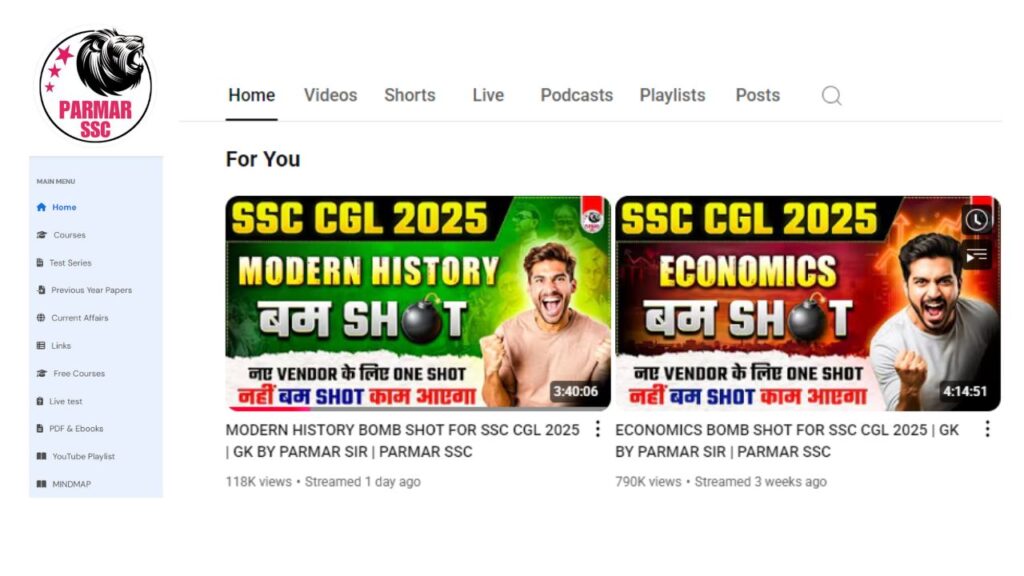
Parman sir is highly recommended by most of the former students who have appeared in SSC CGL exam. His experienced knowledge of General Studies is basically providing the core content that is relevant to this competitive exam. His teaching style is different and also offers a variety of courses and test series through Youtube channel and Parmar Academy.
The course is specifically designed to cover subjects like Basic GK, History, Polity, Geography, and Science. His content is focused on strategic preparation by analyzing and solving previous year’s questions. Students can learn every core topic in both languages (Hindi & English).
Amandeep Sharma
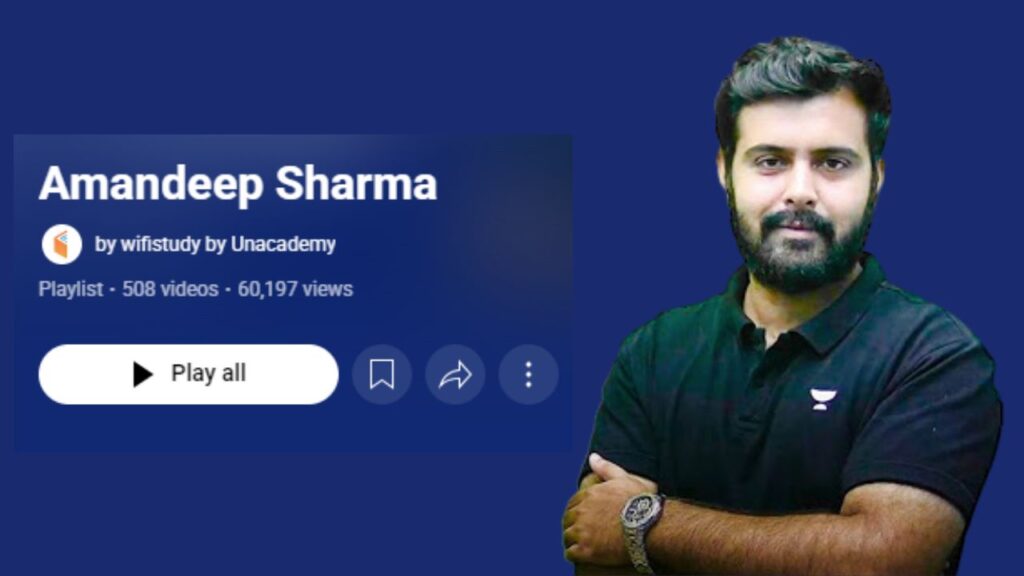
Amandeep Sharma specializes in General Studies and provides online education though learning platforms like Unacademy and Testbook. He is also known for his teaching ability to make complex problems easily understandable for the students through previous year questions technique and explanation style.
He has more than 5 years experience teaching over 100,000 students for many competitive exams, especially SSC CGL. Some of his lectures are also available on Youtube where students can start preparing for SSC CGL.
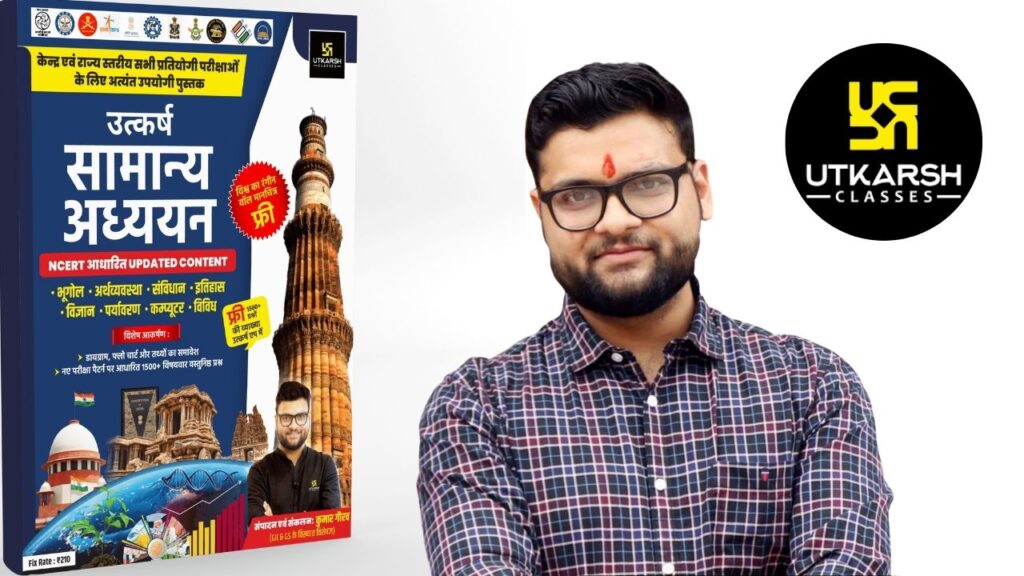
Gaurav Kumar by Utkarsh
Gaurav Kumaris a General Studies educator who focuses on current affairs as well to provide every topic detailed explanation for SSC aspirants. He is providing online classes focused on topics such as history, geography, polity, static GK, and basic science, integrating them with current affairs. Ideal for students who want to cover every topic with deeper knowledge and relevant current events.
His engaging style often uses storytelling, mnemonics, and unique examples to make learning more easier. Classes are both free & paid through Utkarsh Classes app and on youtube.
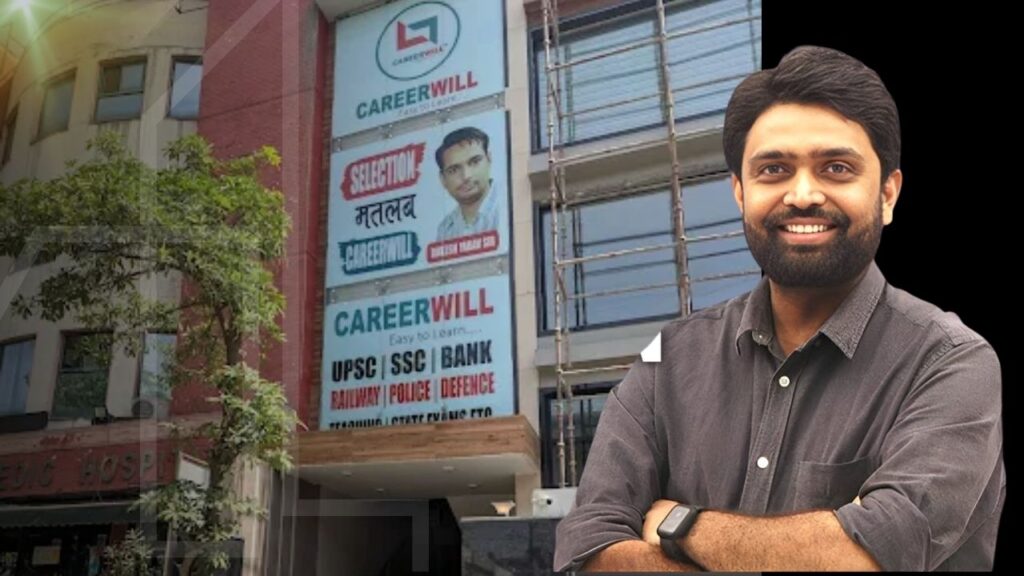
Abhishek Suman by Careerwill
Abhishek Suman is an online educator with proficient knowledge of General Studies to prepare students for competitive exams like SSC CGL. His history lessons are not boring, this unique ability makes him the best history teacher. He covers variety of topics which comes in a question paper including Polity, Static GK, and modern and ancient history.
Students who want to study with detailed explanations for each topic can consider taking his lessons. He is teaching on Careerwill and also prepares previous year questions for helping students to simplify the complex topics with a vast range of GK syllabus.
Smart Preparation Strategy and Time Management
You can’t just read every topic in GS, you need to prepare strategically. Just remember these factors while learning:
Weightage of the section: check previous year’s papers to analyze questions and which topic has covered up more. While Polity and Static GK has come more often and covers vast areas of the section.
Focus on Concepts: don’t just rote learning, understanding each concept will help remember for a long time.
Make Short Notes: Short notes, bullet points, and charts are helpful to remember and in quick revision.
Daily revision: Take 20-40 minutes extra for revising everything you have studied.
PYQ’s Practice: practice makes a man perfect, applies on the competitive exam, solving previous year questions will help you analyze how much you understand the topic.
Time Management: you have to divide your time accordingly for all topics and give extra time to your weak concepts.
General Studies is an important section of SSC CGL exam paper which students have to prepare. But it’s hard to prepare without a mentor. These Best GS Teachers for SSC CGL are delivering each topic in detail with a unique way of teaching to help you beat the competition.
The HPSC Recruitment for 2026 Post Graduate teacher (PGT) Computer science Vacancy is out. There are a total of 1,672 posts and the process of application is going on. Those interested in this job can apply on-line from 16/February/2026 to 09/March/2026. Here is a golden opportunity for all the aspirants who want to become a teacher in Haryana.
Candidates should meet the eligibility criteria as per the HPSC to apply for the Teaching Posts. There is full information regarding eligibility, application fees, exam pattern and selection procedure in the notification. Applicants are advised to go through this notification carefully of HPSC Recruitment to ensure that they meet the eligibility criteria.
Application Fees of HPSC Recruitment
Category
Fee
General/EWS/OBC
₹1,000
SC/BC/PwD/Ex-Serviceman
₹250
Females
₹250
PH (Divyang)
No fee
Schedule For Haryana HPSC PGT Teacher
Event
Date
Notification Release
5/February/2026
Online Application Start
16/February/2026
Application Deadline
9/March/2026
Fee payment deadline
9/March/2026
Education Requirement
Qualification
Details
M.Sc. Computer Science
2-year regular course
MCA
3-year regular course
BE/B.Tech in Computer Science/IT
From recognized university, minimum 55% aggregate
Age Limit
Category
Age Range
Minimum
18 years
Maximum
42 years (relaxations apply)
Application Process
View the Official Notification Or Apply Online: Interested candidates can apply online through the HPSC website.
Now, go to the “Recruitment” section, check and click on the advertisement for PGT Computer Science.
Select the option for Online Registration. Make sure you provide the correct number and DOB for registration in this step.
Then, after registering for an account, you can complete your application form with the necessary details. It includes the details of educational qualification, ID, etc.
Now, make the payment of the application fee as specified in the notification. You need to ensure that you do this step otherwise your application will not proceed further.
After filling the form and making the payment of the fee, you may attach the required documents and submit the application.
NOTE: Do keep a printout of your application form and payment slip for your reference.
The PGT selection procedure of HPSC Recruitment is meant to be a just and fair assessment through a simple two-tier exam system where your basic knowledge as well as expertise in the subject is tested.
1. Screening Test:
This is the initial level of screening. It combines your general knowledge with rudimentary knowledge of your subject to get rid of the non-serious and non-able candidates.
2. Subject Knowledge Test:
This is the main exam phase. It examines more deeply into your subject and examines what extent your conceptual clarity, understanding and hold of the subject is.
The selected candidates may be called for interview which will be concentrated for personality, communication/interactive skill and teaching aptitude after these written tests.
Total Questions
100
Total Marks
100
Marking Scheme
+1 mark per correct answer (0.25 negative marking in screening test)
Syllabus for the HPSC PGT Exam
The HPSC PGT syllabus is very well crafted, as it is designed to impart teaching basics along with in-depth subject knowledge, guiding candidates to prepare in a comprehensive and methodical manner. It’s not just a test of what you know—it’s also a test of how well you know teaching.
General Topics (Applicable to all Subject)
These components are designed to focus on developing effective teaching practices:
Educational Psychology: Provides knowledge of how students learn, think, and grow, as well as some significant theories of learning and development.
Pedagogy: Practical teaching techniques, teaching in the classroom as well as learning to learn.
TLM (Teaching-Learning Materials): Related to production, use and management of TLM for efficient and effective classroom learning.
Subject Specific Knowledge
Each PGT subject has its own defined detailed syllabus by HPSC which is depth orientated and specialised.
For instance: For example, in Computer Science — Data structures, searching and sorting, algorithm analysis, graph theory getting solid computational and logical foundations.
English: A focus on reading comprehension, critical thinking and analysis of texts is effectively promoted by the syllabus.
Conclusion
The application for HPSC Recruitment for PGT Computer Science 2026 is expected to be filled with aspiring candidates who wish to establish their career in the teaching field through this Haryana Public Service Commission Teaching jobs. With 1,672 vacancies dealing with a transparent selection process & a well-structured exam pattern, this recruitment serves as the best platform to enter into Haryana education.
If you qualify for the eligibility and have the enthusiasm to teach, now is your time to take the plunge. Smart Preparation, Strategic Syllabus, brief Application Procedure & Get all Official Notifications. HPSC Recruitment 2026 can be the stepping stone for a bright and safe career in the Haryana’s Education System with hard work and integrity.
GovUpdatewala is your trusted source for real-time updates on government exams and jobs in India. We provide verified info on SSC, UPSC, Banking, Railways, Defense, and Teaching exams. From syllabus and patterns to important dates and career tips — we support aspirants at every step.
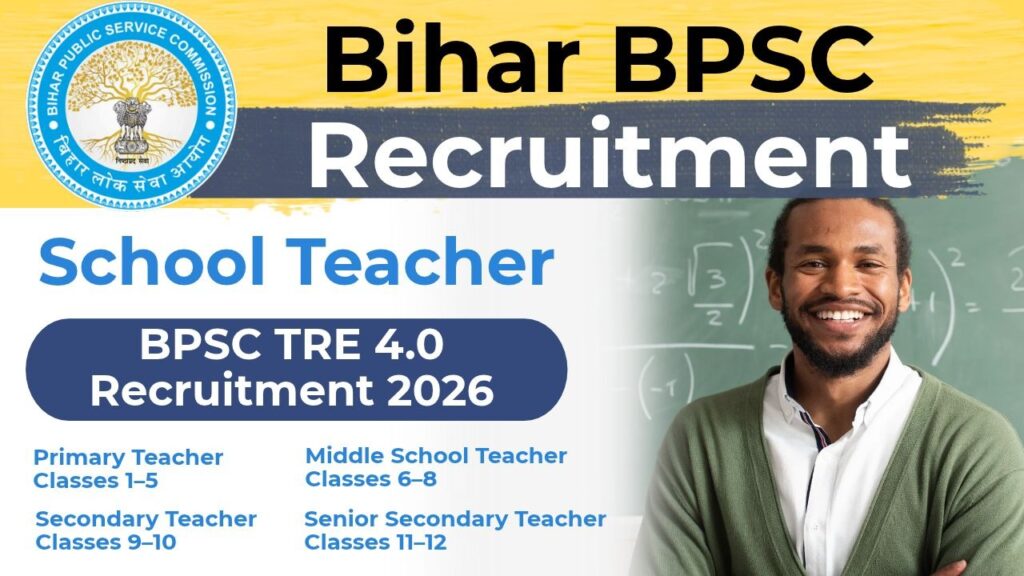
Candidates who still don’t fill the form of Bihar School Teacher Recruitment Exam 2026 can fill up now. The application window will be closed on 3 November 2026. Check if you fall into the eligible candidates, if not then apply when you get eligible. If yes, then don’t let this opportunity go away.
Check the vacancy breakdown, eligibility column, application fee, selection process and exam pattern to apply for BPSC TRE 4.0 Recruitment 2026.
Particulars
Details
Recruitment name
BPSC TRE 4.0 / School Teacher Recruitment Examination 2026
Conducting body
Bihar Public Service Commission (BPSC)
Advertisement number
15/2026
Posts
Primary, Middle, Secondary and Senior Secondary School Teachers
Classes covered
Classes 1–12
Total vacancies
33,320 posts, as per the revised/updated recruitment reports
Bihar BPSC School Teacher TRE Recruitment 2026 Dates
Event
Date
Official notification release
22 September 2026
Online application start date
25 September 2026
Last date to pay application fee
2 November 2026 (extended)
Last date to submit online application
3 November 2026 (extended)
Written examination
December 2026–January 2027, expected
Application Fee For Bihar School Teacher Recruitment Exam
Rs 100 for all the category students but there is ₹200 biometric fee which means the total fee amount will be Rs 300 to pay online to proceed with the application.
Candidates Post-wise Eligibility
There are four multiple level teaching posts which require that level of knowledge and education qualification so the table below mentions the necessary qualifications which must be in your resume to allow you for this exam.
Post
Key qualification
Primary Teacher
Class 12 with D.Ed/JBT/B.El.Ed and CTET/BTET Paper-I
Middle School Teacher
Graduation with B.Ed/B.El.Ed and CTET/BTET Paper-II
Secondary Teacher
Graduation with B.Ed/B.El.Ed and STET Paper-I
Senior Secondary Teacher
Postgraduate degree with B.Ed/B.El.Ed and STET Paper-II
Age is given to few categories as per Bihar government norms. But the age limit for Bihar School Teacher Recruitment Exam ranges between 21–37 years.
How to Apply For Bihar School Teacher Recruitment
Visit the official BPSC website and complete One-Time Registration (OTR).
Fill in personal, educational and category details.
Upload photograph, signature and required certificates.
Pay the application fee online by 2 November 2026.
Review and submit the application by 3 November 2026.
What is The Post-wise Vacancy Breakdown
There are a total 33,320 teacher posts under BPSC TRE 4.0 2026 recruitment drive. Check the post-wise vacancy breakdown to know the competition heat.
Teaching post
Classes
Vacancies
Primary Teacher
1–5
3,847
Middle School Teacher
6–8
8,563
Secondary Teacher
9–10
4,370
Senior Secondary / Higher Secondary Teacher
11–12
16,540
Total
1–12
33,320
BPSC revised the vacancy number with adding 493 posts for Classes 9–10 and 439 posts for Classes 11–12.
Selection Process and Exam Pattern
There are four stages in the Bihar School Teacher Recruitment selection process. First candidates have to pass the written test when they get a good score and find their name in the merit list, document verification and medical examination happen to verify your details you put in the application. fitness and health also require you to teach students.
You are notified through the official website of the recruitment organisation. The final merit list will be declared and if you have passed all three stages then you are eligible for teaching in a Bihar government school.
Bihar School Teacher Recruitment Exam pattern will help you understand how you are going to attempt the question and complete it on time. Also prepared according to the sections.
Teaching level
Paper structure
Questions / Marks
Duration
Primary Teacher, Classes 1–5
Language (qualifying) + General Studies
30 + 120 = 150
2 hours 30 minutes
Middle School Teacher, Classes 6–8
Language (qualifying) + General Studies + Concerned Subject
30 + 40 + 80 = 150
2 hours 30 minutes
Secondary Teacher, Classes 9–10
Language (qualifying) + General Studies + Concerned Subject
30 + 40 + 80 = 150
2 hours 30 minutes
Senior Secondary Teacher, Classes 11–12
Language (qualifying) + General Studies + Concerned Subject
30 + 40 + 80 = 150
2 hours 30 minutes
The language section carries 30 marks and it’s easy so you can secure it first.
General studies carries 40 marks for 6 — 12 classes teachers and 120 marks for primary teachers so keep yourself updated with the current events that especially happened in Bihar.
Concerned subject means your choice of subject which carries 80 for 6—12 marks teachers so prepare your preferred subject well enough to secure full marks.
All questions are multiple-choice/objective type.
Candidates should always check the notification updates and admit card release so they won’t miss anything.
If you are heading towards your teaching career then the Bihar School Teacher Recruitment Exam is an opportunity to secure a seat to become eligible to teach in a government school. But you must carry the necessary documents in your hand and be willing to beat the competition. Check instructions on how to apply for BPSC TRE 4.0 Recruitment 2026.