Best Student Loans for College Students

Student Loans

Your admission letter came through and you are stressed about its fees? That’s the moment you’ll start looking for the best student loans for college students. Between tuition, hostel, a laptop, and living costs, a B.Tech at a decent private college or a master’s abroad can run anywhere from ₹8 lakh to over ₹1 crore, and very few Indian families are sitting on that kind of cash without dipping into a fixed deposit meant for something else. 

This is exactly where the best Student Loans in the market — from SBI’s Scholar Loan to NBFCs like HDFC Credila and Avanse, start doing real work, provided it actually fits your situation instead of just going with whichever bank branch is nearest to your house.

This blog walks through the loan for education options Indian students actually use in 2026 — public banks, private banks, NBFCs, and the government’s PM Vidyalaxmi scheme with real numbers, what each one is genuinely good at, and where it falls short.

Who Can Get These Loans for Education

If you’re an Indian student (or a parent reading this on their behalf) heading into an undergraduate program, a postgraduate course, or a study-abroad admission, and you need a study loan rather than paying out of pocket, this comparison is built for you. It splits lenders into three buckets — public sector banks, private banks, and specialised NBFCs because each serves a different kind of borrower, and picking the wrong bucket is the single most common reason students overpay by lakhs over a 15-year tenure.

Interest rates on education loans are floating and revised frequently by each lender’s internal benchmark. The figures below reflect indicative ranges reported by lenders and comparison platforms as of mid-2026. Treat every rate here as a starting reference, not a quote so confirm the live number on the lender’s own site before you apply.

Best Student Loans For College Students in India

1. SBI Scholar Loan / Global Ed-Vantage — Best for Domestic Students and Government-Bank Trust

  • Rate: roughly 8.15%–10.75%, MCLR-linked (floating)
  • Loan amount: up to ₹7.5 lakh without collateral for listed premier institutes; higher amounts with collateral, up to ₹1.5 crore under Global Ed-Vantage for study abroad
  • Processing fee: flat ₹10,000 — no percentage-based fee
  • Tenure: up to 15 years

SBI remains the default first stop for most Indian students, and there’s a simple reason: as the largest public bank, it consistently prices education loans lower than private banks and NBFCs, and its flat processing fee actually saves real money on larger loans compared to a percentage-based charge. 
The trade-off is speed — SBI’s sanction process for study-abroad loans can take four to eight weeks, and IBA guidelines require 15% margin money on foreign education loans above ₹4 lakh, meaning you’ll need to arrange that slice yourself. 

Best for: students with time before their visa deadline who want the lowest lifetime interest cost.

2. HDFC Credila — Best for Speed and High-Value Unsecured Loans

  • Rate: roughly 9.5%–13%, secured loans starting near 9.95%, unsecured (no collateral) starting near 11.25%
  • Loan amount: up to ₹50–60 lakh for premier institutes, sometimes higher
  • Processing fee: 1%–1.5% plus GST
  • Tenure: up to 15 years

Credila built its business on what it calls a “future employability” assessment rather than collateral value, which is why students without property to pledge still get approved here. Sanctions typically land in 7–14 days, which matters enormously when a visa interview is on the calendar and SBI’s timeline doesn’t fit. 

The catch is that unsecured Credila loans run meaningfully higher than SBI’s rate, and the processing fee, a percentage plus GST are added up fast on a ₹50 lakh loan. 

Best for: students on a tight admission or visa timeline who need fast, collateral-free approval and can absorb a higher rate.

3. Bank of Baroda — Best for Large Loans to Global Universities

  • Rate: competitive with SBI, generally in the 8.5%–11% band depending on the institute tier
  • Loan amount: up to ₹1.5 crore for premium global universities
  • Processing fee: typically lower than private banks; concessions available for girl students
  • Tenure: up to 15 years

BoB doesn’t get the same attention as SBI or the big NBFCs, but for students heading to genuinely expensive programs like top-50 global MBAs or engineering master’s — its higher loan ceiling and public-bank pricing make it worth a direct comparison. 

Best for: high-ticket study-abroad admissions where you need both a large sanction and a public-bank rate.

4. Avanse Financial Services — Best for Broad Course Coverage

  • Rate: roughly 11%–14.5%
  • Loan amount: up to ₹50–75 lakh
  • Processing fee: 1.25%–1.75% plus GST
  • Tenure: up to 15 years

Avanse is one of the few lenders that regularly finances courses public banks are cautious about — niche postgraduate programs, some online degrees, and vocational tracks. It’s genuinely useful when your course doesn’t fit a PSU bank’s approved list. The limitation is its rates sit at the higher end of the NBFC range, so it’s rarely the cheapest option on the table. 

Best for Student Loans for college students whose course or university isn’t covered by public-bank lending lists.

Read More👉 RRB JE Notification OUT With RRB JE Vacancy Of 3,993 Posts 

5. Axis Bank / ICICI Bank Education Loan — Best for Existing Bank Customers Wanting Fast Digital Processing

  • Rate: roughly 9.5%–13.5%
  • Loan amount: up to ₹40 lakh
  • Processing fee: moderate, varies by profile
  • Tenure: typically 10–15 years

If you or your parents already bank with Axis or ICICI, pre-approved education loans can be sanctioned in as little as 72 hours for existing customers, bundled with a forex card and a student account for study abroad. The point here is convenience, not price — you’re paying slightly more for an integrated, faster experience with a bank you already have a relationship with. 

Best for: existing customers who value speed and a bundled international banking package over shaving off the last percentage point of interest.

SBI vs HDFC Credila: The Two-Lender Face-Off

These two get compared constantly because they represent opposite philosophies — lowest cost versus fastest approval.

SBI Global Ed-VantageHDFC Credila
Starting rate~8.15%–9.65%~9.5%–11.25% (unsecured)
Processing feeFlat ₹10,0001%–1.5% + GST
Sanction time4–8 weeks7–14 days
CollateralRequired above ₹7.5 lakhOptional, employability-based
Best forLowest total interest costTight visa or admission deadlines

On a ₹50 lakh, 15-year loan, roughly every 100 basis points of extra interest costs about ₹7.5 lakh over the loan’s life, so the gap between these two isn’t cosmetic. Take Credila or Avanse first to secure fast disbursal for the visa file, then refinance into SBI once the loan is live and the pressure is off.

 

This works better than it used to, because the RBI’s Prepayment Charges Directions, effective January 1, 2026, banned foreclosure and prepayment charges on floating-rate loans to individual borrowers — a rule that covers nearly every education loan in this list. Before this, NBFCs could charge 2%–5% of the outstanding principal to close a loan early; that lock-in is now gone.

Don’t Skip the Government Route: PM Vidyalaxmi Scheme

Before comparing private lenders at all, check whether you qualify for PM Vidyalaxmi, the Centre’s collateral-free education loan scheme launched in November 2024. It isn’t a separate lender — it works through participating banks but it changes the math significantly for eligible students:

  • Collateral-free, guarantor-free loans up to ₹7.5 lakh, backed by a 75% government credit guarantee
  • Covers students admitted purely on merit (not management or NRI quota) to around 1,425 listed Quality Higher Education Institutions
  • A 3% interest subvention during the moratorium period for families with annual income up to ₹8 lakh, on loans up to ₹10 lakh
  • Rates capped at the bank’s benchmark lending rate plus 0.5%, with banks free to offer an extra 1% concession if you service interest during your study period
  • Subsidy is disbursed directly through the PM Vidyalaxmi Digital Rupee (CBDC) app

More than 1.12 lakh loans had been sanctioned under the scheme as of July 2026, so it’s no longer a pilot — it’s a live, functioning route worth checking on the PM Vidyalaxmi portal before you approach a bank directly.

Read More 👉 Best Student Laptops for School and University in 2026 

Two Rules That Apply Regardless of Which Lender You Choose

Section 80E tax benefit: the entire interest you pay on student loans for college students — not principal, and with no upper cap is deductible from your taxable income for up to 8 years from the year you start repaying. This applies to loans from any bank or approved NBFC and is one of the few genuinely uncapped deductions left in Indian tax law.

The girl-student concession: most public banks, including SBI and PNB, shave 0.5% off the standard rate for female applicants. It’s easy to miss because it’s rarely advertised loudly — ask for it explicitly when you apply for any of these student loans for college students.

Conclusion

If your priority is the lowest total interest over 15 years and you have a few weeks before your deadline, start with SBI — check PM Vidyalaxmi eligibility first if your loan need is under ₹7.5 lakh. 

If your visa interview or admission deposit deadline is within two weeks and you need money to move fast, HDFC Credila or Avanse will get you there, with the option to refinance into a cheaper public-bank loan later at no penalty under the new RBI rule. And if your course or university sits outside what PSU banks typically approve, Avanse’s broader course coverage is worth a direct call before you assume you’re out of options. 

Whichever lender you pick, don’t sign with the first offer you get on Student Loans for college students — pull two or three live quotes through the Vidya Lakshmi portal, apply the 80E deduction into your repayment planning from day one, and claim every concession you’re eligible for.

Note: Interest rates, fees, and scheme terms mentioned above are indicative and change frequently. Verify current figures directly with the lender or on official government portals before applying. 
Leave a Comment

Your email address will not be published. Required fields are marked *

Best Lightweight Sunglasses for Student Life 

Sunglasses

A pair of sunglasses in a college backpack is a choice of your comfort. When the college campus is large and you need to walk in direct sunheat or you go out randomly somewhere with your friends and your eyes start to burn in the heat. That’s where you start hunting for Best Lightweight Sunglasses for students, the best is the one which gives you comfort, weightless, and perfect for your face.

What Actually Matters for Campus-Ready Sunglasses

Frame weight comes down to material, not brand name. TR-90 and polycarbonate frames flex instead of snapping when they get crushed in a bag, and they sit lighter on the nose during a three-hour library stretch than metal or thick acetate does. UV protection — specifically UV400 — isn’t optional no matter how cheap the pair is; it’s the one spec that protects your eyes rather than your outfit. 

Polarization is worth paying a little more for if you’re on a bike or scooter daily, since it cuts glare off wet roads and car windshields far better than plain tinted lenses. And because these things get lost, borrowed by roommates, or sat on at least once a year, price-to-replacement-cost matters more here than it would for a pair you’d baby at home.

The 5 Best Lightweight Sunglasses for Students 

1. Fastrack Polarized Wayfarers and Aviators

Price: ₹950–₹5,000 | Frame: TR-90 polycarbonate | Lens: UV400, polarized options | Best for: tightest-budget daily wear


Fastrack’s entry-level polarized range starts under ₹1,000 and still comes with a 1-year warranty on lenses and frames, which is unusual at that price point. The TR-90 build is genuinely flexible — it survives the kind of backpack abuse a rigid acetate frame won’t. The trade-off is build quality at the very bottom of that price range: some buyers report the cheapest models feeling plasticky compared to what ₹2,000+ gets you in the same lineup. Good for someone who wants a backup pair as much as a main one.

2. Vincent Chase by Lenskart

Price: From ₹999, polarized from ₹1,299 | Frame: TR90 | Lens: 100% UV protected, polarized | Best for: best value-for-money on a first “real” pair


Vincent Chase is Lenskart’s in-house line, and it’s built around the same TR90 material for the same reason — daily wear without weight. The advantage over Fastrack is availability: Lenskart runs frequent Buy 1 Get 1 offers on this line, which effectively gets you a backup pair for the price of one. The catch is that heavy discounting means style availability shifts often, so a specific frame you like online today may not be there in three months if you need a replacement in the exact same shape.

3. OPIUM Eyewear

Price: ₹1,500–₹5,000 | Frame: lightweight polycarbonate | Lens: UV400, polarized, AVS coating | Best for: students who scratch or drop glasses often


OPIUM’s AVS lens coating adds hydrophobic, oleophobic, and anti-static properties on top of standard UV/polarized protection — practically, that means fewer smudges from fingerprints and better scratch resistance when the lenses rub against keys or coins loose in a bag. It sits a notch above Fastrack and Vincent Chase in price, which is the real trade-off: you’re paying for lens durability, not a jump in style tier.

4. IDEE

Price: ₹899–₹1,499 | Frame: lightweight, sporty builds | Lens: UV protected | Best for: gym, sports, or an active daily commute


IDEE leans into bold, sporty designs — wraparounds and neon accents rather than classic wayfarer shapes — and stays cheap while doing it. If your daily routine includes a run, a cycle to campus, or intramural sports, the closer-wrap fit holds better than a flat wayfarer frame. The limitation is versatility: the sportier shapes don’t double as well for a formal event or an internship interview the way a classic frame does.

5. Ray-Ban (Aviator / Wayfarer)

Price: roughly ₹7,000–₹15,000 depending on style and retailer | Frame: acetate/metal | Lens: UV400, optional polarized | Best for: one pair meant to last through all four years

Ray-Ban is the outlier on this list by price, and it’s here for a specific reason: it’s the one pair that isn’t disposable. The Original Wayfarer and Aviator have been in continuous production since 1952 and 1937 respectively, which means replacement parts, nose pads, and repairs are easy to find at any optician years later — something none of the budget brands above can promise. It only makes sense if you can absorb the upfront cost and genuinely won’t be swapping styles every semester.

The Real Face-Off of Fastrack & Vincent Chase 

These two get compared constantly because they’re the two brands most students actually cross-shop, so here’s the direct read:

FastrackVincent Chase
Entry price₹950₹999
Polarized entry priceIncluded in mid-rangeFrom ₹1,299
Warranty1 year (lens + frame)Standard return window, no stated 1-yr warranty
Where to buyFastrack’s own site, Titan Eye+, Flipkart, Tata CLiQLenskart, Amazon.in
Recurring offersOccasional salesFrequent Buy 1 Get 1

If warranty coverage matters more to you than getting two pairs, Fastrack wins. If you’d rather have a spare pair sitting in a drawer for when the first one inevitably gets sat on, Vincent Chase’s BOGO structure is hard to beat on pure economics.

Which One Should You Actually Buy?

If your budget is genuinely under ₹1,200 and you just need something functional for the sun on your walk to class, get the Fastrack or Vincent Chase entry model — there’s no meaningful difference in daily performance between them at that price. If you’re riding a two-wheeler daily, prioritize a polarized lens over anything else on this list; glare off a windshield or wet road is a real safety issue, not just comfort. 

If you’re the person who’s cracked three pairs of earphones and lost two water bottles this year, don’t buy OPIUM or Ray-Ban — buy the cheapest polarized Fastrack you can find and expect to replace it. And if you’ve got one splurge in your accessory budget for the year and want something that’ll still be wearable at your graduation photos, the Ray-Ban is the only pair on this list built to actually last that long.

One habit that extends your sunglasses lifespan –  a hard case, not the soft pouch that comes in the box. Most lens scratches on student sunglasses don’t happen while wearing them, they happen loose in a bag next to keys and a laptop charger.

Read More👉 iPhone 18 Pro on EMI: A Complete Buying Guide

Conclusion

The Best Lightweight Sunglasses for Everyday Student Life aren’t always expensive. Whatever you opt for, be sure to focus on UV400 protection, a lightweight frame, a comfortable fit, and polarization for when glare is an issue. Toss a hard case In Addition your backpack, and even a modest pair can make it through life on the daily grind of college. Pocket your case for your backpack and even a thrifty pair can easily keep up with daily college life. 

Leave a Comment

Your email address will not be published. Required fields are marked *

Voice-to-Notes Tools for Students: Study Faster Without Typing

Voice-to-Notes Tools

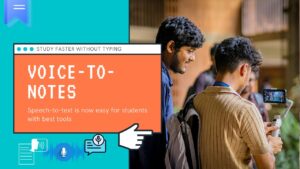
Voice-to-Notes Tools are really helpful from turning large study lectures into simple notes in just few minutes. Writing everything down is an old fashion technique that takes a lot of time for a few pages notes but everything is going easy with fast pacing technologies. Whether it’s hours of session or long research sheets, enabling speech to text is the smarter way to take notes. 

You’re forty minutes into a lecture, the professor has moved through three concepts, and your notes still say “photosynthesis — light reaction —” because your hand gave up before your brain did. Speaking runs at roughly 150-160 words a minute while typing tops out around 40 for most people. 

That gap is the entire case for Voice-to-Notes Tools , and for Indian students juggling coursework in English, Hindi, or a regional language, the tool you pick matters more than the concept itself — because most of the tools were built for American office meetings, not for Indian classrooms. 

Best Voice-to-Notes Tools For Indian Students 

There are plenty of tools that can turn your voice into text but then you find an error — spelling, whole different word (except, accept), not able to turn your regional language — that’s because it doesn’t understand. Some AI integrated voice tools that turn your every word into text without major errors is here:

Gboard Voice Typing — free, and it’s already on your phone

Before downloading anything, check what you have. Google’s Gboard keyboard has an in-built voice typing feature which you can use by clicking on the mic icon. If the icon is invisible then enable it from the setting so Voice-to-Notes can be easy and quick without downloading any new app.


It works in Hindi plus eight regional languages — Bangla, Gujarati, Kannada, Malayalam, Marathi, Tamil, Telugu, and Urdu — Indian students can use this keyboard in any app that takes input in the same language, not just Google’s own apps. 

For a student jotting quick revision notes in Hindi between classes, this is the lowest-friction option because there is no signup, no subscription, no separate app to remember to open.

Google Recorder — real-time transcription, best if you have a Pixel

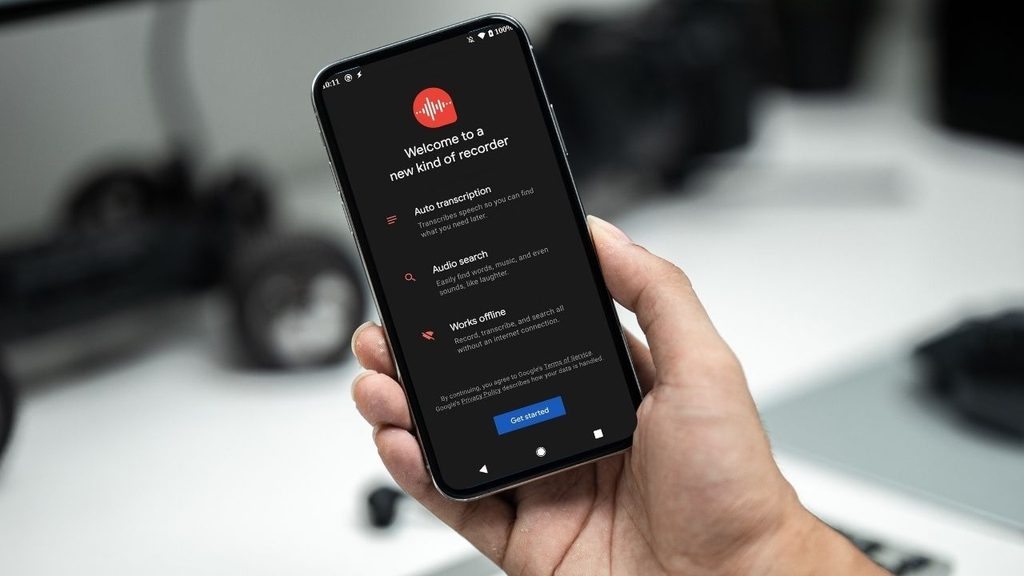
Google Recorder transcribes live as you speak and runs the processing on-device, which matters if your hostel Wi-Fi is unreliable. The catch: it’s tied to Pixel phones for its full real-time transcription experience, so if you’re on a different Android device or iPhone, this one’s off the table.

Otter.ai — good for English lectures, but it skips Hindi entirely

Otter is the name that comes up first in most “best Voice-to-Notes Tools” lists, and for English-medium lecture capture it’s genuinely capable — live transcription, speaker labels, searchable transcripts. 

The free tier gives you 300 minutes of transcription a month, capped at 30 minutes per recording, which covers maybe eight or nine standard lecture sessions before you hit the wall. The Pro plan runs $16.99/month billed monthly, or roughly $8.33/month if you pay annually (about $99.99/year). 

But for Indian students: Otter’s transcription supports English and a small set of other languages — Spanish, French, German, Japanese, Chinese depending on the source you check — but not Hindi or Indian regional languages. If your coursework happens in Hindi medium, Otter simply won’t understand you, no matter which plan you’re on.

Wispr Flow

Wispr Flow is the strongest option because it works inside almost any application. Students who want long-form writing and fast drafting can use this tool but unlimited dictation requires a subscription, which costs around $15 per month or $12 per month when billed annually. Since it supports more than 100 languages and gives accuracy for names and jargon along with AI editing, the cost is worth it.

VoiceToNotes.ai 

Its features include real-time transcription, grammar correction, AI summaries so it can become a useful tool for students which turn spoken thoughts into structured notes. Some professionals consider this tool as more affordable than many full-featured AI assistants but free usage is limited. The catch: accuracy still depends on microphone quality and background noise.

Mindgrasp

Mindgrasp is primarily an AI learning and content-understanding platform. Students can use it for lectures and study material — it helps in creating flashcards and quizzes automatically. Best for exam preparation and research but some features are tied to specific subscription tiers. 

Lisup 

Lisup focuses on accessibility and hands-free writing. It can be used across desktop applications so access will be easy and it is specifically designed for in-place speech-to-text features. It’s not built for broader use but enough for students to take notes easily. 

Soniox — the app actually built for Hindi dictation

Soniox is less well-known in student circles but solves exactly the gap Otter leaves open. It handles Hindi across regional varieties like Khariboli and Braj Bhasha, works system-wide across any app or text field on your phone rather than locking you into one note-taking interface, and covers 60-plus languages total with the ability to switch languages mid-sentence. 


It’s useful if you naturally code-switch between Hindi and English while explaining a concept to yourself. It’s free to start, with weekly free credits rather than a hard monthly cap, and the company states it doesn’t store your recordings or use them for model training, which is worth knowing if you’re dictating exam-prep notes you’d rather keep private.

Sarvam AI — worth watching, not quite a student app yet

Sarvam is India’s most-funded sovereign AI company, and its speech models (Saaras v3) handle 22 Indian languages with genuinely strong accuracy claims. But as of now, Sarvam’s product lineup is built mainly for enterprises — voice agents for banks and government call centers, APIs for developers — rather than a polished consumer app you’d install and use for lecture notes. 

A consumer-facing voice app was announced in February 2026, aimed at exactly this kind of mass-market, multilingual use case, but a public launch isn’t happening right now.

Read Also 👉 Why ChatGPT Ads Deserve a Place In Your 2027 Media Plan 

Why Do Students Need These Tools?

Most of the time students missed points while trying to understand the same topic simultaneously. Writing it down on paper or in a mobile is the same thing — it consumes a lot of time and misses points. So, these Voice-to-Notes Tools help students take notes without tiring their hands. 

There are some free and some paid tools, if you just need to take notes of what your processor is explaining then a free tool is enough for you. But if you are a Ph.D student or you need to do heavy research, organize every note, and make summaries from online content, you need a tool which can handle all of that, even if it costs you a little.

Which Speech-to-Text Tools are Best For Studies?

Google’s Gboard keyboard is the best free Voice-to-Notes Tools which I have used personally and crafting many documents in English, Hindi and Urdu. I recommended to students who wanted to take notes before exams and stop writing everything manually and waste their time. 


Gboard offers unlimited access to use on any other applications like docs, word, and on any device (mobile or laptop). Most of the students take their mobile to the college, so it runs smoothly. But sometimes it makes minor errors in spelling which you can edit later. 

Second is Wispr Flow but you have to pay after a limited use and many students can’t afford it but those who can afford can consider Wispr Flow as the best tool for making notes.

Read Also👉 Upgrade Laptop Like New Model In Low Budget

Conclusion for Voice-to-Notes Tools

The world is changing and for solving traditional problems by adapting new technology. One of the old problems is taking notes in a mid-session in your classrooms. Students have to understand the topic and write down their important concepts — two jobs at once.

If they forgot, they have to ask other students and it appears a problem if you don’t have a lot of friends. So the problem is solved now, you can spend your time to understand the topic without worrying about the notes as these Voice-to-Notes Tools do that job for you.

Leave a Comment

Your email address will not be published. Required fields are marked *

Bihar STET 2026 Online Form Out: Check Exam Syllabus and Pattern To Get Teacher Job

Bihar STET

Bihar STET 2026 Online Form Out on August 17 2026 and the last date to fill that form is September 15, 2026. Apply early to avoid last minute errors and server breaks, to score in Bihar State Eligibility Test (BSTET/STET 2026) examination, understand the exam syllabus and pattern.  

Download the official notification of Bihar STET 2026 to get all the details about eligibility, how to apply, and confirmed date for examination. While understanding the exam pattern which gets you selected.

Why Bihar STET 2026 Is Necessary For Teachers

Bihar STET — the Secondary Teacher Eligibility Test — isn’t a recruitment exam by itself. It’s a qualifying test conducted by BSEB that makes you eligible to apply for teaching posts in Bihar government-recognized schools, the same way BPSC TRE recruitment cycles have required in recent years. 

Clear it once, and BSEB now treats the certificate as valid for life rather than expiring after a few years, which is a meaningful change from the older TET/STET cycles where candidates had to keep re-qualifying. 

That’s the real reason so many people apply even when there’s no active teacher vacancy notification running at the same time — it’s a credential you bank for whichever recruitment drive comes next.

Bihar STET 2026 Important Dates

Save these dates into your calendar so don’t miss the day. Check updates on the official site every week for the exam date.

EventDate/Details
Notification released14/August/2026
Online application start17/August/2026
Original last date31/August/2026
Extended last date for application and fee payment15/September/2026
Official portalsThe dedicated application portal at stetregistration.cbrt.co.in
Exam DateThe exam date itself has not been officially announced. 

Eligibility Criteria for Paper 1 and Paper 2

The minimum age is 21 years as on August 1, 2026, confirmed consistently across the notification coverage. The upper limit is reported as 37 years for general candidates in some write-ups and as high as 42 for reserved and women candidates in others — since this figure hasn’t been consistent, check the age-relaxation table in the PDF notification itself before you rule yourself out.

Academic eligibility splits cleanly by paper:

  • Paper 1 (Secondary level, Classes 9–10): a Bachelor’s degree in the relevant subject with at least 50% marks, plus a B.Ed from an NCTE-recognized institution.
  • Paper 2 (Higher Secondary level, Classes 11–12): a Master’s degree in the relevant subject with at least 50% marks, plus a B.Ed.

Computer Science applicants are exempt from the mandatory B.Ed requirement if they meet the notification’s alternate qualification combinations, and the reduced qualifying marks, fee concessions, and age relaxations are only available to candidates with permanent Bihar domicile. 

Apply from outside the state, and you’re processed as a general-category male candidate regardless of your actual category — a detail that trips up a fair number of applicants from neighboring states every cycle.

Read More 👉 Your Dollar Income Isn’t Fixed: How INR Volatility Changes Freelancers Earning 

Bihar STET 2026 Online Form Fee Structure

The fee depends on category and on whether you’re applying for one paper or both:

  • General, BC, and EWS candidates: ₹960 for one paper, ₹1,440 for both
  • SC, ST, and PwD candidates: ₹760 for one paper, ₹1,140 for both

The fee is not refundable if you don’t pass the examination as this is the processing fee of your application.

Bihar STET 2026 Exam Pattern

Both papers follow the same structural pattern:

Exam ParticularsDetails
ModeComputer-Based Test (CBT)
Total questions150 multiple-choice questions
Total marks150 marks
Marks per question1 mark
Duration150 minutes (2 hours 30 minutes)
Negative markingNo negative marking

Of the 150 marks, 100 come from your chosen subject and the remaining 50 come from a section common to every candidate — Arts of Teaching and Other Competencies, covering General Knowledge, Reasoning Ability, Environmental Science, basic Mathematics, and Teaching Aptitude. 

Read More 👉 SSC CPO SI CAPF Online Form 2026

What To Study For Bihar STET Examination?

The subject-specific syllabus for Paper 1 broadly mirrors the graduate-level curriculum taught across Bihar’s universities. For Paper 2, it steps up to the graduate honours-level syllabus used for that subject in state universities — meaningfully deeper than Paper 1, which is worth remembering if you’re eyeing both papers back to back.

Your subject accounts for two-thirds of the total marks, so subject depth should be where most of your study hours go. But don’t write off the 50-mark common section as an afterthought — because most candidates do treat it as an afterthought, a candidate who actually revises General Knowledge, Reasoning, Environmental Science, and Teaching Aptitude systematically picks up an edge that’s disproportionate to how little competition they face there.

How to Apply for Bihar STET 2026

  1. Go to the official application portal of Bihar STET.
  2. Start a new registration and fill in basic details — name, mobile number, email.
  3. Verify your mobile number via OTP; a login ID and password get generated and sent to you.
  4. Log in and complete your personal and educational details in the application form.
  5. Upload a recent photograph, signature, and the required certificates.
  6. Pay the application fee online through the available payment modes.
  7. Submit the form and save or print the confirmation copy.

Several candidates in this cycle have reported that correction options after final submission are limited. Double-check your subject choice, category, and uploaded documents before you hit submit rather than assuming you can fix it afterward.

Selection Process and Certificate Validity

There’s no interview or separate merit round for STET itself — selection is based purely on your normalized CBT score against the qualifying threshold for your category. 

General category candidates need 50% to qualify; SC, ST, PwD, and women candidates need 40%. Once you clear that bar, BSEB issues a certificate that, under current policy, doesn’t expire — meaning you carry that eligibility forward into whichever Bihar teacher recruitment drive (including future BPSC TRE rounds) comes next, rather than needing to re-clear STET every cycle.

Read More 👉 Apple iPhone Duo Changes the Cost Effectively With These Methods

Conclusion

Bihar STET 2026 Online Form Out in August and now the deadline is coming, so you still have time to apply for the teacher eligibility test. Knowing the exam syllabus and pattern will help you get a high score and open many opportunities.

The one thing worth deciding today is whether you’re eligible for both papers — because qualifying for STET is separate from being recruited into a specific post, applying for both when you meet both qualification bars simply widens which recruitment drives you can walk into later without paying for and sitting through a second STET cycle. 

And since the exam date isn’t out yet, don’t waste energy hunting for a leaked schedule — put that time into the subject syllabus instead, since that’s the one variable in this entire process that’s already fully in your control.

Leave a Comment

Your email address will not be published. Required fields are marked *

iPhone 18 Pro Launching Next Month: 12 New Features Worth Knowing About

iPhone 18 Pro

If you’ve been putting off a new iPhone purchase this month, that instinct is about to pay off. The iPhone 18 Pro launching next month means in September 2026, and unlike last year’s fairly incremental refresh, this generation brings changes that actually alter how the phone behaves day to day — not just how it looks in a colour catalogue. 

The iPhone 18 Pro comes up with twelve new features that keep resurfacing across leaks from potential sources, and enough of them line up with each other that the list is worth taking seriously, even months before Apple confirms anything on stage.

When Is the iPhone 18 Pro Launching in India?

Apple has not confirmed an exact date of launch but people are guessing according to the leaks of iPhone 18 Pro that it will launch on September 8 and other sources have cited a September 9 date, with sales starting around September 18. Either way, expect the announcement in the first half of September and phones on shelves roughly a week or two later — India has landed in Apple’s first launch wave for the last several cycles, so there’s no reason to expect a delay this time.

The bigger structural change is that Apple is reportedly splitting its iPhone 18 lineup across two events for the first time. Only the iPhone 18 Pro, iPhone 18 Pro Max, and Apple’s first foldable iPhone are expected this fall. The standard iPhone 18, a budget iPhone 18e, and a second-generation iPhone Air are said to be held back until around March 2027. If that holds, it’s a genuine break from Apple’s usual one-event calendar, not just a rumor footnote.

Read More👉 Best Student Laptops for School and University in 2026 

The iPhone 18 Pro Launching Next Month With New Features: 12 Upgrades Leaks 

1. A Smaller Dynamic Island

Apple’s Face ID flood illuminator is rumored to move under the display at the same time, allowing Apple to reduce the size of the pill-shaped cutout at the top of the display for the first time since its introduction. 

2. LTPO+ Displays

Screen sizes stay put at 6.3 inches and 6.9 inches, matching the iPhone 17 Pro line. What’s new is LTPO+ panel technology, which is expected to squeeze out extra battery life without changing the physical footprint.

3. Variable Aperture Camera

The 48-megapixel main camera is rumored to gain a variable aperture — a first for iPhone — giving more control over depth of field. Given how small phone camera sensors are compared to a real DSLR, how much this actually improves photos in practice is still an open question.

4. A20 Pro Chip on 2nm

This would be Apple’s first chip fabricated on TSMC’s 2nm node, up from the 3nm A19 Pro. There’s likely to be a huge jump in both performance and power efficiency, even if Apple hasn’t yet released any figures. 

5. Third-Generation C2 Modem

Apple’s in-house modem line continues past the C1 and C1X with a new C2 chip, expected to keep pushing speed and efficiency ahead of its predecessors.

6. 5G Connectivity via Satellite

Paired with the C2 modem, the iPhone 18 Pro is rumored to support satellite-based web browsing when there’s no Wi-Fi or cellular signal — useful well beyond emergency SOS messaging.

7. New N2 Wireless Chip

The chip that currently handles Wi-Fi, Bluetooth, and features like AirDrop and Personal Hotspot is due for an upgrade to N2. What specifically improves hasn’t leaked yet.

8. A New Dark Cherry Colourway

Reports consistently point to Dark Cherry replacing Cosmic Orange and Deep Blue as the standout shade, alongside Light Blue, Dark Gray, and Silver.

9. A Simplified Camera Control Button

Apple is expected to strip out touch sensitivity and haptic feedback from the Camera Control button, leaving a purely pressure-sensitive click — a response to complaints that the current button is fussy to use.

10. A Cleaner Rear Finish

The Ceramic Shield area around the MagSafe ring is rumored to move to a single frosted finish, replacing the two-tone look on current Pro models.

11. A Bigger Battery on the Pro Max

Alleged Chinese regulatory filings suggest the iPhone 18 Pro Max’s battery capacity could grow by close to 10% over the iPhone 17 Pro Max — a meaningful jump if it holds up.

12. A Thicker Pro Max Body

That extra battery could come with a price: the iPhone 18 Pro Max seems to be a bit thicker than the standard iPhone 18 Pro and last year’s Pro Max, according to leaks. 

iPhone 18 Pro Price in India: What to Expect

Still, no one outside Apple knows the real figure, so consider anything below as a pre-launch estimate and not a quote. Indian retailers trackers like Smartprix, Cashify and LatestLY are now pointing towards a base price of ₹1,39,900 for the 256GB base model of the iPhone 18 Pro — which would be ₹5,000 more than the iPhone 17 Pro started from. 

Some tech enthusiasts notes are less optimistic, citing rising costs for the 2nm chip and faster memory, with a few reports floating figures as high as ₹1,43,990 to ₹1,54,900 depending on storage tier and whether you’re looking at the standard Pro or Pro Max. The spread between these numbers is wide enough that none of them should be treated as settled until Apple confirms pricing at the keynote.

Should You Wait for the iPhone 18 Pro?

If you’re still on an iPhone 15 Pro or older, this generation is worth waiting for — the variable aperture camera and the A20 Pro’s efficiency gains are the kind of changes you’d actually notice in daily use, not just on a spec sheet. If you already own an iPhone 17 Pro, none of the 12 rumored changes look big enough on their own to justify an upgrade this cycle — the two most significant jumps, the larger battery and thicker body, apply mainly to the Pro Max. 

And if price is what’s holding you back either way, keep an eye on the iPhone 17 Pro once the new lineup launches — Apple typically keeps the outgoing Pro model on sale at a reduced price, and that discount is usually the better deal in late September than paying full price for year-one rumors that haven’t been battle-tested yet.

Read More 👉 Top Lightweight Student Laptops to Buy in 2026

Conclusion 

The iPhone 18 Pro launching next month seems like a worthwhile upgrade in a nutshell, featuring a new A20 Pro chip, variable-aperture camera, smaller Dynamic Island, better connectivity, and bigger Pro Max battery. But keep in mind that all of the 12 features are still leaks until Apple officially unveils the phone. 

If you have an older iPhone, then holding out for the September release is a good idea. If you’re already an iPhone 17 Pro owner, there’s probably no need to hurry unless the camera improvements or Pro Max battery life are plenty of temptation. 

Leave a Comment

Your email address will not be published. Required fields are marked *

How to Start a Mineral Water Business: Complete Guide

Mineral Water Business

Students who want to start a business while studying that will grow with time when they get passed out but don’t know how to start a mineral water business, stay consistent and understand everything step-by-step. Why the Mineral Water Business ? Because it’s easy and needs less investment so students can easily work it out.

In every area there’s someone on a bicycle, two or three 20-litre cans strapped to the back seat, making rounds before the 9 a.m. lecture. And you’re wondering about the cost per can, number of houses in the block, weekly demand and deciding to start a mineral water business. It sounds like the side income you’ve been looking for.

It’s not a bad instinct. Even if you don’t have six months of free time, and lakhs of rupees sitting idle. You can still set up your small business amid juggling a timetable, a hostel curfew, and exam weeks. Here’s what actually applies if you’re starting this while you’re still enrolled.

Mineral Water Business Is Different From Packaged Drinking Water

The label gets used loosely, and that’s where a lot of first-time entrepreneurs trip up. Under Indian standards, “natural mineral water” (IS 13428) and “packaged drinking water” (IS 14543) are two different categories. The natural mineral water is sourced from a protected mineral spring, while packaged drinking water is the RO-and-UV purified water in cans and bottles that almost every local plant actually sells. 

If you’ve ever seen a delivery guy with unbranded 20-litre cans, that’s packaged drinking water, not mineral water in the technical sense — even though everyone calls it “mineral water” on the street.

It matters because both categories legally require BIS certification if you’re selling them in a sealed, labelled container under a brand name. FSSAI registration is a separate, additional requirement that applies to anyone in the food and water supply chain — manufacturer, distributor, or reseller. 

Skipping either one isn’t a grey area; local FDA teams do seal unlicensed plants, and it happens more often than people expect. If you don’t have much money then you can apply for FSSAI certification to start with.

The Reality of Setting Up A Brand of Water

If the plan is to manufacture and bottle your own brand, here’s the honest range, based on current supplier and consultancy listings — treat these as ballpark figures and verify locally, since they shift by state, capacity, and vendor:

  • BIS/ISI certification facilitation through a consultant typically runs somewhere in the ₹35,000–₹70,000 range.
  • Entry-level packaged drinking water machinery (RO plant, filling, capping) starts around ₹2.4 lakh for lower-capacity units and climbs past ₹13 lakh for higher-capacity setups.
  • A full project — machinery, water-testing lab, premises — can land around ₹25 lakh once you include everything, which is roughly the scale seen in real project reports built for government-backed loans like PMEGP, financed mostly through a bank loan plus KVIC margin-money subsidy.

None of that is pocket money, and the setup timeline — BIS testing cycles, layout approval, machinery installation — usually runs months, not weeks. It’s a business for after you graduate, or for a family that already owns a plant.

Read More 👉 Best Noise-Cancelling Headphones for Online Classes and Mock Tests 

How to Start a Mineral Water Business While Studying

The workaround isn’t to skip compliance — it’s to skip manufacturing. Instead of building a plant, tie up with a local packaged drinking water plant that already holds FSSAI and BIS certification, and become their reseller or delivery partner in a specific area you can actually cover between classes.

You’ll still need your own FSSAI Basic Registration — it’s mandatory for anyone distributing or reselling food and water products, not just manufacturers, but it’s a low-cost, online process aimed at businesses with turnover under ₹12 lakh a year. No lab, no machinery, no factory inspection required at this tier.

However, you can’t put your own brand name on someone else’s water without their manufacturer backing you under their BIS license. Either sell openly under the supplier’s existing brand as their authorized reseller, or have a documented dealership arrangement. Your own labelled brand is the manufacturing route above — a later-stage move, not a starting point.

How to Manage Your Business While Attending Classes

A few things make the difference between this staying manageable and it eating your semester:

  • Keep the radius tight. Your own hostel block, one PG cluster, or a few shops near campus — something you can cover in under 15 minutes so it fits around lecture slots.
  • Vet suppliers in person. Visit two or three candidate plants, ask to physically see their FSSAI certificate and BIS license number rather than taking their word for it.
  • Apply for FSSAI Basic Registration early — it’s inexpensive and doesn’t take long, but it’s not something to leave until customers are already asking for it.
  • Run subscriptions, not daily orders. A weekly or monthly can subscription over WhatsApp is far easier to manage during exam weeks than fielding one-off orders every day.
  • Budget for the deposit cycle. Most local can systems run on a refundable can deposit — commonly in the ₹50–100 range per can, though this varies by supplier. That money is tied up as working capital until the empty can comes back, not profit you can spend.
  • GST registration only becomes mandatory once turnover crosses ₹40 lakh a year for goods in most states (lower in a few special-category states). Most student-run operations won’t hit that in year one.

Where Student Water Businesses Usually Fail

Three patterns show up repeatedly, and they’re worth naming before you start rather than after:

Treating it as passive income when it’s really a logistics job — someone has to physically move 20-kilogram cans at a fixed time, every week, including exam season. Letting the deposit-cash mismatch creep up — if thirty cans are out with customers and only ten deposits have come back, the working capital gap is real and it stalls reorders. 

And trying to compete on price against an established local operator who already owns the plant and the delivery network — a student reseller almost never wins that fight, and shouldn’t try. The actual pitch is convenience: reliable timing around class hours, UPI payment, water dropped right at the door. 

Read More 👉 Business Ideas for Students With Zero Investment — Easy Startup Guide

Where To Begin Your Mineral Water Business?

  • Skip the machinery quote for now. Call two local packaged drinking water plants and ask if they take resellers. 
  • Apply for your FSSAI Basic Registration online. 
  • Then run a 20-can pilot in your own hostel or nearby block before spending a rupee on anything beyond that. 
  • If the pilot survives one full exam cycle without a missed delivery, you’ll know whether this is a real business or just a good week.

Conclusion

Understanding how to Start a Mineral Water Business as a student is different from starting as a manufacturer. So don’t follow large-level business instruction points, begin with less investment and short area to cover. 

While attending your classes, you can set up your side business for passive income and it gets succeeded then you can turn it into a large-scale business. Apply FSSAI registration and track down your reliable provider who already has a water plant industry. Expand the network in the hostel and nearby block to easily deliver the mineral water cans.

Stay consistent and don’t get bored in just one week, keep up with the idea and you’ll get a success. 

Leave a Comment

Your email address will not be published. Required fields are marked *

Scroll to Top